The best walks and hikes around Bagnacavallo
4.5
(46)
487
hikers
69
hikes
Hiking around Bagnacavallo offers exploration of the diverse landscapes of Emilia-Romagna, Italy. The region features flat plains characterized by rivers like the Lamone, Senio, and Santerno, transitioning towards the initial rises of the Romagna Apennines. Marshlands and agricultural areas are also prominent, providing varied terrain for outdoor activities. This mix of riverine environments and open countryside defines the hiking experience.
Best hiking trails around Bagnacavallo
- The most popular hiking route is Lamone Embankment Off-road loop from Russi, a 5.9…
Last updated: July 26, 2026
30
hikers
11.8km
02:58
20m
20m
Moderate hike. Good fitness required. Easily-accessible paths. Suitable for all skill levels.
4.0
(2)
14
hikers
14.7km
03:41
10m
10m
Moderate hike. Good fitness required. Easily-accessible paths. Suitable for all skill levels.

Sign up for free
12
hikers
5.49km
01:23
0m
0m
Easy hike. Great for any fitness level. Easily-accessible paths. Suitable for all skill levels.
5.0
(1)
6
hikers
6.51km
01:39
10m
10m
Easy hike. Great for any fitness level. Easily-accessible paths. Suitable for all skill levels.
6
hikers
14.3km
03:36
10m
10m
Moderate hike. Good fitness required. Easily-accessible paths. Suitable for all skill levels.
Get access to more routes and recommendations from other explorers.
Sign up for free
Already have an account?
Our route recommendations are based on thousands of hikes, rides, and runs completed by other people on komoot.
Start today with a free account
Your next adventure awaits.
Login or Signup

Tips from the Community

The inscription recalls the point from which the military turning point of crossing the Senio river occurred, which for long weeks marked the front line in the winter of 1944-45.
0
0

It was a small, wild, silent, hidden corner of absolute tranquility. The photos will never be able to make it seem as lucky as bikers like me and Alessandro who traveled it............
1
0

The convent of San Francesco, dating back to the 13th century, is the oldest convent building in the city of Bagnacavallo. The complex includes the church and the large convent that houses: the beautiful Sala Oriani or “New Refectory”, the cloister, the monumental staircase and the rooms on the first floor (not restored) used as exhibition spaces, the basement and the “large attic” also known as the Sala delle Capriate. Dating back to the mid-1200s, the convent of Bagnacavallo was one of the first to be built after the death of San Francesco. Considering that the first convents were built in places of heavy traffic, we must deduce that Bagnacavallo at the time was an important road junction and a stop for wayfarers. The convent complex underwent renovations and expansions over the centuries, the most important of which occurred in 1460 and 1667 (works by Andrea Galegati). It took on its current appearance at the end of the 18th century, with the interventions of the architect Gioacchino Tomba from Faenza. After the suppression of religious orders due to Napoleonic edicts, the building became largely public property. From 1875 to 1959 the convent was home to public schools and during the Second World War the immense underground areas were used as a refuge for the population. Only a small part of the building, in the twentieth century, was inhabited by the Conventual Friars Minor. This part, after the transfer of the religious to other locations, is no longer accessible to the public. The majority of municipal property has been renovated and used to host exhibitions or public meetings. Part of the building houses the Albergo Antico Convento San Francesco. (Source: https://www.bassaromagnamia.it/poitofintrests/antico-convento-di-s-francesco/ )
0
0
Overlooking Piazza della Libertà are the neoclassical Palazzo Comunale, built starting in 1791 and designed by Cosimo Morelli, and next to it, the beautiful Teatro Goldoni, inaugurated in 1845. On the west side, the Palazzo Vecchio (from the 13th century, but rebuilt several times) and the Civic Tower, built in the mid-13th century; used as a prison, in 1849 the legendary bandit “Il Passatore” was locked up there. Adjacent to the square, in via Trento Trieste, are the 17th-century Chiesa del Suffragio and the Antica Galleria, a public underground passage. (Source: https://www.bassaromagnamia.it/localita/bagnacavallo/ )
0
0
Piazza Nuova is the oval porticoed square built in the 18th century as a market, home to butchers, fishmongers and oil shops. Piazza Nuova, built in 1758, is the first example in Romagna of a center equipped for commerce. It is a unique building of its kind for the originality and elegance of its structures. The interior is developed as a loggia on an elliptical plan, with a succession of thirty round arches on square pillars. The two entrances consist of two arched portals with curved pediments, frames and relief panels. The building is made of exposed brick, paved in terracotta and paved with pebbles. Piazza Nuova has always been the ideal setting for events of various kinds; in recent years it has hosted summer film festivals, theater festivals, parties, exhibitions, musical performances. Vittorio Gassman chose it as the setting for the television reading of the first canto of Dante's Inferno. Restored in the late 90s, it now houses a tavern and some artisan shops. (Source: https://www.bassaromagnamia.it/poitofintrests/piazza-nuova/ )
0
0

Unfortunately this place no longer exists after last year's floods and was razed to the ground
0
0
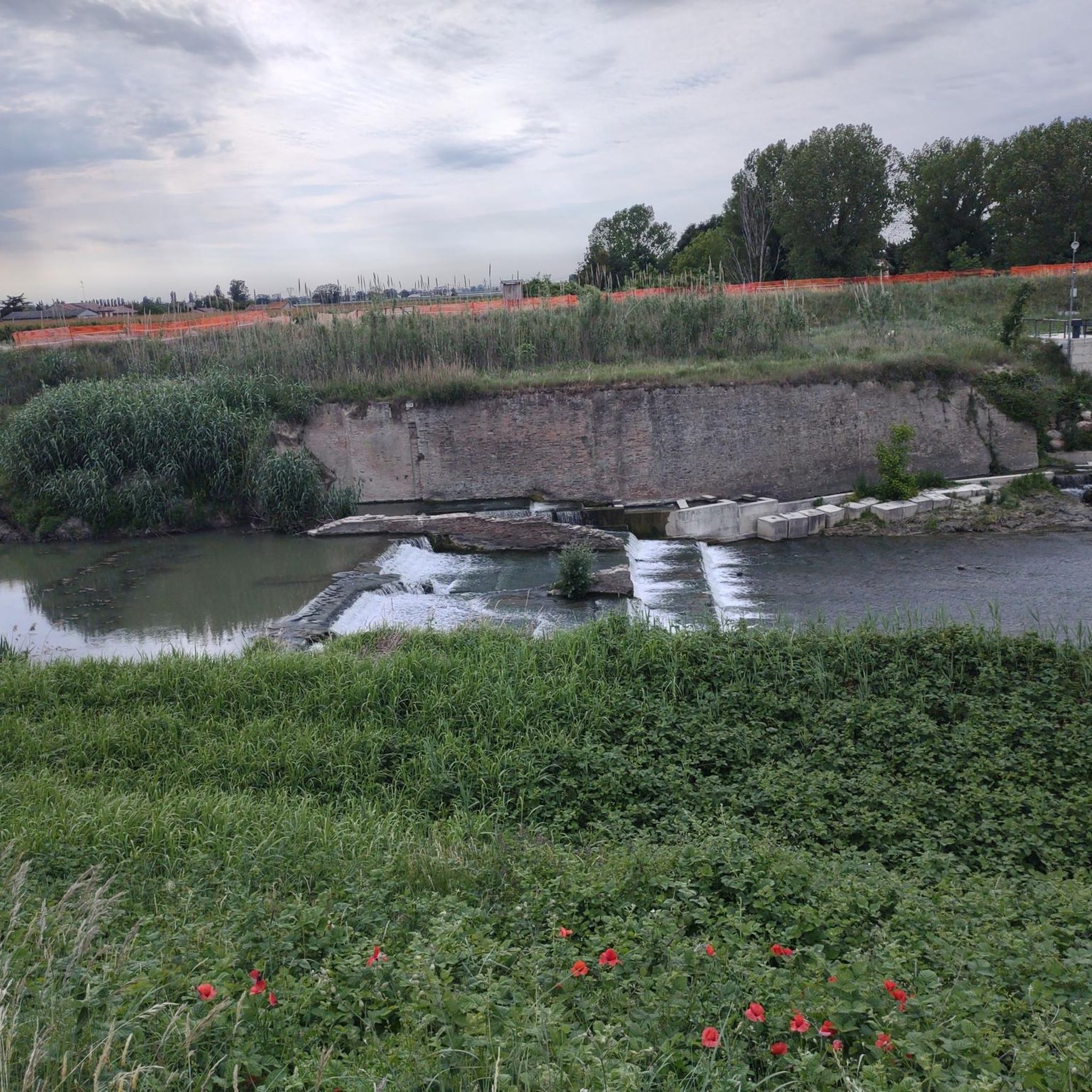
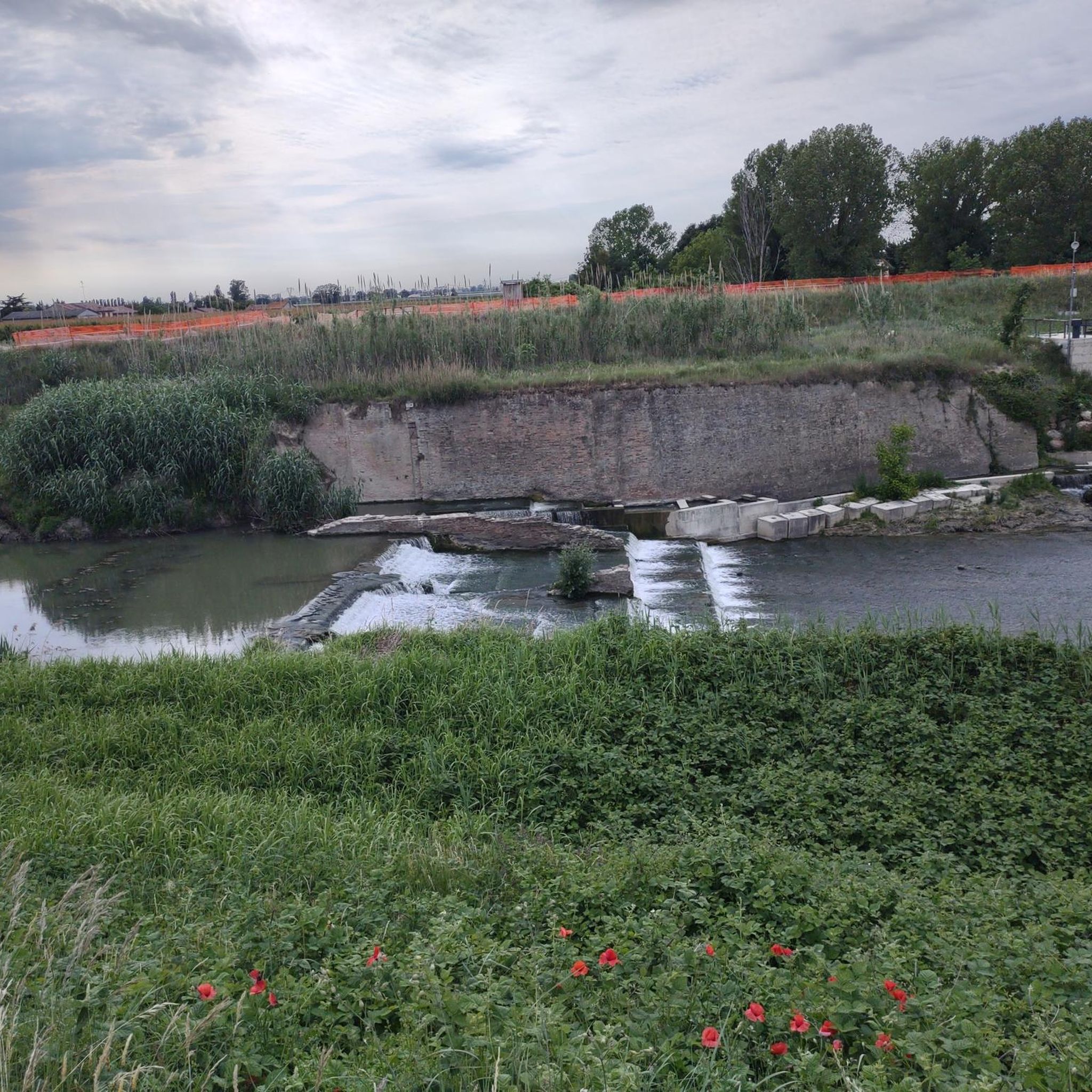
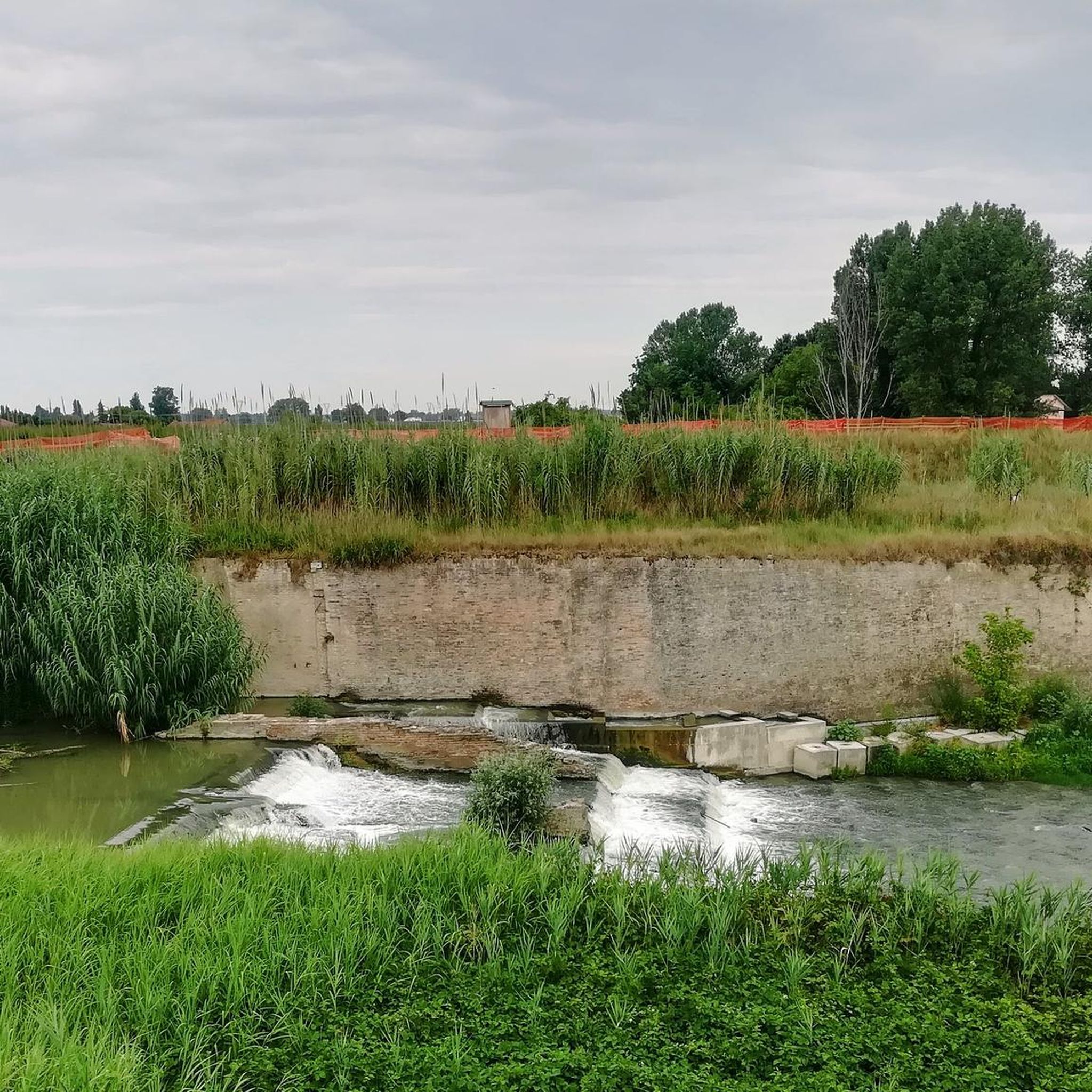
The bridge, with the classic donkey's back structure, had the function of supporting the doors of one of the eleven locks built at the time of construction of the Canale Naviglio, at the end of the eighteenth century, to allow navigation.
1
0
Frequently Asked Questions
How many hiking trails are available around Bagnacavallo?
There are over 45 hiking routes around Bagnacavallo, offering a variety of experiences. These range from easy strolls through local villages to moderate paths along river embankments and through the countryside.
What kind of landscapes can I expect to see while hiking near Bagnacavallo?
Hiking around Bagnacavallo offers a diverse experience, transitioning from the flat plains of the Bassa Romagna, characterized by rivers like the Lamone, Senio, and Santerno, to marshy landscapes and agricultural areas. You'll find riverine environments, open countryside, and even areas hinting at the foothills of the Romagna Apennines.
Are there easy hiking routes suitable for beginners or casual walkers?
Yes, Bagnacavallo offers plenty of easy options. Approximately 30 of the available routes are classified as easy. For example, the Café loop from Fusignano is an easy 2.3-mile path perfect for a leisurely walk through local village settings.
What do other hikers say about the trails in Bagnacavallo?
The routes in Bagnacavallo are highly rated by the komoot community, with an average score of 4.4 stars from 38 reviews. Over 340 hikers have used komoot to explore the varied terrain, often praising the accessible nature and scenic riverine paths.
Are there any circular walks around Bagnacavallo?
Yes, many of the trails around Bagnacavallo are designed as loops. A popular option is the Hiking loop from Bagnacavallo, a 3.6-mile trail that leads through the local countryside.
What interesting places can I explore near the hiking trails?
Beyond the trails, you can visit several points of interest. The Boscoforte Peninsula Nature Reserve, part of the Po Delta Park, offers a unique natural environment. You might also explore historical sites like the Rocca Sforzesca di Bagnara or the Rocca Estense di Lugo.
Are there any natural reserves or unique natural features to visit?
Absolutely. Just outside Bagnacavallo, you can find Podere Pantaleone, a six-hectare natural habitat intentionally left wild to foster local flora and fauna. The wider area also features marshlands and the distinct Boscoforte Peninsula Nature Reserve, known for its ancient dunes.
Are there family-friendly hiking options in Bagnacavallo?
Many of the easier routes are suitable for families. The flat terrain and well-maintained paths along rivers and through agricultural areas make for pleasant walks for all ages. Consider the Café loop from Fusignano for a gentle family outing.
Can I bring my dog on the hiking trails?
Generally, dogs are welcome on many of the trails around Bagnacavallo, especially on public paths and embankments. However, it's always advisable to keep them on a leash and be mindful of local regulations, particularly in nature reserves or agricultural areas.
What is the best time of year to hike in Bagnacavallo?
The region's beauty changes with the seasons. Spring offers lush blooms, while autumn brings earthy scents. Even winter has its charm with a misty allure. For comfortable hiking, spring and autumn generally provide the most pleasant temperatures and conditions.
Are there any longer, more challenging routes for experienced hikers?
While most trails are easy to moderate, there are longer moderate options. For instance, the Hiking loop from Palazzo San Giacomo covers nearly 9 miles (14.2 km) and offers a more extended exploration of the area's landscapes.
Are there trails that follow rivers or waterways?
Yes, the region is characterized by rivers like the Lamone, Senio, and Santerno. Many trails, such as the Lamone Embankment Off-road loop from Russi, follow these river embankments, offering scenic views of the waterways and surrounding plains.
Can I find trails that lead to specific natural attractions like wetlands or ponds?
Yes, you can explore routes that highlight the region's unique marshy landscapes. The Pond of the Parco del Loto loop from Bizzuno is a moderate 5.5-mile trail that takes you through such an environment, showcasing the local ecosystem.
Most popular routes around Bagnacavallo
Most popular attractions around Bagnacavallo

Get inspired with the komoot mobile app


Explore more
Browse the best Hikes in other regions.
