Attractions and Places To See around Belmonte In Sabina - Top 20
Best attractions and places to see around Belmonte In Sabina encompass a rich tapestry of ancient landmarks, cultural sites, and natural beauty. This historic village, nestled in the heart of Italy's Sabina region, offers a diverse array of points of interest spanning from prehistoric times through the Roman era and the Middle Ages. Visitors can explore historic centers, significant religious buildings, and natural features like the Sabini Mountains. The area provides opportunities to discover both man-made monuments and natural landscapes.
…Last updated: August 3, 2026
Sanctuary of Saint Mary of the Forest
Highlight • Religious Site
In the summer of 1225, at the invitation of Cardinal Ugolino (future Pope Gregory …
Translated by Google •
Tip by

Umbilicus Italiae — Geographic Center of Italy (Piazza San Rufo, Rieti)
Highlight • Monument
In Piazza San Rufo, Varronian tradition places the so-called Umbilicus Italiae, the geographical center of Italy, commemorated by a …
Translated by Google •
Tip by

Sign up now to discover places like this
Get recommendations on the best single tracks, peaks, & plenty of other exciting outdoor places.
Sign up for free
Ponte Vecchio of Posticciola
Highlight • Bridge
Translated by Google •
Tip by

Grand Hotel Quattro Stagioni
Highlight • Rest Area
The hotel is located in a restricted-traffic zone within the medieval walls that surround much of the city center, overlooking the Romanesque …
Translated by Google •
Tip by
Church of San Lorenzo
Highlight • Religious Site
Translated by Google •
Tip by

Sign up for free to discover even more attractions around Belmonte In Sabina.
Sign up for free
Already have an account?
Start today with a free account
Your next adventure awaits.
Login or Signup

Tips from the Community

Grande Albergo Quattro Stagioni, Piazza Cesare, Rieti RI Quattro Stagioni, Piazza Cesare Battisti 14, Rieti RI The hotel is located in a restricted-traffic zone within the medieval walls that surround much of the city center, overlooking the Romanesque cathedral, in front of the magnificent Italian garden of Palazzo Vincentini, two minutes from Sabina Universitas and the shopping street, and in front of the elevator leading to the newly renovated Santa Lucia Cultural Center. The strategic location also allows visitors to walk to the center of Italy (Umbilicus Italiae, as Rieti's Marco Terenzio Varrone called it) in Piazza San Rufo, whose church houses a wonderful organ and a Guardian Angel by Caravaggio. Text / Source: Quattro Stagioni, Piazza Cesare Battisti 14, IT-02100 Rieti RI Internet: https://www.hotelquattrostagionirieti.com/
13
1
Umbilicus Italiæ - Centro d'Italia, Rieti / Geographical Center of Italy In Piazza San Rufo, Varronian tradition places the so-called Umbilicus Italiae, the geographical center of Italy, commemorated by a plaque. Piazza San Rufo is located amidst the imposing buildings of the historic center, which line the main streets Via Roma and Via Garibaldi. In the center of the square, a section of wall, a remnant of the Roman city's first city walls, can be seen beneath the pavement. The value of this area is commemorated by a plaque and a monument with a unique shape, located exactly in the center of the square and aptly called "la caciotta" (the caciotta) for its rounded and circular design. The work, created between the 1980s and 1990s following the city's twinning with the Georgian capital Tbilisi, appears to resemble the base of a column and features the design of the Italian peninsula on its surface, accompanied by the inscription "Umbilicus Italiae" (Umbilicus Italiae), which runs along half the circumference of the monument itself. Text / Source: Official Tourist Portal of the City of Rieti https://www.visitrieti.com/2020/01/25/rieti-umbilicus-italiae/
14
0
Quattro Stagioni, Piazza Cesare Battisti 14, Rieti RI The hotel is located in a restricted-traffic zone within the medieval walls that surround much of the city center, overlooking the Romanesque cathedral, in front of the magnificent Italian garden of Palazzo Vincentini, two minutes from Sabina Universitas and the shopping street, and in front of the elevator leading to the newly renovated Santa Lucia Cultural Center. The strategic location also allows visitors to walk to the center of Italy (Umbilicus Italiae, as Rieti's Marco Terenzio Varrone called it) in Piazza San Rufo, whose church houses a wonderful organ and a Guardian Angel by Caravaggio. Text / Source: Quattro Stagioni, Piazza Cesare Battisti 14, IT-02100 Rieti RI Internet: https://www.hotelquattrostagionirieti.com/
13
1

The sanctuary of Santa Maria della Foresta is one of the four sanctuaries that celebrate the passage of San Francesco in the Reatina valley. According to some, it was precisely here that the Saint composed the Canticle of the Creatures. In this place there originally stood a small church dedicated to San Fabiano flanked by the priest's house alone. Legend has it that, during the period in which Saint Francis stayed here, many people from Rieti went to visit him, often picking bunches of grapes from the priest's vineyard. When it was time to collect the fruits for the harvest, the priest realized that there was very little left, nevertheless, encouraged by Saint Francis, he collected and harvested what little there was, however obtaining much more wine than in previous years. Of this episode, remembered as the "miracle of wine", traces can still be found inside the sanctuary: in fact, inside the domus there are the remains of a tank for pressing wine dating back to the period of the Saint's life.
2
0

The Romanesque bridge dates back to the 11th century, but was probably built on a pre-existing building of an unspecified period, of rare beauty, still usable but which requires urgent and significant restoration. In the two pillars it is possible to notice the three "holes" used to insert wooden poles horizontally, capable of supporting the "centre" for closing the stone arch. As you pass the bridge on the left, going up towards Posticciola, there is still a clear trace of "Garitta Muraria" where the border point with the Papal State and Kingdom of the Two Sicilies was made, and with the "horizontal transhumance" the duty for the ride. Transhumance has an ancient history which most likely coincides with the history of breeding itself and was regulated and disciplined since Roman times by a set of laws of taxes to be paid in the various customs. Transhumance derives from the Latin "trans" (beyond) and "humus" (earth) = pastoralism transmigrating with the seasons, along the sheep tracks (from the Latin "tractoria" = the shepherds' roads). In southern Italy transhumance was divided into "vertical" and "horizontal". The first concerned the Kingdom of the Two Sicilies, with several sheep tracks that connected from Abruzzo to Puglia (the most important was the famous "Tratturo Magno"). Horizontal transhumance, however, also of ancient origins, descended into the Roman countryside and increased considerably in 1477, when Pope Sixtus IV forced all the shepherds of the "Kingdom of the Church" to take their animals to winter in the Agro Romano. Transhumance in Lazio reached its peak starting from 1800, when the "vertical" one entered into crisis. This was usually in provincial sections from Umbria towards Civitavecchia, from the Marche towards Polo and Maccarese, from Abruzzo towards the Roman countryside, from Ciociaria towards Anzio and Terracina. http://www.magiadelturano.it/index.php/posticciola/ponte-romanico
0
0

Saint Lawrence / "San LORENZO", to whom this church in Contigliano - which is now only a ruin but still dominates the landscape with its silhouette - was dedicated, is one of the early Christian martyrs from a time when Christianity was still forbidden. He was archdeacon of the Pope and was asked by the pagan emperor to hand over the treasure to the church. Lawrence asked for three days, during which time he distributed the church assets among the poor inhabitants of Rome and, after the agreed time, came to the emperor with the poor to present them to him as the treasure of the church. He was then martyred to death, the legend says that he was roasted alive on a grate - this attribute can be seen in many depictions of Saint Lawrence - over coals. He is said to have been in good spirits and told his executioner on the one hand whether he wanted to turn him around. The feast day of San Lorenzo/Saint Lawrence in the calendar of saints is August 10th.
1
0
The sanctuary of Santa Maria della Foresta is one of the four sanctuaries erected by Saint Francis, together with the sanctuary of Fonte Colombo, the sanctuary of Greccio, and the sanctuary of Poggio Bustone. Source: Wikipedia
0
0

The Romanesque bridge (or Ponte Vecchio) near Posticciola is a really good example of the time it was. Formerly a post station and place of transit for transhumance, the bridge preserves the layout of a medieval Sabine village well.
2
0
Frequently Asked Questions
What historical sites can I explore in Belmonte In Sabina?
Belmonte In Sabina is rich in history. You can visit the ancient Cyclopean Wall, also known as 'The Wall of the Devil,' dating back to the late Bronze Age. Another significant site is the Ponte del Sambuco, a Roman bridge from the 1st century AD. Within the village, explore the historic center with its narrow streets, the Sant'Elena Church, and the San Salvatore Church, which features an apse fresco depicting John the Baptist. Don't miss the Ponte Vecchio of Posticciola, an 11th-century Romanesque bridge.
Are there any natural attractions or features to see around Belmonte In Sabina?
Yes, the area boasts significant natural beauty. Belmonte In Sabina is situated on a ridge of the Monti Sabini, offering breathtaking landscapes of high hills and thick oak woods. You can also explore the prehistoric Caves of Zoccano, located beneath the Cyclopean Wall. The village serves as a starting point for the Truffle and Chestnut Road, a naturalistic and gastronomic itinerary connecting to Lake Turano. The surrounding unspoiled woodlands are ideal for nature walks.
What outdoor activities are available near Belmonte In Sabina?
The varied terrain of the Sabini Mountains makes the region popular for outdoor activities. You can find numerous routes for cycling and motorbiking. For those interested in running, there are several trails, including an easy running loop in Rieti. Gravel biking enthusiasts can explore routes like the Angelo Sebastiani Hut loop. There are also MTB trails, such as the Roman Bridge over the Velino River loop.
Are there any family-friendly attractions in the area?
While specific family-focused attractions are not detailed, many historical sites can be enjoyed by families. The Sanctuary of Saint Mary of the Forest is listed as family-friendly and offers a peaceful setting. Exploring the historic center of Belmonte In Sabina and enjoying nature walks in the surrounding woodlands can also be pleasant family activities.
Where can I find panoramic views in Belmonte In Sabina?
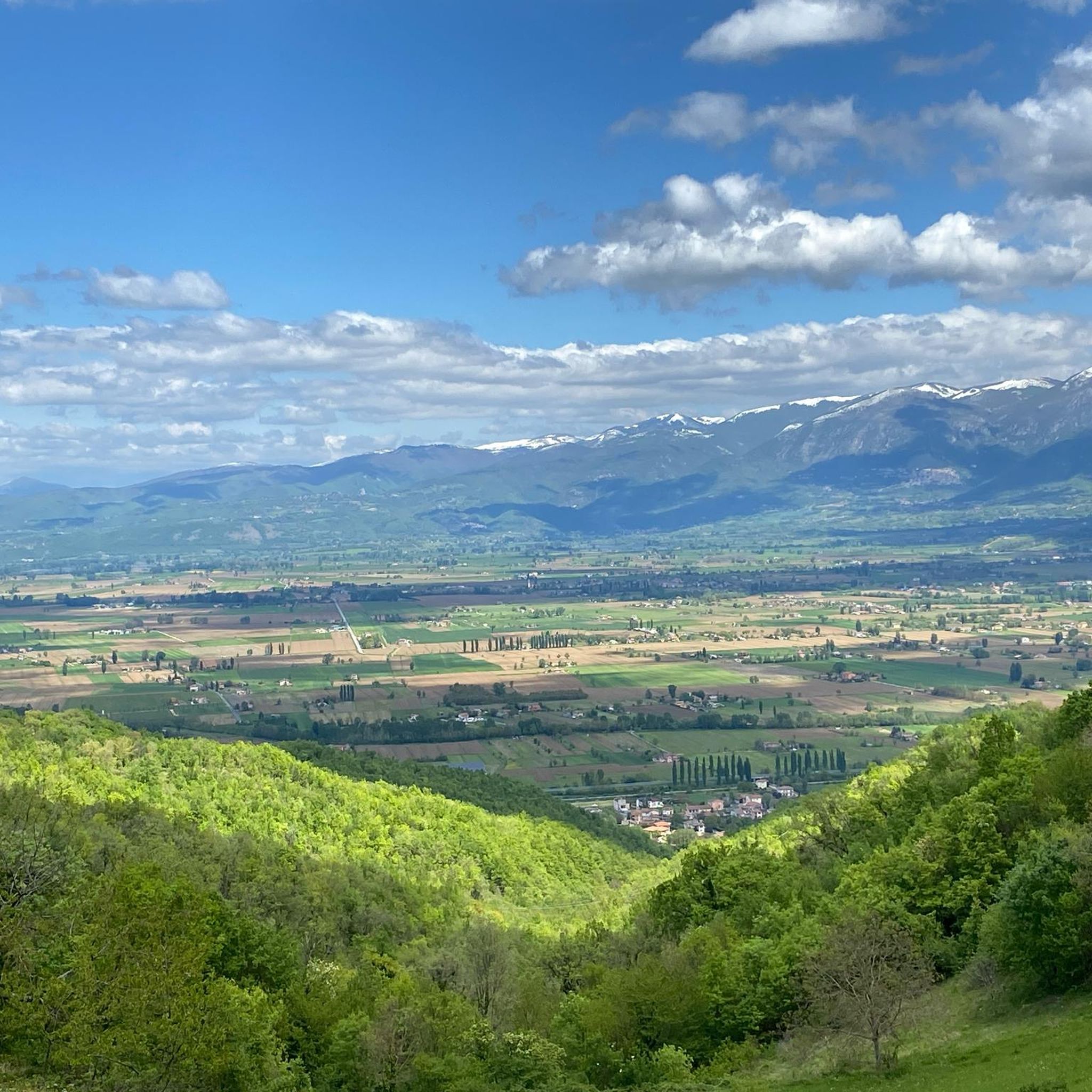
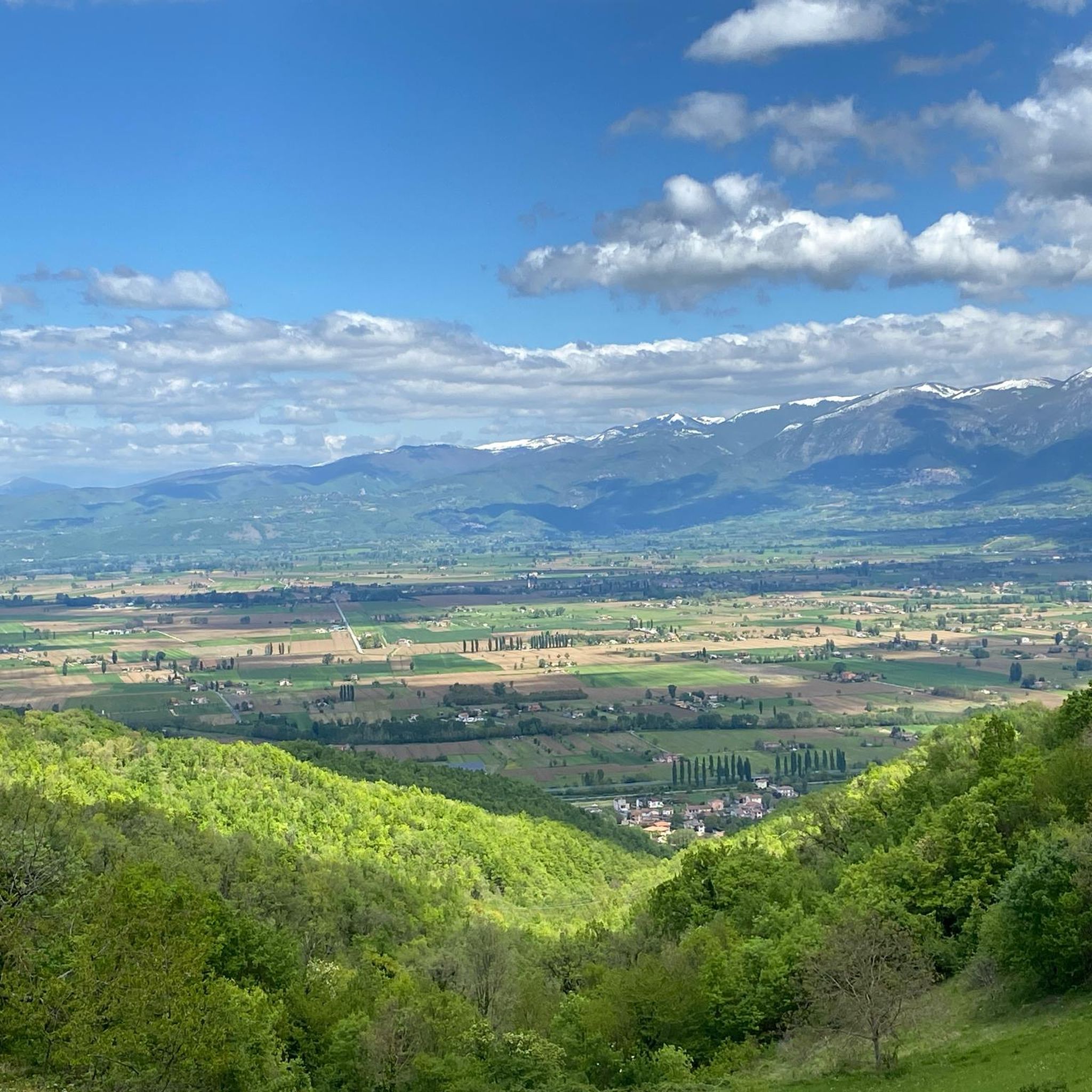
Belmonte In Sabina, perched on a ridge of the Monti Sabini, naturally offers many scenic viewpoints. The ruins of the Church of San Lorenzo provide breathtaking views of the Rieti valley and the Terminillo massif. Exploring the higher points of the historic village itself will also reward you with panoramic vistas of the surrounding natural landscapes.
What is the 'Umbilicus Italiae' and where is it located?
The 'Umbilicus Italiae' is traditionally considered the geographical center of Italy. It is located in Piazza San Rufo, Rieti, commemorated by a plaque and a unique monument. This site is a significant historical landmark and a popular point of interest for visitors.
What is the 'Miracle of Wine' associated with the Sanctuary of Saint Mary of the Forest?
The Sanctuary of Saint Mary of the Forest is famous for the 'miracle of wine.' During Saint Francis's stay in 1225, pilgrims consumed grapes from a small vineyard. Despite the scarcity of grapes, Saint Francis miraculously obtained more than double the usual amount of wine from the harvest, using a tank still visible at the sanctuary today.
Are there any cultural events or festivals in Belmonte In Sabina?
Belmonte In Sabina is known for its annual 'Turchetto' festival. This cultural and gastronomic event, typically held shortly after mid-August, celebrates a local biscuit made from eggs, flour, sugar, oil, and toasted hazelnuts, offering a taste of local traditions.
What kind of accommodation is available in Belmonte In Sabina or nearby?
While Belmonte In Sabina is a small village, the broader region offers various accommodation options. For a notable stay, the Grand Hotel Quattro Stagioni in Rieti is located within the medieval walls, offering a strategic base to explore the area's attractions.
Can I find places to eat or drink in Belmonte In Sabina?
Belmonte In Sabina offers gastronomic routes for those interested in local flavors. While specific cafes or restaurants are not detailed, the village's cultural and gastronomic traditions, such as the 'Turchetto' festival, suggest opportunities to experience local cuisine. Exploring the historic center will likely reveal local eateries.
What is the significance of the San Nicola Monastery?
The San Nicola Monastery, located west of Belmonte, features walls dating back to the 12th century. Its adjoining church houses 16th-century wall paintings and a 17th-century wooden statue of San Francesco, making it a significant site for those interested in medieval religious architecture and art.
Are there any ancient Roman ruins besides the Ponte del Sambuco?
Yes, not far from the Ponte del Sambuco, ruins of an ancient Roman villa have been discovered. These sites, along with the bridge, provide a glimpse into the Roman presence and history of the Belmonte In Sabina area.
Most popular routes around Belmonte In Sabina
Most popular attractions around Belmonte In Sabina

Get inspired with the komoot mobile app


Explore more
Still not found the Highlight you’re looking for? See guides of the top attractions in other regions:
