Attractions and Places To See around Casalanguida - Top 9
Best attractions and places to see around Casalanguida include a mix of historical sites, cultural landmarks, and natural features within the tranquil Abruzzo region of Italy. This town, situated in the hills at 450 meters altitude, offers views and serves as a base for exploring a diverse landscape. The surrounding area is characterized by mountains, hills, and a coastline, with significant protected areas like the Majella National Park and Punta Aderci Regional Nature Reserve. Visitors can explore ancient towers, churches,…
Last updated: May 19, 2026
Convent of San Pasquale (Atessa)
Highlight • Religious Site
Translated by Google •
Tip by

San Michele Arcangelo Cave in Liscia
Highlight • Cave
Translated by Google •
Tip by

Sign up now to discover places like this
Get recommendations on the best single tracks, peaks, & plenty of other exciting outdoor places.
Sign up for free
Comune di Casalbordino - DINAclub e-Bike Charging Station
Highlight • Rest Area
Translated by Google •
Tip by

Historic Center of Casalbordino
Highlight • Historical Site
Fun …
Translated by Google •
Tip by
Baronial Palace
Highlight • Historical Site
Translated by Google •
Tip by
Sign up for free to discover even more attractions around Casalanguida.
Sign up for free
Already have an account?
Start today with a free account
Your next adventure awaits.
Login or Signup

Tips from the Community

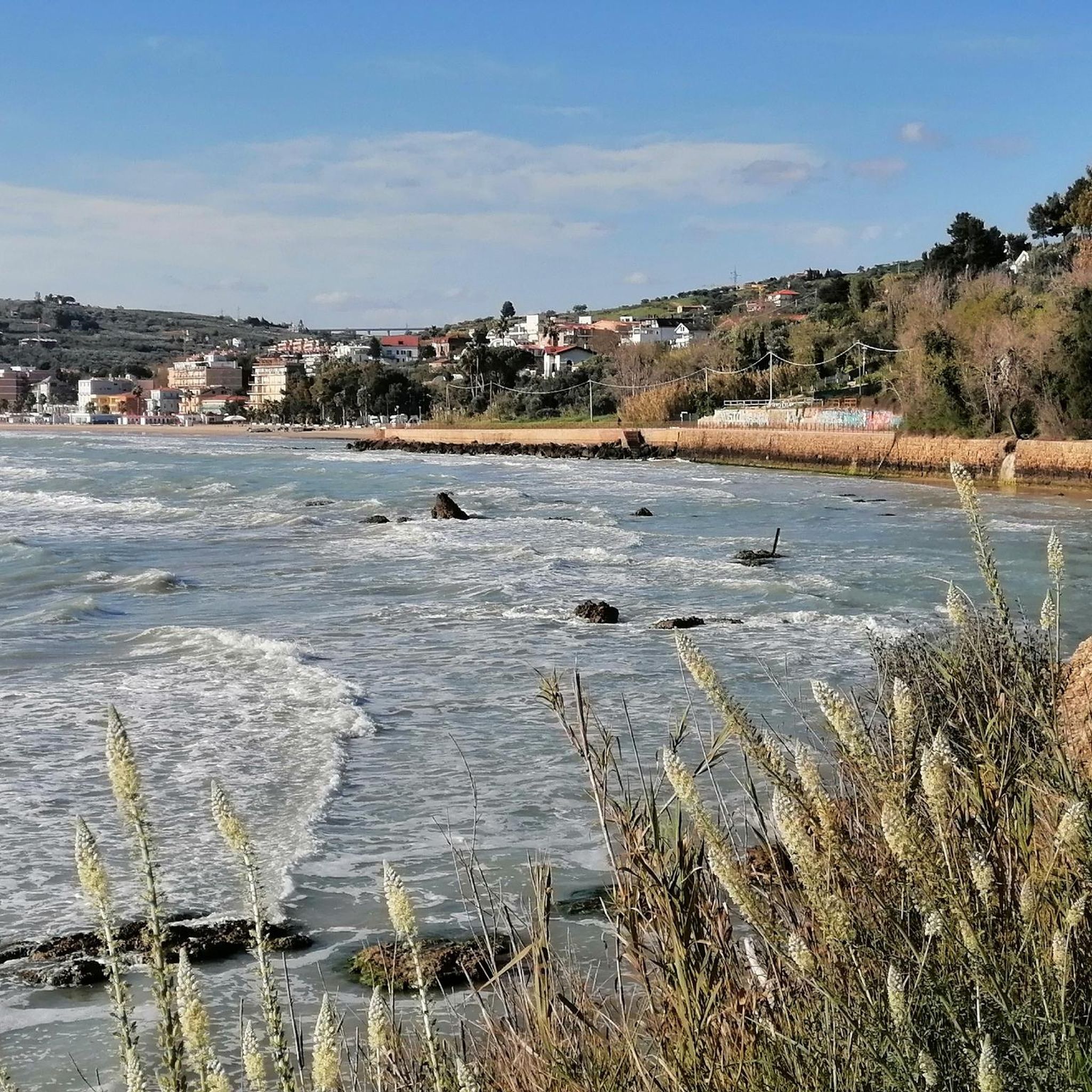
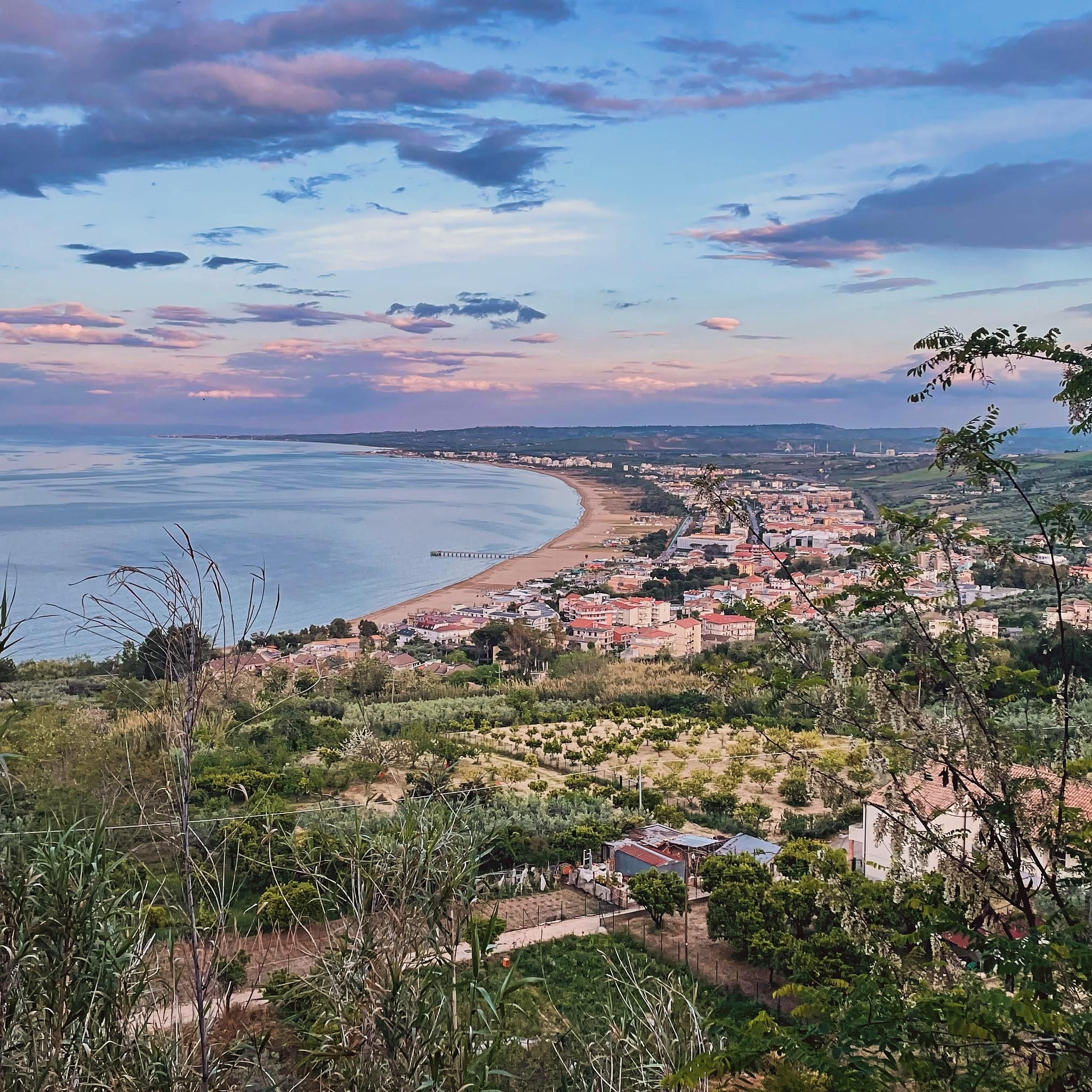
The Municipality of Casalbordino is located in the heart of the Abruzzo coast, surrounded by natural landscapes ranging from green hills to the nearby Adriatic Sea. This village rich in history and traditions offers visitors a peaceful atmosphere, embellished by historical monuments such as the Sanctuary of the Madonna dei Miracoli and the well-preserved historic center. An ideal starting point for exploring the natural trails and pristine beaches of the Punta Aderci Nature Reserve, Casalbordino is a perfect stop for those seeking a mix of culture, nature and relaxation. The Municipality of Casalbordino is also the ideal point for recharging your e-Bike and earning DINAclub points. Find out how at https://dinaclub.repower.com/ To discover the territory, an itinerary ready to pedal: https://www.komoot.com/it-it/tour/1960674336?share_token=aRGQ3DKyO6qGmhKY6dUjiEIHlVUYrNS95KJuOGIG2UAOFgkev8&ref=wtd
0
0

Convent of S.Maria degli Angeli (S.Pasquale) in Vallaspra di Atessa (CH) In the name Vallaspra, Valle-aspra, one can sense the peculiarity of a wild and fruitless nature, but also the sedimentation of a troubled historical and religious with long periods of splendor and apostolate. The history of the Vallaspra convent is linked to the Franciscan spirit and the incessant work of evangelization of the observant Friars Minor. Way back in 1408, Tommaso da Firenze, lay friar and secretary of Father Nicola da Osimo, commissioner of the province of Sant'Angelo in Puglia, stopped his wanderings in the Frenta area, in front of an ancient Cona depicting the Madonna of Sorrows with the Dead Christ and on the sides Saint John and Saint Francis on the right, Mary Magdalene and Saint Anthony of Padua on the left, venerated in a barren and wild place, precisely Vallassero di Atessa. Conquered by the evocative sacredness of the place and the profound meaning of this Pietà, Frà Tommaso began the construction of the first nucleus of the convent, which was completed and inaugurated just ten years later, in 1430. The convent of Vallaspra dedicated by Frà Tommaso to Santa Maria degli Angeli , not only in the dedication, but above all in the architectural structures, preserves the cleanliness of the Franciscan forms. The church, with a central nave and a side one, was enriched, in the early 1700s, with a chapel dedicated to San Pasquale Baylon (Spanish), a lay Franciscan, canonized in 1860, in honor of the Contestabile Colonna; the latter changed the title of the convent and San Pasquale simply, rather than Vallaspra, indicates the locality and the monastic complex. Over the centuries the structure was a woolen mill (the Franciscan habit was produced there); operating for more than a century and closed in 1675, it was linked to the intense period of traffic along the herd arteries. Over the years, the Convent of S.Pasquale became an important center of theological studies. Today, the Convent transmits a strong sense of belonging, of religious, spiritual and cultural identity; characteristics, the latter, which make it a solid, safe reference center, as well as a pole of aggregation, prayer and apostolate.
1
0

Monastic complex located in Atessa. The style is Renaissance/Baroque and its origins date back to the 15th century. the convent is entirely made of stone and there is a nursery in its garden.
2
0
Baronial palace of Archi dating back to the 11th century now reduced to ruins. Its current appearance is the result of the damage done by the Nazis in 1943. In fact, the Germans used the castle as a military outpost above the Val di Sangro to watch over the arrival of allied troops from Perano.
1
0
Typical medieval village built in bricks. The civic tower with the clock, the ancient tower and the medieval village, located in the historic centre, are the most relevant attractions. Fun fact: the village of Casalbordino is mentioned by Gabriele D'Annunzio in his novel "The Triumph of Death"
1
0
According to oral tradition, it seems that San Michele, who left from the East to defeat paganism, stopped in a wood near Liscia before arriving on the Gargano; this wood is located around Monte Sorbo, an area that in ancient times had a high anthropic density, as can be seen from the remarkable archaeological material found here and coming from Italic tombs. Still on the subject of legend, it is said that a man from Palmoli, a village in the upper Vasto bordering Liscia, intent on grazing cows near the Treste river, noticed that a young bull got lost every day and then returned in the evening. One day, however, the farmer, intrigued by this mysterious behavior, decided to follow his animal and saw that the vegetation opened up, as if by magic, as it passed, as if to indicate a direction to follow; this strange path led him to a cave where he saw the bull kneeling in front of a wooden image of St. Michael the Archangel, which miraculously made water gush out so that man could quench his thirst and recover from the discovery to witness this event supernatural. In memory of these events that occurred in Liscia, the Marquesses of Avalos, in the eighteenth century incorporated the cave inside a small church, perhaps, to regulate the large influx of pilgrims who are here recalled by popular devotion to the Archangel Michael, a cult that is lost in the mists of time.
1
0
Frequently Asked Questions
What natural attractions can I explore near Casalanguida?
The region around Casalanguida is rich in natural beauty. You can visit the Oasi di Serranella, a WWF nature reserve created in 1981, known for its rare plant species and diverse fauna, with the Sangro River flowing through it. Another significant natural area is the Punta Aderci Regional Nature Reserve, established in 1998, which preserves a rocky coast and is excellent for birdwatching and diving. Additionally, Casalanguida is situated at the foot of the Montagnola, offering fantastic views, and is within reach of the vast Majella National Park and Gran Sasso and Monti della Laga National Park, both offering stunning mountain scenery and diverse wildlife.
Are there opportunities for hiking or cycling around Casalanguida?
Yes, the diverse landscape around Casalanguida, with its mountains, hills, and coastline, provides ample opportunities for outdoor activities. You can find various routes for road cycling, mountain biking, and gravel biking. For instance, there are road cycling routes like the 'San Rocco Fountain – Quiet Country Road loop' from Gissi, and MTB trails such as the 'Palazzo Furii loop' from Pili. For those interested in gravel biking, options like the 'Adriatic Cycle Route' loop from Atessa are available. The national parks also offer numerous trails for hiking and mountain biking.
What historical sites can I visit in and around Casalanguida?
Casalanguida and its surroundings boast a rich historical heritage. In town, you can see 15th-century towers like the Cauli Tower and the Procaccini palace tower, as well as the Church of Santa Maria Maddalena, first mentioned in 1324-25. Nearby, explore the 14th-century Castello Ducale in Carpineto Sinello, the 16th-century Castello Montazzoli, and the 13th-century Castello Monteodorisio, which houses a museum. Don't miss the Historic Center of Casalbordino, a typical medieval village with a civic tower and ancient structures.
Are there any notable cultural landmarks or museums in the area?
Beyond historical sites, the region offers cultural insights. The Convent of San Pasquale (Atessa) is a significant Renaissance/Baroque monastic complex dating back to the 15th century. You can also visit the Museo Etnografico (Ethnographic Museum) in Bomba, which showcases the life of Abruzzo peasants in the early 20th century. For religious significance, the Shrine of the Eucharistic Miracle in Lanciano is a notable site.
What is the best time to visit Casalanguida for outdoor activities?
The Abruzzo region, where Casalanguida is located, experiences distinct seasons. Spring (April-May) and autumn (September-October) generally offer pleasant temperatures for hiking and cycling, with lush landscapes in spring and vibrant colors in autumn. Summer (June-August) is ideal for coastal activities and exploring higher elevations in the national parks, though it can be warm. Winter (November-March) brings colder weather, especially in the mountains, suitable for winter sports if available, but less so for general outdoor exploration around the town itself.
Are there family-friendly attractions or activities near Casalanguida?
Yes, several attractions cater to families. The Historic Center of Casalbordino is considered family-friendly, offering a glimpse into a well-preserved medieval village. The Museo Etnografico in Bomba can also be an engaging educational experience for older children. For outdoor family fun, the less strenuous trails in the Punta Aderci Regional Nature Reserve or designated family walks in the broader national parks can be enjoyable. The tranquil atmosphere of Casalanguida itself, with its views and traditional pace of life, is also appealing for a relaxing family visit.
Where can I find unique religious sites or legends in the area?
The region has several sites with religious significance and local legends. The Convent of San Pasquale (Atessa) is a beautiful and historically important monastic complex. For a unique experience, visit the San Michele Arcangelo Cave in Liscia, which is steeped in oral tradition and local legends about Saint Michael the Archangel. The Shrine of the Eucharistic Miracle in Lanciano is also a globally recognized religious destination.
What are some interesting architectural features to look out for in Casalanguida?
In Casalanguida, you can observe 15th-century towers, such as the Cauli Tower and the one in the Procaccini palace, which feature various stone fragments like corbels, jambs, and architraves. The Church of Santa Maria Maddalena has a molded stone portal from the 16th century and a three-nave interior with a polychrome wooden organ. The 19th-century neoclassical San Rocco Fountain also stands out at the junction of Via Straripola and Via Nuova.
Are there any viewpoints or scenic spots near Casalanguida?
Casalanguida itself is situated high in the hills at 450 meters altitude, offering fantastic views of the surrounding landscape, which includes mountains, hills, and a distant coastline. For more specific scenic spots, exploring the trails within the Majella National Park and Gran Sasso and Monti della Laga National Park will lead to numerous panoramic viewpoints. The Punta Aderci Regional Nature Reserve also provides beautiful coastal vistas.
What is the local cuisine or produce known for in the Casalanguida region?
The broader Abruzzo region, including the area around Casalanguida, is renowned for its distinctive local produce. Visitors can enjoy high-quality olive oil and a variety of local wines. The cuisine typically features hearty, traditional Italian dishes, often incorporating fresh, regional ingredients.
How can I find information about parking or public transport for attractions?
While specific parking details for every attraction are not always available, many villages and towns like Casalanguida and Casalbordino will have public parking areas. For natural reserves like Punta Aderci Regional Nature Reserve, there are usually designated parking facilities. Public transport options to smaller towns like Casalanguida might be limited, often requiring a car for flexibility to explore the various attractions and natural sites effectively. For specific e-bike charging needs, the Comune di Casalbordino offers a DINAclub e-Bike Charging Station.

Get inspired with the komoot mobile app


Explore more
Still not found the Highlight you’re looking for? See guides of the top attractions in other regions:
