Attractions and Places To See around Castelnuovo Della Daunia - Top 20
Best attractions and places to see around Castelnuovo Della Daunia. This charming village in Puglia is situated on the eastern side of the Daunia mountains at an altitude of 543 meters. The area features a hilly landscape with wide streets and spacious squares, offering views of the Fortore Valley. It presents a blend of historical, cultural, and natural points of interest.
Best attractions and places to see around Castelnuovo Della Daunia
- The most popular attractions is Ducal Castle of Torremaggiore…
Last updated: July 15, 2026
Ducal Castle of Torremaggiore
Highlight • Castle
Translated by Google •
Tip by

Castel Fiorentino
Highlight • Castle
Translated by Google •
Tip by
Sign up now to discover places like this
Get recommendations on the best single tracks, peaks, & plenty of other exciting outdoor places.
Sign up for free
Dragonara Castle
Highlight • Castle
This ancient manor is the last testimony of the Byzantine-Norman-Swabian …
Tip by
Church of Our Lady of Sorrows (Church of the Carmine), Torremaggiore
Highlight • Religious Site
Translated by Google •
Tip by
Sanctuary of Maria Santissima della Fontana, Torremaggiore
Highlight • Religious Site
Translated by Google •
Tip by
Sign up for free to discover even more attractions around Castelnuovo Della Daunia.
Sign up for free
Already have an account?
Start today with a free account
Your next adventure awaits.
Login or Signup
Popular around Castelnuovo Della Daunia
Tips from the Community

Castelfiorentino is the current name, Torre Fiorentina is the name of the site on which the remains of the small medieval city are located.
0
0

The castle of Torremaggiore is a 12th century fortress located in the center of the Apulian city. It was built by the Normans and then transformed into a residence by the De Sangro princes. The castle has six towers, a moat and today houses a civic museum with archaeological finds from Fiorentino, the place where Frederick II of Swabia died.
0
0

Today and tomorrow 11 and 12 April the procession in honor of the Madonna della Fontana is repeated. The whole country is still to celebrate all together..... All in the street, in the streets behind the procession in honor of Maria SS della Fontana 🙏.... Exciting ❤️
10
0

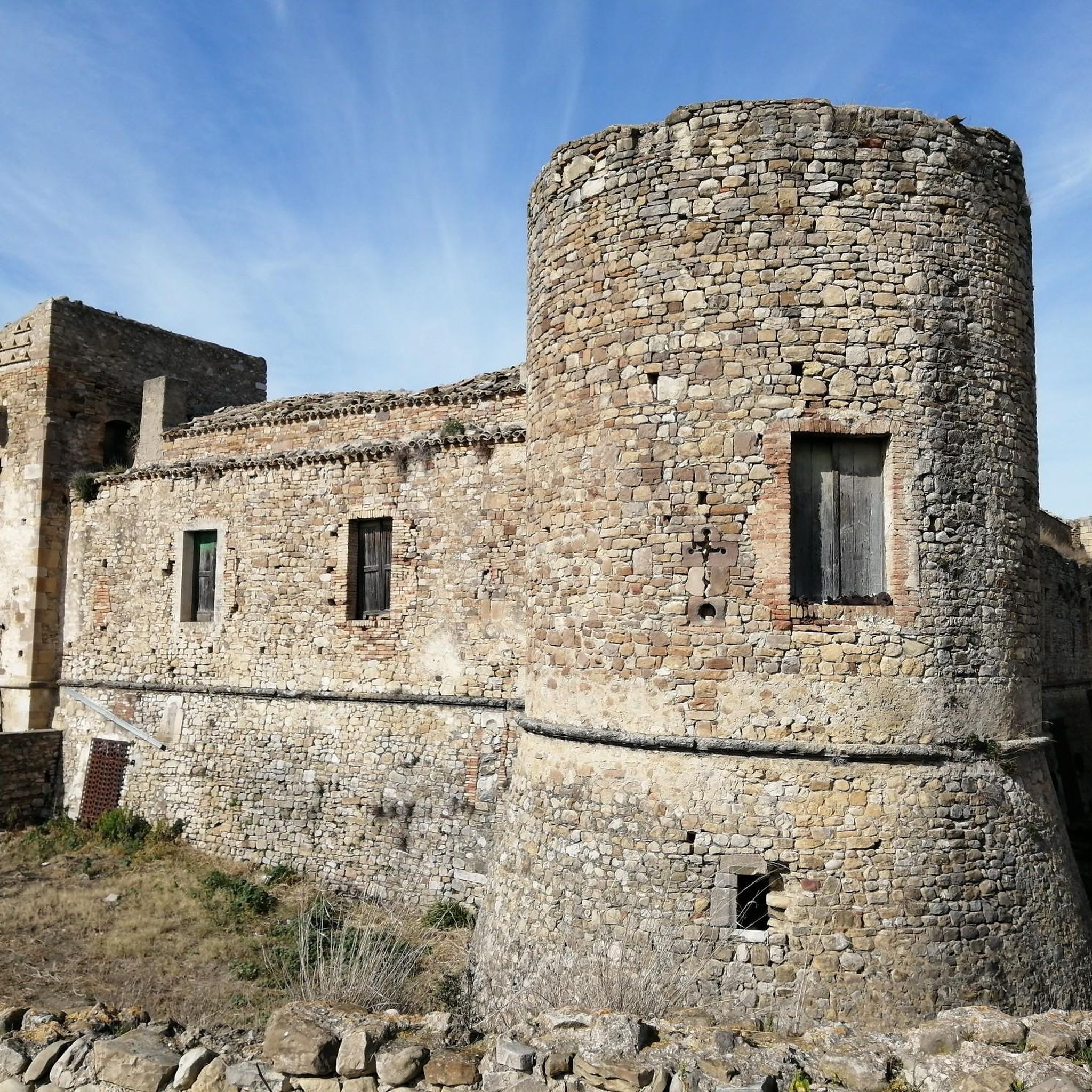
on the top of a hill between San Severo and Castelnuovo della Daunia the remains of a Frederician fortress, where on the day of Santra Lucia in 1250 Federico II of Swabia, taken ill, dictated his last dispositions and died. A place of extraordinary energy, constantly flown over by the flight of birds of prey as if to build a sacred place. It deserves more protection though.
1
0
On Good Friday, the Brothers, dressed in black, leave the Carmine Church to carry the statue of Our Lady of Sorrows, Patroness and Protector of the city, in procession through the streets of Torremaggiore. The facade of the Church, in Baroque style, is embellished by four allegorical statues depicting the three theological virtues and a cardinal virtue. It is among the Places of the Heart of FAI, the Italian Environment Fund.
28
0
Originally entrusted to the Order of Carmelites, who stayed in the adjacent convent, in 1836 the Church of Carmine was sold to the Confraternita della Morte, one of the oldest confraternities in the city.
22
0
The Carmine Church, more properly known as the Church of Our Lady of Sorrows, was built in 1730 on land donated by Prince Raimondo di Sangro, feudal lord of Torremaggiore.
22
0
The church over the years underwent several restoration interventions; in fact, in the 16th century it was enlarged by the De Sangro family, feudal princes of the area, while the works that took place between 1916 and 1920 gave it its current neo-Romanesque appearance.
26
0
Frequently Asked Questions
What historical sites can I explore around Castelnuovo Della Daunia?
The area is rich in history. You can visit the impressive Ducal Castle of Torremaggiore, an 11th-century fortress declared a National Monument, which now houses a Civic Museum. Explore the remains of Castel Fiorentino, a Frederician fortress where Federico II of Swabia died in 1250. Another significant ruin is Dragonara Castle, a Byzantine-Norman-Swabian fortress destroyed in 1255.
Are there any notable churches to visit in Castelnuovo Della Daunia?
Yes, Castelnuovo Della Daunia is home to several historic churches. The 13th-century Church of the Madonna della Murgia (Chiesa Madre) is notable for its bell tower and 1500s ciborium. The 16th-century Church of Santa Maria Maddalena features a Romanesque portal and valuable 17th and 18th-century paintings. The Church of San Nicola exhibits oriental architectural influences, and the 18th-century neoclassical Church of the Incoronata houses beautiful wooden statues and altarpieces.
Where can I learn about the local heritage and rural life?
For insights into the area's heritage and past way of life, visit Palazzo Romano. This historic palace houses the Ecclesiastical Museum, a library, and the Museum of Rural Civilization, offering a comprehensive look at the region's history and traditions.
Are there natural attractions or scenic viewpoints near Castelnuovo Della Daunia?
Castelnuovo Della Daunia is set in a pleasant, hilly area offering beautiful views. The belvedere on the Colle del Mulino a Vento (Windmill Hill) provides panoramic vistas of the Molise hills and the Fortore River valley. The village itself overlooks the Fortore Valley, presenting a picturesque postcard view.
Can I find places for relaxation and wellness in the area?
Yes, the area is known for its oligomineral and sulfuric water springs with therapeutic properties. The Terme di Castelnuovo della Daunia is a modern spa center, the only one in the Foggia Province, offering various treatments including hydro-punic therapies, motor rehabilitation in water, and traditional spa cures.
Where can I enjoy a picnic in nature?
For those seeking a tranquil spot in nature, the Pineta La Cappellina is a cool and green pine forest located in the Molino a Vento district. It offers equipped areas perfect for picnics and relaxation amidst the trees.
What cycling routes are available around Castelnuovo Della Daunia?
There are various cycling opportunities. For touring bicycles, you can find routes like the 'Belvedere di Volturino loop from Volturino' or the 'San Bartolomeo in Galdo – Bar Eden, Volturara Appula loop from Volturino'. You can explore more options on the Cycling around Castelnuovo Della Daunia guide.
Are there mountain biking trails near Castelnuovo Della Daunia?
Yes, mountain biking enthusiasts can find trails such as the 'Castel Fiorentino – Dragonara Castle loop from Torremaggiore' or the 'Mountainbike loop from Motta Montecorvino'. Discover more trails in the MTB Trails around Castelnuovo Della Daunia guide.
Can I find road cycling routes in the area?
Absolutely. Road cyclists can enjoy routes like the 'Serracapriola from Torremaggiore – loop tour' or the 'Pietramontecorvino from Torremaggiore – loop tour'. For more details, check the Road Cycling Routes around Castelnuovo Della Daunia guide.
Are there family-friendly attractions around Castelnuovo Della Daunia?
Many historical and cultural sites are suitable for families. The Ducal Castle of Torremaggiore, with its museum, offers an engaging historical experience. Additionally, several churches like the Church of Our Lady of Sorrows and the Sanctuary of Maria Santissima della Fontana are considered family-friendly historical sites.
What makes Castelnuovo Della Daunia's urban layout unique?
The town's urban structure is distinct from other villages in the Daunia mountains. It features wide streets and spacious central squares that converge with scenic steep alleys. This design softens the hill's slope and defines the town's three main quarters, contributing to its airy and orderly appearance.
What is the best time of year to visit Castelnuovo Della Daunia for outdoor activities?
The region's pleasant, mainly hilly terrain makes it enjoyable for outdoor activities during spring and autumn when temperatures are mild. Summer can be warm, but the higher altitude of Castelnuovo Della Daunia (543 meters) and natural spots like Pineta La Cappellina offer cooler retreats.
Most popular routes around Castelnuovo Della Daunia
Most popular attractions around Castelnuovo Della Daunia

Get inspired with the komoot mobile app


Explore more
Still not found the Highlight you’re looking for? See guides of the top attractions in other regions:
