Attractions and Places To See around Nola - Top 20
Best attractions and places to see around Nola, Italy, offer a diverse range of historical, natural, and cultural sites. The region is characterized by its proximity to volcanic landscapes, including Mount Vesuvius, and features historical structures like Matinale Castle. Visitors can explore ancient religious buildings and enjoy viewpoints across the surrounding area. With 20 hidden gems, Nola provides opportunities for exploration and discovery.
Best attractions and places to see around Nola
- The most popular attractions is Crater of Mount Vesuvius…
Last updated: May 9, 2026
Crater of Mount Vesuvius
Highlight • Volcano
Translated by Google •
Tip by

Matinale Castle
Highlight • Castle
Translated by Google •
Tip by

Sign up now to discover places like this
Get recommendations on the best single tracks, peaks, & plenty of other exciting outdoor places.
Sign up for free
Sanctuary of Sant'Angelo a Palombara
Highlight • Religious Site
Translated by Google •
Tip by
Cognoli Summit and Valle dell'Inferno
Highlight • Summit
Translated by Google •
Tip by

Trail to Cognoli di Ottaviano
Highlight (Segment) • Trail
Translated by Google •
Tip by

Sign up for free to discover even more attractions around Nola.
Sign up for free
Already have an account?
Start today with a free account
Your next adventure awaits.
Login or Signup

Tips from the Community

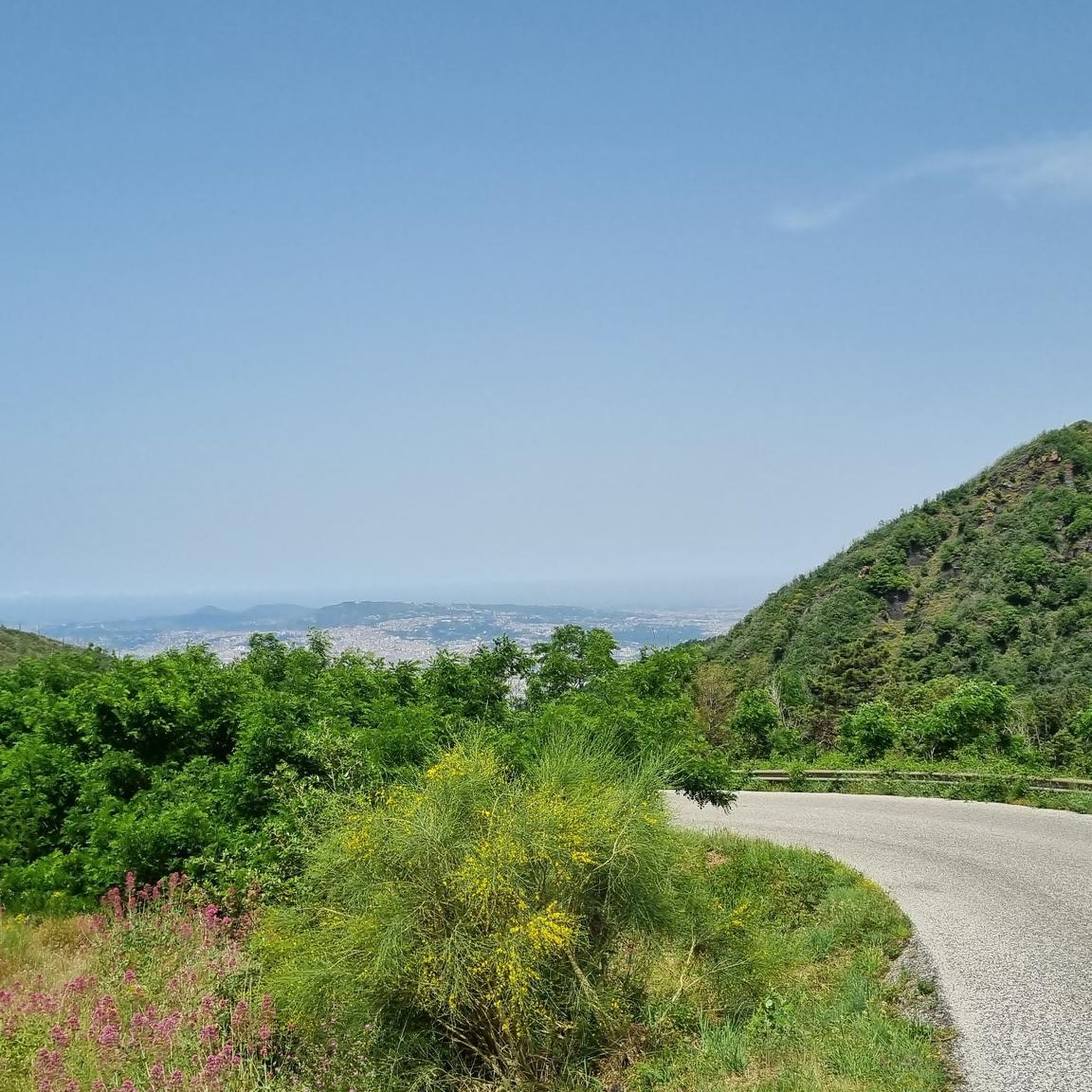
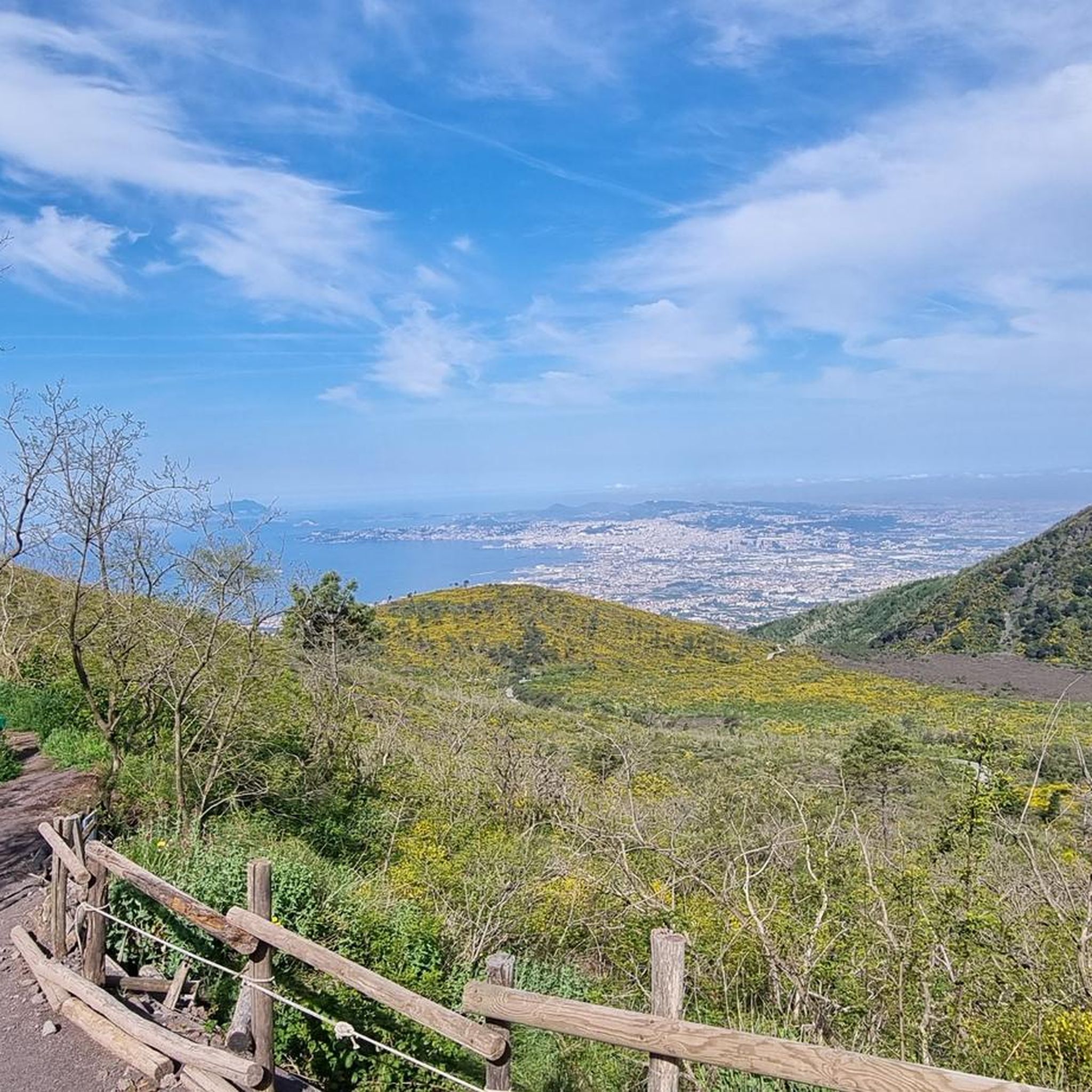
The very panoramic itinerary allows you to enjoy the most suggestive and wild scenery of Somma-Vesuvius, crossing forest environments, scrubland up to bare lava rock. The starting point is located along the road that from the Medici Palace of Ottaviano continues towards the volcanic complex. A barrier prohibiting vehicular traffic marks the beginning of the route, the first stretch of the path, common with path no. 1, winds along asphalted hairpin bends, and then turns into a dirt path. The plant landscape consists initially of a thick pine forest of stone pine and then in a mesophilous forest, with essences such as chestnut, Neapolitan alder, Neapolitan maple, holm oak, black locust. Among the nesting birds, the minute lesser spotted woodpecker, rare and localized in Campania, has only recently colonized the Vesuvius Park. After more than 1 km of walking on a steep climb you reach Largo Angelo Prisco dedicated to the young financier murdered by poachers in 1995 which represents the closest destination. From the Largo, path no. 1 branches off to the left, while the itinerary continues on the right on a slight climb, entering, between twists and turns, into a shady chestnut grove where the numerous species of mushrooms present give off an intense and pleasant fragrance.
0
0

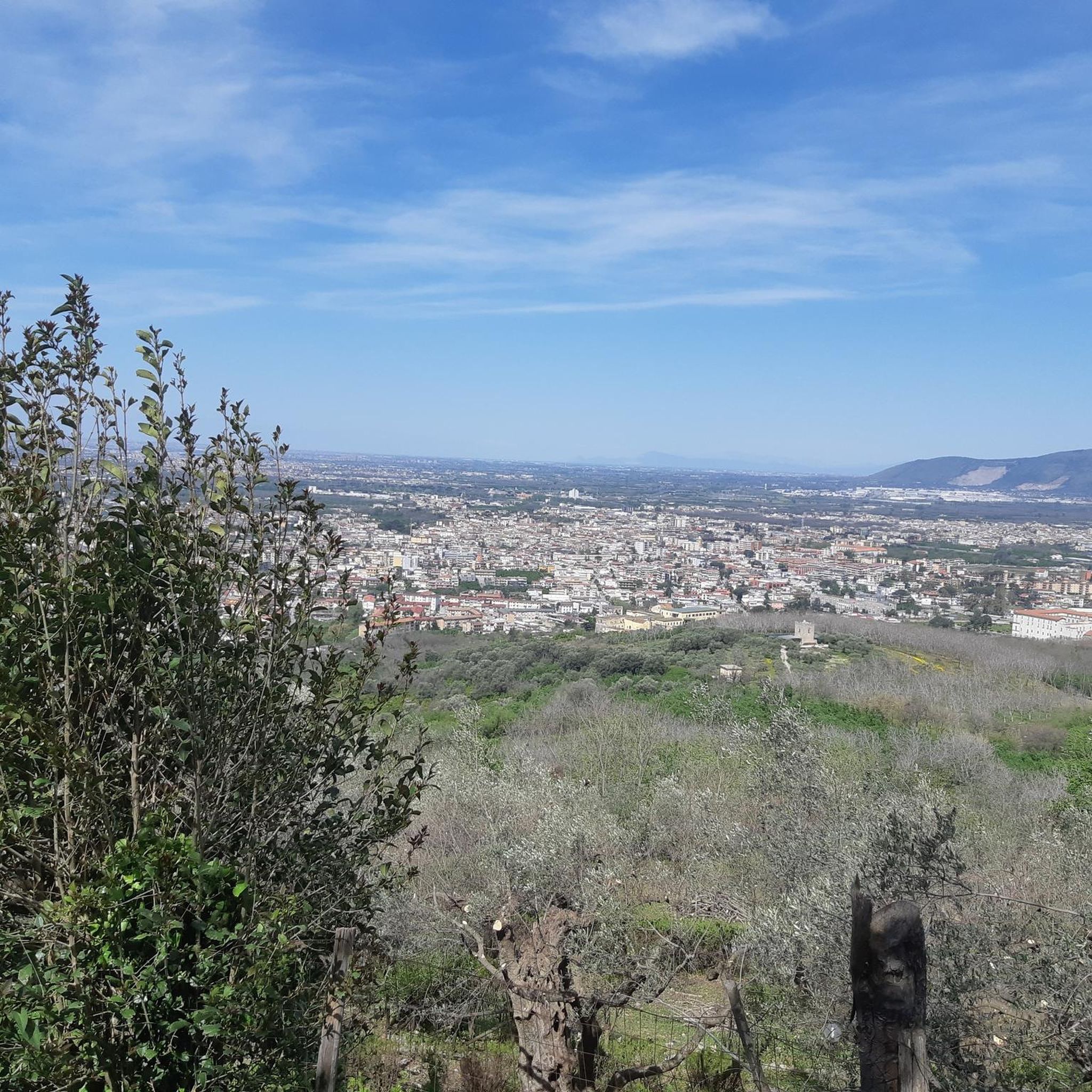
Sanctuary of S. Angelo in Palombara. Spectacular Panorama
1
0

There is also a water source going down the stairs.
0
0

TO visit, it is still possible to climb up one of the 4 towers for a view over the entire valley
1
0
Sanctuary with wonderful fall over the entire Caudina valley
0
0
Clearance with Sant'Angelo Sanctuary in Palombara, with adjoining panoramic view of the Caudina valley.
0
0

A wonderful place from which you can admire a sensational view of the whole area below.
1
0
The volcano symbol of the city of Naples, is still active, its last eruption dates back to 79 years ago.
0
0
Frequently Asked Questions
What historical landmarks can I explore around Nola?
The Nola region is rich in history. You can visit Matinale Castle, a historical castle that has hosted kings and dukes since before 1247. Another significant site is the Sanctuary of Sant'Angelo a Palombara, a religious building with roots dating back over a thousand years, offering a glimpse into the area's ancient past.
Are there any natural features or volcanic landscapes to see near Nola?
Yes, Nola is known for its volcanic landscapes. A prominent natural feature is the Crater of Mount Vesuvius, an active volcano where you can climb to the crater's edge. You can also explore the Cognoli Summit and Valle dell'Inferno, which offers a very panoramic itinerary through forest environments and lava rock.
What kind of outdoor activities can I do around Nola?
The Nola region offers diverse outdoor activities. You can find numerous routes for hiking, gravel biking, and mountain biking. For hiking, consider trails like 'Trail 2: Along the Cognoli' or the 'Gran Cono del Vesuvio dai Cognoli di Ottaviano – loop trail'. For cycling, there are routes such as the 'Matinale Castle – Canaloni di Palombara loop'. You can explore more options in the Hiking around Nola, Gravel biking around Nola, and MTB Trails around Nola guides.
Where can I find the best viewpoints in the Nola area?
For stunning views, head to the Sanctuary of Sant'Angelo a Palombara, which provides a sensational panorama of the entire area below. The Crater of Mount Vesuvius also offers impressive vistas from its edge. Additionally, the Cognoli Summit and Valle dell'Inferno is known for its panoramic scenery.
Are there hiking trails suitable for different difficulty levels near Nola?
Yes, the hiking trails around Nola cater to various skill levels. For example, 'Trail 2: Along the Cognoli' is considered moderate, while the 'Gran Cono del Vesuvio dai Cognoli di Ottaviano – loop trail' and 'Trail 3: Monte Somma' are more difficult. The Trail to Cognoli di Ottaviano is an intermediate route, offering a particular and fascinating experience.
What do visitors enjoy most about the attractions around Nola?
Visitors frequently praise the impressive nature and historical significance of the region. The Crater of Mount Vesuvius is highlighted as 'really impressive' and 'mystical'. The Sanctuary of Sant'Angelo a Palombara is admired for its 'sensational view'. The Cognoli Summit and Valle dell'Inferno is appreciated for its 'very panoramic itinerary' and 'magnificent view'.
Can I visit Mount Vesuvius from Nola?
Yes, the Crater of Mount Vesuvius is a key attraction in the Nola region. You can drive up a significant portion of the mountain, with the final few hundred meters to the crater's edge requiring a climb. Remember to purchase your ticket at the designated house before accessing the crater.
What is the history behind Matinale Castle?
Matinale Castle, also known as Rudovaco Castle, dates back to before 1247. It was attributed to Tommaso II d'Aquino and has a rich history, hosting kings like Guglielmo il Malo and Manfredi di Svevia. Over centuries, it served various purposes, from a military stronghold to an inn, and even a den for brigands, before being donated in the early 20th century.
Are there any religious sites of interest around Nola?
The Sanctuary of Sant'Angelo a Palombara is a significant religious building near Nola. It appears as a solitary and massive fortress and offers a wonderful view of the surrounding area. Documents mentioning the locality and Abbey date back over a thousand years, highlighting its long-standing spiritual importance.
What kind of terrain can I expect on hiking trails near Nola?
Hiking trails around Nola feature diverse terrain. For instance, the path to Cognoli Summit and Valle dell'Inferno starts with an uphill climb on curves, then flattens out, offering suggestive paths with leaves, chestnuts, and mushrooms. It crosses forest environments, scrubland, and bare lava rock, providing a varied hiking experience.
Are there any specific tips for visiting the Crater of Mount Vesuvius?
When visiting the Crater of Mount Vesuvius, you can drive quite far up the mountain. However, the final section to the crater's edge requires a climb. A key tip is to purchase your ticket at the small house in the last corner before you reach the access area, as many visitors have had to turn back to get one.
Most popular attractions around Nola

Get inspired with the komoot mobile app


Explore more
Still not found the Highlight you’re looking for? See guides of the top attractions in other regions:
