Attractions and Places To See around Cassano Delle Murge - Top 20
Best attractions and places to see around Cassano Delle Murge include a diverse range of historical landmarks, cultural sites, and natural features. Located on the Murge plateau in Puglia, the town and its surroundings offer insights into ancient origins, with evidence of prehistoric and Roman settlements. The landscape is characterized by karst topography, leading to unique geological formations and extensive forests. Visitors can explore a variety of points of interest, from historic churches to significant natural areas.
Best attractions and places to see around Cassano Delle Murge
- The most popular attractions is Pulo of Altamura, a canyon that is a karst sinkhole created by rainwater channeling, forming a depression about 500 meters in diameter and 75 meters deep. Its walls feature caves and ravines, some of which were inhabited in prehistoric times, representing an archaeological heritage.
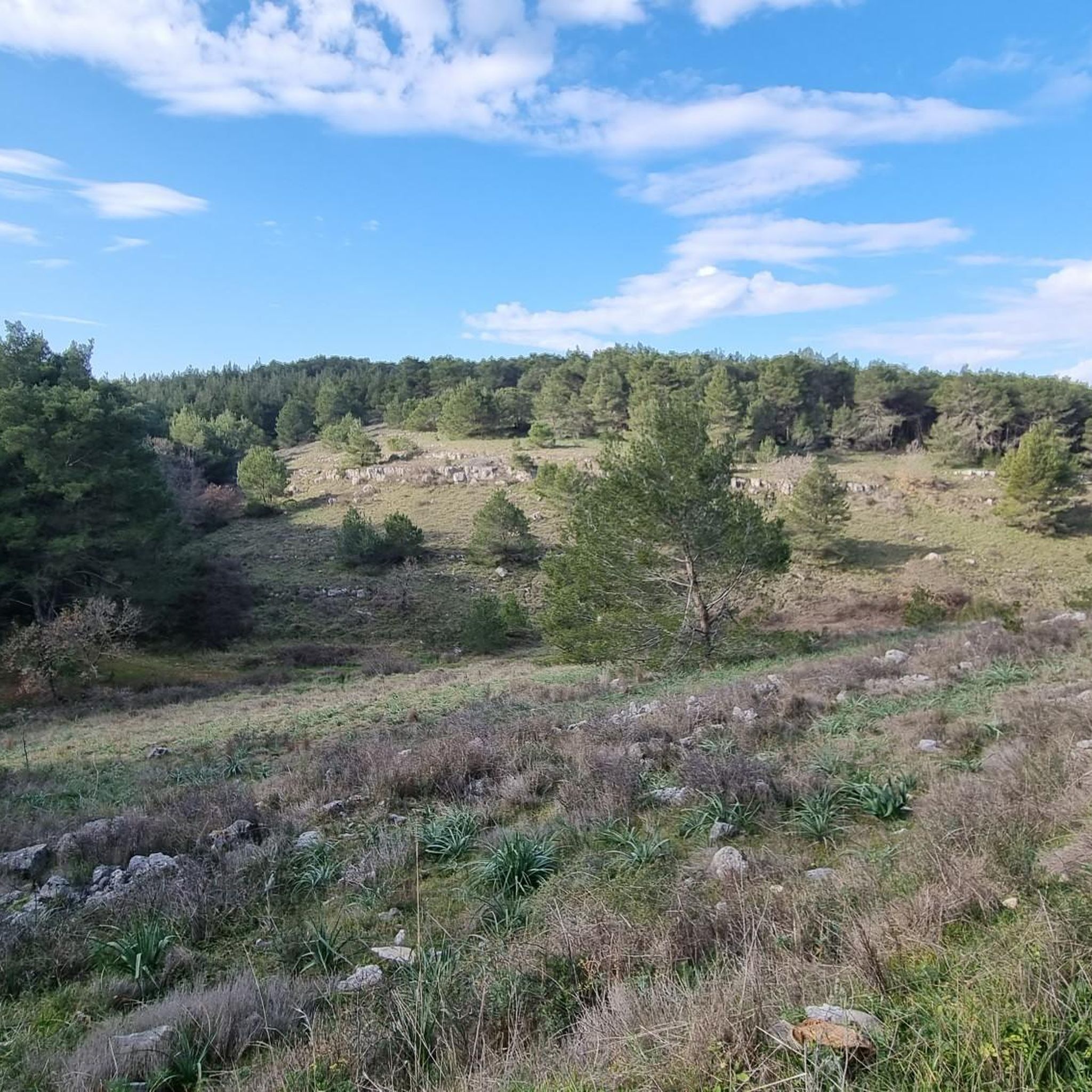
- Another must-see spot is Mercadante State Forest, a protected natural area within the Alta Murgia National Park. This artificial pine forest, planted in 1928, offers visitors an evocative landscape with trails and equipped spaces for relaxation and nature walks.
- Visitors also love Tower of the Marquis Arcamone, an ancient farmhouse with a rich history. It represents a significant historical site, once functioning as an important oil mill with visible niches and presses for olive oil production.
- Cassano Delle Murge is known for historical landmarks, natural features like karst caves, and cultural sites. The area offers a variety of attractions to see and explore, from ancient churches to unique geological formations.
- The attractions around Cassano Delle Murge are appreciated by the komoot community, with 13 highlights and 25 photos shared by visitors.
Last updated: July 21, 2026
Pulo of Altamura
Highlight • Canyon
This created a more or less circular depression with a diameter of about 500 m. with a maximum depth of 75 meters. Along the walls, which are very steep in some points, caves and ravines have been created which indicate the different levels of excavation by the waters. These caves represent a real archaeological heritage because they were inhabited since the earliest ages of prehistory.
The route includes an unpaved stretch of about 1 km that can also be easily covered by racing bike.
Translated by Google •
Tip by

Mercadante State Forest
Highlight • Forest
In addition, there are several cycling areas in this area that can be traveled mainly by MTB and, not only, also by Gravel.
Translated by Google •
Tip by

Sign up now to discover places like this
Get recommendations on the best single tracks, peaks, & plenty of other exciting outdoor places.
Sign up for free
Tower of the Marquis Arcamone
Highlight • Historical Site
Translated by Google •
Tip by

Trullo
Highlight • Historical Site
Translated by Google •
Tip by

Mother Church of Santa Maria Assunta (Cassano delle Murge)
Highlight • Religious Site
Translated by Google •
Tip by

Sign up for free to discover even more attractions around Cassano Delle Murge.
Sign up for free
Already have an account?
Start today with a free account
Your next adventure awaits.
Login or Signup
Popular around Cassano Delle Murge

Other adventures around Cassano Delle Murge

Tips from the Community

Church of Santa Maria Assunta (pictured) History of Cassano delle Murge Hundreds of stone artifacts, paintings, various objects found in the caves around the town tell us about prehistoric settlements. The recent discovery of a menhir, dating back to 2500–2000 BC., confirms the antiquity of the human presence in these districts. The origins of Cassano seem to date back to the Roman Age, as confirmed by many archaeological finding, such as the recent discovery of a precious 5th century mosaic floor. The name Cassano appears for the first time in a document dating back to the beginning of the 14th century. The toponym derives from the Latin term “Cassius” to which the specification “delle Murge” was added in 1863, in reference to the geographical context in which the town stands. The history of the town reflects that of the entire regional territory which, after a long period of stagnation in the early Middle Ages, saw a recovery under the Normans and the Swabians.
0
0
Trulli - or trullo when you’re talking about just one dwelling - were initially built to provide temporary field shelters and storehouses. Over time they also became permanent dwellings for agricultural families and labourers of smallholdings. The simple traditional lime whitewash that decorates the trulli’s exterior complements the local geology and pastoral landscapes. To protect against the elements and balance the temperature all year round, the trulli walls are incredibly thick, made up of a double skin filled with rubble. Similarly, the doorways and windows are small. These iconic rural dwellings began appearing as early as the 14th century, and their popularity originated because of a 15th century decree that made urban settlers pay taxes to the crown under feudal rule. If the king’s inspectors came collecting, the villagers could easily demolish these inexpensive buildings into a pile of stones and hide in the forest, and then rebuild them once they’d gone.
0
0
The "Torre del marchese Arcamone" is a fortified two-storey farmhouse whose last phase is certainly from the modern age, which has on the ground floor rooms for stables, warehouses and an oil mill. But what is its history and why is the district called this way? In 1399 the king of Naples, Louis, ceded the barony of Bitetto together with the fief of Ceglie and Bari, for having fought bravely in a war near Taranto, to Marcello Arcamone. Since 1382, during the reign of Charles III, he had come to Puglia with his brother Lionello, who had been given the Lordship of Ceglie. The Arcamone family lived in Bitetto for a long time. In 1407 Pope Martin V transferred Bishop the son of Marcello, Carlo Arcamone, from his seat in Venafro to Bitetto. The farm had many changes of ownership and in 1806, already belonging to the Noja family of Mola, it was confiscated for the abolition of the feudal regime.
0
0

Small square and church.
1
0

The main church of Cassano delle Murge, which dominates the square in front with its simple and beautiful white façade.
3
0

The Mercadante Forest is a protected wooded area that extends for 1,300 hectares between the municipalities of Cassano delle Murge and Altamura. It was born in 1928 from a reforestation project after a flood, and hosts different species of trees, such as oaks, cedars and cypresses. It is the ideal place to cool off among the trees on hot summer days and take a break in one of the areas equipped with picnic tables.
1
0

The Trulli are typical Apulian buildings. They represent an extraordinary example of dry stone construction
1
0
The Torre del Marchese is an ancient farmhouse with an ancient history. Even today it represents one of the most important oil mills where the niches with the press for pressing the olives are still visible.
2
0
Frequently Asked Questions
What natural attractions can I explore around Cassano Delle Murge?
The region offers several captivating natural sites. The Pulo of Altamura is a remarkable karst sinkhole, approximately 500 meters in diameter and 75 meters deep, featuring caves that were inhabited in prehistoric times. Another significant natural area is the Mercadante State Forest, a protected artificial pine forest within the Alta Murgia National Park, perfect for nature walks and relaxation. The area's karst topography also means there are numerous caves, including the Grotta di Cristo.
Are there any historical or cultural sites to visit in Cassano Delle Murge?
Yes, Cassano Delle Murge is rich in history. You can visit the Mother Church of Santa Maria Assunta, which stands on the remains of a 14th-century Romanesque church. The Palazzo Marchesale Miani-Perotti, a Baroque palace, houses a picture gallery and library. Don't miss the unique medieval-style Casa Torre, with one 12th-century tower house still open to visitors. The Sanctuary-Convent of Santa Maria degli Angeli, set among caves, also holds historical and religious significance.
What kind of outdoor activities can I do near Cassano Delle Murge?
The area around Cassano Delle Murge is excellent for various outdoor activities. You can enjoy road cycling, with several routes like the 'Mellitto Church – Cassano delle Murge loop' available. For runners, there are trails such as the 'Mercadante State Forest – Entrance to Mercadante Forest loop'. Gravel biking is also popular, with routes like the 'Entrance to Mercadante Forest – Masseria Chinunno loop'. You can find more details on these activities and routes in the Road Cycling Routes, Running Trails, and Gravel Biking guides for the region.
Are there family-friendly attractions in the area?
Absolutely. The Mercadante State Forest is a great option for families, offering equipped spaces for relaxation, picnics, and nature walks. Its trails are suitable for various ages, making it an ideal spot for a family day out in nature.
What is a Trullo and where can I see one?
A Trullo is a typical Apulian dry stone hut with a conical roof, representing an extraordinary example of traditional construction. Originally built as temporary shelters or storehouses, they later became permanent dwellings. You can find examples of these unique structures, such as an agricultural trullo, in the surrounding countryside of Cassano Delle Murge.
What archaeological findings have been made in Cassano Delle Murge?
Cassano Delle Murge has a rich archaeological past. Hundreds of stone artifacts, paintings, and other objects have been found in the surrounding caves, indicating prehistoric settlements. A menhir dating back to 2500–2000 BC confirms ancient human presence. Roman-era findings, such as a 5th-century mosaic floor discovered under the Miani Palace, also highlight the town's significance as a Roman settlement and a rest station.
Can I find places for cycling in Cassano Delle Murge?
Yes, the Mercadante State Forest offers several cycling areas, mainly suitable for mountain biking (MTB) and gravel biking. Additionally, the region has numerous road cycling routes, with options for moderate difficulty rides, as detailed in the Road Cycling Routes around Cassano Delle Murge guide.
What is the significance of the Tower of the Marquis Arcamone?
The Tower of the Marquis Arcamone is an ancient farmhouse with a rich history, representing one of the most important historical oil mills in the region. You can still see the niches and presses used for olive oil production, offering a glimpse into the area's agricultural heritage.
Is Cassano Delle Murge part of any walking trails or pilgrimage routes?
Yes, Cassano Delle Murge serves as a stopping point on the Cammino Materano, a significant walking itinerary that connects Matera and Bari. This makes it an appealing destination for trekking enthusiasts looking to explore the region on foot.
What local culinary specialties should I try in Cassano Delle Murge?
The town is known for its traditional cuisine, featuring specialties like the unique black chickpea of Cassano, which is recognized as a Slow Food Presidium. Local restaurants offer traditional dishes, and visitors can experience 'fornelli all'aperto' (outdoor grills) for local specialties, providing an authentic taste of the region.
What is the best time to visit Cassano Delle Murge attractions?
While specific seasonal recommendations for all attractions are not provided, the Mercadante State Forest is ideal for cooling off among the trees on hot summer days. Generally, spring and autumn offer pleasant weather for exploring historical sites and engaging in outdoor activities like hiking and cycling.
Are there any unique geological features in the area?
Yes, the region is characterized by its typical karst topography, which has led to the formation of unique geological features. The most prominent is the Pulo of Altamura, a large karst sinkhole. Additionally, the area is home to numerous karst caves, including the Grotta di Cristo, which is the largest, and the still largely unexplored 'Grave of Pasciullo'.
Most popular routes around Cassano Delle Murge
Most popular attractions around Cassano Delle Murge

Get inspired with the komoot mobile app


Explore more
Still not found the Highlight you’re looking for? See guides of the top attractions in other regions:
