Attractions and Places To See around Villa Castelli - Top 20
Best attractions and places to see around Villa Castelli offer a blend of historical landmarks, cultural experiences, and natural features within Italy's Apulia region. The town is situated in a picturesque Mediterranean landscape characterized by rolling hills and ancient olive groves. Visitors can explore ancient ruins, religious sites, and traditional workshops, providing insight into the local heritage. The surrounding countryside also features unique geological formations like ravines and caves.
Best attractions and places to see around Villa Castelli
- The most…
Last updated: October 11, 2026
Ulmo Pine Grove
Highlight • Forest
Translated by Google •
Tip by

Gravina di Riggio
Highlight • Gorge
Translated by Google •
Tip by

Sign up now to discover places like this
Get recommendations on the best single tracks, peaks, & plenty of other exciting outdoor places.
Bucito Cave
Highlight • Cave
Translated by Google •
Tip by
Villa Castelli Hydroelectric Power Plant
Highlight • Monument
Translated by Google •
Tip by

Grottaglie Ceramics District
Highlight • Structure
Translated by Google •
Tip by

Sign up for free to discover even more attractions around Villa Castelli.
Already have an account?
Start today with a free account
Your next adventure awaits.
Popular around Villa Castelli
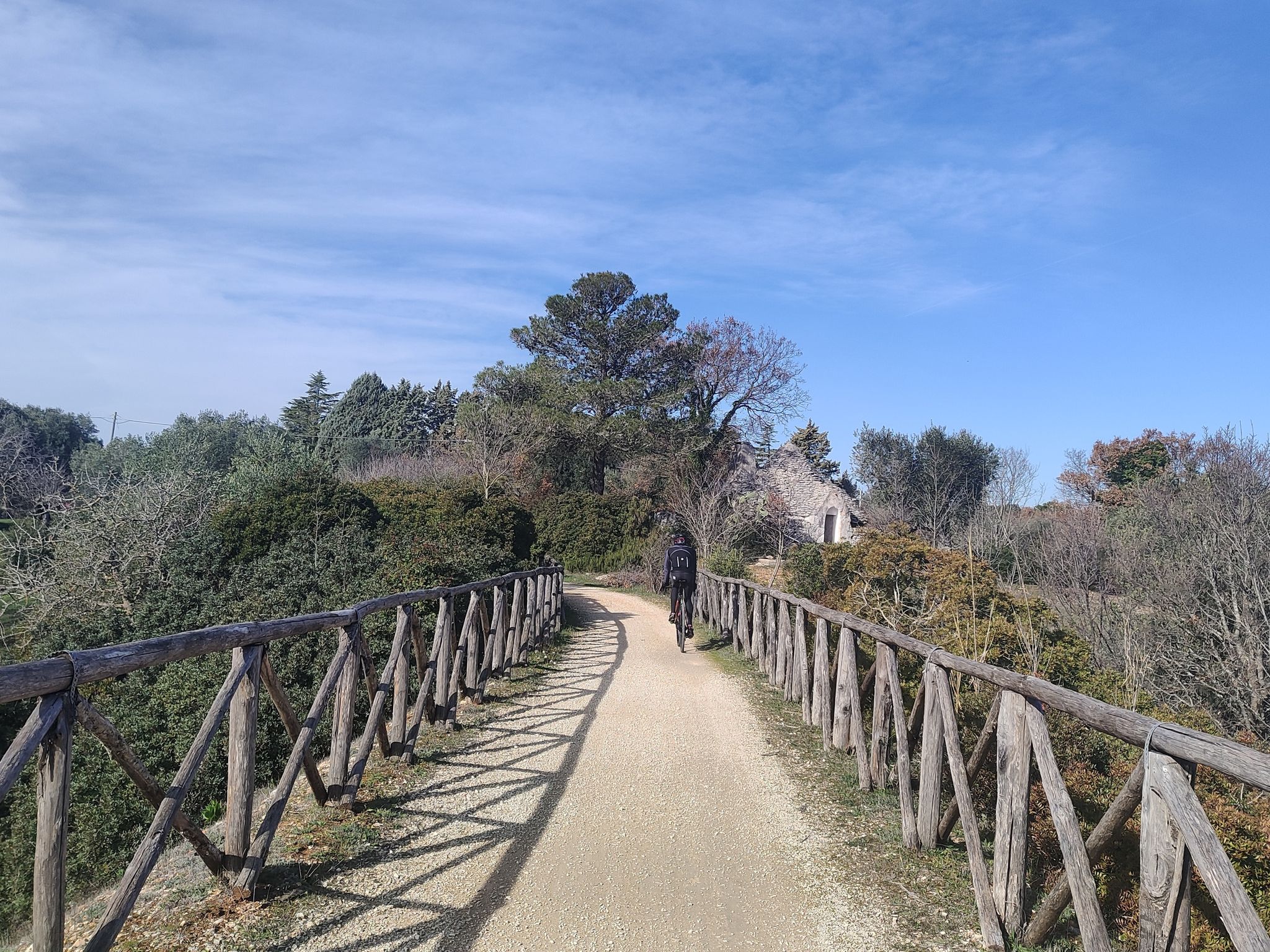
Ciclovia Anello d'oro di Puglia - Viaggio nella Puglia profonda
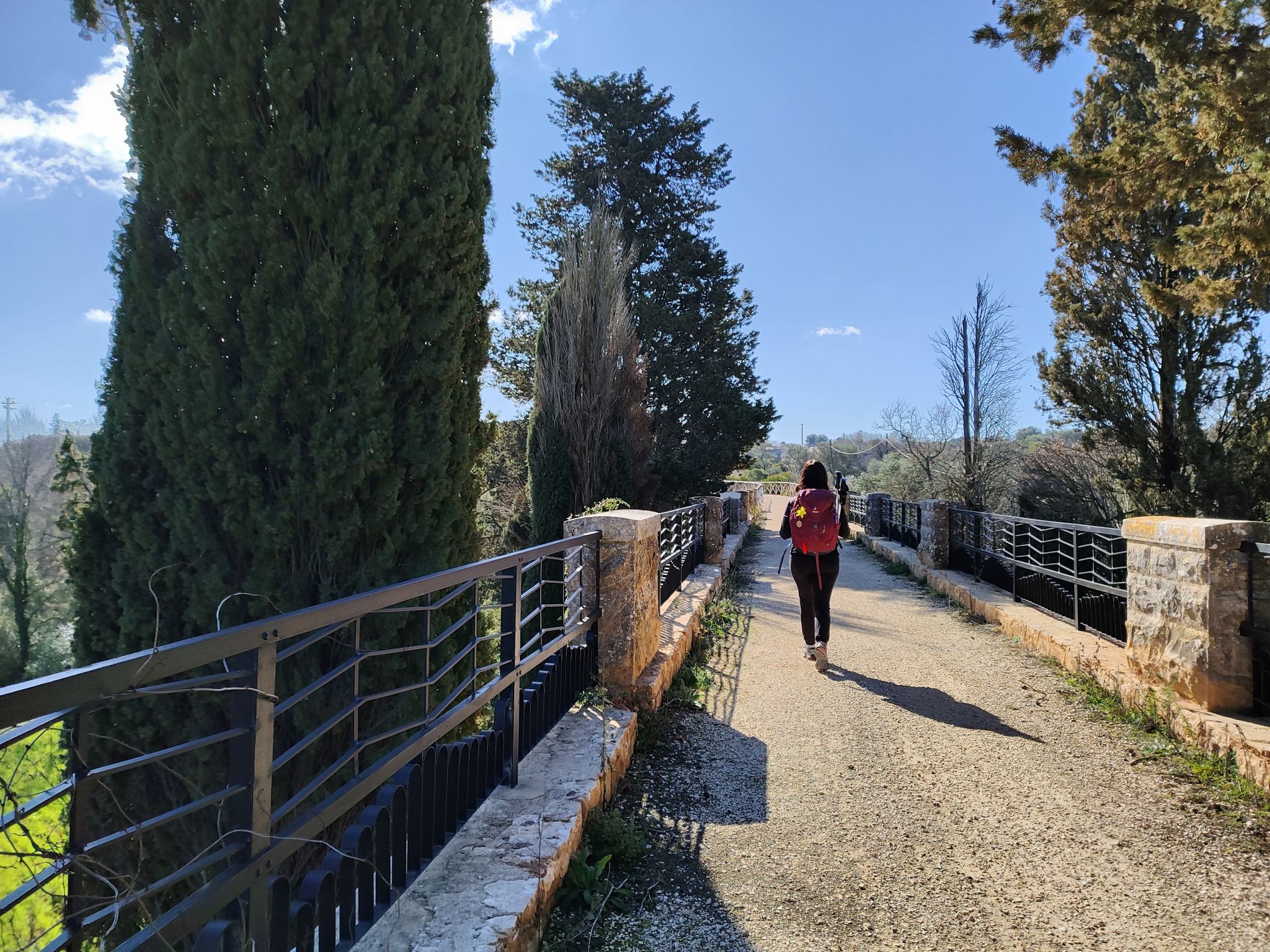
Anello d'oro di Puglia - Trekking nella Puglia profonda
Road Cycling Routes around Villa Castelli
Cycling around Villa Castelli
MTB Trails around Villa Castelli

Gravel biking around Villa Castelli
Running Trails around Villa Castelli
Hiking around Villa Castelli

Tips from the Community

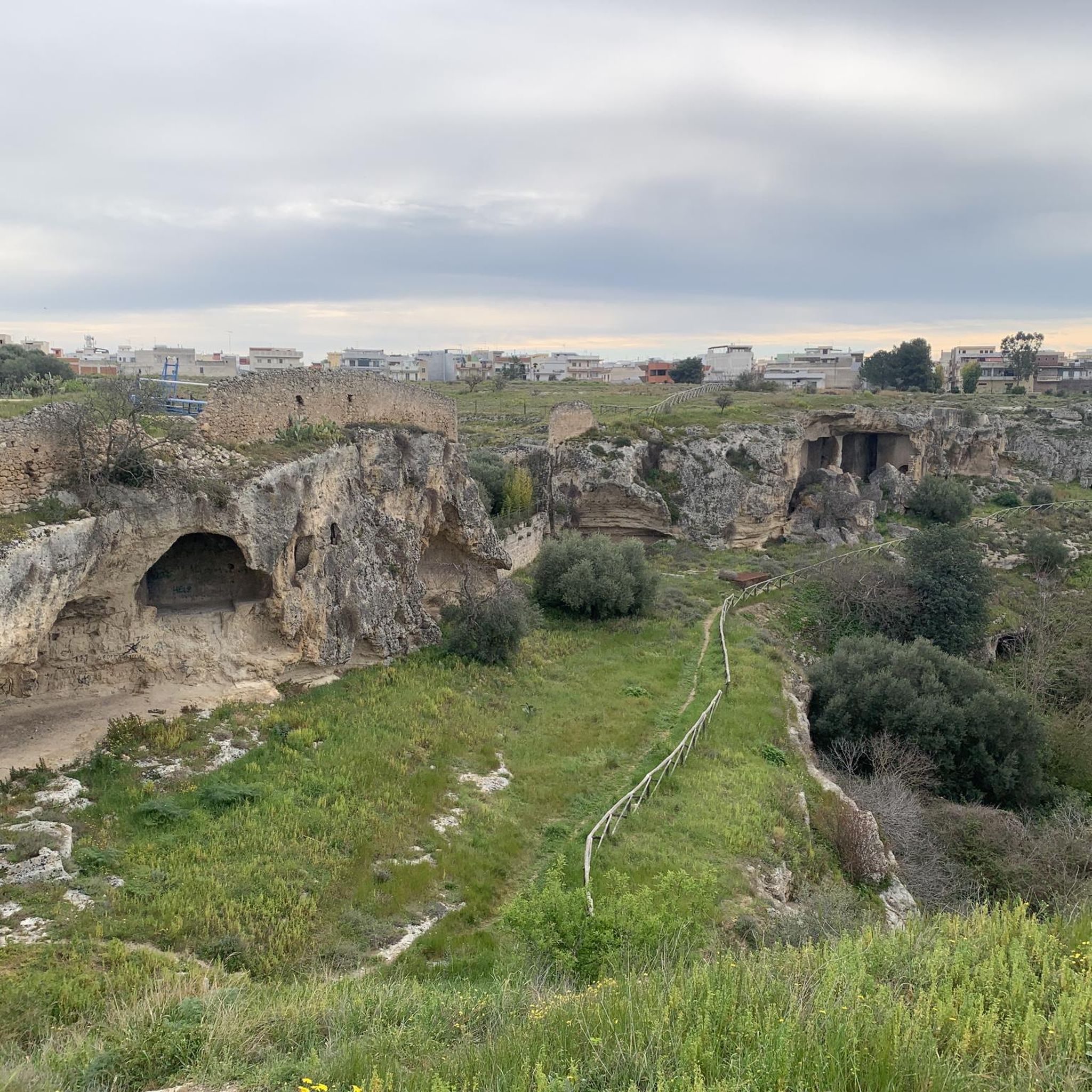
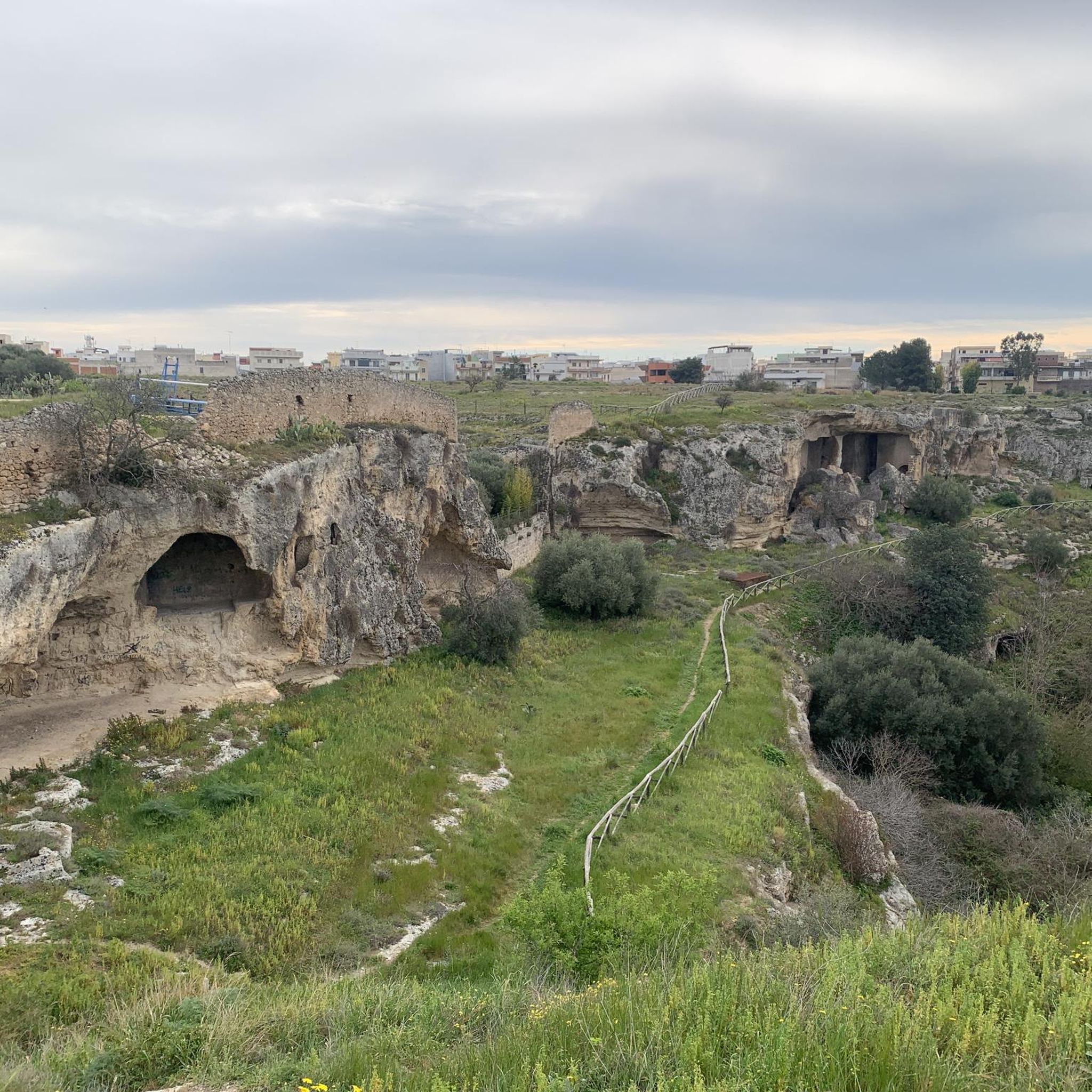
A valley with a small lake, a small natural waterfall—unique in Puglia—and numerous historical sites, from prehistory to the 10th century. A small paradise that many may not know, yet it lies within our territory. We're talking about the Gravina di Riggio, a place of great natural and historical value. A few kilometers from the city, the Gravina di Riggio is a deep valley characterized by a waterfall, a small lake, and a small stream, as well as numerous relics related to the phenomenon of "living in caves." Of particular note is "il Caggione," a circular chasm located near the waterfall. On its sheer walls, a cave village spread across three levels of caves is clearly visible. The remains of a fortification wall, some graffiti, and fragments of pottery date back to the Greek and Roman periods. Finally, the area was heavily inhabited during the Middle Ages, as evidenced by the two frescoed rock churches, the cenobitic hermitage, the pit burials, and a village with communal facilities such as water cisterns and a granary. The Gravina di Riggio rises 4 kilometers from Grottaglie, in the province of Taranto, and is a valley 1,300 meters long and 25 meters deep. In addition to being home to many animal and plant species, it is famous for its caves, some of natural origin, others man-made. The Gravina di Riggio is unique for its waterfall, which after a 15-meter drop feeds a small lake and a stream. The Church-Crypt of the Savior, with frescoes from the 10th and 11th centuries, is also beautiful. A special place not to be missed.
0
0
This hydroelectric plant was once covered in tall pine trees (and still is today) to prevent it from being bombed during World War II. The area is known as "abbascj alla Centrel," and in the past, many people bathed in the canals built near the plant and running through the countryside; the water was fresh, clear, and drinkable. Unfortunately, the canals are poorly maintained, but this place continues to fascinate tourists and all those who come to visit, upon request, especially in May, if they wish to enter the plant. The Apulian Aqueduct Cycle Route has been open for several years next to the hydroelectric plant. This cycle route allows many bike and nature lovers to pedal, walk, and observe the many wonderful places of the Murgia, the Itria Valley, and Salento.
0
0

The Ulmo Pine Forest, featuring a picnic area equipped with wooden tables and benches, extends over approximately ten hectares in the Ceglie Messapica area, in the heart of the Itria Valley. It's the ideal place to spend a relaxing day with friends and family, sheltered by the shade of the Mediterranean scrub and dense Aleppo pine forest, or simply to take a break before continuing your exploration of the surrounding countryside and the nearby towns of the Itria Valley.
0
0

There are many ceramics workshops in the immediate vicinity. Despite the similarity in the motifs, the workshops usually have their own unique style. Today—off-season—the neighborhood was very quiet, and some shopkeepers took the time to explain some of the special features to us. It's worth stopping by the shops; you'll probably find something beautiful to take home.
0
0

Built in 1919 and still active, with the original machinery inside, it is a testimony to the technological aspects of this heritage and its evolution over time, with recent adjustments and attention to the use of renewable energy sources.
0
0
This power plant, which already existed in 1929, produced electricity until 1971. Since March 16, 2009, after almost 40 years, thanks to the use of new technologies and the commitment of the Apulian Aqueduct, it has been operational again, as part of an A.Q.P. Plan.
0
0
"The Bucito Cave", in Grottaglie I'll make a very brief introduction: generally the manifestations of worship in caves, here, refer to what is the devotion for the Archangel Michael (quis ut Deus). And we owe this to the Lombards who made him their national saint. I would not leave out, however, the Byzantines of Puglia among whom this saint enjoyed enormous popularity. "The Grottaglie area, like other places in the area, has been inhabited by man since the most remote times. In fact, in some districts (Bucito, Coluccio and Lonoce) roughly worked stone tools, splinters and processing residues have been found, belonging to the Paleolithic, that is, to the period of the Ancient Stone. The Buccito Cave (or Coluccio), near Grottaglie, is located at an important road junction, closely connected to the Tratturo Martinese. These are the oldest signs of the presence of man in our territory. In the Neolithic Age (from the mid-5th to the first centuries of the 4th millennium BC) the first agricultural villages began to emerge (Bucito and Caprarica). Caves and natural caverns were then used in all phases of the Bronze and Iron Ages, especially in the villages of Riggio, Lonoce, Fullonese and Pensieri. In the last period of the Bronze Age, the agricultural economy took over from pastoralism, so the ravines were gradually abandoned to form small urban-type settlements. This process was however stifled with the foundation of Taranto by Spartan colonists (towards the end of the 8th century BC)” (From metropolis.it) Why is it called that? The cave takes its name from the Greek term βοῦς, βοός- bus,- or “ox” and οἰκία or “house, shelter, dwelling” and therefore, originally, indicated a place of shelter for these animals. The Greek etymology is evidence of both Magna Graecia, of Byzantine d+-++-homination and of the subsequent presence of the Basilian monks in our territory For some years, in this cave, the mass of December 24th was celebrated. Suggestive! A custom that would be nice to resume, both for our religion and for our traditions.
0
0
The Cave is part of the Gravine di Grottaglie and is located in the Terra delle Gravine Regional Park. The Bucito cave (also known as the Coluccio cave) is located in an important road junction, closely connected to the Tratturo Martinese, an ancient primary communication route until the 19th century in Puglia. On a boulder adjacent to the cave there are two statuettes, one of Padre Pio da Pietrelcina and one of Jesus Christ. Until a few years ago, in the Bucito cave, on the night of December 25, the inhabitants of Grottaglie and the surrounding area flocked there for the Christmas vigil and for the celebration of the Midnight Christmas Mass.
0
0
Frequently Asked Questions
What natural features can I explore around Villa Castelli?
The area around Villa Castelli is rich in natural beauty. You can visit the Ulmo Pine Grove, a dense forest perfect for picnics and enjoying fresh air. Another must-see is the Gravina di Riggio, a stunning gorge within the Terra delle Gravine Regional Park, considered one of the most evocative ravines in the region. Additionally, the Bucito Cave offers a glimpse into ancient human presence within the Gravine di Grottaglie.
What historical and cultural sites are there to visit in Villa Castelli?
Villa Castelli boasts several historical and cultural sites. The town's historical center features the Castle (Ducal Palace), dating back to 1450, and the prominent Chiesa Madre San Vincenzo De Paoli. You can also explore the Pezza Petrosa Archaeological Site and Museum, which houses ancient ruins, a necropolis with 33 tombs, and artifacts from the Paleolithic to the Metal Age. The Villa Castelli Hydroelectric Power Plant is another historical site, operational since 1929 and reactivated in 2009.
Can I experience local crafts or food production in the Villa Castelli area?
Yes, the region offers unique cultural experiences. You can participate in traditional mozzarella-making workshops on family-run farms in the Apulian countryside, learning about milk production and cheesemaking. Another highlight is the Grottaglie Ceramics Workshop in a historic Masseria, offering insights into the ancient art of pottery. The Grottaglie Ceramics District is known for its expert ceramists and unique artisan activity.
Are there family-friendly attractions in Villa Castelli?
Absolutely! The Ulmo Pine Grove is an ideal spot for families, offering a picnic area, shade, and fresh air, even on hot summer days. Its internal trails are short and fun, and there's a kiosk-bar. The Grottaglie Ceramics District also offers a pleasant walk and an engaging cultural experience for all ages.
What outdoor activities are available around Villa Castelli?
The area around Villa Castelli is perfect for various outdoor activities. You can find numerous routes for running, gravel biking, and cycling. For running, explore trails like the 'Walk loop from Grottaglie' or 'Running loop from Calcio a 5'. Cyclists can enjoy routes such as the 'Apulian Aqueduct Cycle Path' or a 'Loop from Villa Castelli to Martina Franca'. Gravel biking options include the 'Ulmo Pine Grove – Water fountain at Pineta Ulmo loop'. You can find more details on these activities in the Running Trails around Villa Castelli, Gravel biking around Villa Castelli, and Cycling around Villa Castelli guides.
When is the best time to visit Villa Castelli?
Villa Castelli, located in Italy's Apulia region, enjoys a Mediterranean climate. The spring (April-May) and autumn (September-October) months generally offer pleasant temperatures, making them ideal for exploring historical sites, natural features, and engaging in outdoor activities. Summer can be quite warm, but places like the Ulmo Pine Grove provide shade and fresh air.
Are there dog-friendly trails or areas around Villa Castelli?
While specific dog-friendly trails are not explicitly listed, the natural surroundings of Villa Castelli, including the Apulian countryside with its rolling hills and ancient olive groves, generally offer opportunities for walks with dogs. Always ensure your dog is on a leash and respect local regulations and private property signs when exploring.
Where can I find parking near attractions in Villa Castelli?
Parking facilities in Villa Castelli are typically available in the town center and near major attractions. For specific sites like the Ulmo Pine Grove, there are often designated areas for visitors. When visiting the historical center, look for public parking lots or street parking options, keeping in mind that some areas might have restrictions.
What do visitors enjoy most about the attractions around Villa Castelli?
Visitors particularly appreciate the blend of natural beauty and historical significance. The Ulmo Pine Grove is loved for its well-kept environment, picnic areas, and suitability for spending a day outdoors. The Gravina di Riggio is praised as one of the most evocative natural monuments. The Grottaglie Ceramics District is highlighted for its spectacular ceramic creations and the pleasant walk through the history of ceramics.
Are there any unique or lesser-known attractions worth visiting?
Beyond the main highlights, the countryside around Villa Castelli is dotted with numerous prehistoric trulli, traditional Apulian dry stone huts with conical roofs, offering a unique architectural sight. Exploring the charming streets and local churches within the historical center of Villa Castelli also provides a glimpse into traditional Apulian life away from the more frequented spots.
Can I visit olive oil factories in the region?
Yes, the region is well-known for its olive groves. Many tours in the Apulian countryside include visits to traditional olive oil factories. Here, you can learn about the production process of local olive oil and often enjoy tastings of various samples, providing a delicious insight into the local agricultural heritage.
Most popular routes around Villa Castelli
Most popular attractions around Villa Castelli

Get inspired with the komoot mobile app


Explore more
Still not found the Highlight you’re looking for? See guides of the top attractions in other regions:
