The best walks and hikes in Sierra De Andújar
4.6
(51)
434
hikers
13
hikes
Hiking in Sierra De Andújar offers diverse landscapes within the Sierra Morena in Jaén, Andalusia. The region is characterized by well-preserved Mediterranean forests of holm oaks and cork oaks, alongside riverine vegetation along the Yeguas and Jándula rivers. Terrain varies from undulating hills to rocky areas, with the highest point being Burcio del Pino at 1,290 meters. The park also features open grassy areas and two significant reservoirs, Embalse del Jándula and Embalse El Encinarejo.
Best hiking trails in Sierra…
Last updated: August 5, 2026
4.5
(4)
24
hikers
Hard hike. Very good fitness required. Easily-accessible paths. Suitable for all skill levels.
15
hikers
6.16km
01:37
50m
50m
Easy hike. Great for any fitness level. Easily-accessible paths. Suitable for all skill levels.

Sign up for free
5.0
(1)
10
hikers
Moderate hike. Good fitness required. Easily-accessible paths. Suitable for all skill levels.
3.0
(1)
11
hikers
Moderate hike. Good fitness required. Easily-accessible paths. Suitable for all skill levels.
8
hikers
17.9km
05:47
740m
740m
Hard hike. Very good fitness required. Easily-accessible paths. Suitable for all skill levels.
Get access to more routes and recommendations from other explorers.
Sign up for free
Already have an account?
Our route recommendations are based on thousands of hikes, rides, and runs completed by other people on komoot.
Start today with a free account
Your next adventure awaits.
Login or Signup

Other adventures in Sierra De Andújar

Tips from the Community

It is a river that originates in the south of the province of Ciudad Real and is formed by the confluence of the Montoro and Ojailén rivers. It creates two reservoirs before flowing past the Sanctuary of the Virgin of the Head. The first reservoir is called "La Lancha" and the second, "Encinarejo," is used for swimming during the summer months. It flows into the Guadalquivir River very near the town of Marmolejo.
13
0
Very close to the so-called "Cuesta del Madroño" (Strawberry Tree Slope) is the only fountain on the "Camino Viejo" (Old Road) where we can refresh ourselves and refill our water bottles, as there is still a long stretch with a steep climb ahead. During the summer it usually dries up, so it's advisable to bring enough water from Andújar.
12
0
An emblematic spot for the horse-drawn carts, where the ritual of baptizing new pilgrims is often performed. A small monument to the carts was built at this crossing of the stream.
11
0
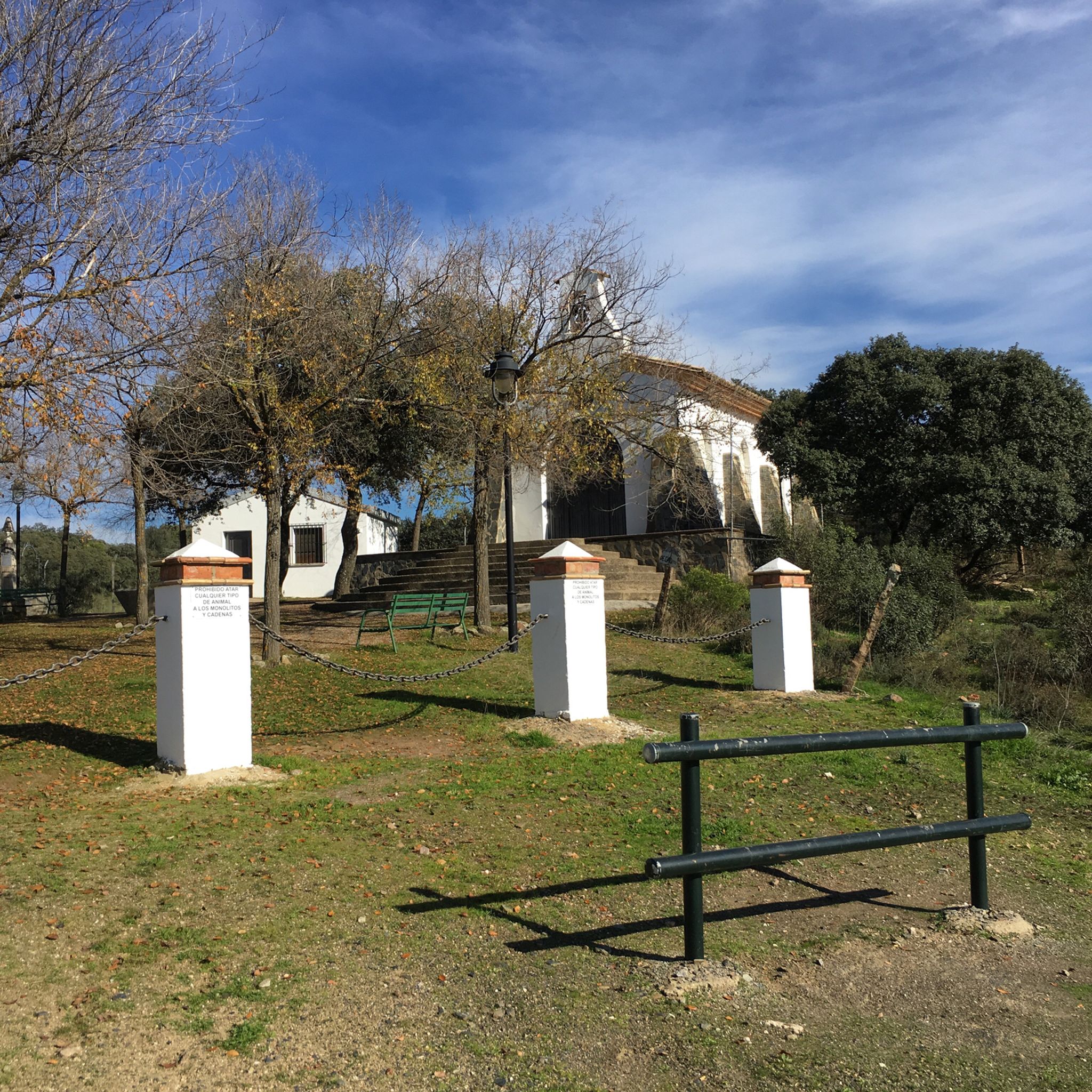
The first stop on the old road to the Sanctuary of the Virgin of the Head is where pilgrims rest and have a light lunch before continuing their journey. Here you'll find several watering troughs so the horses can quench their thirst during the approximately 20-kilometer trek from the city of Andújar. A small chapel has also been built where pilgrims can pray to the Virgin.
6
0

The Sanctuary of the Virgin of the Head is located in the Sierra de Andújar Natural Park. This sanctuary is one of the oldest in Spain, with a history dating back to the 13th century. It is known for its impressive Gothic architecture and religious significance, making it a very popular pilgrimage site. Every year, on the last weekend of April, a pilgrimage is held in honor of the Virgin of the Head, attracting thousands of pilgrims from all over Spain. During this festival, devotees climb the Cabezo hill, where the sanctuary is located, to pay homage to the Virgin.
2
0
Since 1227, the date on which the apparition of the Virgin of the Head to Pastor Juan de Rivas is recorded, the celebration of the pilgrimage is commemorated on the last Sunday of April of each year, although the apparition took place on the night of the 11th. to August 12, 1227 in whose memory a kind of small pilgrimage is also celebrated on that date in the same Sanctuary of the Virgin of the Head.
6
1
The hermitage of San Ginés is an important milestone for pilgrim walkers who make the journey from Andújar to the Sanctuary of the Virgen de la Cabeza, along what is known as the old road or bridle path. San Ginés is the place where there is a kind of hill that leaves Andújar behind in the view, to soon resume the views of the Jándula river valley. Walkers usually stop there to rest and regain strength. The hermitage and its surroundings were also rehabilitated a few years ago.
10
0
It is a trail that is located within the Sierra de Andújar Natural Park, and is not open to the public
8
0
Frequently Asked Questions
How many hiking trails are available in Sierra De Andújar?
Komoot lists over 10 hiking routes in Sierra De Andújar, offering a diverse range of experiences from easy walks to more challenging ascents. These trails are highly rated by the komoot community, with an average score of 4.6 stars.
What types of landscapes can I expect to see while hiking in Sierra De Andújar?
Sierra De Andújar is characterized by its well-preserved Mediterranean forests of holm oaks and cork oaks, alongside riverine vegetation along the Yeguas and Jándula rivers. You'll encounter terrain varying from gently undulating hills to rockier crags, especially in the north, and picturesque views of reservoirs like Encinarejo Reservoir.
Are there any easy hiking trails suitable for families in Sierra De Andújar?
Yes, there are several easy options. While specific family-friendly routes aren't detailed in the data, the park offers trails suitable for various fitness levels. For a moderate option that is not too strenuous, consider the Encinarejo Dam loop from Los Llanos, which is 6.2 km long and takes about 1 hour 37 minutes.
What are some notable landmarks or attractions to see along the hiking routes?
Many routes offer views of significant landmarks. The Sanctuary of the Virgin of the Cabeza is a prominent religious building perched atop Cerro de la Cabeza, offering spectacular panoramic views. You can also find natural monuments like the Trail to Cerro del Cabezo in Sierra de Andújar Natural Park and various viewpoints such as Valley Viewpoint and Los Pastores Viewpoint.
Are there any circular hiking routes in Sierra De Andújar?
Yes, several circular routes are available. A popular and challenging option is the Santuario Virgen de la Cabeza - circular through the Sierra de Andújar natural park, which is 17.8 km long. For a moderate circular walk, consider the Old Path Viewpoint – Membrillejo Stream loop from Santuario de la Virgen de la Cabeza.
What is the best time of year to go hiking in Sierra De Andújar?
The Sierra de Andújar is best enjoyed during the cooler months, typically from autumn through spring (October to May), to avoid the intense summer heat. These seasons offer pleasant temperatures for hiking and increase your chances of wildlife sightings. The park is also recognized as a Starlight Destination, making it excellent for stargazing on clear nights.
Can I spot wildlife while hiking in Sierra De Andújar?
Sierra De Andújar is a crucial sanctuary for endangered species, most notably the Iberian lynx, making it one of the few places where this elusive feline can be found. Other significant species include wolves, Spanish Imperial eagles, black vultures, deer, mouflon, and wild boar. Birdwatching is also popular, with over 178 different species inhabiting the area.
Are dogs allowed on the hiking trails in Sierra De Andújar?
While the park is a natural area, specific regulations regarding dogs on trails can vary. It's generally advisable to keep dogs on a leash to protect local wildlife and ensure their safety. Always check local signage or contact the park's visitor centers for the most current rules regarding pets.
Are there any challenging hikes for experienced hikers?
Yes, Sierra De Andújar offers challenging routes. The San Ginés Hermitage – Bridge over the Jándula River loop from San Ginés is a difficult 17.9 km trail with significant elevation gain, providing a demanding experience for seasoned hikers.
Where can I find information about the park and its trails?
Information on trails, accommodation, and the park's wildlife can be obtained from the Centro de Visitantes Las Viñas de Peñallana and the Cercado del Ciprés Visitor Centre. The Iberian Lynx Ecomuseum also provides insights into the park's conservation efforts.
Is public transport available to reach the hiking trailheads?
Public transport options directly to specific trailheads within the Sierra de Andújar Natural Park are limited. It is generally recommended to travel by private vehicle to access the various starting points for hikes. Parking is usually available near popular trailheads and attractions.
Are there any trails that follow rivers or lead to reservoirs?
Yes, the park features two significant rivers, the Yeguas and the Jándula, with trails often following their banks or leading to reservoirs. The Encinarejo Reservoir – Encinarejo Dam loop from Santuario de la Virgen de la Cabeza is a 13.4 km trail that leads through Mediterranean forest and along the reservoir.
Most popular routes in Sierra De Andújar
Most popular attractions in Sierra De Andújar

Get inspired with the komoot mobile app


Explore more
Browse the best Hikes in other regions.
