The best walks and hikes around Niedermurach
4.6
(2328)
8,705
hikers
681
hikes
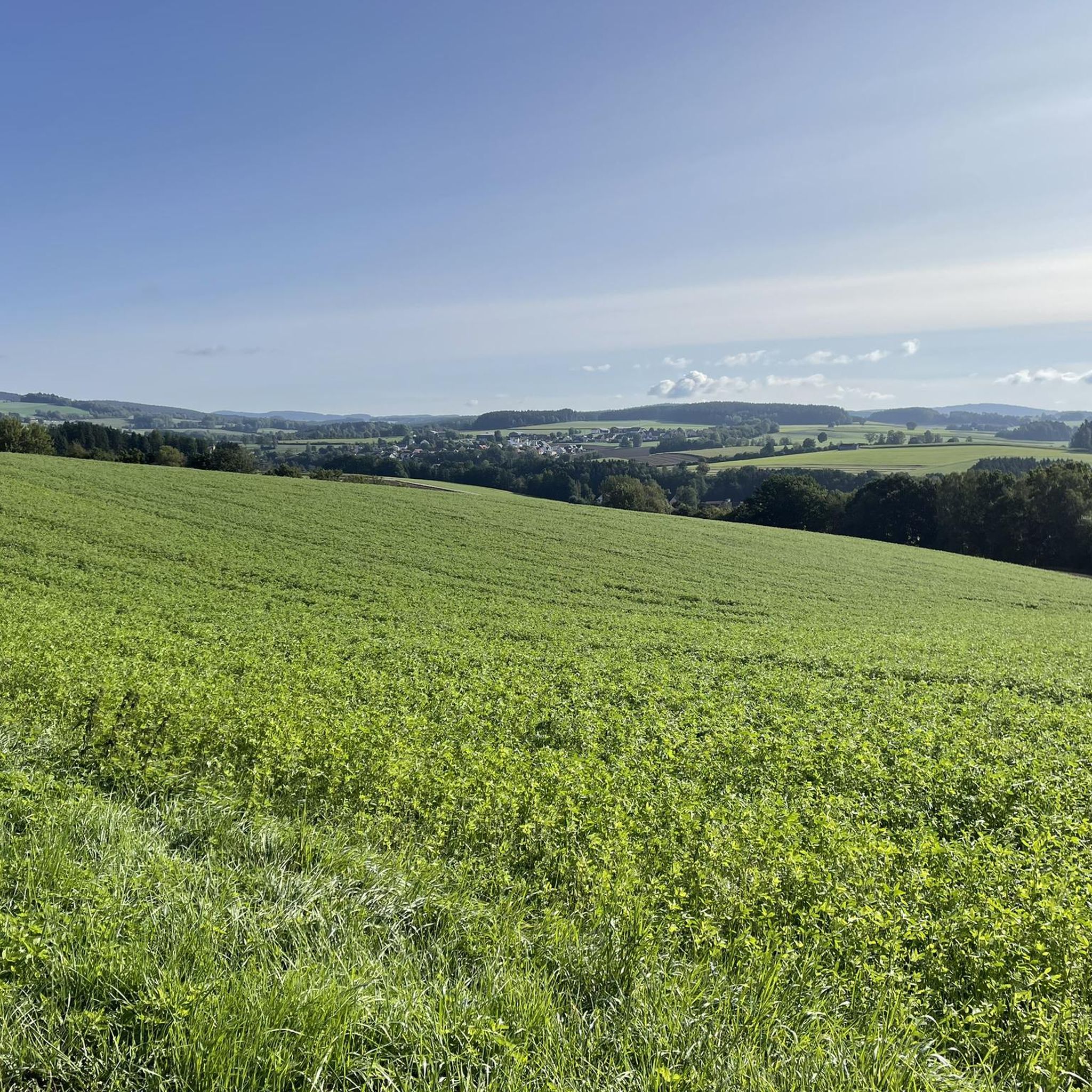
Hiking around Niedermurach offers diverse landscapes characterized by rolling hills, dense forests, and idyllic rivers. The region provides a scenic backdrop for various outdoor activities, with well-signposted paths leading through varied terrain. Hikers can explore a network of trails that cater to different fitness levels, from easy strolls to more demanding routes. The natural beauty of Niedermurach includes features like moorland areas and elevated viewpoints.
Best hiking trails in Niedermurach
- The most popular hiking route is Niedermurach's Sagenhafter Tanzacker loop…
Last updated: May 17, 2026
4.6
(34)
119
hikers
7.02km
01:57
130m
130m
Easy hike. Great for any fitness level. Easily-accessible paths. Suitable for all skill levels.
4.5
(10)
31
hikers
17.3km
05:01
460m
450m
Hard hike. Very good fitness required. Easily-accessible paths. Suitable for all skill levels.

Sign up for free
5.0
(6)
9
hikers
6.80km
01:53
120m
120m
Easy hike. Great for any fitness level. Easily-accessible paths. Suitable for all skill levels.
5.0
(1)
13
hikers
7.03km
02:05
200m
200m
Moderate hike. Good fitness required. Easily-accessible paths. Suitable for all skill levels.
6
hikers
8.10km
02:21
210m
210m
Moderate hike. Good fitness required. Easily-accessible paths. Suitable for all skill levels.
Get access to more routes and recommendations from other explorers.
Sign up for free
Already have an account?
Our route recommendations are based on thousands of hikes, rides, and runs completed by other people on komoot.
Start today with a free account
Your next adventure awaits.
Login or Signup

Other adventures around Niedermurach

Tips from the Community


Beautifully situated! Great station, not just for cyclists!
0
0

Here you can charge your bike, pump up the air and buy something to drink (including alcoholic beverages, thanks to the ID card device)
0
0
Old train station of Oberviechtach, where the Bavarian-Bohemian cycle path also passes.
0
0
The Bavarian-Bohemian Cycle Route passes by here.
0
0

Pilgrimage Church of St. James Also known as St. James' Church or popularly known as "da Jakowe", it is located half a kilometer east of the village of Fuchsberg on the Way of St. James from Prague to Nuremberg at the fork in the road to Hebermühle. The church's beginnings go back a long way in history: According to popular belief, there was a masonry monument with a wooden portrait of St. James on the site of the current church. It is historically proven that the church was built in the 18th century. According to sources, the founders were Count Carl Clement von Taufkirchen zu Fuchsberg and his wife Eleonora. The background to the foundation is a vow: the founders asked St. James to protect their son from injury and death in the Turkish wars. A picture on the gallery shows the saint riding alongside the Taufkirchen cavalry officer and protecting him. When this wish was granted, the couple had the Jakobi Church built in 1766. It appears to be a reconstruction of a church that had fallen into disrepair during the Reformation. There are around 80 seats in the interior of the church. The altarpiece shows Saint James with a shell and walking stick. The altar is flanked by two baroque candlesticks and the paintings "Washing of the Feet" and "Last Supper", which are attributed to Anton Merz from Neunburg. Figures of Saint Peter, Saint James the Elder and Saint Paul are to the left of the altar, and a crucifixion group is on the right. The gallery is decorated with paintings depicting Saint James. On the back wall under the gallery there are several votive tablets, two of which show "the image of Fuchsberg Castle from 1796" and the ruins of Wildstein Castle. In the middle under the gallery there is an oil painting of a Madonna of Mary Help of Christians by the Winklarn reverse glass painter Karl Josef Ruf the Elder, so that the depiction of Mary and the altarpiece form a longitudinal axis in the church. The pilgrimage church of St. Jakob was extensively renovated three times between 1962 and 1991, during which the masonry was restored, the pews from the Teunz parish church were installed, the roof was covered with larch shingles and the ridge turret with the bell was moved. Source: Excerpts from www.wikipedia.de / www.pfarrei-teunz.de
2
0
Chapel of St. Walburga It is reported that the little church was "in a state of disrepair in 1718 and was then rebuilt again thanks to a miraculous sign." The renovation was carried out on the instigation and mainly at the expense of Mrs. von Murach. Its construction and interior design are plain and simple, built around 1720. On both gable sides, strong granite stones protrude in the shape of teeth, similar to those on the Wieskirche in Niedermurach. The Murach coat of arms was once on the ceiling of the little church, but was whitewashed during renovation work. After hard work by the community, the new little church was consecrated on Walburga's Day, February 25, 1724. Since then, numerous prayers have been raised at the intercession of Saint Walburga. Saint Walburga is the patron saint of farmers and domestic animals, and as a powerful intercessor she helps crops thrive, against dog bites and rabies. She is depicted as an abbess in a black Benedictine habit with a staff and rule book and a bottle of oil, three ears of corn in her hand because she saved a child from starvation. The altar is decorated with two twisted columns entwined with vines and the image of Saint Walburga, next to which are two holy pilgrims on pedestals. The two "two holy pilgrims" are most likely the brothers of Saint Walburga, with Saint Willibald on the left with a bishop's staff and Saint Wunibald on the right with a loaf of bread in his hand. The history of the little church tells us that there was a lot of activity and activity at the chapel on Walburga's Day. Shopkeepers had set up their stalls and were offering goods for sale. Until around 1780, it was a popular pilgrimage site. After an unsuccessful legal dispute over stall fees, the fair was closed. In addition, in 1785, the name day “Walburga” was abolished as a public holiday, which probably caused the flow of pilgrims to dry up. Source: Excerpts from www.pfarrei-teunz.de/Pfarrei-Niedermurach/Kapellen/Walburgakapelle/
2
0
"9-11 WTC Memorial Oberviechtach" The memorial is an artifact with two glass columns modeled on the World Trade Center. Next to it is a 160-centimeter-long piece of the original steel girder from the rubble of the destroyed World Trade Center. The memorial stands in the avenue of Oberviechtach on a base made of Upper Palatinate granite. This makes the small Upper Palatinate town the only place in Germany that has a piece of the destroyed twin towers. As Oberviechtach Mayor Rudolf J. Teplitzky told Bavarian Radio, the idea for the memorial goes back to a long friendship between the two fire departments. There have long been connections with mutual visits between members of the Oberviechtach fire department and members of the Freeport Fire Department in New York. The two started talking during a joint visit to the memorial at "Ground Zero" in New York. "It was said there that there were steel parts that were to be erected as memorials all over the world, and that's where the idea came from to bring one of these memorials to Oberviechtach." Martin Zimmermann, the then chairman of the Association of German-American Firefighters and Friends, had applied for a piece of rubble from the World Trade Center and was awarded the contract. Source: www.br.de/nachrichten/bayern/einziges-deutsches-denkmal-fuer-9-11-steht-in-der-oberpfalz
2
0
Frequently Asked Questions
What types of hiking trails can I find in Niedermurach?
Niedermurach offers a diverse network of over 670 hiking trails, catering to various fitness levels. You'll find everything from easy strolls through forests to more demanding routes with significant elevation changes. The landscape is characterized by rolling hills, dense forests, and idyllic rivers.
Are there any easy, family-friendly hiking options in Niedermurach?
Yes, Niedermurach is home to many easy, family-friendly trails. A great option is Niedermurach's Sagenhafter Tanzacker loop, an easy 4.4-mile (7.0 km) route that takes you through forests around Pertolzhofen and features sculptures illustrating local legends. The Niedermurach Nature Trail is also an informative circular trail ideal for families, detailing the region's flora and fauna.
Can I find circular hiking routes in Niedermurach?
Absolutely. Many trails in Niedermurach are designed as loops, allowing you to start and end at the same point. Examples include the moderate Murach Castle – Obermurach Bell Tower loop from Niedermurach, which offers panoramic views, and the easy Old Beech Tree – Saddle Stone loop from Niesaß.
What are some notable landmarks or attractions I can see while hiking in Niedermurach?
The region is rich in historical and natural attractions. You can hike to Murach Castle for magnificent panoramic views. The "Sagenhafter Tanzacker" loop features unique Tanzacker Mythical Sculptures. Further afield, the well-preserved ruins of Schwarzenburg Castle on Schwarzwihrberg offer a unique panorama, and the Steinerne Wand (Schwarzwihrberg) is a natural monument with impressive views.
Are there any long-distance hiking trails passing through Niedermurach?
Yes, the significant Goldsteig Long-Distance Hiking Trail, which stretches from Marktredwitz to Passau, passes directly through Niedermurach. A segment of this trail, Goldsteig S8, runs through Obermurach and past the Kätzelsberg, offering serious hikers a chance to explore the region's nature and historical sites.
What is the best time of year to go hiking in Niedermurach?
Niedermurach offers beautiful hiking experiences throughout the year. Spring brings wildflowers, summer allows for hikes along the Naab River or swimming in lakes, and autumn showcases vibrant colorful foliage. Each season provides a unique scenic backdrop for your outdoor adventures.
Are there any specific natural features or landscapes to look out for?
Hikers in Niedermurach will encounter diverse natural features, including dense forests, rolling hills, and idyllic rivers. The region also features unique moorland areas like the Kulzer Moos, which is part of the Goldsteig S8 route, offering a distinct natural environment to explore.
What do other hikers say about the trails in Niedermurach?
The hiking routes in Niedermurach are highly rated by the komoot community, with an average score of 4.7 stars from over 2,200 reviews. Hikers often praise the varied terrain, well-signposted paths, and the scenic beauty of the forests and rolling hills.
Are there any lakes or reservoirs near Niedermurach that I can visit?
Yes, there are several beautiful water bodies in the vicinity. You can explore highlights such as the Eixendorfer Reservoir, the Trausnitz Reservoir, and the Rabenleite Upper Reservoir, all offering scenic views and recreational opportunities.
Are there any caves or interesting rock formations to discover?
The area around Niedermurach features several intriguing caves and rock formations. Highlights include The legendary Güttingloch and the Railway Workers' Grotto. These natural formations add an extra layer of exploration to your hiking experience.
What is the most challenging hike in the immediate Niedermurach area?
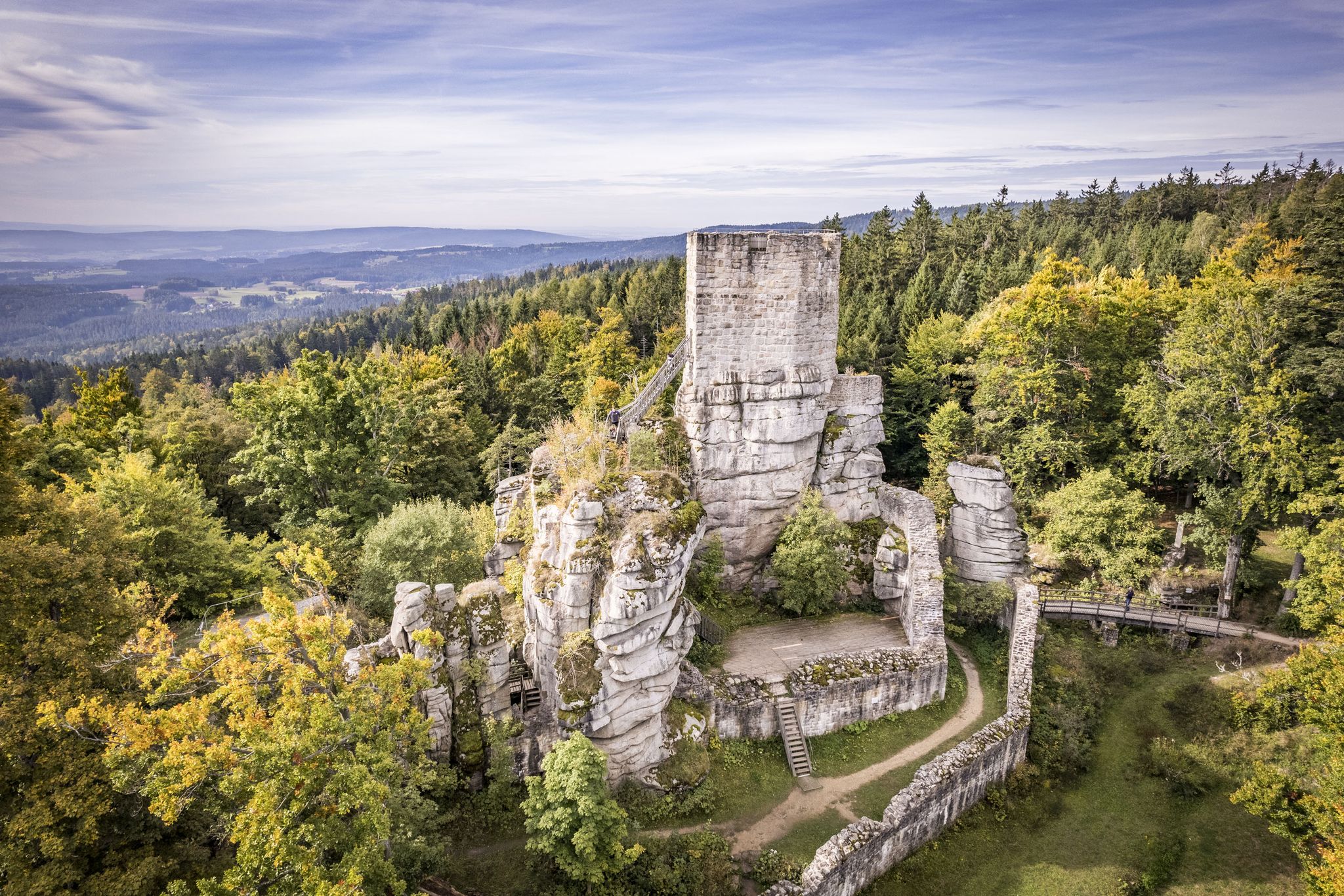
While many trails are easy to moderate, for a more challenging experience, consider the Wildstein Summit – Wildstein Castle Ruins loop from Teunz. This difficult 10.7-mile (17.3 km) route involves significant elevation gain and takes approximately 5 hours to complete, rewarding hikers with impressive views from the Wildstein Castle Ruins.
Most popular routes around Niedermurach
Most popular attractions around Niedermurach

Get inspired with the komoot mobile app


Explore more
Browse the best Hikes in other regions.
