The best walks and hikes around Moltzow
4.6
(1499)
4,239
hikers
36
hikes
Hiking around Moltzow offers routes through the Mecklenburg Lake District, characterized by extensive forests, rolling hills, and numerous shimmering lakes. The region's terrain includes gentle ascents and varied paths, with proximity to Müritz National Park providing access to unspoiled nature. This area features a landscape shaped by the ice age, with diverse ecosystems including moorland, pine forests, and ancient beech groves.
Best hiking trails around Moltzow
- The most popular hiking route is St. Florian Chapel – Enchanted Burgtal Valley loop…
Last updated: November 9, 2026
4.8
(14)
34
hikers
16.3km
04:18
150m
150m
Moderate hike. Good fitness required. Easily walkable paths.
2.5
(11)
41
hikers
Easy hike. Easily walkable paths.

2.9
(9)
38
hikers
4.56km
01:11
30m
30m
Easy hike. Easily walkable paths.
4.6
(16)
51
hikers
Easy hike. Easily walkable paths.
4.7
(10)
36
hikers
Easy hike. Easily walkable paths.
Get access to more routes and recommendations from other explorers.
Already have an account?
Our route recommendations are based on thousands of hikes, rides, and runs completed by other people on komoot.
Start today with a free account
Your next adventure awaits.
Tips from the Community

Rambow belonged for a long time to the Ulrichshusen estate, from which it was separated in 1822 and assigned to Moltzow. From the 1870s onwards, the Moltzow line of the von Maltzan family had the farm expanded. This included an inspector's house, a cow shed, a barn, a horse stable with a servant's dwelling, a school, two houses for day laborers, and precisely this reaper barracks. Reaper barracks were typical accommodations for seasonal agricultural workers, especially during harvest time. On large estates in the 19th century, when mechanization was still limited, itinerant workers – often from Poland or other regions – frequently came for the harvest.
0
0
It replaces the church of the deserted village of Domherrenhagen/Papenhagen (already documented as deserted in 1458). The construction of the current church began around 1485. In the church is the grave with epitaph (1657) and the knight's armour of the Swedish general/colonel Carl Didriksson Ruuth (also Carl Dietrichson Ruth, 1592–1656). He was, among other things, commander in Halberstadt, Landsberg/Warthe, Stettin and finally Elbing. After the Thirty Years' War, he acquired the Ulrichshusen estate in 1649/50 and became patron of the church. He and his family (until 1688 at Ulrichshusen) are buried in the crypt.
0
0
This is a memorial to the fallen of the First World War (1914–1918). It is protected as a historical monument.
0
0
Alter Pfarrhof Rambow (Kirchstraße 11) is a historic baroque half-timbered rectory (approx. 1798, on an old churchyard/church island) with holiday apartments.
0
0
The workers' houses of the former Dahmen sugar factory are a striking testament to the short but intense industrialization phase in rural Mecklenburg during the 19th century. The factory began operations in 1875 and ran until its closure in 1905 – just under 30 years. The primary reason for its early demise was the collapse of beet sugar prices due to the rapidly growing competition from numerous other factories in Germany. The factory complex included not only the production facilities themselves (which, with the exception of one storage building, have been largely demolished), but also a small factory village with infrastructure for the workforce: Housing for the factory workers (the so-called workers' houses) A tavern A general store A bakery These workers' houses were built at the same time as the factory. They served to attract and retain workers – often seasonal laborers (e.g., harvesters for the beet harvest) – as Dahmen was a very rural and remote location.
0
0
Sagel was located approximately 500–1000 meters south of Rothenmoor, in the picturesque Burgtal valley (with a Slavic hillfort). It was a tiny farming village (also called "Dorwerk zu Rothenmoor") belonging to the Rothenmoor manor. It consisted of just a few farmsteads/cottages (farmhouses). During the GDR era, the village of Sagel was gradually abandoned. The last cottage was demolished in 1979. Since then, Sagel has been considered a lost village.
0
0
The grave of Wilhelm von Maltzan (Baron of Wartenberg and Penzlin) is located in the Moltzow cemetery. In 1863, he donated the bronze bell to the church (cast by C. Illies in Waren). His grave is also located there. This is one of the few specifically documented individual family graves directly in Moltzow. The von Maltzan family owned Moltzow for centuries (at least since the 14th century, and demonstrably from around 1372 in connection with other estates such as Ulrichshusen, Grubenhagen, etc.). Moltzow belonged to the estates of various branches of this widely distributed family (the Moltzow estate is discussed separately in the family history).
0
0
The festival barn at Ulrichshusen Castle is a historically significant venue, converted from an old fieldstone barn (a huge farm building belonging to the estate). The acoustics of the old fieldstone barn, with its high ceilings and rustic character, are considered exceptionally good for chamber music, recitals, and small orchestral concerts.
0
0
Frequently Asked Questions
How many hiking trails are available around Moltzow?
Moltzow offers a diverse network of over 35 hiking trails, catering to various preferences and fitness levels. These routes explore the picturesque Mecklenburg Lake District, characterized by extensive forests, rolling hills, and shimmering lakes.
What kind of terrain can I expect on hikes around Moltzow?
The terrain around Moltzow is shaped by the ice age, featuring gentle rolling hills, extensive forests, and numerous lakes. You'll find varied paths through wide moors, forest lakes, and ancient beech groves, particularly within the nearby Müritz National Park. Most routes offer relaxed walks without significant ascents.
Are there any family-friendly hiking options in Moltzow?
Yes, many hiking routes in the Moltzow region are designed to be family-friendly, with easily walkable paths and rest areas. An excellent example is the Ulrichshusen Castle loop from Schloss Ulrichshusen, an easy 4.5 km path that offers scenic views and is typically completed in about 1 hour 10 minutes.
What are some notable natural features or landmarks to see while hiking near Moltzow?
Moltzow's surroundings are rich in natural beauty and historical sites. You can explore the vast Mecklenburg Lake District, visit the nearby Müritz National Park with its ancient beech trees (a UNESCO World Natural Heritage Site), or enjoy views of Lake Kummerow. Specific highlights include the Lake Tiefwarensee and the Rest area at Jabelscher See. You might also encounter historical structures like Basedow Castle or Schorssow Castle along various routes.
Are there any circular hiking routes around Moltzow?
Yes, Moltzow offers several circular routes. A popular moderate option is the St. Florian Chapel – Enchanted Burgtal Valley loop from Moltzow, which is 16.2 km long and takes approximately 4 hours 16 minutes to complete. Another easy circular path is the Ulrichshusen Castle – Rambow Village Church loop from Rambow, covering 4.7 km in about 1 hour 13 minutes.
What do other hikers enjoy most about hiking in Moltzow?
The hiking trails around Moltzow are highly rated by the komoot community, with an average score of 4.6 stars from over 300 reviews. Hikers often praise the region's tranquil atmosphere, the diverse landscapes of forests and lakes, and the well-maintained paths that make for enjoyable outdoor experiences.
When is the best time of year to go hiking in Moltzow?
The best seasons for hiking in Moltzow are spring and autumn. In spring, nature awakens with vibrant colors, while autumn offers a magical landscape as the leaves change. These seasons provide pleasant temperatures and beautiful scenery for exploration.
Are there any longer-distance hiking trails accessible from Moltzow?
Moltzow is situated within a region that features longer hiking paths. The broader Mecklenburg-Vorpommern area includes significant long-distance trails like the E9 Baltic Sea Coastal Hiking Trail and the E10 Moränenweg. The Müritz National Park Trail, Germany's longest hiking path through a national park, also offers 175 km of unpaved terrain and passes by ancient beech trees and fens. For more information on long-distance trails in the region, you can visit visit-mv.com.
What is the difficulty level of hikes around Moltzow?
The hiking trails around Moltzow cater to various abilities. You'll find a good mix of easy and moderate routes, with 15 easy trails and 21 moderate trails available. There is also one difficult route for more experienced hikers. The region's ice-age shaped landscape generally offers relaxed routes without significant ascents, making it accessible for most visitors.
Can I find routes that lead past castles or historical sites?
Yes, hiking paths in the Moltzow area often lead through quaint villages and past historical sites. While Moltzow Castle itself is an 18th-century baroque complex, the wider Mecklenburg Switzerland region is known for its numerous manor houses and castles. For instance, the Rest area – Ulrichshusen Castle loop from Moltzow offers views of Ulrichshusen Castle and its surroundings.
Is Moltzow a good base for exploring the Müritz National Park?
Yes, Moltzow's proximity to the Müritz National Park makes it an excellent base for exploring this significant natural area. The park offers unspoiled nature on well-signposted trails, allowing visitors to observe rare animal and plant species. You can find more details about hiking within the national park at mueritz-nationalpark.de.
Are there any routes that offer views of lakes?
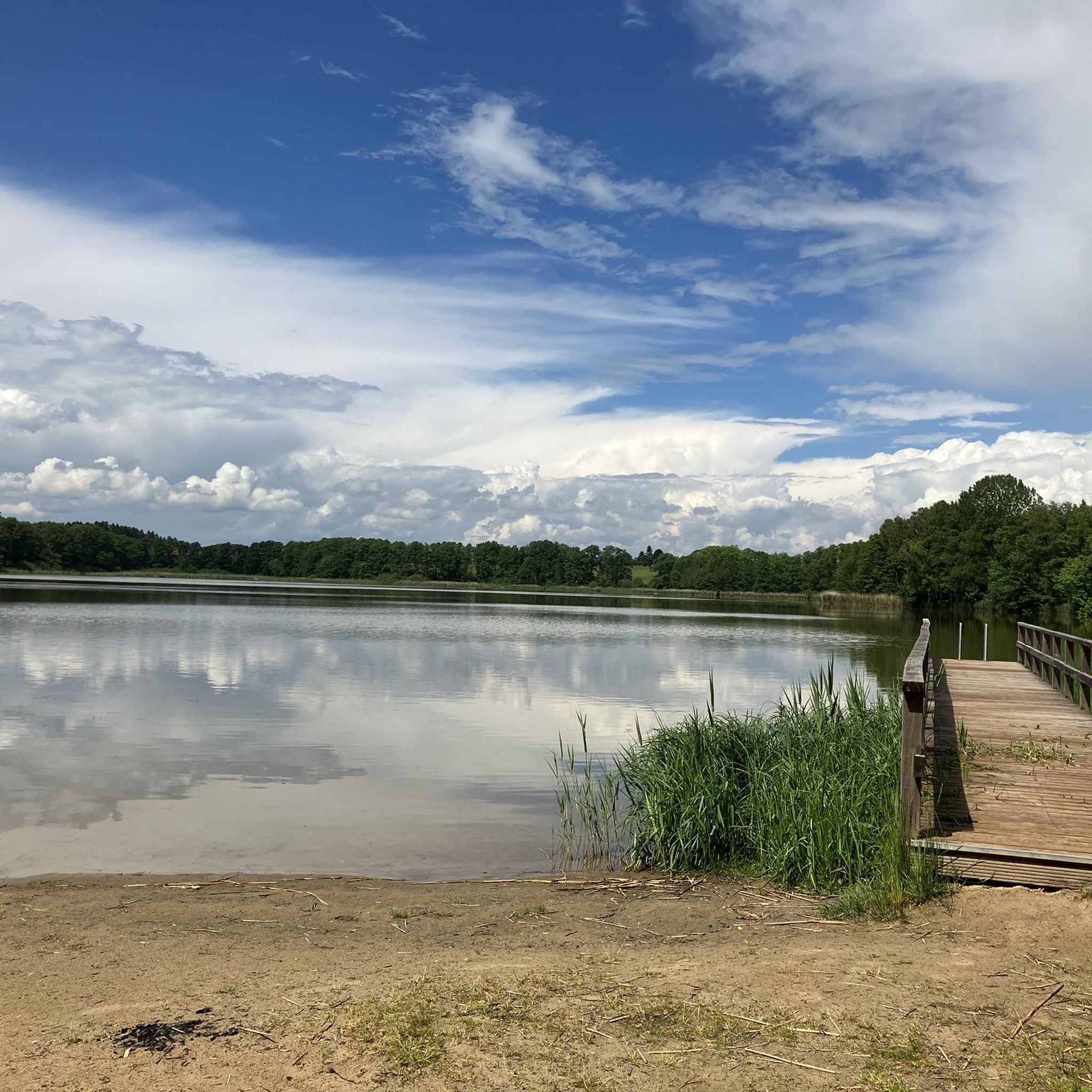
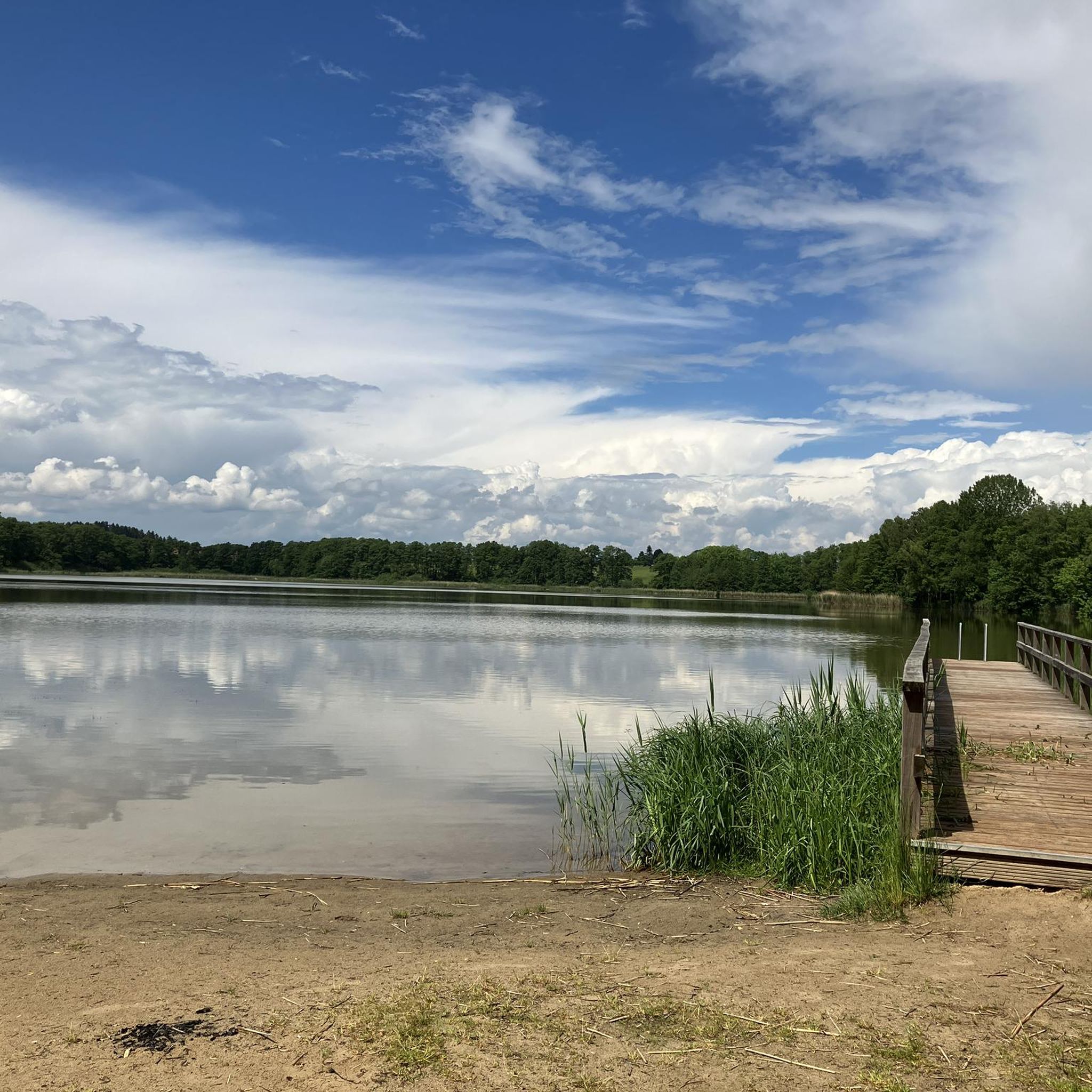
Absolutely. The Moltzow region is part of the 'land of a thousand lakes,' so many routes offer beautiful views of shimmering waters. Lake Kummerow, just a few kilometers away, is a prime example, providing attractive routes for relaxing hikes. You can also find highlights like Lake Tiefwarensee and the Rest area at Jabelscher See along various trails.
Most popular routes around Moltzow
Most popular attractions around Moltzow

Get inspired with the komoot mobile app


Explore more
Browse the best Hikes in other regions.
