Attractions and Places To See around Embalse de Orellana - Top 5
Best attractions and places to see around Embalse de Orellana include a vast reservoir on the Guadiana River, recognized for its ecological importance as a Ramsar site and Special Protection Area for Birds. This region in Extremadura, Spain, offers a diverse landscape encompassing natural beauty, cultural heritage, and recreational opportunities. It features significant bodies of water, mountainous terrain, and historic sites. The area provides a variety of experiences for visitors, blending natural and man-made attractions.
Best attractions and places to see around Embalse de Orellana
- The most popular attractions is Garcia de Sola Reservoir, a lake that is an impressive work of engineering located in the Extremadura region. It is situated in an environment of great beauty, surrounded by rock formations and dense vegetation.
- Another must-see spot is Playa de Orellana, an inland beach. It holds the distinction of being Spain's first inland beach to receive a Blue Flag for its accessibility, water quality, and environmental information.
- Visitors also love Playa de los Calicantos, an inland beach located at the tail end of the Orellana Reservoir. It offers a tranquil natural setting for summer enjoyment, situated within the Guadiana Nature Trail.
- Embalse de Orellana is known for its natural features like reservoirs and beaches, as well as cultural sites such as historic bridges and dams. The area offers a variety of attractions to see and explore, from ecological reserves to recreational areas.
- The attractions around Embalse de Orellana are appreciated by the komoot community, with 6 upvotes and 9 photos shared by visitors.
Last updated: October 5, 2026
Garcia de Sola Reservoir
Highlight • Lake
Translated by Google •
Tip by

Playa de Orellana
Highlight • Beach
Translated by Google •
Tip by
Sign up now to discover places like this
Get recommendations on the best single tracks, peaks, & plenty of other exciting outdoor places.
Playa de los Calicantos
Highlight • Beach
Translated by Google •
Tip by
Orellana Dam
Highlight • Structure
Translated by Google •
Tip by
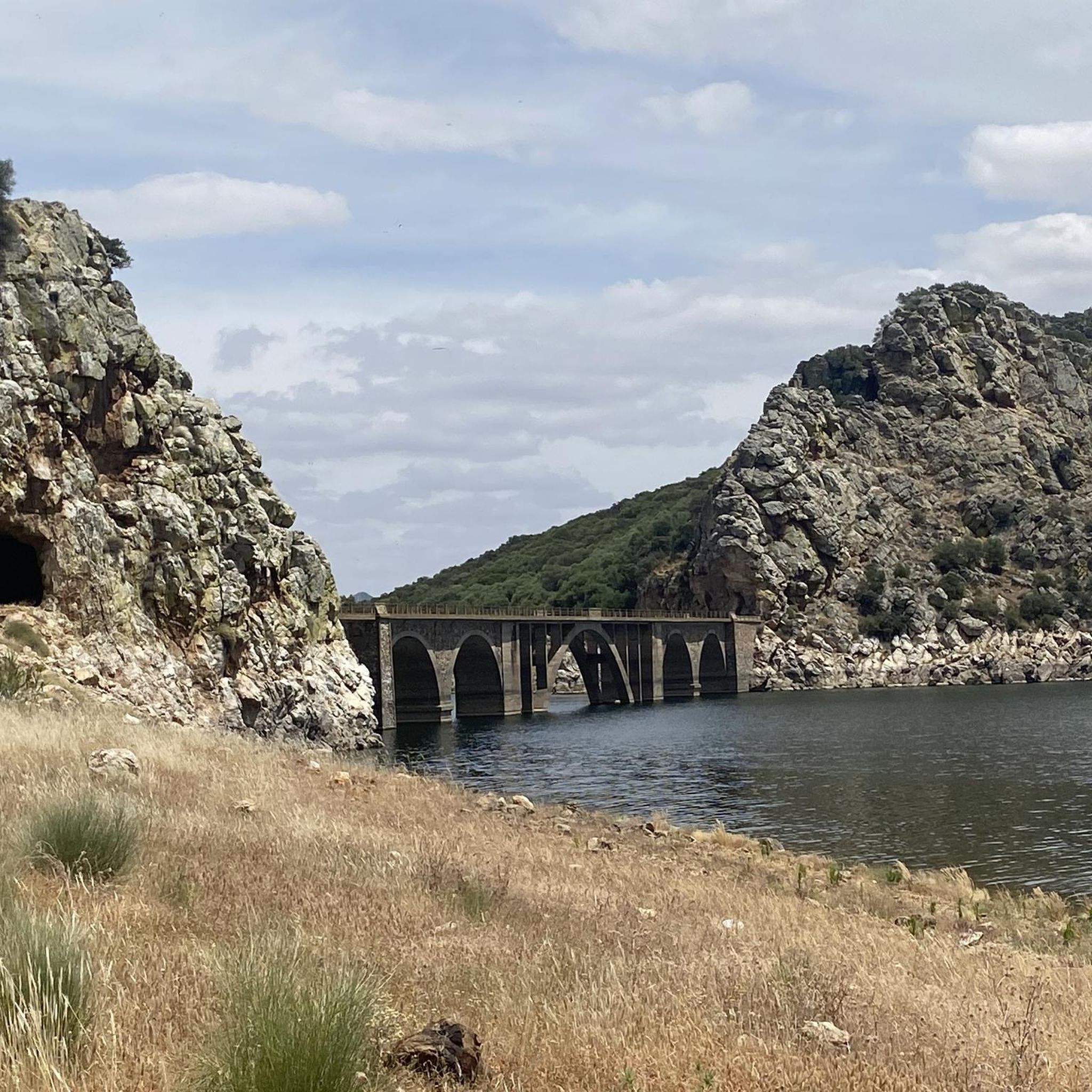
Puente de Cogolludo
Highlight • Bridge
It's part of the Senda de los Embalses (Reservoirs Path), a popular hiking and nature trail.
Translated by Google •
Tip by
Start today with a free account
Your next adventure awaits.
Tips from the Community

The García de Sola Reservoir, also known as Puerto Peña, is located on the Guadiana River, in the La Siberia Extremeña region (Badajoz). It was built in 1962 as part of the Badajoz Plan and has a capacity of 554 hm³. It is an emblematic site for its natural, scenic, and recreational value.
5
0
It's a historic bridge located over the Guadiana River, near the pre-Roman ruins of Lacimurga. It's part of the Senda de los Embalses (Reservoirs Path), a popular hiking and nature trail.
5
0
Playa de los Calicantos, located in Casas de Don Pedro (Badajoz), is an inland beach at the tail end of the Orellana Reservoir, within the La Siberia Extremeña region. It's an ideal place to enjoy the summer surrounded by nature, with excellent services and a peaceful setting.
10
0

This spectacular reservoir was built during the 1960s. The reflection of the sunsets in the water and the surrounding landscape make it a must-see if you're exploring the Guadiana Nature Trail.
0
1
The García de Sola Reservoir is an impressive work of engineering located in the Extremadura region, near Talarrubias, in the province of Badajoz. The reservoir is located in an environment of great beauty, surrounded by imposing rock formations and dense vegetation composed of Mediterranean forests, pine forests and eucalyptus trees. It is a place of great value for birdlife, with species such as the griffon vulture, black vulture, black stork, golden eagle and peregrine falcon.
5
0

A picturesque bridge over the Orellana reservoir, which ends with a tunnel excavated in the rock. Beautiful views.
1
1
The Orellana reservoir is a reservoir on the Guadiana river in the province of Badajoz. It is the largest of those located in the middle section of the river, it is regulated by those of García de Sola and Cíjara and by the transfer of Zújar and La Serena.
10
0
In the municipality of Orellana la Vieja is the first inland beach in all of Spain with a Blue Flag for its accessibility, the quality of its waters and the environmental information offered to users. In addition, it is also a blue trail and marina.
11
0
Frequently Asked Questions
What natural attractions can I explore around Embalse de Orellana?
The region is rich in natural beauty. Beyond the vast Embalse de Orellana itself, you can visit the impressive Garcia de Sola Reservoir, known for its beautiful surroundings of rock formations and dense vegetation. The Sierra de Pela offers stunning mountainous landscapes ideal for hiking and birdwatching. Other points of natural interest include Fuente del Caño and La Laguna del Santo.
Are there any beaches or swimming spots at Embalse de Orellana?
Yes, the Embalse de Orellana is famous for its inland beaches. Playa de Orellana in Orellana la Vieja was Spain's first inland beach to receive a Blue Flag for its accessibility and water quality. Another tranquil option is Playa de los Calicantos, located in Casas de Don Pedro at the tail end of the reservoir.
What historical or cultural sites are worth visiting in the area?
The region offers several cultural and historical points of interest. You can see the significant engineering marvel of the Orellana Dam, completed in 1963. The historic Puente de Cogolludo, near the pre-Roman ruins of Lacimurga, is also notable. In Orellana la Vieja, explore the historic Castle Palace of the Altamiranos, the 16th-century Convent of San Benito (now a cultural center), and the Church of Nuestra Señora de la Inmaculada Concepción.
What outdoor activities can I do around Embalse de Orellana?
The Embalse de Orellana is a hub for outdoor activities. Water sports like sailing, canoeing, windsurfing, and pedal boating are popular on the reservoir. Fishing is also a major draw, with the area recognized as one of Europe's best fishing destinations. For land-based activities, there are numerous trails for hiking and cycling, such as the Senda de los Embalses and the Camino Natural del Guadiana. Birdwatching is also excellent due to the area's ecological importance.
Are there family-friendly attractions or activities available?
Absolutely. The inland beaches, such as Playa de Orellana and Playa de los Calicantos, are ideal for families, offering safe swimming and recreational areas. Many of the hiking and cycling trails are suitable for various ages, and the opportunity for water sports like pedal boating can be fun for the whole family. The natural beauty and wildlife observation also provide engaging experiences for children.
What kind of wildlife can I expect to see?
The Embalse de Orellana is a designated Special Protection Area for Birds (ZEPA), making it an excellent spot for birdwatching. You might observe griffon vultures, black vultures, black storks, golden eagles, and peregrine falcons. The surrounding Mediterranean forests and diverse landscapes also support a variety of other wildlife.
Are there hiking trails near these attractions?
Yes, the region offers a variety of hiking trails. The Senda de los Embalses (Reservoirs Path) and the Camino Natural del Guadiana are popular routes that lead through diverse landscapes, including dehesas, mountains, and reservoir banks. For more options, you can explore detailed hiking routes in the area on our guide page.
Can I go cycling around Embalse de Orellana?
Yes, cycling is a fantastic way to explore the area. There are various routes available, from touring bicycle paths to mountain biking trails and road cycling routes. You can find detailed cycling guides and specific routes, such as the 'Guadiana Natural Trail: Orellana Reservoir Loop' or 'Zona de Interés Regional Embalse de Orellana y Sierra de Pela — circular desde Orellana la Vieja', on our dedicated cycling guide.
What is the best time of year to visit Embalse de Orellana?
The Embalse de Orellana offers attractions year-round, but the best time depends on your preferred activities. Spring and autumn provide pleasant temperatures ideal for hiking, cycling, and birdwatching. Summer is perfect for enjoying the inland beaches and water sports, though temperatures can be high. Winter is milder and suitable for quieter exploration and birdwatching.
Is Playa de Orellana accessible for everyone?
Yes, Playa de Orellana is recognized for its accessibility. It was the first inland beach in Spain to receive a Blue Flag, partly due to its facilities and accessibility features, including for wheelchair users. It offers services like lifeguards and picnic areas, making it welcoming for all visitors.
What makes the Garcia de Sola Reservoir a significant attraction?
The Garcia de Sola Reservoir, also known as Puerto Peña, is an impressive engineering feat located on the Guadiana River. It's highly valued for its stunning natural beauty, surrounded by dramatic rock formations, Mediterranean forests, and diverse birdlife, including several species of vultures and eagles. It's a key site for nature enthusiasts and birdwatchers.
Are there opportunities for mountain biking (MTB) in the area?
Yes, the region around Embalse de Orellana provides excellent opportunities for mountain biking. There are various trails catering to different skill levels, such as the 'Embalse de García Sola y Casas de Don Pedro — circular en BTT por Puebla de Alcocer' or the 'Playa de Orellana – Cerro Cogolludo Tunnel loop from Orellana la Vieja'. You can find more detailed MTB routes and guides on our MTB trails guide page.
Most popular routes around Embalse de Orellana

Get inspired with the komoot mobile app


Explore more
Still not found the Highlight you’re looking for? See guides of the top attractions in other regions:
