The best traffic-free bike rides around Mudá
4
riders
4
rides
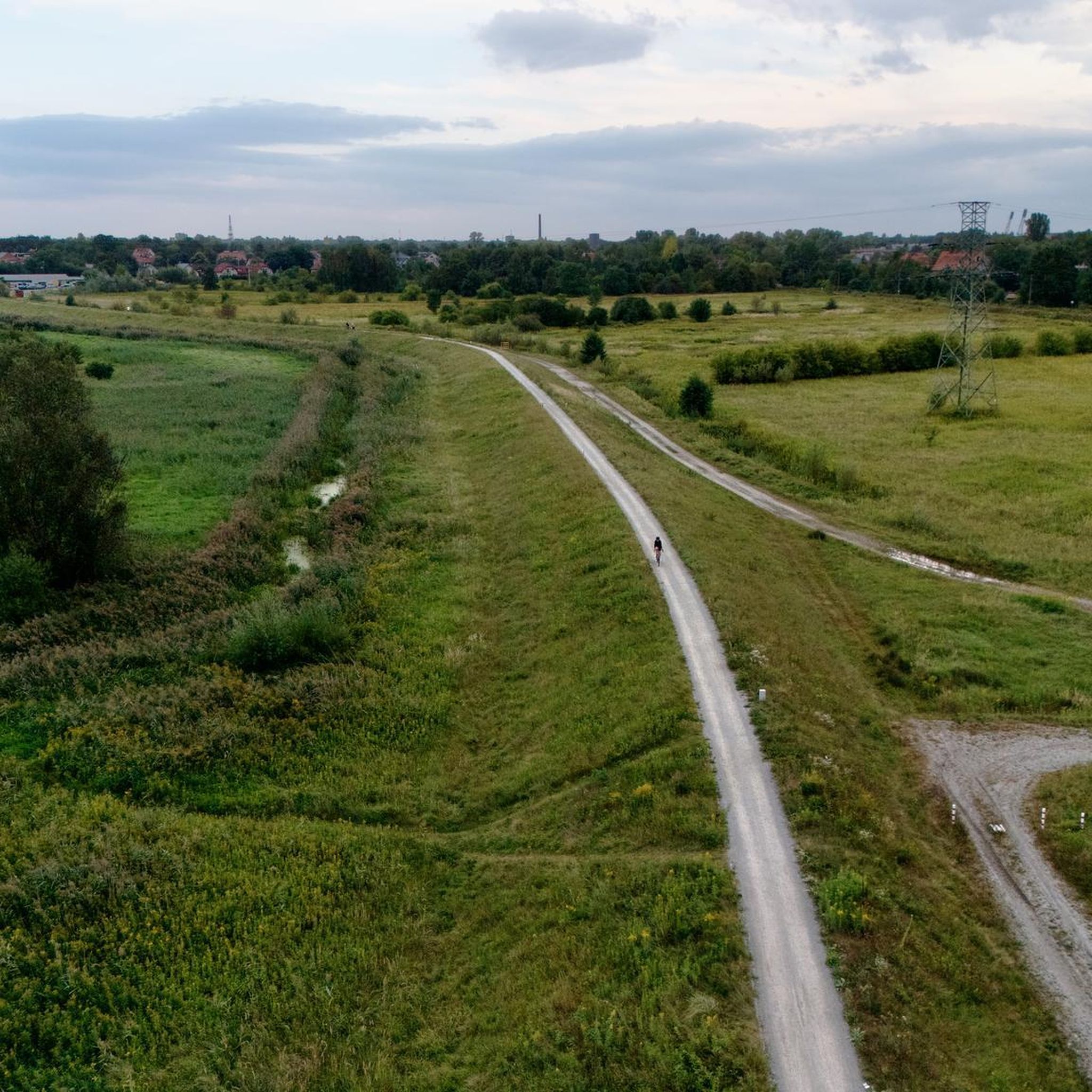
Gravel biking around Mudá offers a diverse landscape characterized by significant elevation changes, reservoirs, and river valleys. The region features hilly terrain, providing both challenging climbs and rewarding descents on unpaved sections. Prominent reservoirs like Ruesga and Requejada are central to the natural beauty, often forming part of popular cycling routes. These rural and natural paths allow riders to explore quieter, less trafficked roads and immerse themselves in the environment.
Best no traffic gravel bike trails around Mudá
- The most popular no traffic gravel bike trail is Salinas de Pisuerga Bridge – Hermitage of Santa Cecilia loop from Barruelo de Santullán, a 45.0 miles (72.3 km) trail that takes 5 hours 20 minutes to complete. This difficult route features over 1000 meters of elevation gain through varied terrain.
- Another top favourite among local gravel bikers is Cervera de Pisuerga – Salinas de Pisuerga Bridge loop from Cervera de Pisuerga, a difficult 25.0 miles (40.2 km) path. This route offers substantial elevation gain and scenic views of the surrounding river valleys.
- Local gravel bikers also love the Aguilar Reservoir – Salinas de Pisuerga Bridge loop from Vado-Cervera, a 39.8 miles (64.0 km) trail leading through reservoir landscapes and rural areas, often completed in about 4 hours 14 minutes.
- Gravel biking around Mudá is defined by hilly terrain, prominent reservoirs, and rural unpaved paths. The network offers options for different ability levels, though all listed routes are considered difficult.
- The guide includes highly-rated routes that showcase the best of the region's landscape. More than 4 gravel bikers have used komoot to explore Mudá's varied terrain.
Last updated: May 31, 2026
5.0
(1)
11
riders
72.3km
05:20
1,010m
1,010m
Hard gravel ride. Very good fitness required. Mostly paved surfaces. Suitable for all skill levels.
2
riders
Hard gravel ride. Very good fitness required. You may need to push your bike for some segments of this route.

Sign up for free
2
riders
64.0km
04:14
720m
720m
Hard gravel ride. Very good fitness required. Mostly paved surfaces. Suitable for all skill levels.
2
riders
Hard gravel ride. Very good fitness required. Mostly paved surfaces. Suitable for all skill levels.
Our route recommendations are based on thousands of hikes, rides, and runs completed by other people on komoot.
Start today with a free account
Your next adventure awaits.
Login or Signup
Popular around Mudá

Tips from the Community

How hard would life be in those 8th, 9th and 10th centuries? Hope... a small hermitage dug into a rock and the tomb? as close as possible to the altar, as close as possible to Christ, when the end of the world and the resurrection of the dead arrived. It... overwhelms me.
1
0

Stage 2. Cervera de Pisuerga/Alar del Rey 72 kilometers. 920 positive meters. The second day has common sections with the previous stage and a small road connection. The first kilometers are known and it is a mental help to overcome the Peña Umoma slope from Vado in the opposite direction. The exit from Cervera through the old town is comfortable and pleasant. And almost without pedaling we enter Vado, connect with the red milestones and begin the cycling adventure through the fields of the Valdeados plain. In reality, only the last kilometer is hard, we overcome the panoramic hill and stop at the La Estación viewpoint, always contemplating the magnificent rocky backdrop of the Curavacas peak in the background. In Dehesa de Montejo, the Perazancas de Ojeda alternative detour leaves and a new route begins through the towns and rural landscapes of La Ojeda. The rural road has a good surface and without stopping we reach Colmenares de Ojeda. The entrance to the church of San Fructuoso is fantastic, it has three arches with a cross vault and a Romanesque portico. The jewel is a baptismal font from the 12th century kept inside, one of the best of the Palencia Romanesque, it is a sandstone rock font carved with high reliefs of religious scenes and ceremonies. The towns are small, people barely appear on the streets, and it is surprising to find so much artistic wealth in each rural center. The path does not have slopes as hard as the previous day, it is still a constant ups and downs through holm oak mountains, fallow lands and agricultural meadows but without slopes of five per hour. The valley of the Fuente de los Moros stream is delicious, the bicycles glide over the crops to Pisón de Ojeda. The church of San Pelayo dominates the town's plain from a hill, preserving the Romanesque apse from the 13th century. And then comes the hardest slope of the day, although it has a lot of uncomfortable gravel, it is short and immediately a new plateau appears with views and the descent to Montoto de Ojeda. The church is also on the hill of the town and we went straight up, shortcutting the milestones of the Natural Trail. The best part of the temple is the apse, from the 12th century, inside it has capitals and wall paintings. The portico is Cistercian from the 13th century, it is a temple that has more content than meets the eye. The route continues along the gravel road, jumps over the mountain through a plain of crops and descends to Perazancas de Ojeda. The parish church has a beautiful Romanesque doorway with three archivolts on carved capitals, from the 12th century. And at the exit of the town is the hermitage of San Pelayo, with interesting mural paintings from the 12th century and a portico with a semicircular arch on Mozarabic capitals, a valuable artistic complex declared a National Monument in 1931. The red milestone posts continue towards the connection with the Coal Route of Cok and Cozuelos de Ojeda, returning directly towards Alar del Rey. The route leaves the Nature Trail for now and continues along the road towards Olmos de Ojeda. Before arriving, pass by the Monastery of Santa Eufemia, former residence of kings, princes and nobles, it is one of the most valuable monumental complexes of the Palencia Romanesque, it was declared a Historic-Artistic Monument in 1931 and can be visited on weekends. The price of the visit is four euros per person. In Olmos de Ojeda the red indications appear again and shortly after the Payo de Ojeda variant appears. The town is on a hill along a lonely rural road of bowling alleys and boulders. The church is outside the hamlet, it has a walk of acacias and a beautiful doorway composed of a pointed arch and an archivolt, inside it houses a Romanesque baptismal font with carved ornaments. The route returns along the same path to the Olmos de Ojeda intersection and turns to the right to visit the last enclaves of the gravel journey through the Romanesque of Palencia. The first town is Moarves de Ojeda, which has one of the most precious jewels of the Palencia rural Romanesque in the façade of the church of San Juan Bautista, declared a Historic-Artistic Monument in 1931. The entrance has an elegant portico with five semicircular archivolts on capitals decorated with great detail and artistic level. The cake goes to the upper frieze, presided over by a Pantocrator surrounded by the tetramorphs and the twelve apostles, a marvel of Romanesque sculpture that especially attracts attention being in a small town in the Palencia wasteland. The attraction may also be due to the reddish color of the stone or the careful details of the sculptures. Inside it has a Romanesque baptismal font.
0
0
The visit to the neighborhoods of San Pedro and Santa María is worth it for the heritage and landscapes but it has a price on the legs, you have to climb Monte de la Ruya again to connect with the main itinerary and overcome the infernal slope that We saw before the detour, which also has a trap because after a short descent there is another similar section to a hill, the prize is fantastic views of the Palentina Mountain. The road enters the meadows and mountains of La Ojeda again and there is a fun stretch, climbing the GPS average for several kilometers until Dehesa de Montejo, where the detour for the Perazancas variant comes out on the left. The route continues to the right, crosses the Cervera de Pisuerga road and climbs the slope of Peña Umoma to a hill that finally marks the entrance to the Pisuerga valley through the beautiful valley of Valdeados. The descent ends in Vado, it is noon, time for a snack but there is no bar or grocery store. Cervera is three kilometers away but it is the place where we plan to finish the stage and we decided to continue and spend the afternoon with the energy bars. The path continues along the charming bank of the Pisuerga River, favorable terrain, river landscape, good climate and change of environment. On the route there are yellow arrows of the Camino Olvidado or Camino de la Montaña, a Camino de Santiago very popular in the 12th and 13th centuries, starting from Bilbao, running along the southern slope of the Cantabrian Mountains and connecting with the Camino Francés in El Bierzo. In Barcenilla de Pisuerga, the milestones of the Natural Trail cross the Pisuerga River via a pedestrian walkway and change course, beginning the climb through the Mudá valley until the connection with the GR-1. The climb begins in Rueda de Pisuerga, the route passes by the church of San Cristóbal, which preserves the Romanesque doorway from the 12th century, and continues through Vallespinoso de Cervera to San Cebrián de Mudá, a town with a mining tradition and the last town on the Natural Trail of the Palentine Romanesque. In the square there are some wagons from the mining era, when the Cok Coal Route was the main economic channel of the valley. The church of San Cornelio and San Cipriano is on a hill, is Romanesque from the 13th century and was declared a Site of Cultural Interest in 1993. The climb to the Historical Trail passes through the European Bison Interpretation Center, runs through a mountain oak grove and ends at a small hill below the imposing Valdecebollas (2,143 m), entrance to the La Pernía valley and the upper Pisuerga. The views are stunning. The end of the stage is Cervera de Pisuerga, with accommodation, camping and complete services. The final stretch to complete a great day of gravel cycling continues through the Castillería valley and at the Estalaya crossroads, where the climb to the Verdeña Fossil Forest is, a path leaves on the left that leads to Vañes off the road. In this section it is important to have the track downloaded because there are no milestones on the route. You must continue along the road for about 500 meters towards Cervera and at the fork of the road take a detour to the left towards Rabanal de los Caballeros and Valdasornín. The rest of the way follows the road that goes down to the urban complex of Cervera de Pisuerga.
0
0

The next town is Vallespinoso de Aguilar. The hermitage of Santa Cecilia, immediately standing out on a castle hill, is dated to the 12th century and was declared a historical-artistic monument in 1951. The portico has well-carved capitals and the location conveys the atmosphere of a fortress sanctuary.
0
0

Temple built at the end of the 12th century and beginning of the 13th, it is located on a beautiful hillock, on the outskirts of Barrio de Santa María, near the Aguilar de Campoo reservoir.
2
0
The Church of the Assumption, located in Barrio de Santa María, is an outstanding example of the Romanesque in the Palencia Mountain. Built in the 16th century on the remains of a 12th-century Romanesque church, it preserves elements such as the apse and the nave of the Gospel.
2
0
Built in stone and in medieval style, Puente de San Roque de Cervera de Pisuerga, dates from the 15th century. The bridge is composed of 4 arches.
1
0
Nice railway bridge that crosses the Pisuerga river on the outskirts of Salinas de Pisuerga.
1
0
Frequently Asked Questions
What kind of terrain can I expect on no-traffic gravel bike trails around Mudá?
The region around Mudá is characterized by its hilly and varied terrain, offering a mix of challenging climbs and rewarding descents. You'll find routes traversing rural areas, often on unpaved paths, allowing for an immersive experience in the natural environment. This diverse topography ensures engaging rides with varied scenic vistas.
Are the no-traffic gravel bike trails around Mudá suitable for beginners?
The routes listed in this guide are generally rated as 'difficult' due to significant elevation gains and distances. For example, the Cervera de Pisuerga – Salinas de Pisuerga Bridge loop covers over 40 km with more than 500 meters of elevation gain. While the 'no traffic' aspect makes them safer, the physical demands mean they are better suited for experienced touring cyclists and gravel enthusiasts rather than absolute beginners.
What natural features can I expect to see along the gravel bike trails?
You'll encounter prominent reservoirs and river valleys, which are central to the region's natural beauty. Many routes offer picturesque scenery alongside these bodies of water. The area also features natural monuments like the Roblón de Estalaya and the Fossil Forest Cliff, providing unique sights during your ride.
Are there any circular no-traffic gravel bike routes available?
Yes, all the routes featured in this guide are circular, allowing you to start and end at the same point. For instance, the Salinas de Pisuerga Bridge – Hermitage of Santa Cecilia loop from Barruelo de Santullán is a challenging 72 km loop, and the Cervera de Pisuerga – Ermita de Santa Eulalia loop offers a shorter, yet still demanding, 37 km option.
What kind of attractions can I find near the no-traffic gravel bike trails?
Beyond the natural beauty, you can explore charming settlements like Cervera de Pisuerga, which boasts a historic center and town hall. You might also pass by landmarks such as the Salinas de Pisuerga Bridge. For panoramic views, consider visiting the Umbría Viewpoint (Peña de Rulaya).
What is the typical duration for these no-traffic gravel bike rides?
The duration varies significantly depending on the route's length and your pace. For example, the Cervera de Pisuerga – Salinas de Pisuerga Bridge loop typically takes around 3 hours, while the longer Aguilar Reservoir – Salinas de Pisuerga Bridge loop can take over 4 hours to complete.
Are there any viewpoints along the no-traffic gravel trails in Mudá?
Yes, the region's hilly nature means there are several opportunities for scenic viewpoints. The Umbría Viewpoint (Peña de Rulaya) is a notable highlight where you can pause and enjoy expansive vistas of the surrounding landscape.
What makes the gravel biking experience in Mudá unique?
Mudá offers a comprehensive network of 'no traffic' routes, which is ideal for gravel cyclists seeking quiet, open-road experiences away from vehicles. The combination of varied terrain, significant elevation changes, and picturesque reservoirs provides a diverse and engaging adventure for those looking to immerse themselves in nature.
What should I consider regarding elevation when planning a gravel ride in Mudá?
The area around Mudá features significant elevation changes. All routes in this guide involve substantial climbing, ranging from approximately 500 meters to over 1000 meters of ascent. Be prepared for challenging climbs and rewarding descents, which are a hallmark of gravel biking in this region.
Are there any specific natural monuments I can visit while gravel biking?
Absolutely. You can plan your ride to pass by the impressive Roblón de Estalaya, an ancient oak tree, or explore the unique geological formations at the Fossil Forest Cliff. These natural monuments add an extra layer of interest to your gravel biking adventure.
Most popular attractions around Mudá

Get inspired with the komoot mobile app


Explore more
Browse the best Gravel rides in other regions.
