The best traffic-free bike rides around Sablons-Sur-Huisne
3.8
(12)
77
riders
7
rides
Gravel biking around Sablons-Sur-Huisne offers diverse landscapes within the Parc naturel régional du Perche. The region features an undulating terrain with forest hills and bocage countryside, providing varied backdrops for rides. An extensive network of quiet country roads and greenways, including the Alençon–Condé-sur-Huisne Greenway, makes it suitable for no traffic gravel bike trails. The Huisne Valley and surrounding forests contribute to the serene natural environment.
Best no traffic gravel bike trails around Sablons-Sur-Huisne
- The most popular no traffic gravel bike trail is Voie verte in Dorceau – Above the Huisne loop from Saint-Pierre-la-Bruyère, an 18.6 miles (30.0 km) moderate trail that takes 1 hour 46 minutes to complete. This route utilizes a scenic greenway section.
- Another top favourite among local gravel bikers is Above the Huisne – Voie verte in Dorceau loop from Condé-sur-Huisne, a moderate 41.4 miles (66.6 km) path. This route explores the Huisne Valley and incorporates parts of the greenway.
- Local gravel bikers also love the Villeray Mill – Above the Huisne loop from Nocé, a 27.7 miles (44.5 km) trail leading through the varied landscapes of the Perche Regional Natural Park, often completed in about 2 hours 29 minutes.
- Gravel biking around Sablons-Sur-Huisne is defined by greenways, quiet country roads, and undulating forest hills. The network offers options for easy, moderate, and difficult ability levels.
- The routes in Sablons-Sur-Huisne are highly rated by the komoot community with an average score of 3.6 stars from 10 reviews. More than 64 gravel bikers have used komoot to explore Sablons-Sur-Huisne's varied terrain.
Last updated: May 26, 2026
5.0
(2)
33
riders
28.5km
01:41
270m
270m
Moderate gravel ride. Good fitness required. Mostly paved surfaces. Suitable for all skill levels.
4.0
(3)
21
riders
66.6km
03:20
300m
300m
Moderate gravel ride. Good fitness required. Mostly paved surfaces. Suitable for all skill levels.

Sign up for free
3.5
(2)
5
riders
49.9km
02:55
470m
470m
Hard gravel ride. Very good fitness required. Mostly paved surfaces. Suitable for all skill levels.
4.0
(2)
2
riders
24.6km
01:29
230m
230m
Moderate gravel ride. Good fitness required. Mostly paved surfaces. Suitable for all skill levels.
2
riders
71.6km
04:07
700m
690m
Hard gravel ride. Very good fitness required. Mostly paved surfaces. Suitable for all skill levels.
Get access to more routes and recommendations from other explorers.
Sign up for free
Already have an account?
Our route recommendations are based on thousands of hikes, rides, and runs completed by other people on komoot.
Start today with a free account
Your next adventure awaits.
Login or Signup
Popular around Sablons-Sur-Huisne

Tips from the Community

The Church of Saint-Pierre, under the Ancien Régime, part of the deanery of Bellême, in the diocese of Sées, is located in the heart of the village of Saint-Pierre-la-Bruyère, in the Perche region. This building features a relatively high nave, surmounted by a slate bell tower, extending into a square-plan choir, much lower, flanked by a rectangular chapel to the south. The façade is supported by four powerful buttresses that appear to date from the late Middle Ages. It features a basket-handle lintel entrance door, dating from the late Gothic period. This door replaced a Romanesque doorway whose semicircular arch appears above the Gothic opening. It is surmounted by a pointed window. The northern drip wall is flanked, where it meets the western façade, by a brick staircase turret leading to the attic. The nave was built in the Romanesque period, as evidenced by the small round-arched windows in the upper part of the north drip wall. The bell tower is supported by four posts set within the nave's volume behind the façade wall. The three bays delimited by these posts are covered by a plastered wooden vault, lower than the nave vault, built in the 18th century. The triumphal arch is quite small. It is flanked by two finely crafted stone altarpieces. The choir is adorned with a large stone altarpiece with three sides delimited by four columns, surmounted by a richly decorated cornice crowned with fire pots. The high altar and side altars, in the same style, were built after the episcopal visit of 1706. They are a representative example of the quality of the renovations carried out in Percheron churches in the 17th and 18th centuries. A seigneurial chapel, built in the late 15th or early 16th centuries to the south of the choir, was converted into a sacristy between 1701 and 1706, to satisfy the observations made during the episcopal visitations. The arch opening onto the choir was walled up for this purpose. Aside from the altarpieces, the church contains few furnishings: an 18th-century stone Virgin Mary and a 16th-century baptismal font. The Sauvegarde de l'Art Français (French Art Protection Agency) granted €4,000 in grants in 2005 for the restoration of the roof.
0
0

Nestled on hillsides painted with ochre, yellow, or pink sand, limestone, and lights, Mortagne-au-Perche is a must-see for anyone wanting to explore Le Perche. A favorite holiday resort of the Counts of Perche and their wives, Mortagne-au-Perche has managed to preserve its monuments and historical heritage. This medieval town brimming with character is recommended for exploring by bike or on foot.
0
0

The church has a Latin cross plan. It has a single nave and a flat chevet. A small building is attached to the chevet. A bell tower flanks the building. Buttresses support the drip walls and the gable wall. Pointed arch bays with tracery illuminate the building. The portal, in a low arch, has its external arched voussure.
0
0
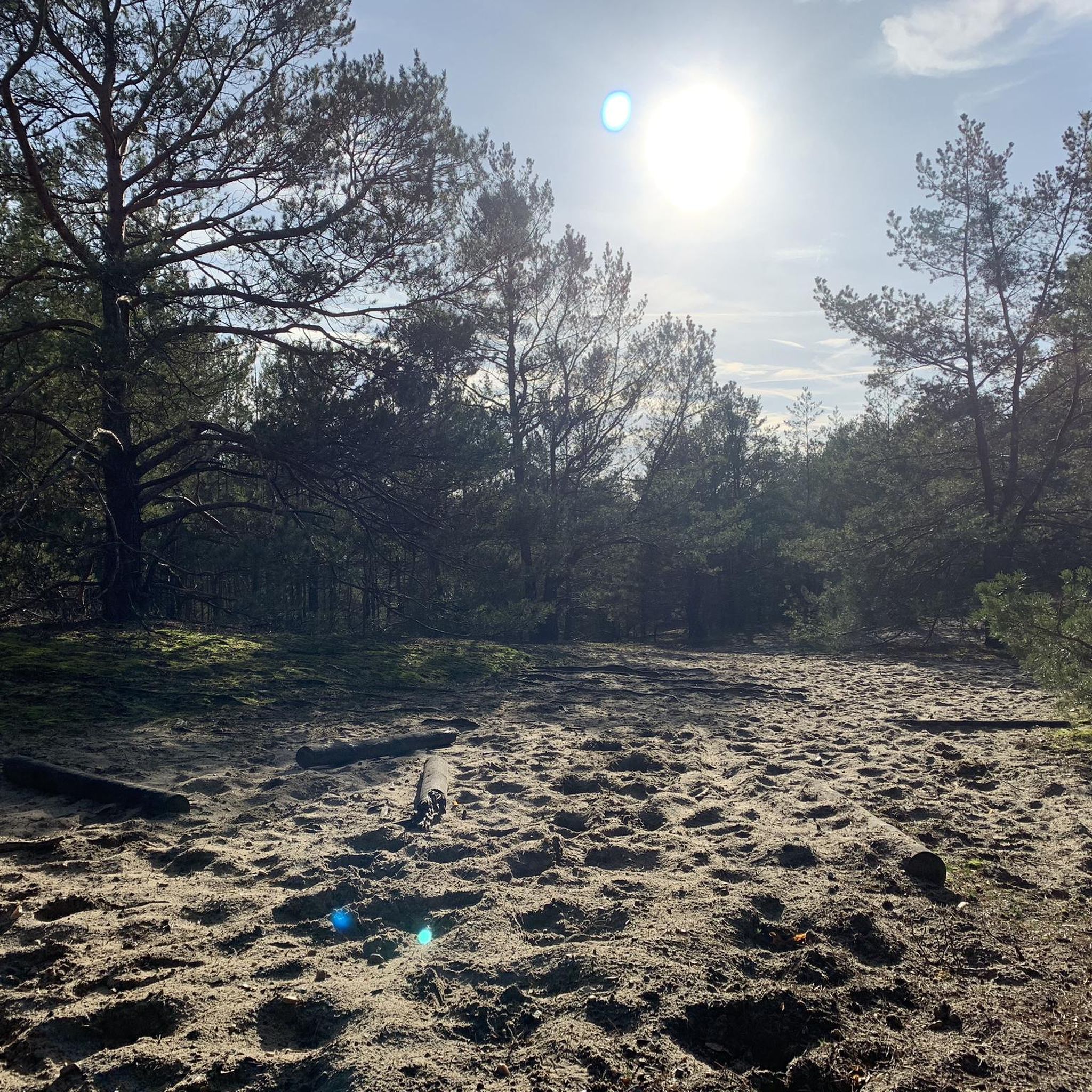
Always straight ahead. Slightly downhill, through the shady forest.
1
0
The Huisne is a river in central France, flowing in the regions of Normandy, Centre-Val de Loire and Pays de la Loire. It rises in the municipality of La Perrière, in the Perche Regional Nature Park, initially drains to the northeast, later to the southeast, finally turns to the southwest near Condé-sur-Huisne and, after around 165[2] kilometres, flows into the Sarthe in Le Mans as a left tributary.
2
0

Very beautiful start to the route with an arrival at this magnificent mill
2
0

In the heart of Perche, Bellême, a medieval village, is full of charm. Its location, on a hill, and its proximity to the forest that bears its name, make it a village integrated into the landscape. This of course reinforces its fine reputation.
0
0
Frequently Asked Questions
How many no-traffic gravel bike trails are available around Sablons-Sur-Huisne?
There are 6 dedicated no-traffic gravel bike trails around Sablons-Sur-Huisne, offering a range of distances and difficulties. These routes are designed to provide a serene cycling experience away from vehicular traffic, often utilizing greenways and quiet country paths within the beautiful Perche Regional Natural Park.
Are there easy, family-friendly no-traffic gravel routes in the area?
Yes, the region is excellent for easy, family-friendly gravel biking. The Alençon–Condé-sur-Huisne Greenway, built on an old railway line, offers a stabilized sand compact surface ideal for hybrid and gravel bikes. Its flat profile ensures an accessible ride for all skill levels. A great example is the "Voie verte in Dorceau – Above the Huisne loop from Saint-Pierre-la-Bruyère" which is classified as moderate but features significant greenway sections.
What kind of scenery can I expect on these no-traffic gravel trails?
You can expect diverse and picturesque scenery. The trails wind through the Perche Regional Natural Park, characterized by undulating terrain, magnificent views, forest hills, and bocage countryside. You'll encounter tranquil valleys like the Huisne Valley, expansive forests, and meadows, providing a peaceful and engaging backdrop for your ride. Many routes, such as the "Above the Huisne – Beautiful bucolic greenway loop from Condé-sur-Huisne," highlight the region's natural beauty.
Are there options for longer no-traffic gravel bike tours?
Absolutely. For those seeking a longer adventure, routes like the "Above the Huisne – Voie verte in Dorceau loop from Condé-sur-Huisne" cover approximately 66.5 kilometers. These longer tours often incorporate significant sections of the Alençon–Condé-sur-Huisne Greenway, ensuring a consistent no-traffic experience while allowing you to explore more of the Perche region's charming landscapes.
What historical sites or points of interest can I discover along these car-free routes?
The region is rich in history and culture. Along the greenway, you'll find old, well-maintained railway stations. Nearby attractions include the historic Nogent-le-Rotrou Castle, offering panoramic views of the Huisne Valley, and the Thiron-Gardais Abbey Gardens. The "Villeray Mill – Above the Huisne loop from Nocé" route, for instance, passes by historical points of interest, allowing you to combine cycling with cultural exploration.
Are there any more challenging no-traffic gravel routes for experienced riders?
Yes, while many routes are accessible, there are options for more experienced gravel bikers. The "Bellême – Villeray Mill loop from Berd'Huis" is classified as difficult, covering over 71 kilometers with a significant elevation gain of nearly 700 meters. This route offers a more demanding ride while still prioritizing quiet country roads and greenway sections.
What is the best time of year to enjoy no-traffic gravel biking around Sablons-Sur-Huisne?
The spring and autumn months are generally ideal for gravel biking in the Perche region. The weather is typically mild, and the natural landscapes are particularly vibrant with blooming flowers or rich autumnal colors. Summer also offers pleasant conditions, though it can be warmer. The extensive trail network is regularly maintained, making it suitable for outdoor pursuits throughout much of the year.
Where can I park my car to access these no-traffic gravel bike trails?
Access points to the Alençon–Condé-sur-Huisne Greenway and other quiet country roads often have designated parking areas in nearby villages or at former railway stations along the greenway. For routes starting from specific towns like Condé-sur-Huisne or Saint-Pierre-la-Bruyère, you'll typically find convenient public parking options to begin your ride.
Are the no-traffic gravel bike trails around Sablons-Sur-Huisne suitable for cycling with dogs?
Many of the quiet country roads and greenway sections are suitable for cycling with a dog, provided your dog is well-behaved and accustomed to the activity, either running alongside or in a bike trailer. Always ensure your dog is on a leash where required and respect local regulations, especially when passing through villages or near livestock. The serene nature of these trails makes them generally pleasant for canine companions.
Can I expect to see wildlife on these quiet gravel trails?
Given the region's natural beauty and the tranquility of the trails, especially within the Parc naturel régional du Perche, there's a good chance of spotting local wildlife. Keep an eye out for various bird species, deer, and other small mammals, particularly during quieter times of the day or in less frequented forest sections. The peaceful environment of these no-traffic routes enhances the opportunity for wildlife observation.
Are there any circular no-traffic gravel routes available?
Yes, many of the recommended no-traffic gravel routes around Sablons-Sur-Huisne are designed as circular loops, allowing you to start and finish at the same point. Examples include the "Voie verte in Dorceau – Above the Huisne loop from Saint-Pierre-la-Bruyère" and the "Above the Huisne – Beautiful bucolic greenway loop from Condé-sur-Huisne." These loops offer convenient planning and a varied cycling experience.
Most popular routes around Sablons-Sur-Huisne
Most popular attractions around Sablons-Sur-Huisne

Get inspired with the komoot mobile app


Explore more
Browse the best Gravel rides in other regions.
