The best traffic-free bike rides around Saint-Maclou-De-Folleville
4.2
(22)
133
riders
29
rides
No traffic touring cycling routes around Saint-Maclou-De-Folleville traverse the scenic Pays de Caux region of Normandy, France. This area is characterized by rolling hills, verdant valleys, and traditional Norman farm enclosures. Cyclists will encounter hedgerows and open fields, including flax fields that bloom in June. The landscape offers a serene backdrop for cycling, with gentle gradients suitable for various skill levels.
Best no traffic touring cycling routes around Saint-Maclou-De-Folleville
- The most popular no traffic touring cycling route is Clères Village…
Last updated: May 26, 2026
3.0
(1)
11
riders
42.9km
02:45
540m
540m
Hard bike ride. Very good fitness required. Mostly paved surfaces. Suitable for all skill levels.
5
riders
Moderate bike ride. Good fitness required. Mostly paved surfaces. Suitable for all skill levels.

Sign up for free
7
riders
Hard bike ride. Very good fitness required. You may need to push your bike for some segments of this route.
3
riders
Hard bike ride. Very good fitness required. Mostly paved surfaces. Suitable for all skill levels.
6
riders
33.0km
02:46
430m
430m
Moderate bike ride. Good fitness required. Mostly paved surfaces. Suitable for all skill levels.
Get access to more routes and recommendations from other explorers.
Sign up for free
Already have an account?
Our route recommendations are based on thousands of hikes, rides, and runs completed by other people on komoot.
Start today with a free account
Your next adventure awaits.
Login or Signup
Popular around Saint-Maclou-De-Folleville
Tips from the Community

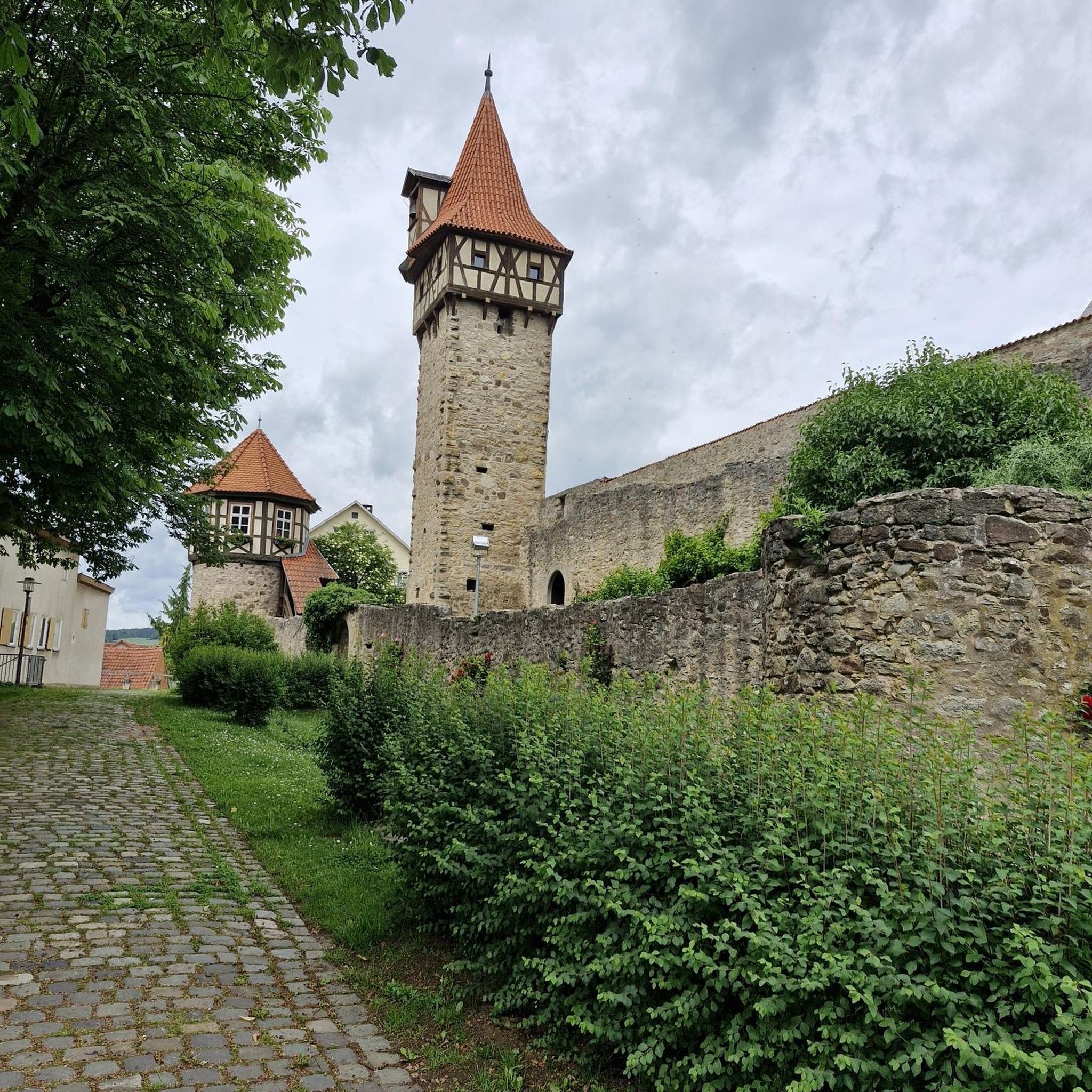
Clères is a French commune with 1,380 inhabitants in the Seine-Maritime department in the Normandy region. It belongs to the arrondissement of Rouen and the canton of Bois-Guillaume.
0
0


The original construction of the building dates back to the 11th and 12th centuries, partly destroyed by lightning on June 10, 1883. In 1896 it was decided to demolish and completely rebuild the church. In front of the church, you can admire the Dillard Fountain. This dates from 1901. Although he died about fifteen years before its construction, Mr. Dillard was keen to supply the city with drinking water and it was with this objective that he made a legacy in his will, a legacy which was contested by the family and whose lawsuit against the town of Saint-Saëns failed. The Dillard Fountain remained operational until 1960 when the city was connected to drinking water.
1
0
The Church has a Latin cross plan with one nave, a nave intersected by a transept, semi-circular bays punctuate the elevations. The bell tower and its polygonal slate spire dominate the double-sloped roofs. The facade is decorated with geometric patterns.
0
0
Every year (first Sunday of spring) the village of Clères welcomes spring with the traditional daffodil festival and its market. For decades, this festival has been a meeting point for the summer. We will therefore find different local producers and artisans presenting their products, but also awareness stands around nature and shows.
0
0
The market halls were built in the 18th century, and over time had various functions: museums, cinema hall, attic... Today, they have regained their former glory and host a weekly market on Sunday morning as well as an annual event every first Sunday of Spring: the Daffodil Festival.
0
0

Mont-Cauvaire is a very bucolic town. There is notably the Raimbourg farm, which has obtained the “Rural Heritage” label for its double bread oven.
0
0
Clères is a charming little village which developed in the 9th century around a fortified castle whose ruins are still visible today. To do this, it is necessary to go to the zoological park, one of the main attractions of the city along with its market halls and its church.
0
0
Frequently Asked Questions
How many no-traffic touring cycling routes are available around Saint-Maclou-De-Folleville?
There are over 30 dedicated no-traffic touring cycling routes around Saint-Maclou-De-Folleville. These routes cater to various skill levels, with 6 easy, 20 moderate, and 6 difficult options, ensuring a suitable ride for most cyclists.
What is the best time of year for traffic-free bike touring in Saint-Maclou-De-Folleville?
The Pays de Caux region, where Saint-Maclou-De-Folleville is located, is particularly beautiful in June when the flax fields are in full bloom, transforming the landscape into a vibrant blue. Spring and early autumn also offer pleasant weather for cycling, with fewer crowds and comfortable temperatures.
Are there any family-friendly no-traffic cycling routes in the area?
Yes, the region offers routes suitable for families. The Véloroute du Lin, for example, is largely developed along a former railway line, providing a smooth, almost entirely traffic-free experience with gentle gradients, making it ideal for families.
What kind of landscapes can I expect on these no-traffic touring routes?
You'll cycle through the picturesque Pays de Caux, characterized by rolling hills, hedgerows, and open fields, including the famous flax fields. Many routes also feature traditional Norman 'clos-masures' and verdant valleys, offering a serene and engaging backdrop for your tour. The Scie river near Vassonville also creates charming green landscapes.
What are some notable landmarks or attractions I can visit along the routes?
While cycling, you can discover several points of interest. Consider visiting the historic Imbleville Castle or exploring Clères Village. The region also features an 11th-century church and the ruins of a 16th-century château in Saint-Maclou-De-Folleville itself, providing glimpses into the region's heritage.
Are there any circular no-traffic bike routes available?
Yes, many routes are designed as loops. For a moderate challenge, consider the Caule Wood Path – Collegiate Church of Our Lady of Auffay loop from Gonneville-sur-Scie, which covers about 27 km. For a longer, more difficult option, the Clères Village – Loop to Do in Dry Weather loop from Clères offers over 66 km of riding.
What do other touring cyclists enjoy most about cycling in Saint-Maclou-De-Folleville?
The area is highly rated by the komoot community, with an average score of 4.14 stars. Reviewers often praise the tranquility of the no-traffic routes, the beautiful Norman countryside, and the well-maintained paths, especially along sections of the Véloroute du Lin.
Are there options for longer, more challenging no-traffic touring routes?
Absolutely. For experienced cyclists seeking a challenge, routes like the Gravel Tracks in Forêt d'Eawy – Gravel section Missy loop from Saint-Hellier offer nearly 40 km with significant elevation gain. Another demanding option is the Clères Village – Clères Daffodil Festival loop from Clères, spanning over 42 km.
Can I find cafes or amenities along the no-traffic routes?
While Saint-Maclou-De-Folleville itself is a small commune, cycling through the Pays de Caux will lead you to charming Norman villages. Towns along the Véloroute du Lin, such as Luneray, Cany-Barville, and Valmont, offer amenities like bakeries and services, perfect for a gourmet break during your tour.
Is public transport available to access these cycling routes?
While specific public transport links directly to the start of every route may vary, the region encourages a 'slow tourism' approach. For detailed information on regional transport options that might connect to parts of the Véloroute du Lin or other cycling hubs, it's advisable to check local transport schedules for the Seine-Maritime department.
Where can I find more information about the Véloroute du Lin?
The Véloroute du Lin is a significant cycling route in the region. You can find more details about its 75-kilometer stretch, which connects Pourville-sur-Mer to Fécamp, on dedicated cycling tourism websites. It's known for its smooth tarmac and traffic-free sections, making it a highlight for touring cyclists.
Most popular routes around Saint-Maclou-De-Folleville
Most popular attractions around Saint-Maclou-De-Folleville

Get inspired with the komoot mobile app


Explore more
Browse the best Cycling routes in other regions.
