The best traffic-free bike rides around Vénérand
4.3
(197)
1,597
riders
112
rides
No traffic touring cycling routes around Vénérand traverse a landscape characterized by undulating terrain, extensive vineyards, and agricultural fields in the Charente-Maritime department. The region features wooded areas like the "bois des Forts" and serene river valleys, offering varied scenery for cyclists. Historical elements, such as Gallo-Roman springs and aqueduct remains, are integrated into many routes. This area provides a mix of generally flat to gently rolling paths, suitable for diverse cycling abilities.
Best no traffic touring cycling routes around…
Last updated: May 22, 2026
5.0
(4)
49
riders
57.4km
03:58
310m
310m
Moderate bike ride. Good fitness required. Mostly paved surfaces. Suitable for all skill levels.
28
riders
34.8km
02:48
340m
340m
Hard bike ride. Good fitness required. You may need to push your bike for some segments of this route.

Sign up for free
4.3
(3)
7
riders
20.8km
01:13
130m
130m
Easy bike ride. Great for any fitness level. Mostly paved surfaces. Suitable for all skill levels.
5.0
(1)
8
riders
Hard bike ride. Good fitness required. You may need to push your bike for some segments of this route.
11
riders
33.8km
02:44
310m
310m
Hard bike ride. Good fitness required. You may need to push your bike for some segments of this route.
Get access to more routes and recommendations from other explorers.
Sign up for free
Already have an account?
Our route recommendations are based on thousands of hikes, rides, and runs completed by other people on komoot.
Start today with a free account
Your next adventure awaits.
Login or Signup
Popular around Vénérand

Tips from the Community

Built around the 1930s, this kiln was used by the inhabitants of the village of Chez Jaguenaud until around 1945. Its operation was used to "fire" clay, transformed into hollow tiles, as well as stone. Quicklime was thus collected from it, a material used by the region's farmers. Purchased by the municipality in 1999, it was restored and rebuilt identically to preserve this small piece of heritage. Its landscaped surroundings make it a remarkable attraction. A nearby parking lot allows visitors to linger.
0
0


Crazannes Castle is a castle located in the commune of Crazannes in the Charente-Maritime department of France. It is known for its medieval watchtower, which was built in the 12th century. Crazannes Castle was built in the 12th century and has been owned by several noble families over the centuries. It has been expanded and modified over time, and its architecture is a mix of medieval, Renaissance and classical styles. Crazannes Castle is also home to underground caves dug into the limestone rock, which have been used as wine cellars and to store food supplies over the centuries. Visitors can explore the caves and learn about their history through guided tours. Crazannes Castle is open to the public during the summer season and offers guided tours, contemporary art exhibitions and cultural events throughout the year. It is also possible to rent rooms for private events such as weddings or receptions.
0
0

Small picturesque town of about 700 inhabitants. The 12th century Saint-Martial church and the castle are worth the detour!
1
0

A particularity is located in the gallery of arcature which overhangs the portal. Indeed it has three arched windows on one side of the central window and two semicircular on the other. Note that the two bays on the right occupy the same width as the three on the left. The bell tower, like many others in the region, has a pyramidal roof. Simple columns come to partition the two windows which cover each face. Inside the church, archival documents prove that the nave with two bays was originally vaulted with warheads. Unfortunately, this vault was destroyed during religious wars. Still according to archival documents, it would seem that at the beginning of the 20th century, a narthex, where the catechumens were held, leaned on its facade. Today, it has completely disappeared. The church was classified as a historic monument in 1913. The building underwent a complete restoration in 1935. To admire just next to the church a magnificent and majestic period residence.
0
0
The walls of the nave were doubled by means of arcades and it was endowed with a new chevet and a new bell tower. With an elegant silhouette and intact in its southern part, it is openworked with four twin bays on semicircular arches on two floors. The interior has a nave with three bays. A bay separates the nave from the front choir vaulted in blocks of rubble which, very narrow, supports the bell tower. The semi-circular apse is vaulted in cul-de-four. The 19th century side chapel, dedicated to Saint Anthony, is located on the left as you enter. Vaulted in a broken cradle, it has a stucco altar whose base has five broken arch bays. A very beautiful ornate wooden balcony dating from the end of the 19th century is located at the interior entrance of the church. The statue of Notre-Dame de Fontdouce, known as "the Virgin and Child" was sculpted by a monk from the Abbey of Fontdouce around the 15th century. It has been kept in the church of Saint Bris des Bois since the revolution and was once a destination of pilgrimage. On the back wall, a semicircular stained glass window indicates the names of the parish priest, Mr. Hague, and the mayor at the time, Mr. Lévécot (1904). The Priory of St Robert: the chapel destroyed during the wars of religion, the campanile is still in place. Saint Robert once had a great reputation, at the end of the 19th century, children suffering from certain illnesses were still brought there "before sunrise". The church was listed as a Historic Monument in 1973. To visit it you will have to pay your tribute just the price of a slight effort ....... the church is located at the top of the hill overlooking the village and adjoining the cemetery.
0
0

The Church of Saint-Martin de Coucoury was built around the 11th century. It is a pretty example of a Romanesque church.
1
0
Frequently Asked Questions
How many no traffic touring cycling routes are available around Vénérand?
There are over 100 dedicated no traffic touring cycling routes around Vénérand. These routes offer a variety of experiences, with 40 easy, 37 moderate, and 27 difficult options to choose from, ensuring something for every skill level.
What kind of terrain can I expect on the no traffic cycling routes near Vénérand?
The terrain around Vénérand is generally flat to gently rolling, making it suitable for touring cyclists. You'll find routes weaving through expansive vineyards, apple orchards, and wooded areas like the Bois des Forts. Some paths also pass through serene river valleys and marshlands, offering diverse scenery. Many routes utilize well-maintained greenways and dedicated paths, ensuring a smooth ride.
Are there any family-friendly no traffic cycling routes in Vénérand?
Yes, Vénérand offers numerous family-friendly options, with 40 easy routes designed for more relaxed rides. These often feature mostly paved surfaces and gentle gradients, perfect for families. An example is the Taillebourg loop from Juicq, which is an easy 9.1 km ride.
What historical landmarks can I see along the no traffic touring cycling routes?
Vénérand and its surroundings are rich in history. You can explore the Gallo-Roman springs, which once supplied the aqueduct to Saintes, or cycle past ancient churches and châteaux. Notable historical sites include the Abbaye de Fontdouce, the Abbaye aux Dames de Saintes, and the Saint-Césaire Church. The Douhet Castle – Gallo-Roman Aqueduct loop from Le Douhet is a great option to combine cycling with historical discovery.
Are there any circular no traffic cycling routes available?
Yes, many of the no traffic touring cycling routes around Vénérand are designed as loops, allowing you to start and end at the same point. Examples include the The Fountains of Vénérand – Saint-Césaire Church loop from La Chapelle-des-Pots and the Ancient Washhouse – Remains of a Roman aqueduct loop from Fontcouverte.
What is the best time of year to cycle in Vénérand?
The Charente-Maritime region generally offers pleasant cycling conditions from spring through early autumn. Spring brings blooming vineyards and mild temperatures, while autumn provides beautiful foliage. Summers can be warm, but many routes pass through shaded woods, offering respite from the sun. Always check the local weather forecast before heading out.
What do other touring cyclists enjoy most about the no traffic routes in Vénérand?
The area is highly rated by the komoot community, with an average score of 4.4 stars from 239 ratings. Reviewers often praise the peacefulness of the car-free routes, the charming scenery through vineyards and forests, and the opportunity to discover historical sites like Roman aqueduct remains and ancient churches.
Are there any specific natural features or viewpoints along the routes?
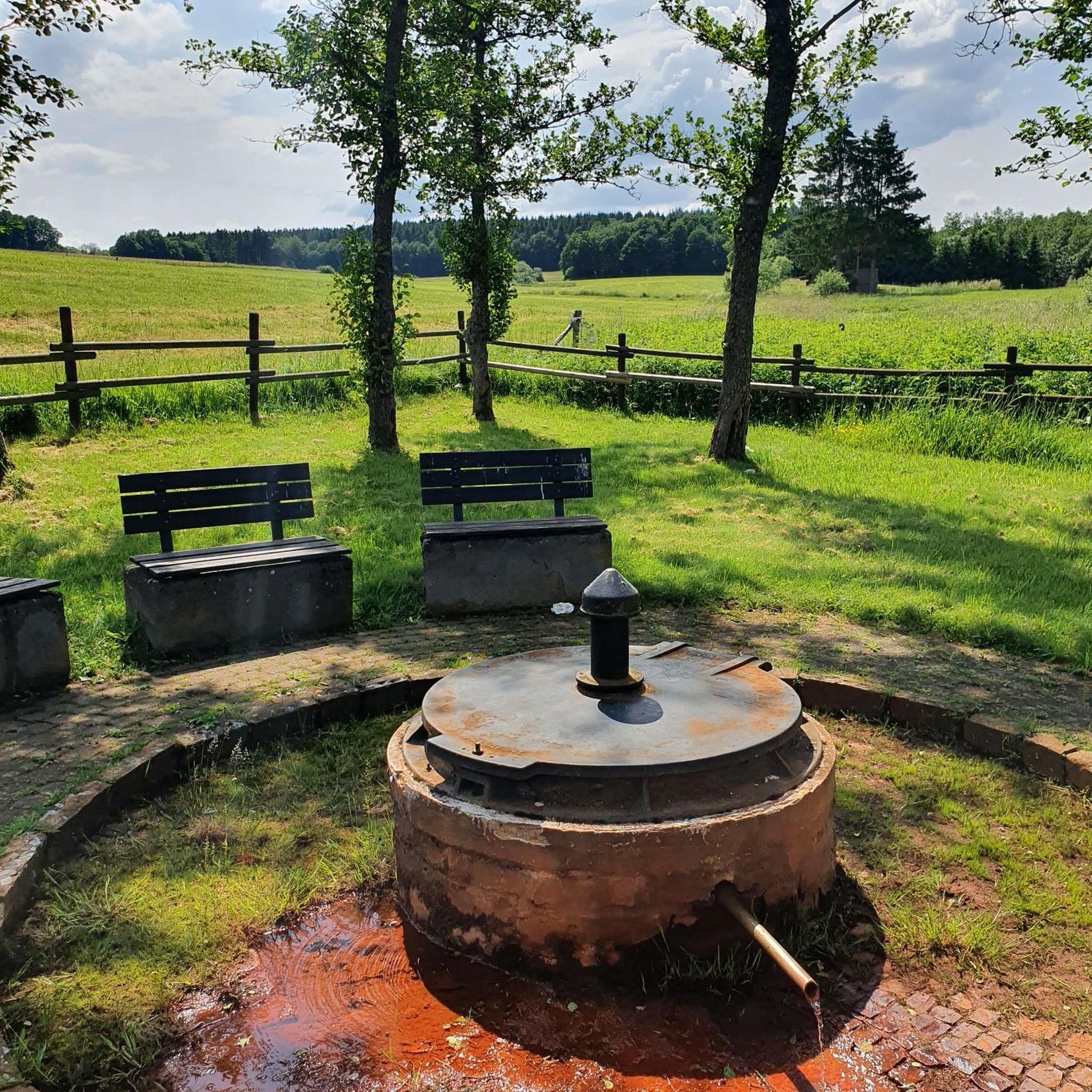
Yes, the routes often traverse picturesque landscapes. You'll cycle through extensive vineyards and orchards, and enjoy the shade of woods like the Bois des Forts. While Vénérand itself is inland, the wider region features serene river valleys and marshlands. The Gallo-Roman springs at Vénérand are a unique natural and historical highlight, offering a tranquil spot to visit.
Where can I find parking for these no traffic cycling routes?
Many routes start from villages or specific points that offer public parking. For example, routes starting from Le Douhet, La Chapelle-des-Pots, or Fontcouverte typically have designated parking areas nearby. It's advisable to check the specific route details on komoot for recommended starting points and parking information.
Can I access these cycling routes using public transport?
While Vénérand itself is a smaller commune, the nearby city of Saintes (approximately 8 km southwest) is a major hub for public transport, including train services. From Saintes, you can often connect to local bus services that serve surrounding villages, or cycle directly to the starting points of many routes. Saintes is also a key point on the Flow Vélo, providing access to broader cycling networks.
Are there any cafes or restaurants along the no traffic cycling routes?
While the routes themselves focus on car-free paths, many pass through or near charming villages where you can find local cafes, bakeries, and restaurants. Saintes, being a larger town nearby, offers a wider selection of dining options. It's a good idea to plan your stops in advance, especially on longer routes, to ensure you have refreshment points.
Most popular attractions around Vénérand

Get inspired with the komoot mobile app


Explore more
Browse the best Cycling routes in other regions.
