The best traffic-free bike rides around Lemud
4.8
(4)
82
riders
16
rides
No traffic gravel bike trails around Lemud offer a diverse landscape for cycling in the Moselle department of France. The region is characterized by its river valleys, such as those of the Seille and Nied, alongside areas of woodland and historical landmarks. Gravel bikers can expect routes with varied terrain, including paths along waterways and through agricultural areas, with moderate elevation changes. This area provides opportunities for exploring the French countryside on car-free routes.
Best no traffic gravel bike trails…
Last updated: October 6, 2026
4.5
(2)
16
riders
38.6km
02:09
190m
190m
Moderate gravel ride. Good fitness required. Mostly paved surfaces. Suitable for all skill levels.
6
riders
Moderate gravel ride. Good fitness required. Mostly paved surfaces. Suitable for all skill levels.

6
riders
Easy gravel ride. Great for any fitness level. Mostly paved surfaces. Suitable for all skill levels.
5.0
(1)
8
riders
57.1km
03:17
390m
390m
Moderate gravel ride. Good fitness required. Mostly paved surfaces. Suitable for all skill levels.
4
riders
45.3km
02:58
380m
380m
Moderate gravel ride. Good fitness required. Mostly paved surfaces. Suitable for all skill levels.
Get access to more routes and recommendations from other explorers.
Already have an account?
Our route recommendations are based on thousands of hikes, rides, and runs completed by other people on komoot.
Start today with a free account
Your next adventure awaits.
Popular around Lemud

Tips from the Community

Two farms were located on the old path between Metz and Peltre, the Haute Bévoye and the Basse Bévoye. The Haute Bévoye, on a hill, is a fortified farm documented from the early 14th century. In 1404, it belonged to "Jehan Xaippey", i.e. Jean de Raigecourt, known as Xappel; 12 cattle and 8 horses were raised there at the time. In addition to an 18th-century dwelling and farm buildings, the layout of the medieval castle remains legible, with four rectangular wings surrounded by a moat; two wings and three towers recall the initial state. https://melodi.univ-lorraine.fr/s/projet-cite-de-metz/item/2973
1
0

A spectacular building from 2010, the first branch of Paris's famous Centre Pompidou, a museum of contemporary art. A white, curved roof is stretched across many exposed wooden beams. Inside, the tube-like exhibition spaces are stacked one above the other in a star shape, with enormous panoramic windows at the ends offering views of the city and the surrounding area.
4
1

Okay with a mountain bike, a bit too intense with a gravel bike!
0
0
Memorial to the fallen of the two world wars and the Indochina War 🕊️.
0
0
Memorial to the fallen of the two world wars 🕊️
0
0
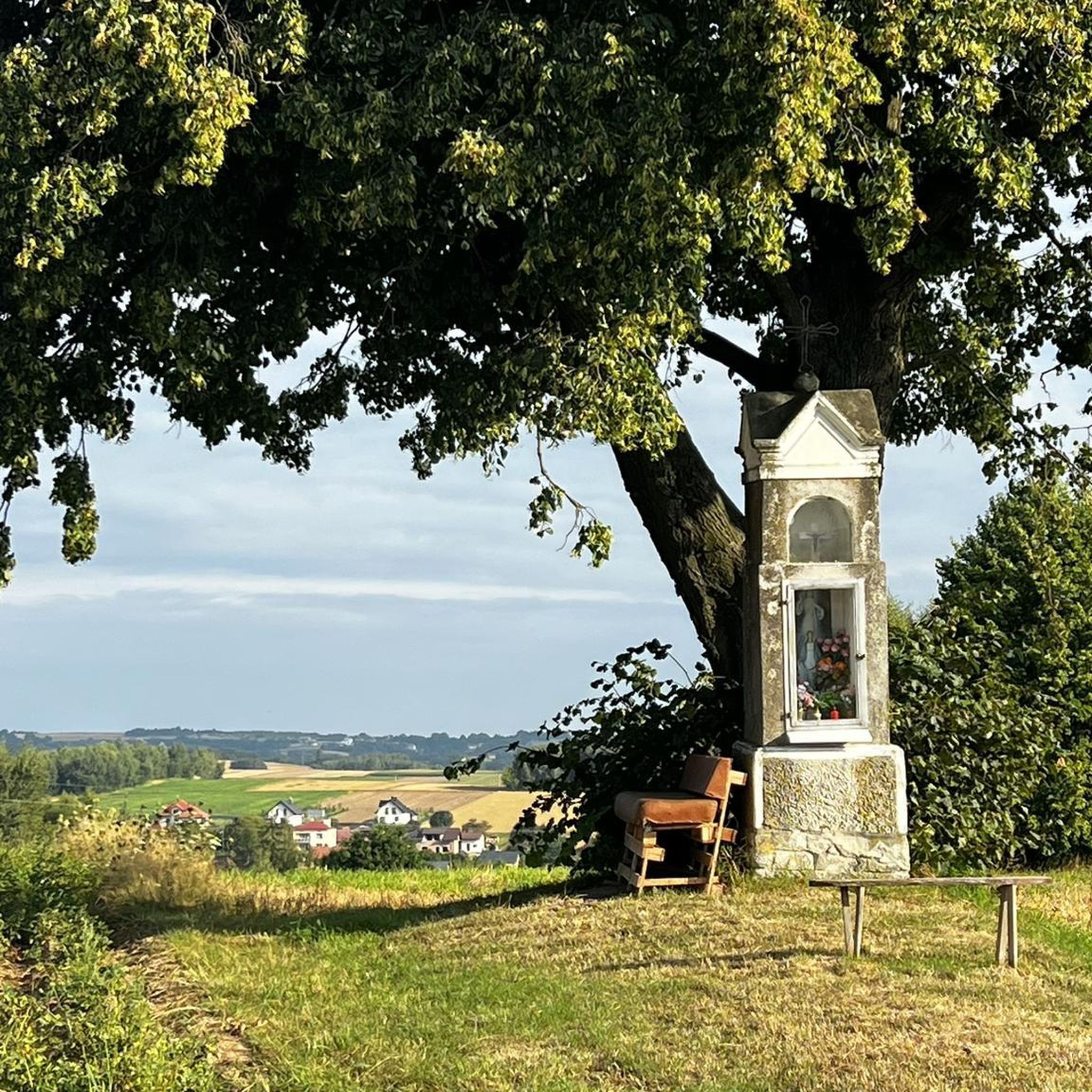
This beautiful rest area is located on the former railway line, at the old train station in Pange.
0
0

The Center Pompidou-Metz is a well-known contemporary art museum located in the Amphitheater district. Created in 2010 as part of a development project, it is one of the most visited museums in France outside of Paris. Its creation represented the first example of decentralization of a public cultural building, in this case the Center Georges Pompidou in Paris. The idea of creating a "branch" came to the now director Jean-Jacques Aillagon in 1997, when the Pompidou in Paris was closed for works (1997-2000). To continue exhibiting the various collections it was decided to create the “Outside the Walls” project, with exhibitions in various French cities. Given the success, concrete thought was given to a second location for the Pompidou Center. Input to the project was given by Aillagon himself when, in 2002, he was appointed Minister of Culture. Various cities showed interest, including Caen, Montpellier, Nancy and Lille, but in January 2003 the final choice was announced: Metz. The following March the tender for the project was launched, won by architects Shigeru Ban, Jean de Gastines and Philip Gumuchdjian. The construction was part of the urban redevelopment project of the Amphitheater district which, in addition to the Pompidou Centre, led to the construction of the Seille Park, the "Robert Schuman" conference centre, the Muse shopping center as well as various buildings of housing and green areas. The official inauguration took place on 11 May 2010 in the presence of President Sarkozy. The Pompidou Center in Metz has a hexagonal plan. The structure develops around a central body with a 77 meter high tower and is characterized by the presence of three self-supporting tunnels that cross each other transversally. The three galleries are oriented towards different points of the city, so as to provide the most complete overview possible. The cover, entirely made of wood, recalls the shape of a traditional Chinese hat owned by Shigeru Ban himself. In addition to the vast exhibition space, which extends over 5,000 m², the structure includes places to welcome the public, a studio for the presentation of shows and performances, gardens, an auditorium, a bookshop, a restaurant and a café. www.centrepompidou-metz.fr
1
0

The origin of “Pont-à-Domangeville is lost in the mists of time. The Roman road from Metz to the Rhine already passed through there. Under the old regime, it was a tiny separate lordship, with a toll bridge. Usually blocked and padlocked, to cross it you had to pay a fee, depending on the livestock and products passed through. The lordship belonged in the 13th century to the Saint-Vincent de Metz abbey, then to the successive lords of Domangeville; in 1716, to the Laubrussels, then to the Leuryses, finally to the Thomas de Pange. It included, in addition to the bridge, the road - 50 toises on this side, 18 beyond - the bed of the Nied on both sides and, on the south-east bank, land with a hostelry (current Mayot farm) . In 1789, the community of Bazoncourt declared in its list of grievances “the enlightenment of the State and the kindness of the King will undoubtedly eliminate a right of final injustice perceived at Pont-à-Domangeville. However poor a plowman he may be, he pays three does and several pay without passing through.” After the revolution, the bridge had to be repaired. Paradoxically, the general council had the expenditure entered in the 1814 and 1815 rolls of the localities which had subscribed to the bridge in 1766. On this ordeal is inscribed: “This monument of our redemption was erected by the care of MM. De Pange, de Courten, Devaux and Dauphin, Commissioners responsible for the reconstruction of this bridge, in the year of our Lord 1816. During the reconstruction work and near the bridge, Joseph GRANDIDIER de Hernicourt and François ANIEL perished in the waters on July 20 from Domangeville, both attached to the service of the neighboring farm »
1
0
Frequently Asked Questions
How many no-traffic gravel bike trails are available around Lemud?
There are 5 dedicated no-traffic gravel bike trails around Lemud listed in this guide. These routes offer a mix of moderate and difficult terrain, ensuring a car-free experience through the beautiful Moselle department.
What kind of terrain can I expect on gravel bike trails near Lemud?
The gravel bike trails around Lemud, situated in the Moselle department, typically feature varied terrain. You can expect a mix of unpaved paths, forest roads, and quiet country lanes, often with gentle to moderate elevation changes. Routes like the Mountain biking in Sud Messin – Verny – Remains of an aqueduct loop from Jury offer more challenging ascents and descents.
Are there any family-friendly no-traffic gravel bike routes near Lemud?
While all routes in this guide are designed to be traffic-free, some are more challenging. For a moderate option that could be suitable for families with some biking experience, consider the The Oak of the Bois de Fey – Pange Castle loop from Courcelles-Chaussy, which is just under 30 km. Always check the route details for distance and elevation to ensure it matches your family's capabilities.
What landmarks or attractions can I see along the no-traffic gravel bike trails?
Several routes pass by interesting landmarks. For instance, the The Oak of the Bois de Fey – Pange Castle loop from Courcelles-Chaussy takes you near Pange Castle. Another route, Denkmal für die Gefallenen 🕊️ – Mont Saint-Pierre loop from Silly-sur-Nied, brings you close to Mont Saint-Pierre, offering scenic views. You might also encounter other historical sites like Mercy Castle or the Domangeville Bridge Monument in the wider area.
What is the best time of year for gravel biking around Lemud?
Spring and autumn are generally ideal for gravel biking in the Moselle department. The weather is typically mild, and the natural scenery is vibrant, with blooming flowers in spring or colorful foliage in autumn. Summer can also be pleasant, but it's advisable to start early to avoid the midday heat. Winter rides are possible, but be prepared for colder temperatures and potentially muddy or icy conditions on unpaved sections.
Are there any circular no-traffic gravel bike routes available?
Yes, all the no-traffic gravel bike routes featured in this guide are circular, meaning they start and end at the same point. This makes planning your ride and parking much more convenient. Examples include the Seille spillway – Ferme de la Haute-Bevoye loop from Jury and the Statue of the Mother and Child – Ferme de la Haute-Bevoye loop from Ogy-Montoy-Flanville.
Where can I find parking for these gravel bike trails near Lemud?
The routes in this guide typically start from villages or towns such as Jury, Ogy-Montoy-Flanville, Courcelles-Chaussy, and Silly-sur-Nied. You can usually find public parking in these areas, often near the starting points of the loops. It's always a good idea to check local parking regulations upon arrival.
Are dogs allowed on the gravel bike trails around Lemud?
Generally, dogs are permitted on public trails in France, especially in rural areas like those around Lemud. However, it's crucial to keep your dog under control, preferably on a leash, to protect local wildlife and ensure the safety of other trail users. Always clean up after your pet. Specific restrictions might apply in certain protected natural areas, so look for signage.
What are the difficulty levels of the no-traffic gravel bike routes?
The no-traffic gravel bike routes around Lemud range from moderate to difficult. There are 3 moderate routes, such as the Seille spillway – Ferme de la Haute-Bevoye loop from Jury, and 2 difficult routes, including the Denkmal für die Gefallenen 🕊️ – Mont Saint-Pierre loop from Silly-sur-Nied. The difficult routes feature more significant elevation gains and longer distances, suitable for experienced gravel bikers.
Are there any cafes or places to stop for refreshments along these routes?
While the routes themselves are traffic-free and often pass through rural landscapes, they typically start or pass near villages and towns where you can find cafes, bakeries, or small shops. For example, routes starting from Courcelles-Chaussy or Jury will likely have amenities available in those towns. It's always recommended to carry sufficient water and snacks, especially on longer rides, as services might not be directly on the trail.
What should I wear for gravel biking in the Moselle department?
Layered clothing is always a good choice for gravel biking, allowing you to adapt to changing weather conditions. Padded cycling shorts are recommended for comfort on longer rides. Depending on the season, bring a windbreaker or waterproof jacket. Sturdy cycling shoes and gloves are also advisable for better grip and protection on varied terrain.
Most popular attractions around Lemud

Get inspired with the komoot mobile app


Explore more
Browse the best Gravel rides in other regions.
