The best traffic-free bike rides around Terdeghem
4.3
(243)
3,562
riders
303
rides
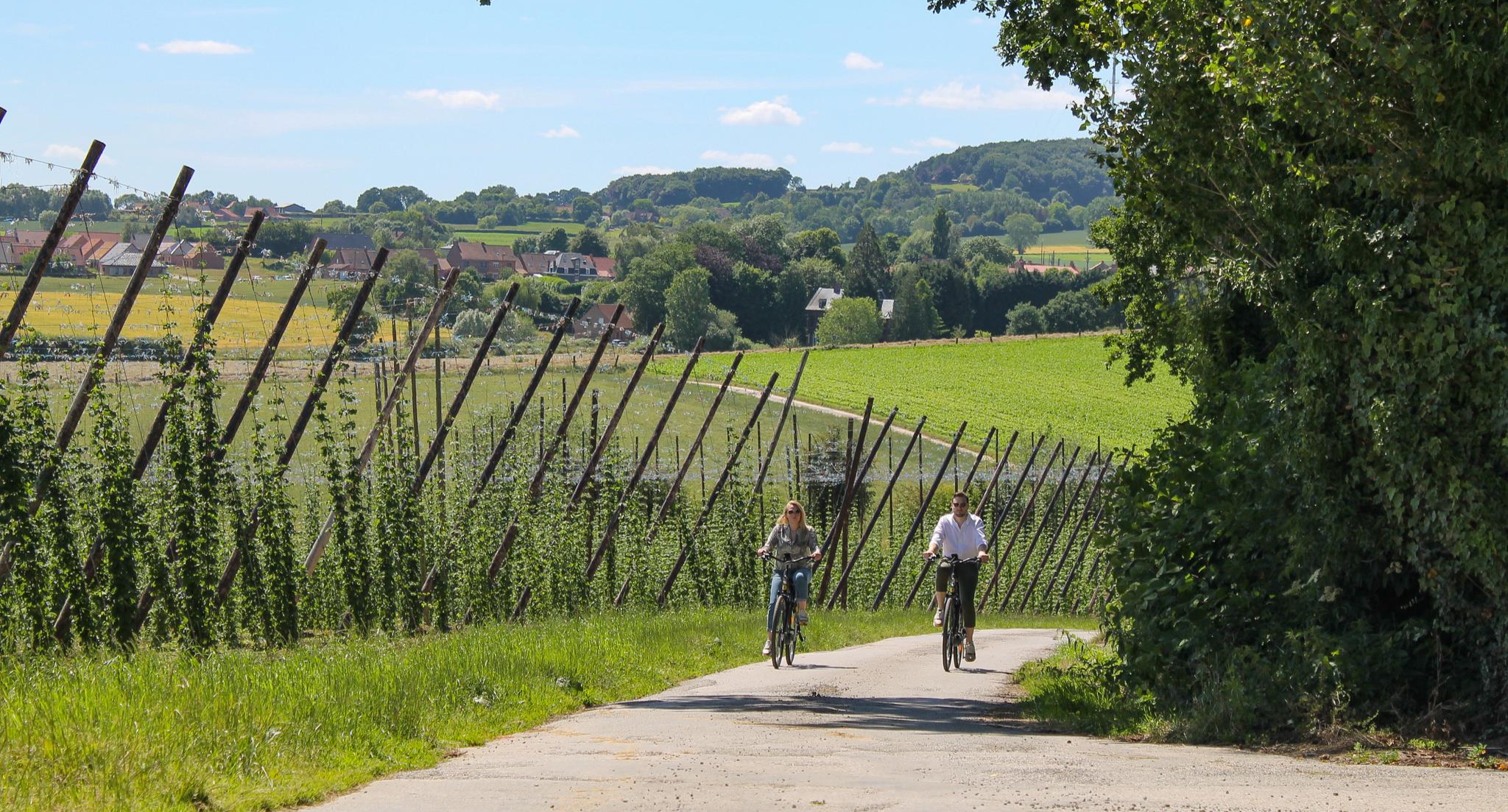
No traffic touring cycling routes around Terdeghem traverse the gentle, wooded terrain of Houtland, offering a picturesque backdrop for cyclists. The region features a varied topography with elevations ranging from 19 to 80 meters, providing a mix of flat paths and gently rolling hills. This allows for both leisurely rides and routes with greater elevation gains. The area is characterized by its extensive network of cycling routes, connecting charming Flemish-style villages and historic windmills.
Best no traffic touring cycling routes…
Last updated: May 22, 2026
5.0
(4)
13
riders
42.1km
02:30
300m
300m
Moderate bike ride. Good fitness required. Mostly paved surfaces. Suitable for all skill levels.
9
riders
Easy bike ride. Great for any fitness level. Mostly paved surfaces. Suitable for all skill levels.

Sign up for free
6
riders
43.6km
02:37
330m
330m
Moderate bike ride. Good fitness required. Mostly paved surfaces. Suitable for all skill levels.
1
riders
36.2km
02:12
310m
310m
Moderate bike ride. Good fitness required. Mostly paved surfaces. Suitable for all skill levels.
5.0
(2)
5
riders
28.6km
01:41
160m
160m
Moderate bike ride. Good fitness required. Mostly paved surfaces. Suitable for all skill levels.
Get access to more routes and recommendations from other explorers.
Sign up for free
Already have an account?
Our route recommendations are based on thousands of hikes, rides, and runs completed by other people on komoot.
Start today with a free account
Your next adventure awaits.
Login or Signup

Other adventures around Terdeghem

Tips from the Community

The Sint-Ackaarsbos in Houtkerke. In the local dialect and on old maps, this forest is also often called the Sint-Achaarsbosch. The name refers to Saint Acharius (Saint-Accaire), a 7th-century bishop who was venerated in this region (the old diocese of Tournai-Noyon). The name of the village itself literally means "the church in the wood (forest)". The Sint-Ackaarsbos is one of the last remnants of the large forests that formerly covered this part of the French Westhoek.
0
0


It was from Steenvoorde that the Beeldenstorm spread rapidly throughout the Netherlands. In the church, you can still see a bell from the Laurentius Monastery. The Beeldenstorm began here with the shattering of all the statues and furnishings of this monastery. No trace remains of the monastery itself, located a few kilometers from Steenvoorde. Only a place name, Gallicized to Saint-Laurent, now a rest stop along the Lille-Dunkirk motorway, remains as a reminder. The church itself has a turbulent history. After falling victim to the Beeldenstorm in 1566, it burned down in 1576, was destroyed by the French in 1644, and was rebuilt in late Gothic style between 1660 and 1664. The tower dates from 1712, and the brick spire was built in 1890 and 1891. In May 1940, the church was again severely damaged. In 1950 it was restored.
0
0

At the beginning of the 14th century, Flanders as a whole enjoyed a flourishing cloth industry. The major centers of Ghent, Bruges, and Ypres wanted to protect their own markets. An initial privilege had already been granted for Ypres on October 28, 1322, but it was insufficient. Louis I, Count of Flanders, amended this privilege for Ypres on February 7, 1324. "From then on, no cloth was to be woven, sheared, or dyed within a three-hour radius of Ypres; failure to comply resulted in a fine of 50 pounds and the confiscation of the looms." This proved very unfortunate for Poperinge, which is only 12 km from Ypres. The people of Poperinge resisted this privilege by continuing to produce cloth or engage in other activities related to the cloth industry. According to several "clever" cloth weavers, it was more than a three-hour walk from Poperinge to Ypres. This led to a fierce battle between Poperinge and Ypres. The three Flemish cities launched an army to silence the people of Poperinge. This occurred in May 1341. Both sides lost their leaders in the battle: Jacob Bets at Poperinge and Jan de Houtkerke at Ypres. Poperinge was powerless against the overwhelming force. From then on, cloth would no longer be woven in Poperinge. What was forbidden, however, did happen: cloth production continued in Poperinge. A lawsuit followed, which was lost. This left the feud between Poperinge and Ypres far from over. The people of Poperinge sought a playful way to take revenge. They used the weapon of mockery. The Guild of the Stone was founded in Poperinge (1372), led by Master Ghybe. To this day, a kind of rivalry between Poperinge and Ypres still remains. Hops were grown as an alternative to the defunct cloth trade. Who? Master Ghybe is something of the Don Quixote of Poperinge. He sat backward on a donkey with an 83-pound boulder on a cushion in front of him. He carried pots and pans as armor. He was armed with a ladle and a spit. Along with his followers, dressed like him, he participated in processions and parades. Ghybe wasn't chosen at random; he was the symbol of the three major cities: Ghent, Ypres (Ieper), and Bruges. His donkey represents Flanders, which was poorly governed. The boulder he carried is the symbol of the people of Poperinge. They are also called "keikop" (stone head). Source: Wikipedia
4
0
Lucien De Gheus used bronze and bluestone for this artwork. Master Ghybe is a fictional, folkloric figure from the Belgian town of Poperinge. The figure dates back to the Middle Ages and symbolizes the competition in the cloth industry between the towns of Poperinge and Ypres. Master Ghybe mocks Ypres, Poperinge's main competitor.
4
0
St. John's Church was founded in the 13th century and is primarily known as a place of pilgrimage in honor of Our Lady of St. John. In 1479, through her intercession, a miracle occurred, which led to the annual Marian Procession. The white stone Calvary is a replica of the original wooden statues, which can now be seen in the winter chapel.
5
0
Frequently Asked Questions
How many no-traffic touring cycling routes are available around Terdeghem?
There are over 300 no-traffic touring cycling routes around Terdeghem, catering to various skill levels. You'll find 112 easy routes, 137 moderate routes, and 61 more challenging options, ensuring a suitable ride for every touring cyclist.
What kind of terrain can I expect on these no-traffic routes?
The terrain around Terdeghem offers a pleasant mix of gentle, wooded landscapes and rolling hills, with elevations ranging from 19 to 80 meters. This provides both leisurely flat paths and routes with gentle gradients, perfect for touring cyclists seeking scenic views without heavy traffic.
Are there any circular no-traffic touring routes in the Terdeghem area?
Yes, many of the no-traffic touring routes around Terdeghem are circular, allowing you to start and end your ride in the same location. An example is the St. Peter's Church Steenvoorde – Moulin de la Roome loop from Steenvoorde, which is an easy 11.3 km ride.
What are some notable landmarks or attractions I can see along the no-traffic cycling routes?
The routes often pass through picturesque Flemish-style villages and by historic windmills. You can visit the Mont des Cats Abbey, see The mill on Cassel Hill, or explore Cassel Village, known for its Flemish character and the Museum of Flanders.
What do other touring cyclists say about the no-traffic routes in Terdeghem?
The no-traffic touring routes in Terdeghem are highly rated by the komoot community, with an average score of 4.4 stars from 243 ratings. Reviewers often praise the quiet, scenic paths, the charming Flemish villages, and the well-maintained network of routes that make for an enjoyable cycling experience.
Are there any challenging no-traffic touring routes for experienced cyclists?
Yes, for those seeking a greater challenge, there are 61 difficult routes available. A moderate option that offers varied terrain and elevation is the Around the Everest of Flanders route, which covers 42.1 km with over 300 meters of elevation gain.
Can I find cafes or places to rest along the no-traffic touring routes?
Yes, the routes often pass through charming Flemish-style villages and towns like Steenvoorde and Cassel, where you can find cafes, eateries, and other amenities. These provide excellent opportunities for a break, a meal, or to simply soak in the local atmosphere.
What is the best season for no-traffic touring cycling in Terdeghem?
The region is enjoyable for cycling throughout much of the year. Spring and autumn offer pleasant temperatures and beautiful scenery with fewer crowds. Summer is also popular, though it can be warmer. Winter cycling is possible, but be prepared for cooler temperatures and potentially wet conditions.
Is public transport available to access the no-traffic cycling routes around Terdeghem?
While Terdeghem itself is a smaller village, nearby towns like Cassel and Steenvoorde are often starting points for routes and may have better public transport connections. It's advisable to check local bus or train schedules for the most convenient access points to the wider cycling network.
Are there any easy no-traffic touring routes suitable for beginners or families?
Absolutely. With 112 easy routes available, beginners and families can find suitable no-traffic touring options. An example is the St. Peter's Church Steenvoorde – Moulin de la Roome loop from Steenvoorde, which is a gentle 11.3 km ride with minimal elevation gain.
Where can I park my car when starting a no-traffic touring cycling route?
Many of the routes start from towns or villages like Steenvoorde or Cassel, which typically offer public parking facilities. It's recommended to check specific starting points for available parking options before your ride.
Most popular attractions around Terdeghem

Get inspired with the komoot mobile app


Explore more
Browse the best Cycling routes in other regions.
