The best traffic-free bike rides around Canillas De Aceituno
4.5
(338)
2,483
riders
11
rides
No traffic touring cycling routes around Canillas De Aceituno are set within the dramatic landscapes of the Sierra de Tejeda, Almijara, and Alhama Natural Park. This region is characterized by rugged peaks, deep gorges, and a mosaic of olive groves, vineyards, and almond trees. The village itself is situated at the foot of La Maroma, Málaga's highest peak, providing a challenging mountainous backdrop for cyclists. The terrain offers significant climbs and scenic routes through traditional white villages, with elevations reaching…
Last updated: May 21, 2026
5.0
(1)
71
riders
59.4km
04:21
1,340m
1,340m
Hard bike ride. Very good fitness required. Mostly paved surfaces. Suitable for all skill levels.
4.0
(1)
37
riders
41.9km
03:45
990m
990m
Hard bike ride. Very good fitness required. Mostly paved surfaces. Suitable for all skill levels.

Sign up for free
5.0
(1)
28
riders
58.3km
04:35
1,610m
1,610m
Hard bike ride. Very good fitness required. Mostly paved surfaces. Suitable for all skill levels.
21
riders
82.4km
05:45
1,590m
1,590m
Hard bike ride. Very good fitness required. Mostly paved surfaces. Suitable for all skill levels.
5.0
(1)
14
riders
Hard bike ride. Very good fitness required. Mostly paved surfaces. Suitable for all skill levels.
Get access to more routes and recommendations from other explorers.
Sign up for free
Already have an account?
Our route recommendations are based on thousands of hikes, rides, and runs completed by other people on komoot.
Start today with a free account
Your next adventure awaits.
Login or Signup




Tips from the Community


The Museo de la Miel (Honey Museum) in Colmenar is dedicated to beekeeping and honey production. It showcases honey making from antiquity to the present day, explains how beehives work, and the role of bees in nature. The museum is organized thematically, displaying the life of bees, different types of beehives, honey production, and beekeeping tools. Interactive screens supplement the exhibition with information on pollination, beekeeping practices, and products from the hive. In addition, the museum regularly hosts events such as workshops, tastings, and culinary tours that highlight regional products like honey and cheese. Visitors can purchase various types of honey, beeswax candles, and other handcrafted items in the museum shop. Thus, the Museo de la Miel offers a comprehensive insight into the world of bees and the tradition of honey production.
5
0
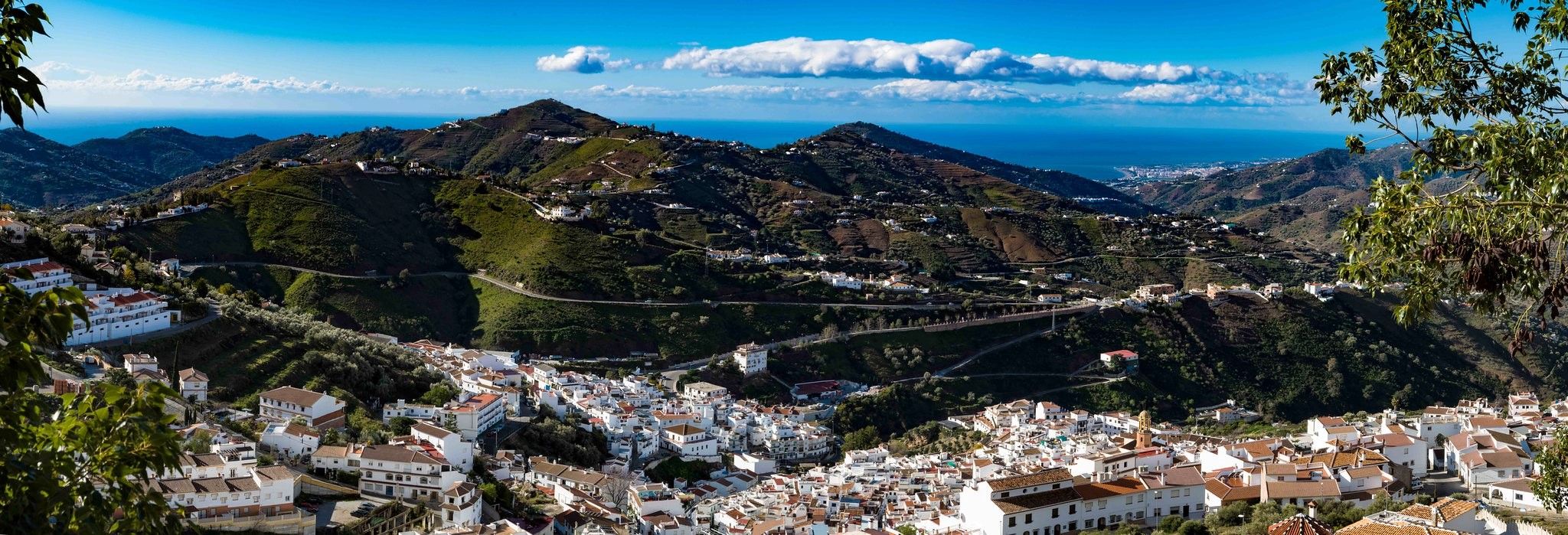
Colmenar, a picturesque village in the Andalusian province of Málaga, was founded at the end of the 15th century after the Christian reconquest of the region. The village's name derives from the Spanish word colmena ("beehive") and recalls the long tradition of beekeeping, which once played a central role here. Thanks to its favorable location in the Montes de Málaga mountains and the lush vegetation, beekeeping was one of the most important sources of income for the population for centuries. Even today, Colmenar is known as the "Village of Honey" and proudly maintains this cultural heritage. Among the village's most important landmarks is the Ermita de la Candelaria, a small 17th-century chapel perched on a hill overlooking the village, offering sweeping views of the surrounding mountains. In the town center stands the Iglesia de Nuestra Señora de la Asunción, a church dating from the 16th and 17th centuries, which impresses with its simple Andalusian style and tranquil atmosphere. At the town entrance, visitors are greeted by the Puerta de la Cruz, a symbolic gate featuring a monolith bearing the village's coat of arms – adorned with a bee and a honeycomb, representing Colmenar's history and identity. A particular highlight is the Museo de la Miel, the "Honey Museum," where visitors can learn all about beekeeping, the work of bees, and honey production. Thus, Colmenar harmoniously blends history, nature, and tradition – a place where the region's past and a deep love for its landscape are reflected in every street and every scent of wild rosemary.
6
0

A town famous for its honey and sausages, among other things. A visit to its central square and the church located at the top of the town are highly recommended.
0
0


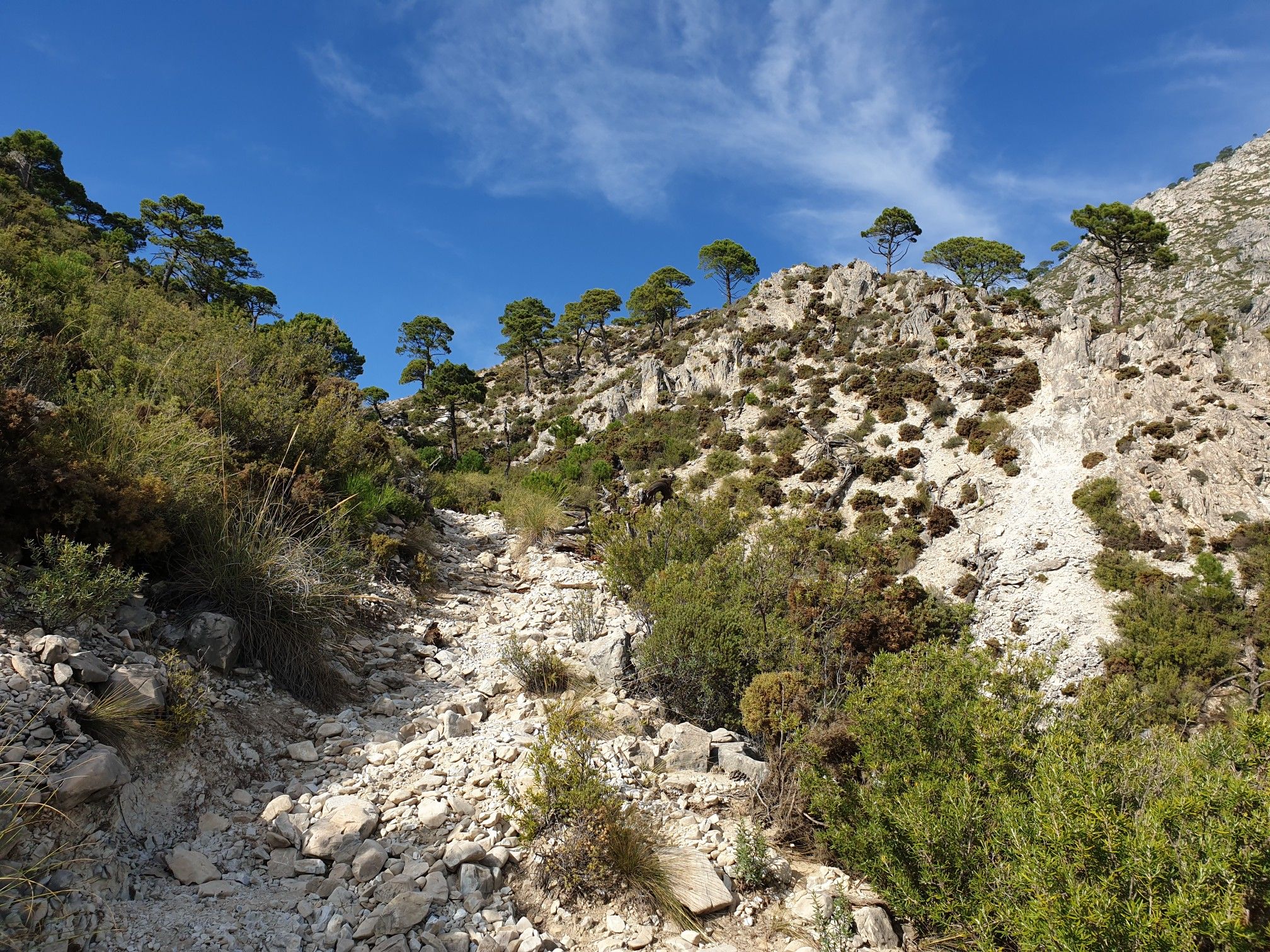
Scenic vista point and accss to two parallel steeper trails above and below this remarkably gradual gravel road. Cork oaks with thick bark thrive at this elevation
1
0
Just off to both sides of the gradual Colmenares gravel road, steeper side roads and trails beckon to explore the nature reserve. Asphodelus albus flowers cover the slopes in early spring https://en.wikipedia.org/wiki/Asphodelus_albus
1
0
At every turn of this well-built smooth gravel road the views open up across the valley and mountains to the west.
1
0
Frequently Asked Questions
How many no traffic touring cycling routes are available in Canillas de Aceituno?
There are 11 dedicated no traffic touring cycling routes around Canillas de Aceituno. These routes are carefully selected to offer quiet and scenic cycling experiences away from heavy vehicle traffic.
What is the typical terrain like for no traffic touring cycling in this region?
The terrain around Canillas de Aceituno is predominantly mountainous, characterized by significant ascents and descents. You'll encounter rugged peaks, deep gorges, and a mosaic of olive groves, vineyards, and almond trees. While challenging, the routes offer rewarding panoramic views of the Sierra de Tejeda Natural Park and even the Mediterranean coast.
Are there any family-friendly no traffic touring cycling routes?
The no traffic touring cycling routes around Canillas de Aceituno are generally considered challenging, with 9 out of 11 routes rated as 'difficult' and 2 as 'moderate'. There are currently no routes specifically categorized as 'easy', so families with young children or beginners may find these routes demanding due to the elevation changes.
What are some notable landmarks or viewpoints I can expect to see along these routes?
Many routes offer stunning views and pass by significant natural features. You might encounter the dramatic El Saltillo Suspension Bridge, often called the 'Caminito del Rey de la Axarquía', or catch glimpses of La Maroma Summit, the highest peak in Málaga. Other highlights include the Walkway Through the Río Algarrobo Gorge and various mountain passes like Huerta Grande Pass.
What is the best time of year for no traffic touring cycling in Canillas de Aceituno?
The best times for touring cycling in Canillas de Aceituno are typically spring (March to May) and autumn (September to November). During these seasons, temperatures are milder, and the natural landscape is vibrant. Summers can be very hot, making longer rides challenging, while winters can bring cooler temperatures and occasional rain at higher elevations.
Are there any circular no traffic touring cycling routes?
Yes, many of the routes are designed as loops, allowing you to start and end in the same location. For example, the Canillas de Aceituno – Sedella loop from Viñuela and the El Saltillo Suspension Bridge – Canillas de Aceituno loop from Viñuela are excellent circular options for exploring the region.
What do other touring cyclists enjoy most about the routes in Canillas de Aceituno?
The area is highly rated by the komoot community, with an average score of 4.46 stars. Reviewers often praise the stunning mountain scenery, the challenge of the climbs, and the authentic experience of cycling through the picturesque white villages of the Axarquía region, all while enjoying the tranquility of traffic-free paths.
Is public transport available to access the cycling routes?
While Canillas de Aceituno is a charming village, public transport options directly to the trailheads can be limited. It's generally recommended to arrive by car, especially if you're bringing your own touring bike. Some local bus services connect to larger towns in the Axarquía region, but direct access to specific route starting points might require additional planning or a taxi.
Are there places to eat or get refreshments along the no traffic routes?
Many routes pass through or near charming white villages like Canillas de Aceituno itself, Sedella, or Salares, where you can find local cafes and restaurants to refuel. It's always a good idea to carry sufficient water and snacks, especially on longer routes, as amenities might be sparse between villages.
Is parking available near the starting points of these routes?
Yes, parking is generally available in or near the villages that serve as common starting points for these routes, such as Canillas de Aceituno or Viñuela. Look for public parking areas within the villages. Always ensure you park responsibly and respect local regulations.
Are there any specific permits required for cycling in the Sierra de Tejeda Natural Park?
Generally, no specific permits are required for cycling on established trails and roads within the Sierra de Tejeda, Almijara, and Alhama Natural Park. However, it's always advisable to stay on marked paths, respect protected areas, and be aware of any local regulations, especially concerning sensitive ecological zones or private land.
Most popular routes around Canillas De Aceituno
Most popular attractions around Canillas De Aceituno

Get inspired with the komoot mobile app


Explore more
Browse the best Cycling routes in other regions.
