The best traffic-free bike rides around Fonollosa
4.5
(88)
4,452
riders
193
rides
No traffic touring cycling routes around Fonollosa traverse a landscape characterized by diverse terrain, from accessible paths connecting its medieval villages to more challenging routes through natural areas. The region features historical architecture, including ancient towers and Romanesque hermitages, alongside unique natural elements like dry stone constructions and monumental trees. Fonollosa's varied topography offers panoramic views from elevated points, providing rewarding cycling experiences.
Best no traffic touring cycling routes around Fonollosa
- The most popular no traffic touring cycling route is…
Last updated: May 21, 2026
5.0
(1)
98
riders
51.2km
03:33
910m
910m
Hard bike ride. Very good fitness required. Mostly paved surfaces. Suitable for all skill levels.
27
riders
26.0km
02:37
580m
580m
Hard bike ride. Very good fitness required. Mostly paved surfaces. Suitable for all skill levels.

Sign up for free
16
riders
27.5km
02:19
340m
340m
Moderate bike ride. Good fitness required. Mostly paved surfaces. Suitable for all skill levels.
8
riders
Moderate bike ride. Good fitness required. Mostly paved surfaces. Suitable for all skill levels.
6
riders
38.0km
02:42
770m
770m
Hard bike ride. Very good fitness required. Mostly paved surfaces. Suitable for all skill levels.
Get access to more routes and recommendations from other explorers.
Sign up for free
Already have an account?
Our route recommendations are based on thousands of hikes, rides, and runs completed by other people on komoot.
Start today with a free account
Your next adventure awaits.
Login or Signup
Popular around Fonollosa

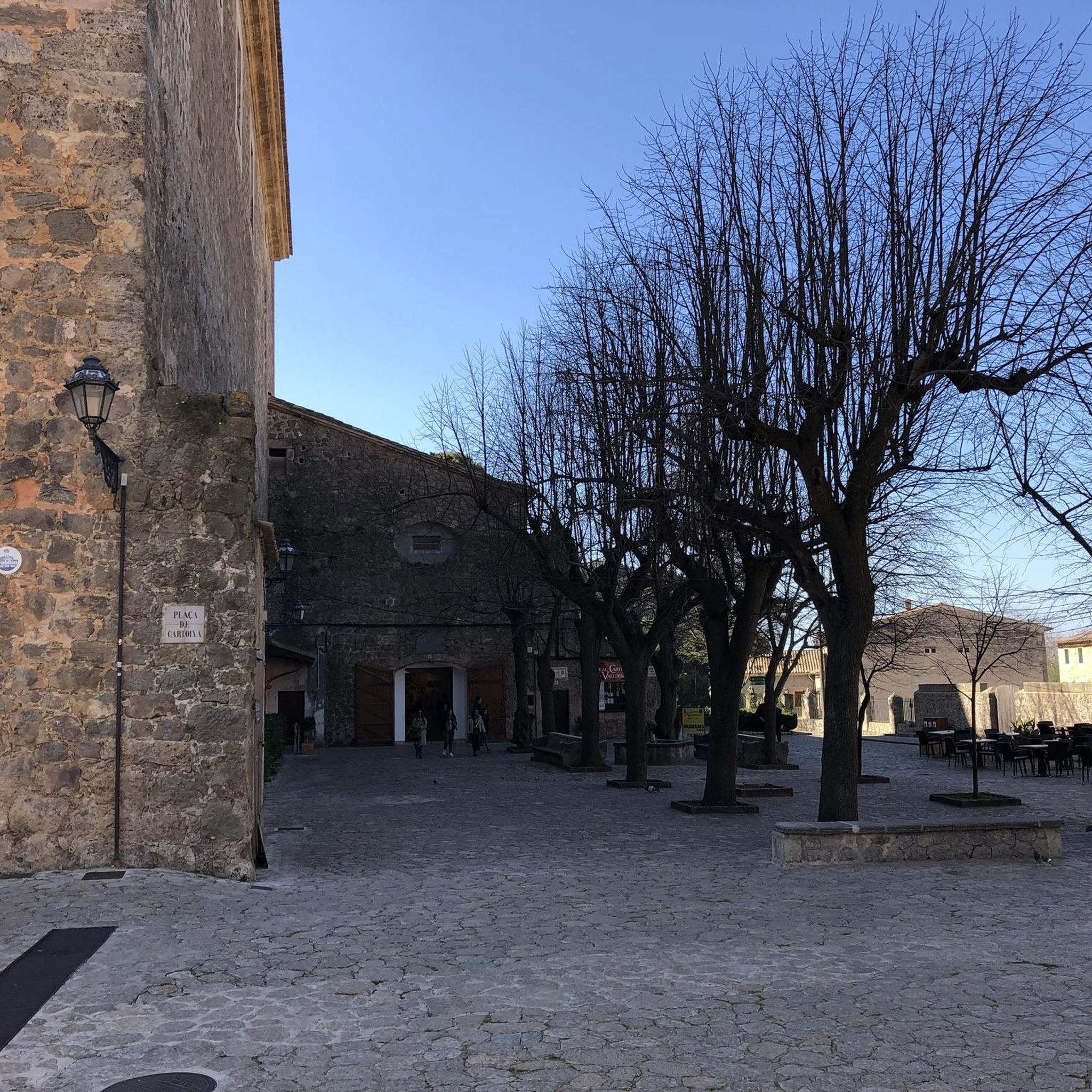
Tips from the Community

Recreation area with picnic area and spectacular views of Montserrat
0
0

The Cave of Saint Ignatius is one of Manresa's most emblematic sites, a sanctuary commemorating Ignatius of Loyola's stay during his spiritual retreat. The grotto, now a chapel, is notable for its alabaster reliefs and the traditional markings attributed to the saint, while the complex includes a Baroque church and a Neoclassical convent that enhance the visit. It is the final destination for those following the Ignatian Way.
0
0

The Old Bridge of Manresa (Pont Vell) is one of the city's most emblematic monuments and forms part of its most distinctive skyline, along with the Basilica of La Seu and the Cave of Saint Ignatius. Of Roman origin, the current structure is a faithful reconstruction of a 12th-century medieval bridge. It was destroyed in 1939 during the Civil War and rebuilt between 1960 and 1962 by architect J. Pons Sorolla.
15
0

I grew up there, long before the observatory and the archaeological works at the Castle. When we were little, it seemed to us that the idea that there was a castle behind the church was a chimera. When it was brought to light, it seemed like magic.
0
0

A carved fountain consisting of a semi-buried body framed by a large arch, which creates a small elliptical apse, at the midpoint of which is the fountain. The water falls, from a rectangular niche framed in another with a pointed arch, onto a circular sink with a base. On the side of the fountain there is a bench attached, running. The set is completed with a stone table in the center of the space. This is built with masonry and the ashlars are seen in its entire front part, and inside, up to half height, the curvilinear part of the chapel was plastered. There still remains, at the highest point of the arch, the part of a fastening element from which a chain hangs, and at an even higher point, crowning the set, there is a large piece of stone with the inscription "Girada 1923". Observations: The fountain is located in Monistrolet, in an artificial widening of the road and in a space formed from the fountain itself and small stone walls that follow the lateral profile of the work. It can be reached by the path that comes from Can Servitge passing through the deposits of Can Gallifa or Cisternes de Monistrolet (file 390) and the Font del Rector (file 391), crossing the Riera de Rajadell, or from Monistrolet, skirting Can Gallifa (file 98) along the path that surrounds it to the W., and passing through the Camp de la Girada, cross the Riera de Rajadell through a ford, and from there follow a path in a westerly direction. The fountain is located 700m. in a straight line to the SW of Can Gallifa. The name of the Girada is due to the curve that the Riera de Rajadell makes in this sector. Campaign masses have been celebrated at the site with the stone table as an altar. You can see that the beautiful vault of this fountain is in the shape of an ellipse. This design, apart from having an artistic motif, also gives it a surprising acoustic property. If we look for the two foci of this ellipse and place a person in the area near each of them, they will hear the other person's voice clearly amplified and with an enveloping effect. From an area close to the focus, such as the beginning of the stone benches, we can also hear the effect.
0
0
The Font de l’Arrel is located next to the torrent de l’Infern –or Vallformosa or Servitge-, very shortly before the confluence with the Rajadell stream, upstream of the Suanya. A path that leaves the asphalt road that goes to the Servitge urbanization, when it crosses the viaduct of the C-37 road above it, crosses the shady slope populated by oaks and black maples, visits the Font de l’Arrel, crosses the Torrent de l’Infern and continues along the right bank of the Rajadell stream towards the Gorg Blau. The itinerary “M2 – La riera de Rajadell” of the Anella Verda de Manresa passes by the Font de l’Arrel. The fountain is well maintained and has a space in front for rest or meeting, shaded by a large oak and some plane trees. The stream of water falls into a stone basin covered with hepatica thallus and capillaries that give it charm. The flow is rather scarce, but only very exceptionally does the spring dry up completely.
0
0

Pont Vell de Manresa, crosses the Cardener river and connects the old Abrera road and Rodalies station with the Santuari de Sant Ignasi and the Old quarter.
1
0

The network of churches, built in territory conquered by the Saracens, was essential for providing religious services to the colonists. Santa Maria (11th century), in Romanesque style, is an example. The current building shows the 18th century extensions that transformed the original Latin cross plan (one nave) into a basilica plan (three naves). On the facade, the rose window, the bell tower and the portal stand out with two domed semi-circular arches, decorated with an archivolt and Corinthian-style capitals. Behind, the apse is covered with a quarter-sphere vault and ornamented with blind arches and a triple-arched window. In the interior, the semi-circular vault roof reinforced with two lateral arches of the central nave and the Gothic sarcophagus of Berenguer de Talamanca, who died in 1325, stand out.
0
0
Frequently Asked Questions
How many no-traffic touring cycling routes are available around Fonollosa?
Fonollosa offers a wide selection of no-traffic touring cycling routes, with over 190 options to explore. These routes vary in difficulty, ensuring there's something for every cyclist.
What is the difficulty range of no-traffic touring cycling routes in Fonollosa?
The no-traffic touring cycling routes around Fonollosa cater to various skill levels. You'll find approximately 12 easy routes, 56 moderate routes, and 124 more difficult options, providing challenges for experienced cyclists.
What historical sites and natural features can I discover along these routes?
Many no-traffic routes in Fonollosa pass by fascinating historical sites and natural landmarks. You can cycle past medieval structures like the Torres de Fals or the impressive Rajadell Castle. Natural highlights include the centenarian Mas Querol Oak, a Monumental Tree of Catalonia, and unique dry stone constructions scattered throughout the landscape.
Are there any circular no-traffic cycling routes in the area?
Yes, many of the no-traffic touring cycling routes around Fonollosa are circular, allowing you to start and end your journey in the same location. For example, consider the "Font de la Girada – Rajadell Castle loop from Rajadell" or the "Molinot Nou Weighbridge – Church of Fonollosa loop from Rajadell" for a scenic round trip.
What is the best time of year to go touring cycling in Fonollosa?
Fonollosa offers pleasant cycling conditions for much of the year. Spring and autumn generally provide the most comfortable temperatures for touring. The region's commitment to preserving its night sky also makes it appealing for clear-sky cycling or stargazing, especially during drier months.
Are there family-friendly no-traffic cycling routes suitable for beginners?
Yes, there are several easier no-traffic routes perfect for families or beginners. These routes often connect the charming villages of Fonollosa, Fals, Camps, and Canet de Fals, offering a gentle introduction to the region's beauty. Look for routes marked as 'easy' in the guide.
Can I find routes with panoramic views of the surrounding landscape?
Absolutely. The region offers routes that lead to elevated points, providing magnificent views. The Collbaix peak, for instance, offers stunning vistas of Montserrat, Sant Llorenç, Montseny, and even the Pyrenees on clear days. While not a specific route, some touring paths will offer glimpses of these iconic landmarks.
Are there places to eat or stay along the no-traffic cycling routes?
While the guide focuses on the routes themselves, the municipality of Fonollosa and its surrounding villages (Fals, Camps, Canet de Fals) offer local establishments where cyclists can find refreshments and accommodation. It's advisable to check local listings for cafes and restaurants in these areas before your ride.
Is it possible to combine cycling with stargazing in Fonollosa?
Yes, Fonollosa is actively involved in night sky preservation initiatives, with efforts to accredit the Serra de Castelltallat as a Starlight Tourist Destination. This makes the region an excellent spot for astrotourism, offering unique opportunities for clear-sky cycling or stargazing after your daytime rides.
What do other touring cyclists enjoy most about cycling in Fonollosa?
The komoot community highly rates touring cycling in Fonollosa, with an average score of 4.56 stars. Reviewers often praise the diverse landscapes, the quiet roads perfect for no-traffic cycling, and the blend of cultural immersion with natural beauty found along the routes.
Are there any specific routes that pass by significant bridges or religious buildings?
Yes, some routes venture close to notable structures. For example, the "Pont Vell de Manresa – Parque de l'Agulla loop from Sant Joan de Vilatorrada" includes the historic Pont Vell de Manresa. You might also encounter the impressive Basilica of Santa Maria de la Seu de Manresa on routes extending towards Manresa.
Most popular attractions around Fonollosa

Get inspired with the komoot mobile app


Explore more
Browse the best Cycling routes in other regions.
