The best traffic-free bike rides around Forès
4.8
(25)
938
riders
8
rides
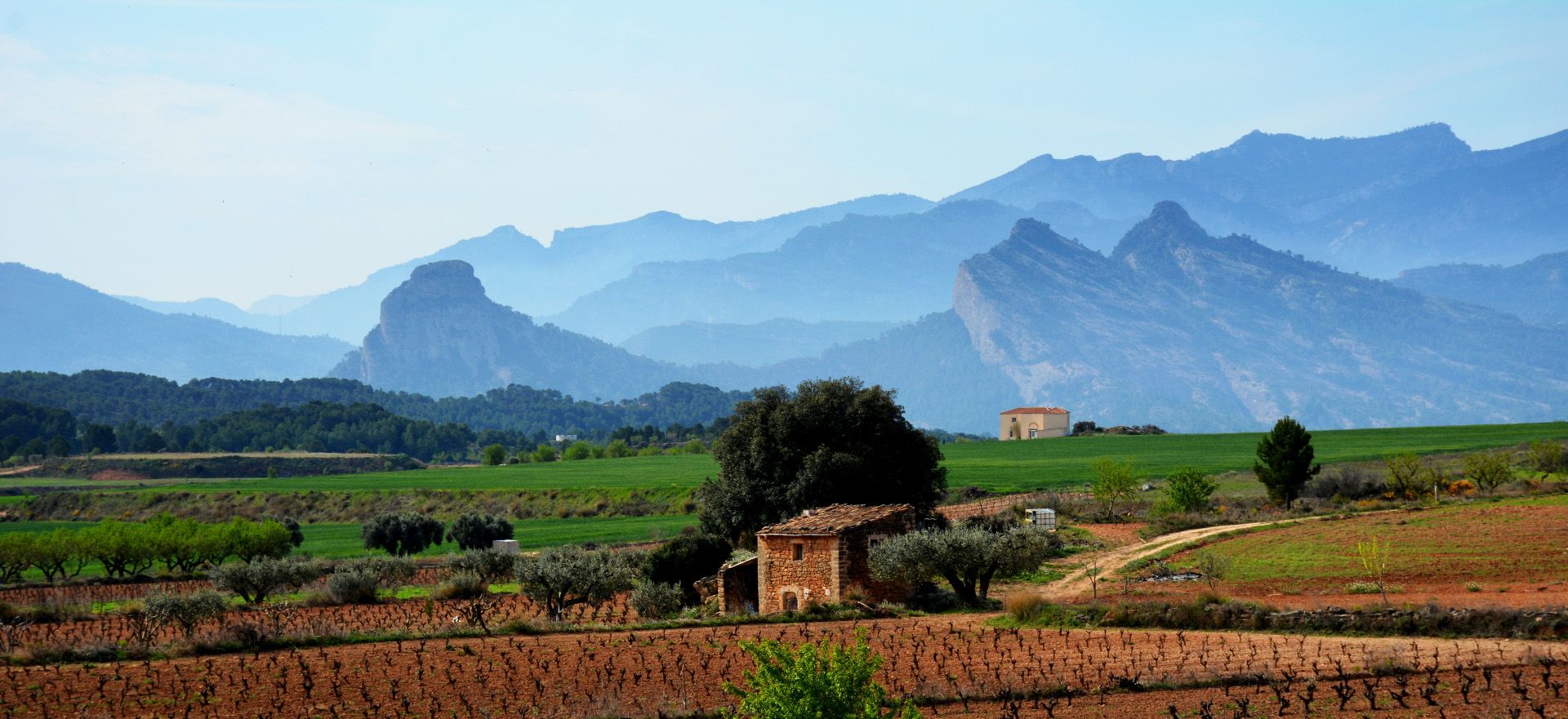
Road cycling around Forès offers diverse terrain in the Conca de Barberà comarca of Tarragona, Catalonia, Spain. Situated at an altitude of 822 to 866 meters, the village provides an elevated starting point for routes featuring rolling hills, cultivated fields, and vineyards. Cyclists can expect panoramic views of the surrounding region, with routes often traversing secondary roads and tracks suitable for road bikes. The area is known for its varied landscape, offering both challenging ascents and more gentle stretches.
Best no traffic road cycling routes around Forès
- The most popular no traffic road cycling route is Bell-lloc d'Urgell – Church of Sant Martí de Maldà loop from Guimerà, a 65.9 miles (106.1 km) trail that takes 4 hours 36 minutes to complete. This moderate route explores the wider region, passing through varied agricultural landscapes.
- Another top favourite among local road cyclists is Medieval Walls of Montblanc – Old Bridge of Montblanc loop from Sarral, a difficult 34.1 miles (55.0 km) path. This route features significant elevation gain, offering views of historic towns and the surrounding countryside.
- Local road cyclists also love the Font Baixa – Poblet Viewpoint loop from Conca de Barberà, a 20.5 miles (33.0 km) trail leading through varied terrain with a viewpoint, often completed in about 1 hour 29 minutes.
- Road cycling around Forès is defined by its elevated position, rolling hills, and extensive vineyards, offering panoramic views across the Conca de Barberà. The network provides options for various ability levels, from moderate loops to more challenging climbs.
- The routes in Forès are highly rated by the komoot community with an average score of 4.9 from more than 20 reviews. More than 1000 road cyclists have used komoot to explore Forès's varied terrain.
Last updated: May 21, 2026
13
riders
105km
04:34
650m
650m
Moderate road ride. Good fitness required. Mostly well-paved surfaces and easy to ride.
4.3
(3)
10
riders
32.9km
01:29
330m
330m
Moderate road ride. Good fitness required. Mostly well-paved surfaces and easy to ride.

Sign up for free
10
riders
Moderate road ride. Good fitness required. Mostly well-paved surfaces and easy to ride.
6
riders
Moderate road ride. Good fitness required. Mostly well-paved surfaces and easy to ride.
5.0
(1)
7
riders
23.0km
01:03
220m
220m
Easy road ride. Great for any fitness level. Mostly well-paved surfaces and easy to ride.
Get access to more routes and recommendations from other explorers.
Sign up for free
Already have an account?
Our route recommendations are based on thousands of hikes, rides, and runs completed by other people on komoot.
Start today with a free account
Your next adventure awaits.
Login or Signup


Other adventures around Forès

Tips from the Community

Guimerà is a town and municipality in the Urgell region. Guimerà is also known as "El nou de Copes", since the view of the town from the river is a pile of houses one on top of the other. The entire town is a declared cultural asset of national interest.[1] It is located in the valley of the Corb river. The main nucleus of houses, formerly walled, rests on the northern slope of the valley. The streets and houses climb, from the river bed, up the mountain. Source: Wikipedia.
0
0
Old route of the N-II road between Bel-lloc d'Urgell and Golmés, a long straight with a twist through Mollerussa.
0
0

The caves of l'Espluga de Francolí are a set of natural cavities formed in the conglomerate rock. Speleological explorations began in 1956, and so far 3,600 meters of galleries have been explored, making them one of the longest caves in the world. The archaeological findings inside show that they have been occupied since the Paleolithic: the last discovery, in 2019, was a Paleolithic sanctuary made up of more than 300 engravings, some of them more than 36,000 years old. The visits are guided and can be booked from https://covesdelespluga.info/
0
0
Halfway between the monasteries of Santa Maria de Vallbona and Santes Creus, the town of Rocafort de Queralt belongs to the region of Conca de Barberà (Tarragona). Its origin is in the 11th century and in 1370 the barony of Rocafort de Queralt was established. It has a parish church dedicated to Sant Salvador (18th century), built on top of a previous church. The castle, from the 12th century, was completely rebuilt in 1964. Two portals of the wall that protected the town are also preserved.
0
0
Traditionally, this pond had been used as a watering hole for the many herds of sheep and goats, and also for the horses, mules and donkeys that ran in the village of Forès. The Forès oral tradition had even created a saying: "A la bassa de Forès hi sang a calandria, to l'hom that no tea diners that no li fason demands." Which translated would look like this: "On the raft of Forès sang a calender who does not have money don't sue him" From the raft you can enjoy a great panoramic view of the Conca de Barberà region.
0
0
Municipality of the province of Tarragona, in the region of Conca de Barberà. The origin of the town is in the castle that Ponç de Cervera built on top of a nearby mountain in the 11th century. In the middle of the 13th century, the castle became dependent on the monastery of Poblet and the Templars, and in the lower part the encomienda of the Espluga de Francolí was established, under the jurisdiction of the hospital order. In the year 1312, the year of the extinction of the Order of the Temple, the Espluga de Francolí acquires the full señorío. Among the cultural heritage stands out the old hospital of the Order of San Juan, which currently houses the Mosén Ramón Muntanyola library, the Museo de la Vida Rural, the modernist cooperative winery Celler Cooperatiu, the work of Pere Domènech i Roura, or the Fassina Balanyà, former alcohol factory, today converted into one of the twenty-five industrial museums of the System of the National Museum of Science and Technology of Catalonia.
0
0
There is news of this fountain as early as 1151, but in its current form it dates from 1852, although the original project was never completed. The stone used in its construction came from an old obelisk that was on the wall of the old road from Poblet to Vimbodí. The number of pipes was also increased from the original 11 to the current 17 (one pipe for each letter of the town where it is located). Originally the pipes were made of bronze, but they were stolen in 1954 and replaced by iron ones.
0
0
Vilasana, crossing point and starting point of the Catigat, under the banana tree and next to the trail circuit.
0
0
Frequently Asked Questions
How many no-traffic road cycling routes are available around Forès?
There are currently 9 no-traffic road cycling routes listed around Forès, offering a variety of distances and difficulty levels for a peaceful ride.
What kind of terrain can I expect on these no-traffic road cycling routes?
The routes around Forès, situated at an altitude of 822 to 866 meters, feature varied terrain. You'll encounter rolling hills, cultivated fields, and some more demanding ascents, offering panoramic views. The region generally provides mostly paved surfaces, suitable for road cycling, with some routes potentially including secondary roads or tracks that are still low-traffic.
Are there any family-friendly no-traffic road cycling options near Forès?
While specific 'family-friendly' routes are not explicitly categorized, the guide includes an easy route, Font Baixa – Poblet Viewpoint loop from Conca de Barberà, which is 33 km long with moderate elevation gain. When choosing a route for families, consider the distance and elevation profile to match everyone's ability.
What are some scenic highlights or landmarks I can see along these routes?
Forès itself is known as the 'viewpoint of the Conca de Barberà,' offering superb panoramic vistas. Along the routes, you can discover cultural and natural highlights such as the Santuario del Tallat, the historic village of Guimerà, and the Forès Wall. Many routes also pass through extensive vineyards and cultivated fields, providing picturesque agricultural scenery.
What is the best time of year to go road cycling in Forès to avoid traffic?
The Conca de Barberà region experiences a transitional climate. Spring and autumn generally offer the most pleasant temperatures for cycling, with less extreme heat than summer and milder conditions than winter. These seasons also tend to have lower tourist traffic compared to peak summer months, contributing to a more peaceful cycling experience on already quiet roads.
Are there any circular no-traffic road cycling routes available?
Yes, many of the routes around Forès are designed as loops. For example, the Bell-lloc d'Urgell – Church of Sant Martí de Maldà loop from Guimerà is a long circular route, and the Cap del Coll loop from Conca de Barberà offers a shorter option.
What is the difficulty level of the no-traffic road cycling routes around Forès?
The routes vary in difficulty. Out of the 9 available, there is 1 easy route, 6 moderate routes, and 2 difficult routes. This range ensures options for cyclists of different fitness levels, from those seeking a relaxed ride to those looking for a challenging climb with significant elevation gain.
Where can I park my car when starting a no-traffic road cycling route in Forès?
While specific parking facilities for cyclists in Forès are not detailed, as a small village, street parking is generally available. For routes starting in nearby towns like Sarral or Barberà de la Conca, you can typically find parking in or around the village centers. It's always advisable to check local signage for any restrictions.
Are there any Vías Verdes (greenways) suitable for no-traffic road cycling near Forès?
The region is known for its diverse cycling infrastructure, including parts of the Cistercian Route (GR175). While the GR175 itself includes varied surfaces, the focus of this guide is on quiet paved roads. Specific Vías Verdes directly adjacent to Forès suitable for road bikes are not prominently featured, but the low-traffic nature of many regional roads provides a similar experience.
What do other road cyclists say about the no-traffic routes in Forès?
The area is highly rated by the komoot community, with an average score of 4.9 stars. Reviewers often praise the peacefulness of the roads, the stunning panoramic views from Forès, and the diverse landscapes that include vineyards and rolling hills, making for a rewarding cycling experience away from heavy traffic.
Can I find cafes or accommodation along these no-traffic road cycling routes?
Forès is a small village, but the wider Conca de Barberà region, especially towns like Sarral or Rocafort de Queralt, offers cafes, restaurants, and accommodation options. The Cistercian Route, which passes near Forès, has seen improvements in cycling infrastructure, including charging and self-repair stations in some villages, indicating a growing cyclist-friendly environment.
Is public transport an option to reach Forès for cycling?
While Forès is a small, elevated village, public transport options to reach it directly might be limited. The Conca de Barberà region has bus routes connecting its towns, but direct services to Forès specifically for cyclists with bikes may require checking local bus schedules and policies regarding bicycle transport. Driving to a starting point in a nearby town with better access and parking is often a more convenient option.
Most popular attractions around Forès

Get inspired with the komoot mobile app


Explore more
Browse the best Road cycling routes in other regions.
