The best traffic-free bike rides around Moya
4.5
(157)
3,096
riders
7
rides
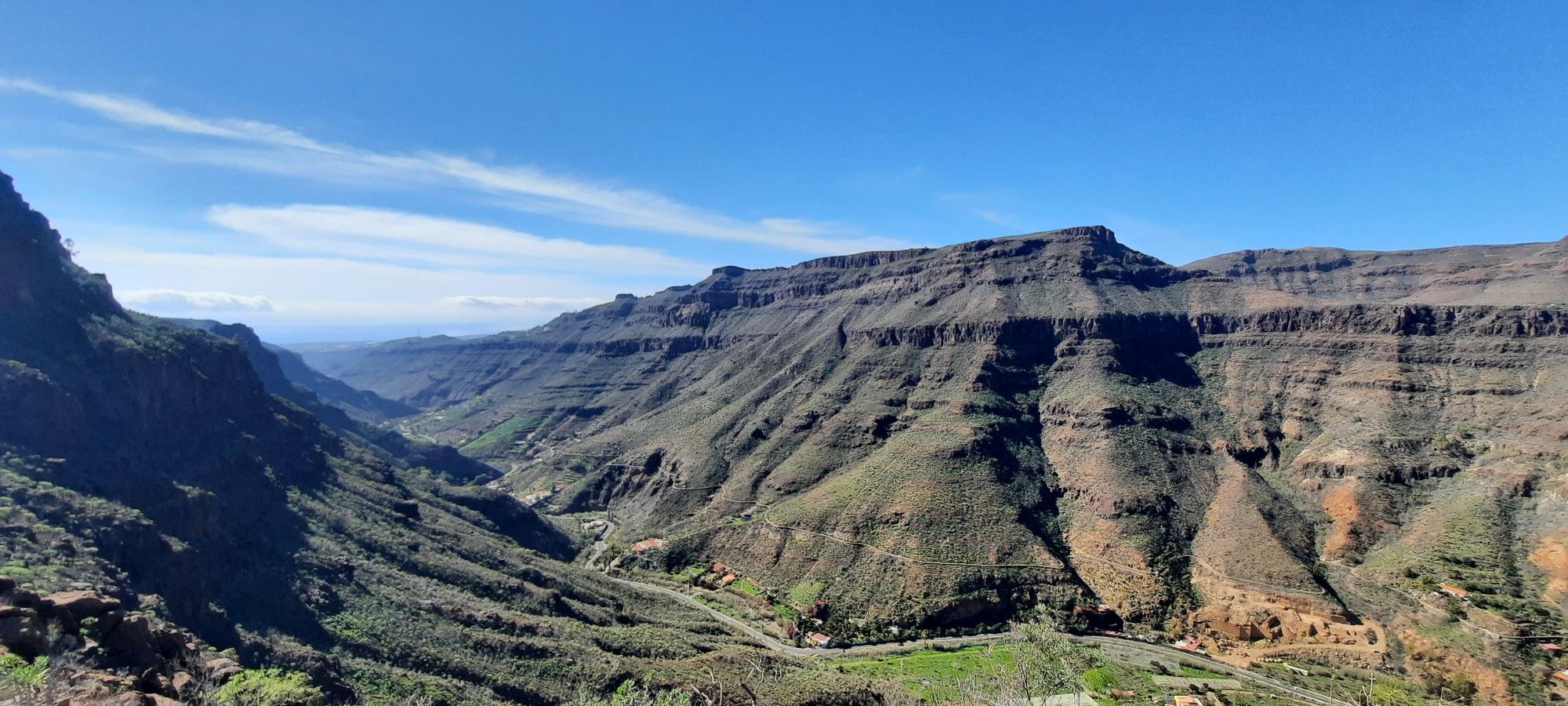
No traffic touring cycling routes around Moya, located in northern Gran Canaria, traverse a landscape characterized by deep volcanic valleys and ravines. The region features significant elevation changes, offering both steady climbs through green landscapes and confident descents on quiet roads. Cyclists encounter a mix of paved and unpaved sections, with terrain ranging from ancient laurel forests to coastal areas.
Best no traffic touring cycling routes around Moya
- The most popular no traffic touring cycling route is Bike loop from…
Last updated: May 21, 2026
5.0
(1)
41
riders
32.6km
02:21
660m
660m
Hard bike ride. Very good fitness required. Mostly paved surfaces. Suitable for all skill levels.
28
riders
Moderate bike ride. Good fitness required. Mostly paved surfaces. Suitable for all skill levels.

Sign up for free
17
riders
28.0km
02:08
710m
710m
Hard bike ride. Very good fitness required. Mostly paved surfaces. Suitable for all skill levels.
8
riders
25.2km
01:45
400m
400m
Moderate bike ride. Good fitness required. Mostly paved surfaces. Suitable for all skill levels.
5
riders
15.1km
01:08
360m
360m
Hard bike ride. Good fitness required. You may need to push your bike for some segments of this route.
Get access to more routes and recommendations from other explorers.
Sign up for free
Already have an account?
Our route recommendations are based on thousands of hikes, rides, and runs completed by other people on komoot.
Start today with a free account
Your next adventure awaits.
Login or Signup
Popular around Moya
Other adventures around Moya

Tips from the Community

just outside the village
0
0

There is a fairly large parking lot directly opposite the entrance to the botanical garden.
0
0

The tour over the weekend this beautiful place.
0
0

The museum is located in the historic center of the town of Gáldar. Its mission is to protect the historical sites there, to conduct scientific research and to communicate the findings to the general public. The institution is named after the Cueva Pintada (painted cave), which was probably created in the 7th century AD by the island's original inhabitants, the Canarios. This cave was forgotten and buried after the conquest of the Canary Islands in the 15th century. It was only rediscovered in the second half of the 19th century. Its cultural and historical significance was already recognized by foreign experts at that time. It was not until the 1970s that a detailed scientific study of the cave began. After the site was declared a Bien de Interés Cultural in 1972, it was protected against environmental influences, which caused damage, among other things, from the irrigation of the surrounding fields. In 1982, access to the cave was closed to the public and in 1987 excavations began in the surrounding area. They revealed that the cave was not an isolated object, but part of a prehistoric settlement with more than 50 houses and other caves. To protect the site, construction began on a new type of museum. An area of 5700 m² was covered. Visitors now have the opportunity to walk through and view the archaeological site on footbridges. Reconstructed aboriginal dwellings were set up and exhibition, information and laboratory rooms were created. The new museum was opened in 2006. It displays objects found on site in separate exhibition rooms, such as pintaderas, statuettes, everyday objects and jewelry made of various materials.
4
0

The museum is more than just the painted cave. it is an archaeological park with real excavation sites where you can imagine what the oldest city in Gran Canaria looked like in indigenous times.
3
0
Leave in the morning and leave the little family in the floral park take the route about 4 hours of walking to the picnic area of Tabadaba where the little family, the spouse or partner will be installed (with the meal it is good!) For the brave to go down we do not see things from the same angle! The solo version is also good be careful non-potable water at the picnic area. Go ahead calves!
0
0
There is a beautiful sandy beach of Galdar here. Very nicely located, invites you to linger, relax and swim.
0
0

The Tamadaba Nature Park is one of the least man-made areas on Gran Canaria. It stretches over an area of 7,500 hectares in the westernmost part of the island from the mountain peak down to the coast. The nature park is located within the western part of Gran Canaria, which has been declared a UNESCO biosphere reserve. The park offers visitors beautiful forests full of endemic pines, dizzying cliffs on its almost inaccessible coasts and an extraordinary biodiversity in its gorges. Source: https://www.hallokanarischeinseln.com/naturraeume/gran-canaria/naturpark-tamadaba/
2
0
Frequently Asked Questions
How many no-traffic touring cycling routes are available around Moya?
There are currently 7 dedicated no-traffic touring cycling routes around Moya featured in this guide. These routes offer a variety of distances and elevations, ensuring a quiet and enjoyable cycling experience away from busy roads.
What is the typical difficulty level of no-traffic touring cycling routes in Moya?
The no-traffic touring cycling routes around Moya are generally rated as moderate to difficult. For instance, routes like the Bike loop from Necrópolis de Maipez de Arriba and the Artenara murals – Tamadaba Pine Forest loop from Presa de Lugarejos are considered difficult due to significant elevation changes. However, there are also moderate options available, such as the El Atlante – El Pagador Bridge loop from Santa María de Guía de Gran Canaria.
Are there any family-friendly no-traffic cycling routes in Moya?
While many routes in Moya feature significant elevation, some of the moderate routes, particularly those with less extreme climbs and descents, can be suitable for families with older children or those accustomed to touring cycling. Always check the route profile and difficulty before setting out. The region's quiet roads are generally safer for family cycling.
Can I find circular no-traffic touring cycling routes near Moya?
Yes, several no-traffic touring cycling routes around Moya are designed as loops, allowing you to start and end at the same point. Examples include the Bike loop from Necrópolis de Maipez de Arriba and the Playa de La Garita – El Frontón Bodyboard Spot loop from Gáldar, offering convenient circular journeys.
What kind of natural attractions can I see along these quiet cycling routes?
Moya's no-traffic cycling routes often pass through stunning natural landscapes. You might encounter deep volcanic valleys like the Barranco de Moya, or cycle near the ancient laurel forest of the Los Tilos de Moya Special Nature Reserve. While direct access to all peaks might require hiking, you can often enjoy views of prominent features like Roque Nublo or Pico de las Nieves summit from various points along the routes. Some routes may also offer glimpses of the coastline and natural pools like Charco San Lorenzo.
Are there any cultural landmarks or viewpoints accessible from the no-traffic cycling routes?
Absolutely. Moya is rich in cultural and historical sites. Cyclists can explore the charming whitewashed village of Moya itself, with its neo-Gothic Church of Nuestra Señora de la Candelaria perched dramatically on a cliff. The House-Museum of Tomás Morales is also nearby. For panoramic views, the Montañón Negro viewpoint offers spectacular vistas of the island's volcanic formations and pine forests. Traditional mountain villages like Fontanales also provide charming stops.
What is the best time of year for no-traffic touring cycling in Moya?
Moya, like much of Gran Canaria, enjoys a mild climate year-round, making it suitable for cycling in most seasons. Spring and autumn offer particularly pleasant temperatures and lush landscapes. Winter can also be a good time to escape colder climates, though occasional rain showers are possible. Summer can be warm, especially at lower elevations, so early morning or late afternoon rides are recommended.
Is it possible to find cafes or places to rest near the no-traffic cycling routes?
Yes, many routes pass through or near small villages and towns where you can find local cafes and restaurants. Moya itself offers several options for refreshments. Traditional mountain villages like Fontanales are known for their local pastries and provide excellent opportunities for a break and to experience local culture.
Where can I park my car to access these quiet cycling routes around Moya?
Parking is generally available in the main towns and villages that serve as starting points for these routes, such as Moya, Santa María de Guía de Gran Canaria, or Gáldar. Look for designated parking areas within these communities. For routes starting from more remote locations, roadside parking might be an option, but always ensure it's safe and permissible.
What do other touring cyclists enjoy the most about touring cycling in Moya?
The area is highly rated by the komoot community, with an average score of 4.5 stars. Reviewers often praise the quiet, traffic-free roads that allow for an immersive experience in Gran Canaria's diverse landscapes. The blend of challenging climbs, confident descents, and stunning views, from lush forests to dramatic volcanic terrain, is frequently highlighted as a major draw.
Are there any routes that offer views of the coast or natural pools?
Yes, some routes, particularly those closer to the northern coastline of Moya, can offer views of the Atlantic Ocean and access to coastal features. For example, the Playa de La Garita – El Frontón Bodyboard Spot loop from Gáldar provides coastal scenery. While not directly on all routes, the natural pools of Charco San Lorenzo are a notable coastal attraction in the region.
Most popular attractions around Moya

Get inspired with the komoot mobile app


Explore more
Browse the best Cycling routes in other regions.
