The best traffic-free bike rides around Valle De Abdalajís
4.6
(94)
1,668
riders
25
rides
No traffic touring cycling routes around Valle De Abdalajís traverse a landscape characterized by rugged limestone mountains and dramatic Jurassic-era karst formations. The region features significant elevation changes, transitioning from imposing peaks to the green arable fields of the Guadalhorce Valley. Key natural features include the Abdalajís mountain range, the Sierra de Huma, and the scenic Guadalhorce and El Torcal Reservoirs. This varied terrain offers diverse cycling experiences for those seeking routes away from vehicle traffic.
Best no traffic touring cycling routes around Valle De Abdalajís
- The most popular no traffic touring cycling route is Return to the Guadalhorce Reservoir - circular from El Chorro, a 31.7 miles (51.1 km) trail that takes 4 hours to complete. This route offers substantial elevation gain and views of the reservoir.
- Another top favourite among local touring cyclists is Bar El Pilar – Abfahrt in Richtung Ardales loop from El Chorro-Caminito del Rey, a moderate 11.8 miles (19.1 km) path. This trail provides a scenic ride through the local countryside with moderate climbs.
- Local touring cyclists also love the Tunnel to the Caminito del Rey – Guadalhorce Reservoir loop from Las Mellizas, a 33.5 miles (53.8 km) trail leading through the area surrounding the Caminito del Rey and Guadalhorce Reservoir, often completed in about 3 hours 50 minutes.
- Touring cycling around Valle De Abdalajís is defined by rugged limestone mountains, the expansive Guadalhorce Valley, and scenic reservoirs. The network offers options for different ability levels, with a majority of routes featuring challenging climbs.
- The routes in Valle De Abdalajís are highly rated by the komoot community with an average score of 4.7 stars from over 60 reviews. More than 1500 touring cyclists have used komoot to explore Valle De Abdalajís's varied terrain.
Last updated: November 2, 2026
4.0
(5)
13
riders
51.1km
04:00
980m
980m
Hard bike ride. Very good fitness required. Mostly paved surfaces.
4.8
(5)
300
riders
Moderate bike ride. Good fitness required. Mostly paved surfaces.

5.0
(2)
24
riders
Hard bike ride. Very good fitness required. Mostly paved surfaces.
4.7
(3)
26
riders
Hard bike ride. Very good fitness required. Mostly paved surfaces.
4.0
(2)
16
riders
15.1km
01:40
640m
640m
Hard bike ride. Very good fitness required. Mostly paved surfaces.
Get access to more routes and recommendations from other explorers.
Already have an account?
Our route recommendations are based on thousands of hikes, rides, and runs completed by other people on komoot.
Start today with a free account
Your next adventure awaits.

Other adventures around Valle De Abdalajís

Tips from the Community

Álora, a Spanish municipality in the province of Málaga, Andalusia, is located in the Guadalhorce valley and covers an area of 169.62 km². Its history dates back to prehistoric times in Hoyo del Conde, with influences from the Turdetani, Phoenicians, and Romans, who fortified the castle, whose foundations are of Phoenician origin. The inhabitants are known as aloreños or perotes, the latter name being attributed to the first councilman Don Pero. Álora lies between hills on the banks of the Guadalhorce River and on the railway line towards Málaga, Seville, Córdoba, and Granada. The municipality includes the El Chorro natural area with the famous Caminito del Rey and a landscape of pine forests and hills with cereal and olive plantations. The landscape is characterized by the Guadalhorce valley and the mountains of the Sistema Bético with citrus and olive cultivation.
1
0

Laura Aguirre Hilla, known in Álora as La Señorita Laura, was a defining figure in the social and religious life of the community during the 20th century. She dedicated her life to the care and education of disadvantaged children and young girls, championing education, social welfare, and Christian values. Her commitment led to the establishment of institutions that later merged to form the Providencia Parroquial Virgen de Flores. Her work extended beyond youth services to include supporting the elderly and vulnerable over the years. As a token of appreciation, a monument was erected in her honor near the Residencia Virgen de Flores. The initiative originated with the Álora City Council and was realized with the support of the Málaga District Council and the local community. The monument symbolizes her decades of selfless dedication and her lasting impact on the social fabric of the city. To this day, her legacy is cherished, among other things through church initiatives that deal with her life and work.
4
0

Great view of the reservoir
4
0
You can't get enough of it.
5
0
The large mural by artist Lalone (Eduardo Luque) attracts the attention of locals and visitors alike. Located on Avenida Peñón Gordo, it was created as part of a community street art project aimed at transforming Álora into an open-air museum. The artwork presents a vibrant and detailed depiction of Álora's identity, focusing on the striking Arab castle, the spectacular Caminito del Rey, and the rocky landscape of the Desfiladero de los Gaitanes. In his signature style, Lalone combines realistic elements with a surreal compositional approach, seamlessly blending landscape, architecture, and human figures. The mural has been featured in numerous regional media outlets and was selected by the Street Art Cities platform as one of the best murals in the world. It symbolizes not only artistic quality but also the community's pride in its history and natural environment.
6
0

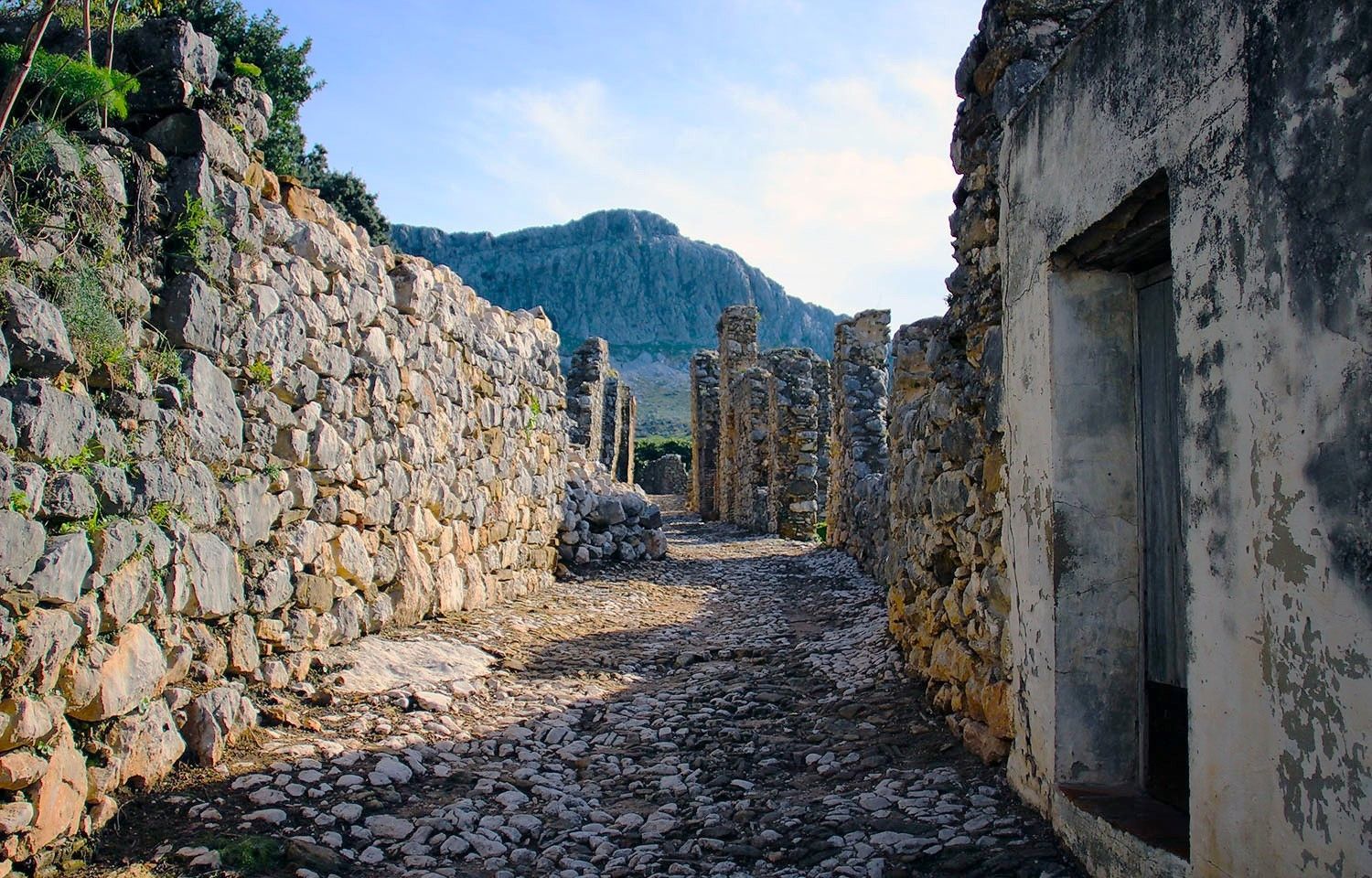
Arabian Stairs: The name is misleading. The stairs are not historical, but probably no more than 100 years old, and serve to avoid a massive detour over the later saddle. They were presumably built to facilitate other projects in the region behind the mountain. A local guide reported that the pine forests at the beginning of the tour used to be villages. You can see ruins and threshing floors. During the Franco dictatorship, the villages were destroyed, the inhabitants relocated, and the pines were planted to prevent their return (formerly grain fields): subsistence farmers were difficult to control, and workers were needed for industry.
2
0

It's amazing what has been created here
0
1

Construction site again
1
0
Frequently Asked Questions
How many no-traffic touring cycling routes are available in Valle De Abdalajís?
Valle De Abdalajís offers a selection of 17 dedicated no-traffic touring cycling routes. These routes are designed to provide a serene cycling experience away from vehicular traffic, allowing you to fully immerse yourself in the region's stunning landscapes.
What is the general difficulty level of these no-traffic routes?
Most of the no-traffic touring cycling routes in Valle De Abdalajís are considered challenging, with 15 out of 17 routes rated as difficult. There are also 2 moderate routes available. The region's dramatic landscapes, characterized by the Abdalajís mountain range and significant elevation changes, contribute to these difficulty ratings.
Are there any circular no-traffic touring routes available?
Yes, several no-traffic routes in the area are circular, offering convenient starting and ending points. For example, you can explore the Return to the Guadalhorce Reservoir - circular from El Chorro, which is a challenging 51 km loop with nearly 1000 meters of elevation gain.
What natural landmarks can I expect to see along these routes?
The no-traffic routes often pass through or offer views of significant natural landmarks. You'll encounter the rugged limestone mountains and karst formations of the Abdalajís mountain range. Many routes also provide glimpses of the Guadalhorce Valley and its reservoirs. The nearby Caminito del Rey and the Suspension Bridge over the Gaitanes Gorge are also prominent features in the area.
Are there any routes that offer views of the famous Caminito del Rey?
Absolutely. Some routes are specifically designed to provide stunning views of the Caminito del Rey and its dramatic gorge. A notable option is the Entrance to Caminito del Rey – Bar El Pilar loop from Bella Rocca, a difficult 22 km route that offers impressive vistas of this iconic landmark.
What is the best time of year for no-traffic touring cycling in Valle De Abdalajís?
Thanks to its continental microclimate, Valle De Abdalajís generally offers pleasant conditions for outdoor activities. Spring and autumn are ideal, with milder temperatures and lush landscapes. Summers can be hot, especially at midday, while winters are generally mild but can have cooler mornings.
Are there any family-friendly no-traffic cycling options?
While many routes in Valle De Abdalajís are rated difficult due to significant elevation, the region's focus on no-traffic paths, such as sections of the Guadalhorce Green Corridor, can offer safer environments for families. It's recommended to check individual route profiles for distance and elevation to ensure suitability for younger or less experienced riders.
Where can I find parking for these no-traffic cycling routes?
Parking is generally available near popular starting points for routes, particularly in towns like El Chorro or Las Mellizas, which serve as access points to many trails. For example, the Tunnel to the Caminito del Rey – Guadalhorce Reservoir loop starts near Las Mellizas, where parking facilities can be found.
What do other touring cyclists enjoy most about cycling in Valle De Abdalajís?
The area is highly rated by the komoot community, with an average score of 4.7 out of 5 stars from 65 ratings. Reviewers often praise the dramatic and diverse scenery, the challenging climbs, and the opportunity to cycle on quiet, traffic-free paths that allow for a truly immersive experience in nature.
Are there any historical or cultural points of interest along the routes?
Yes, the region is rich in history. While cycling, you might pass by or near historical sites. For instance, the town of Valle de Abdalajís itself has landmarks like the Antigua Posada and the Church of San Lorenzo. The nearby Mozarabic Rock-Cut Church of Bobastro is another fascinating historical highlight accessible in the wider area.
Can I access these routes using public transport with my bike?
Public transport options to Valle De Abdalajís and surrounding areas like El Chorro are available, though carrying bikes on buses or trains can sometimes be restricted or require specific arrangements. It's advisable to check with local transport providers in advance regarding their bike policies and schedules to plan your journey effectively.
Are there any routes that explore the Guadalhorce Reservoir area?
Yes, the Guadalhorce Reservoir is a central feature for several no-traffic touring routes. A great option is the Abfahrt in Richtung Ardales – Guadalhorce Reservoir loop from El Chorro-Caminito del Rey, a challenging 52 km ride that offers extensive views of the reservoir and its surroundings.
Most popular routes around Valle De Abdalajís
Most popular attractions around Valle De Abdalajís

Get inspired with the komoot mobile app


Explore more
Browse the best Cycling routes in other regions.
