The best traffic-free bike rides around Stekene
4.3
(167)
2,046
riders
175
rides
No traffic touring cycling routes around Stekene traverse a landscape characterized by tranquil wetlands, dense coppice forests, and mature mixed deciduous forests. The region features a well-developed cycling infrastructure that follows natural waterways like the Stekense Vaart canal. This area offers a relatively flat terrain, with minimal elevation changes, making it suitable for relaxed cycling experiences.
Best no traffic touring cycling routes around Stekene
- The most popular no traffic touring cycling route is The Koningsdijk – Niemandsland Observation Tower loop…
Last updated: August 10, 2026
5.0
(1)
215
riders
Moderate bike ride. Good fitness required. Mostly paved surfaces. Suitable for all skill levels.
4.7
(29)
117
riders
42.2km
02:31
50m
50m
Moderate bike ride. Good fitness required. Mostly paved surfaces. Suitable for all skill levels.

Sign up for free
4.3
(9)
58
riders
30.9km
01:45
30m
30m
Easy bike ride. Great for any fitness level. Mostly paved surfaces. Suitable for all skill levels.
4.5
(2)
61
riders
Moderate bike ride. Good fitness required. Mostly paved surfaces. Suitable for all skill levels.
3.7
(3)
58
riders
19.2km
01:06
30m
30m
Easy bike ride. Great for any fitness level. Mostly paved surfaces. Suitable for all skill levels.
Get access to more routes and recommendations from other explorers.
Sign up for free
Already have an account?
Our route recommendations are based on thousands of hikes, rides, and runs completed by other people on komoot.
Start today with a free account
Your next adventure awaits.
Login or Signup


Other adventures around Stekene

Tips from the Community


On an information board on site, the history of the Stekense Vaart can be read. It began as early as 1315. Count Robrecht III of Béthune then gave the order to dig a canal from Ghent to Hulst. In Stekene, this new 'waterway' turned marshes into arable land and increased export opportunities. In 1556, many fields in Stekene were submerged for a long time. King Philip II of Spain therefore granted a charter for a direct connection to the Durme. In 1628, King Philip IV gave permission to extend the Stekense Vaart by 1300 meters to Hulst. This connected the Vaart to the Westerschelde, which was advantageous for trade. Hulst could thus also be supplied with war materials. South of Moerbeke, between 1637 and 1643, a new canal was dug connecting the Stekense Vaart with the Moervaart. Ships sailing between Ghent and Stekene no longer had to make a detour via the Spelonckvaart. After the Eighty Years' War ended in 1648, the connection with the Westerschelde was broken. The economic benefit of the Vaart was lost. The Vaart was dammed at Tromp in 1691. In 1853, the municipality of Stekene became the owner of the Vaart on the condition that it also be responsible for maintenance. In 1950, the Vaart was declared unnavigable. Wastewater from Sint-Niklaas caused pollution and a strong stench, here at the Quay. In 1953, a cross dam was built in the Durme in Lokeren. The tidal effect on the Stekense Vaart was thus a thing of the past. In 1964, a water treatment plant was commissioned in Sint-Niklaas. This significantly improved the water quality in the Stekense Vaart. In 1995, a water treatment plant was also built in Stekene. In 1998, the area around the Vaart was classified as a quiet area.
2
0
Here and there in Flanders, places of remembrance have been created in recent years, intended as spots that invite you to pause and reflect on a person you miss. What is characteristic of the place of remembrance that the municipality of Stekene created here in Tragelstraat is that it is specifically aimed at cherishing deceased children. The place originated in consultation with a group of parents who lost their child.
2
0
On a plot of almost three hectares, between Brugstraat, Kaaistraat and the railway line, drinks dealer Charles Vydt built an outdoor swimming pool, party hall, and café with terrace in 1936. After WWII, Het Zomerhuis experienced its years of success. For decades, it was a popular destination where many generations of Stekenaars and visitors from far and wide spent their holidays. At the end of the 20th century, Het Zomerhuis fell into disrepair. In 2008, the municipality bought the former recreational domain to give a new tourist impulse to the site. In 2013, the old building was demolished. In the following years, plans for redevelopment were developed. In 2019, the works started and on October 17 and 18, 2020, Park Zomerhuis, with brasserie Het Zomerhuis, officially opened to the public. Shortly thereafter, the surrounding green space, the current park, was laid out. Source: Information panels on site
2
0
During the Second World War, all bridges in Stekene were blown up by the Germans. In 1945, all five were restored. Seven years later, the Stekense Vaart was declared unnavigable. At Aan de Brugstraat, everything was dammed to guarantee pure drinking water for Zeeuws-Vlaanderen. As a result, the canal between Kaaistraat and Tragelstraat, and thus also here at the bridge near Park Zomerhuis, became an open sewer. The canal problem lasted for years, with complaints and symptoms of illness among the local residents. The commissioning of the water treatment plant in Sint-Niklaas, in 1964, finally solved the problem fundamentally. bron: stekene.be
2
0
The former station of Klein-Sinaai was located on line 77, which ran from Sint-Gillis-Waas to Zelzate. In 1974, the Kemzeke - Moerbeke section was dismantled and shortly thereafter converted into an asphalted walking and cycling path, an early example, as recreational cycling was still relatively rare around 1980. In 1981, the former station was converted into the hamlet's post office and from 2011 onwards into a youth center, as is still the case. sources: Inventaris Onroerend Erfgoed & Wikipedia
2
0
The wooden arch bridge over the Stekense Vaart, named after Frans Coppens, was receiver-clerk in the municipality of Sinaai for almost a quarter of a century. He played an important role in "de Groote Watering van Sinay", the name given to the project launched by the Boerenbond in 1926. This project was initiated after repeated floods and aimed to make the polders 'dry'. The construction of the pumping station near Hondsnest was one of the first achievements within this project. During the Second World War, the unemployed were employed to clean or widen ditches. Under the impetus of dike reeve Jozef "meester" Maes and... receiver-clerk Frans Coppens (!), major reclamation works were carried out in the 60s, continuing into the following decades. Thus, Hondsnest got a new pumping station in 1975. In the meantime, the watering area had been converted into a polder, pursuant to the polder law of June 3, 1957. source: info file "Polder Daknam-Sinaai"
2
0

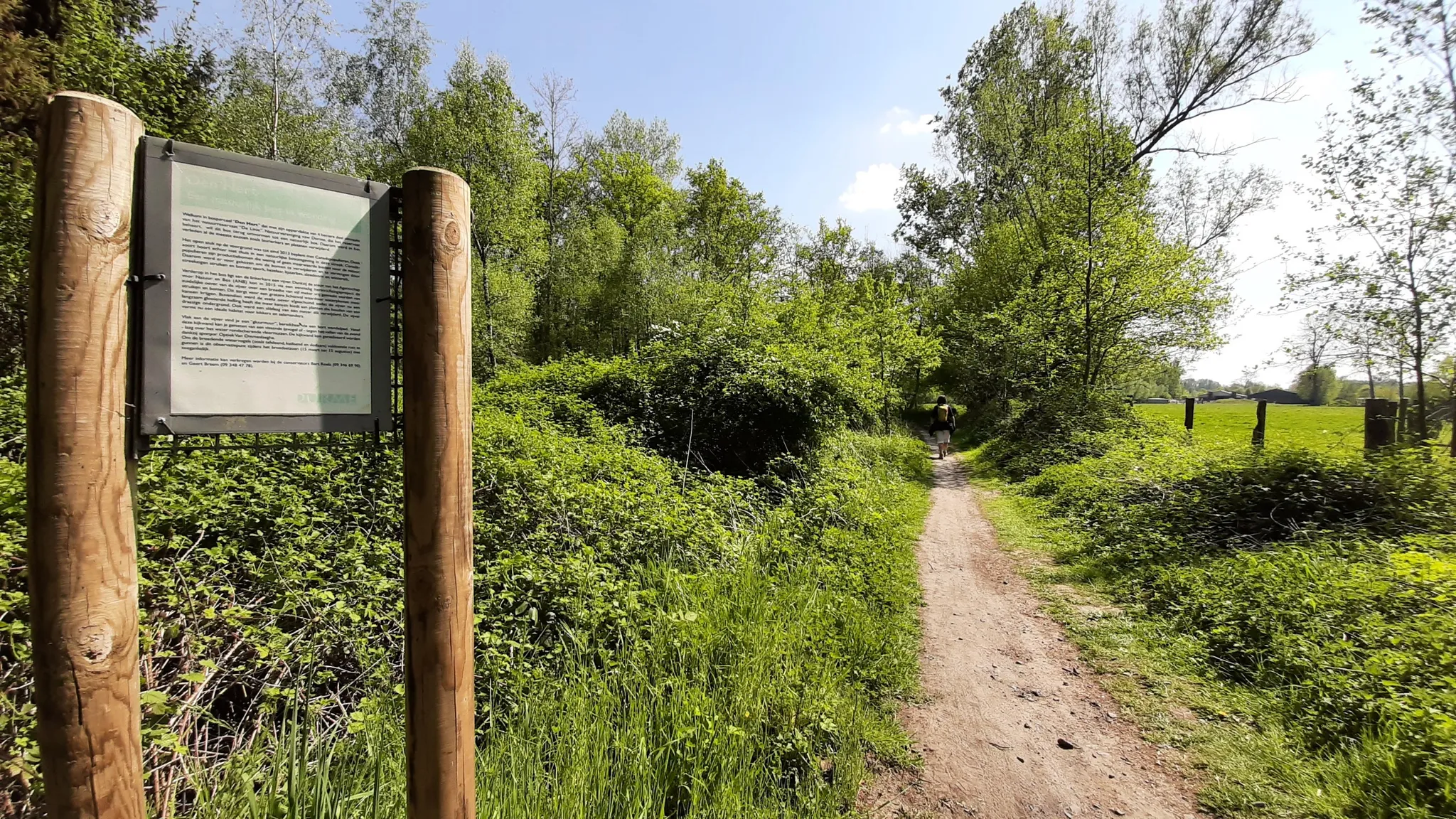
Nice gravel along Nature Reserve 'De Witte Bergen'. Some steering skill is a plus. Some sections can be quite loose.
4
0
Frequently Asked Questions
How many no-traffic touring cycling routes are available in Stekene?
Stekene offers a wide selection of no-traffic touring cycling routes, with over 150 options to explore. The majority of these, about 112, are rated as easy, making them accessible for many cyclists. There are also 39 moderate routes and 5 more challenging options for those seeking a greater adventure.
What kind of landscapes can I expect on no-traffic touring routes in Stekene?
The no-traffic touring routes in Stekene traverse diverse and tranquil landscapes. You'll cycle through serene wetlands, dense coppice and mixed deciduous forests, and open hay meadows. The winding Stekense Vaart canal often borders these areas, providing peaceful paths along its banks. The region is known for its quiet natural environment, perfect for immersive cycling.
Are there any family-friendly no-traffic cycling routes in Stekene?
Yes, Stekene is well-suited for family cycling, especially with its abundance of easy, no-traffic routes. Many paths are flat and follow canals or quiet forest trails, offering a safe and enjoyable experience for all ages. The focus on 'Silence Trails' within areas like the Fondatie Van Boudelo Nature Reserve ensures a peaceful environment away from busy roads.
Can I bring my dog on the no-traffic cycling routes?
While many natural areas in Stekene are dog-friendly, it's always best to check specific regulations for each route or nature reserve. Generally, dogs are welcome on a leash on public paths. Ensure your dog is comfortable with cycling speeds and other cyclists. Always carry water for your pet and clean up after them.
What are some notable natural features or landmarks to see along the routes?
Many routes pass through the beautiful Fondatie Van Boudelo Nature Reserve, featuring wetlands and forests. You might also encounter the picturesque Frans Coppensbrug (Frans Coppens Bridge) over the Stekense Vaart canal. For specific points of interest, consider exploring highlights like Groot Eiland Nature Reserve or De Buylaers Nature Reserve.
Are there any circular no-traffic touring routes available?
Yes, many of the no-traffic touring routes in Stekene are designed as loops, offering convenient circular journeys. An example is the easy Silence Trail – Molenbeek Riverside Path loop from Klein-Sinaai, which provides a pleasant ride through natural surroundings.
What is the best time of year to go touring cycling in Stekene?
The best time for touring cycling in Stekene is typically from spring through early autumn (April to October). During these months, the weather is generally mild and pleasant, and the natural landscapes are at their most vibrant. The 'no traffic' nature of the routes makes them enjoyable even during busier tourist seasons, as you'll largely avoid crowds.
Are there any routes that offer a more challenging experience?
While many routes are easy, Stekene does offer some more challenging no-traffic touring options. For instance, the Forest Path in Heidebos – Silence Trail loop from Klein-Sinaai is rated as difficult, covering over 42 km and navigating through forest paths that may require good fitness.
What do other cyclists say about touring cycling in Stekene?
The touring cycling experience in Stekene is highly regarded by the komoot community, with an average rating of 4.38 out of 5 stars from 146 reviews. Cyclists often praise the region for its tranquil natural environment, well-maintained paths, and the peaceful 'Silence Trails' that allow for an immersive experience away from traffic.
Are there any historical sites or castles accessible by bike?
While the focus is on natural landscapes, Stekene's surrounding area does feature historical sites. You can find several castles nearby, such as Puyenbrug Castle or Walburg Moated Castle, which might be incorporated into longer rides or visited as separate excursions.
Are there any routes that take me along the border?
Yes, some routes in the Stekene area venture close to or along the border, offering unique perspectives. The Niemandsland Observation Tower – Border post 277 loop from Stekene is a moderate route that specifically highlights a border post, providing an interesting historical and geographical element to your ride.
Where can I find routes that feature the Frans Coppens Bridge?
The Frans Coppensbrug (Frans Coppens Bridge) is a notable feature along the Stekense Vaart canal. You can experience this scenic spot on routes like the moderate Frans Coppensbrug – Frans Coppens Bridge loop from Kapellebrug, which offers a pleasant ride showcasing the bridge and surrounding areas.
Most popular attractions around Stekene

Get inspired with the komoot mobile app


Explore more
Browse the best Cycling routes in other regions.
