The best traffic-free bike rides around Durbuy
4.4
(155)
5,601
riders
41
rides
No traffic road cycling routes around Durbuy traverse the varied terrain of the Belgian Ardennes, characterized by rolling hills, deep valleys, and extensive forests. The region's topography is shaped by the Ourthe River, which carves scenic paths through the landscape. Cyclists encounter a mix of elevation profiles, from gentle riverside routes to more challenging climbs within the Ardennes. This area provides a diverse environment for road cycling, featuring natural and historical points of interest.
Best no traffic road cycling routes…
Last updated: October 4, 2026
4.8
(4)
121
riders
65.3km
03:20
1,010m
1,010m
Hard road ride. Very good fitness required. Some segments of this route may be unpaved and difficult to ride.
5.0
(1)
135
riders
Easy road ride. Great for any fitness level. Mostly well-paved surfaces and easy to ride.

5.0
(2)
111
riders
21.6km
01:05
150m
150m
Easy road ride. Great for any fitness level. Mostly well-paved surfaces and easy to ride.
93
riders
15.5km
00:49
140m
140m
Easy road ride. Great for any fitness level. Mostly well-paved surfaces and easy to ride.
4.5
(14)
315
riders
50.4km
02:33
480m
480m
Moderate road ride. Good fitness required. Mostly well-paved surfaces and easy to ride.
Get access to more routes and recommendations from other explorers.
Already have an account?
Our route recommendations are based on thousands of hikes, rides, and runs completed by other people on komoot.
Start today with a free account
Your next adventure awaits.
Popular around Durbuy
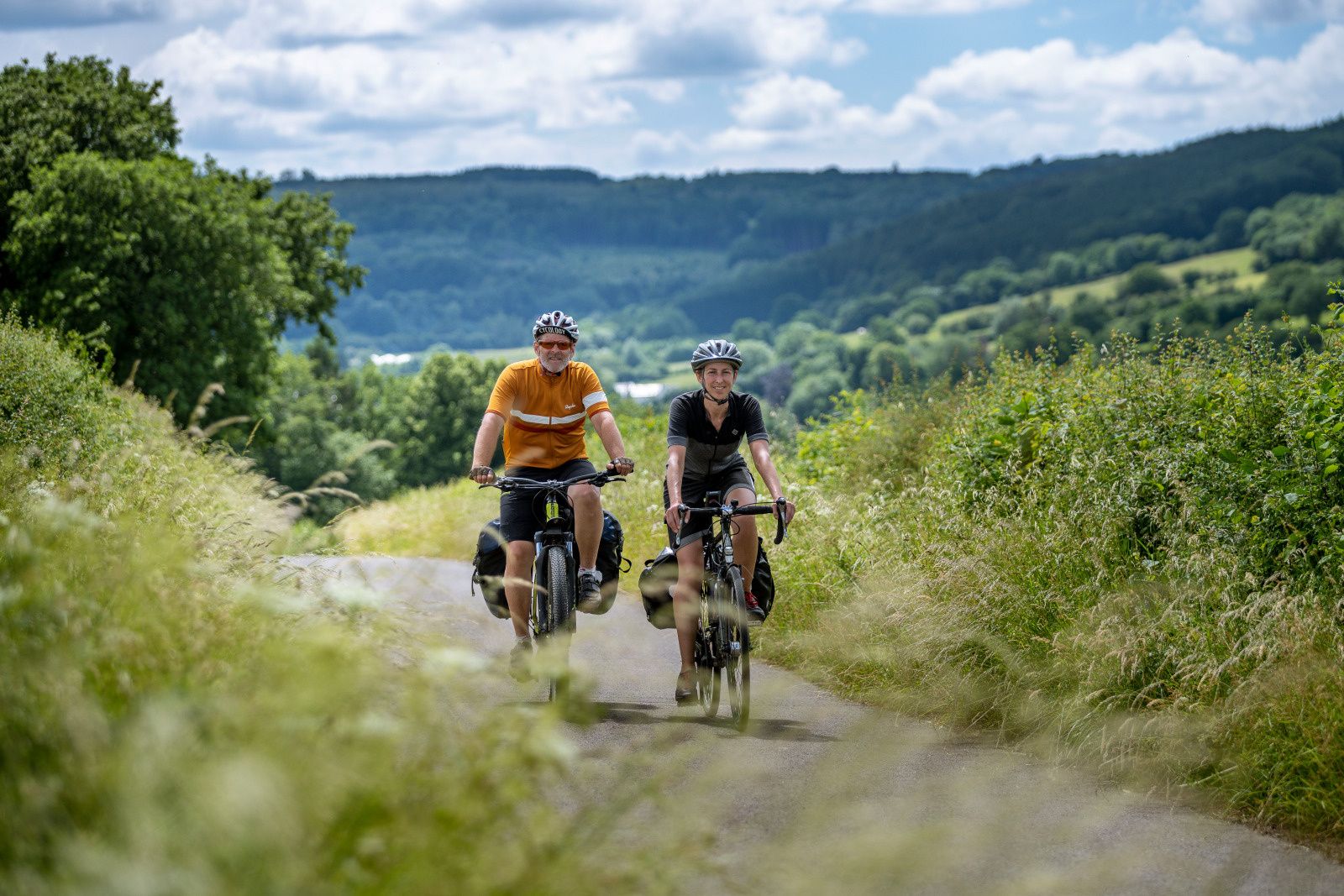
The most beautiful bike rides in Wallonia – pure nature and culture
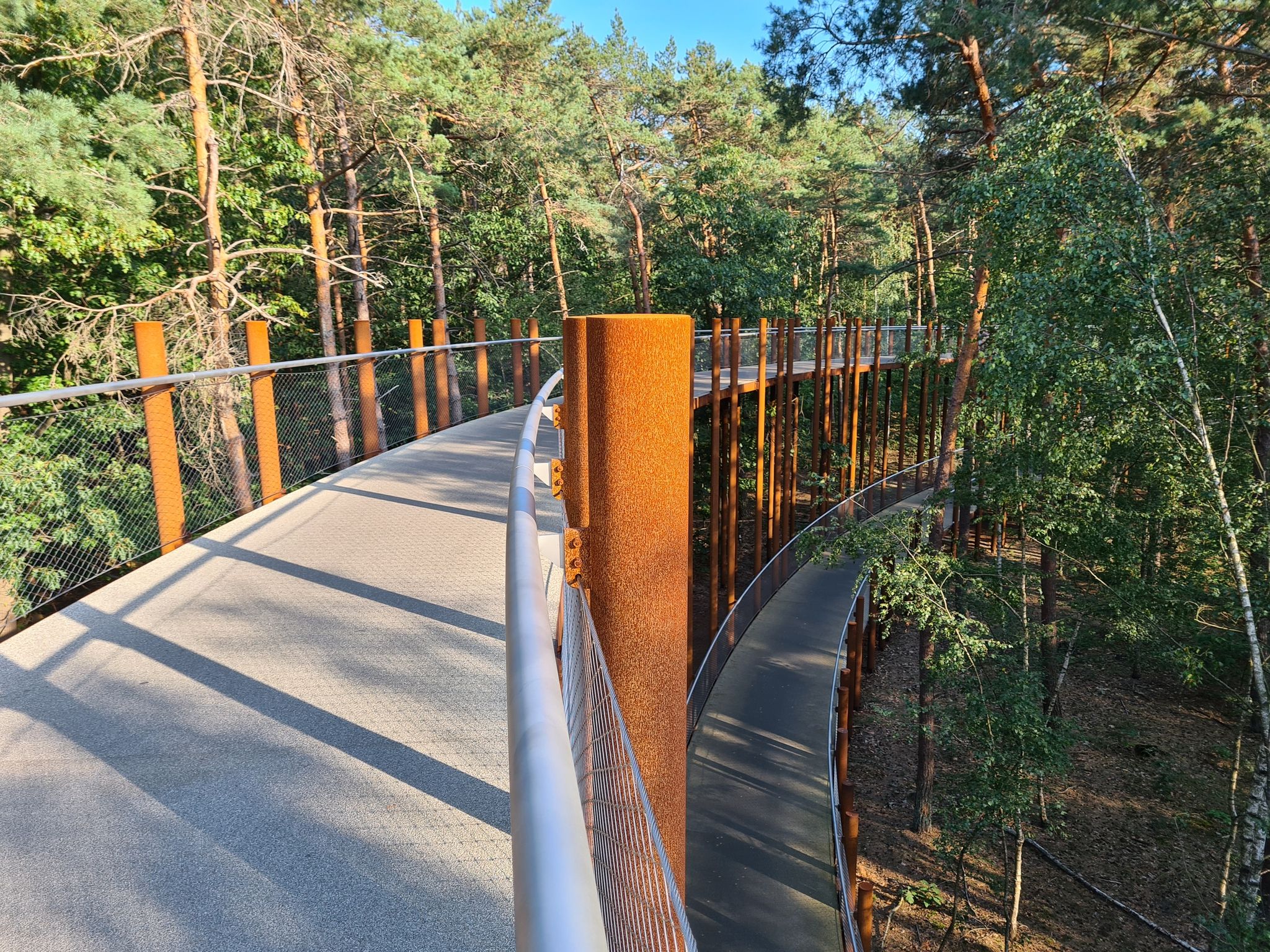
Cycling on Belgium’s most beautiful bike paths — 10 boucles à vélo
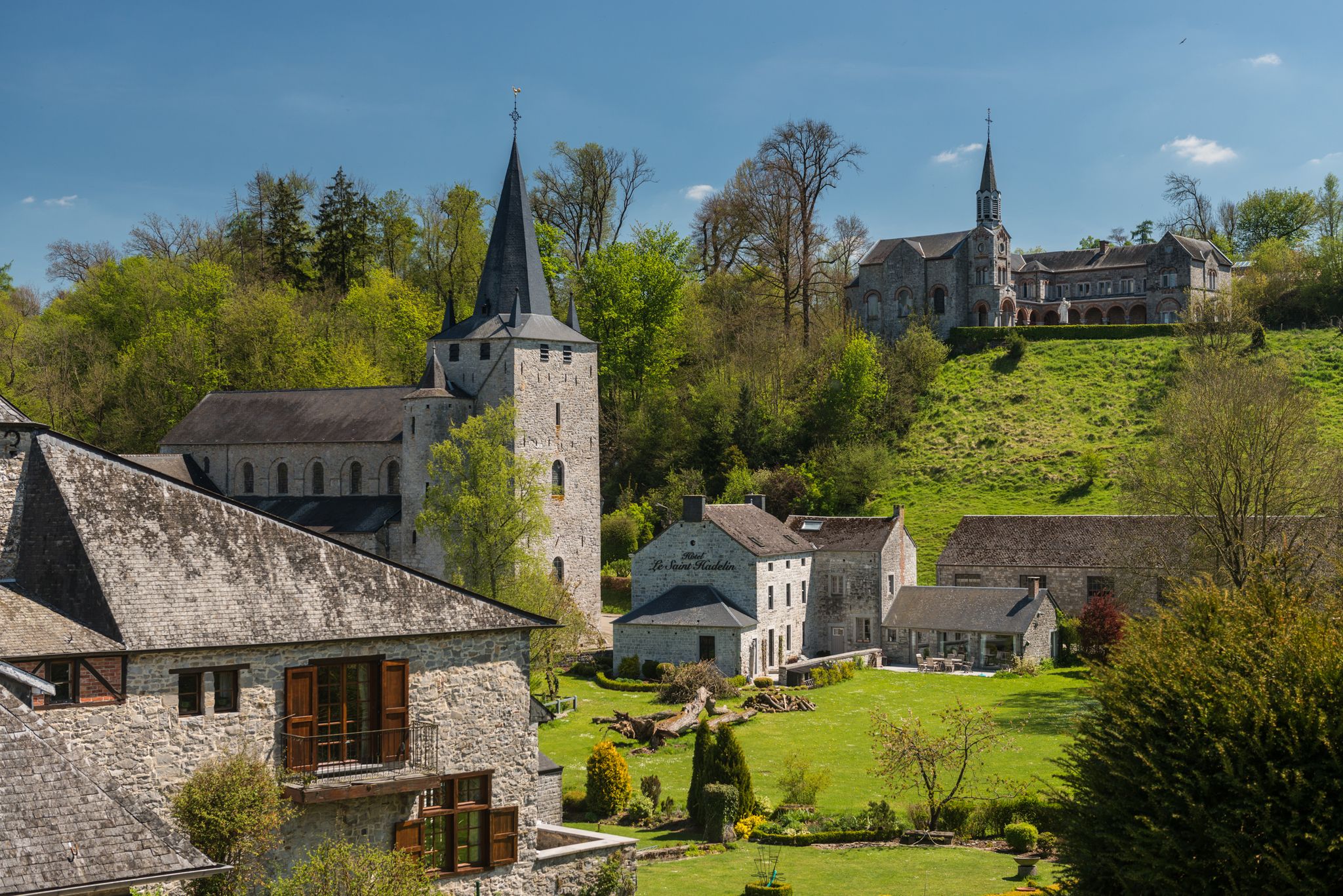
Walks in the Belgian Ardennes — historic walls & magical forests
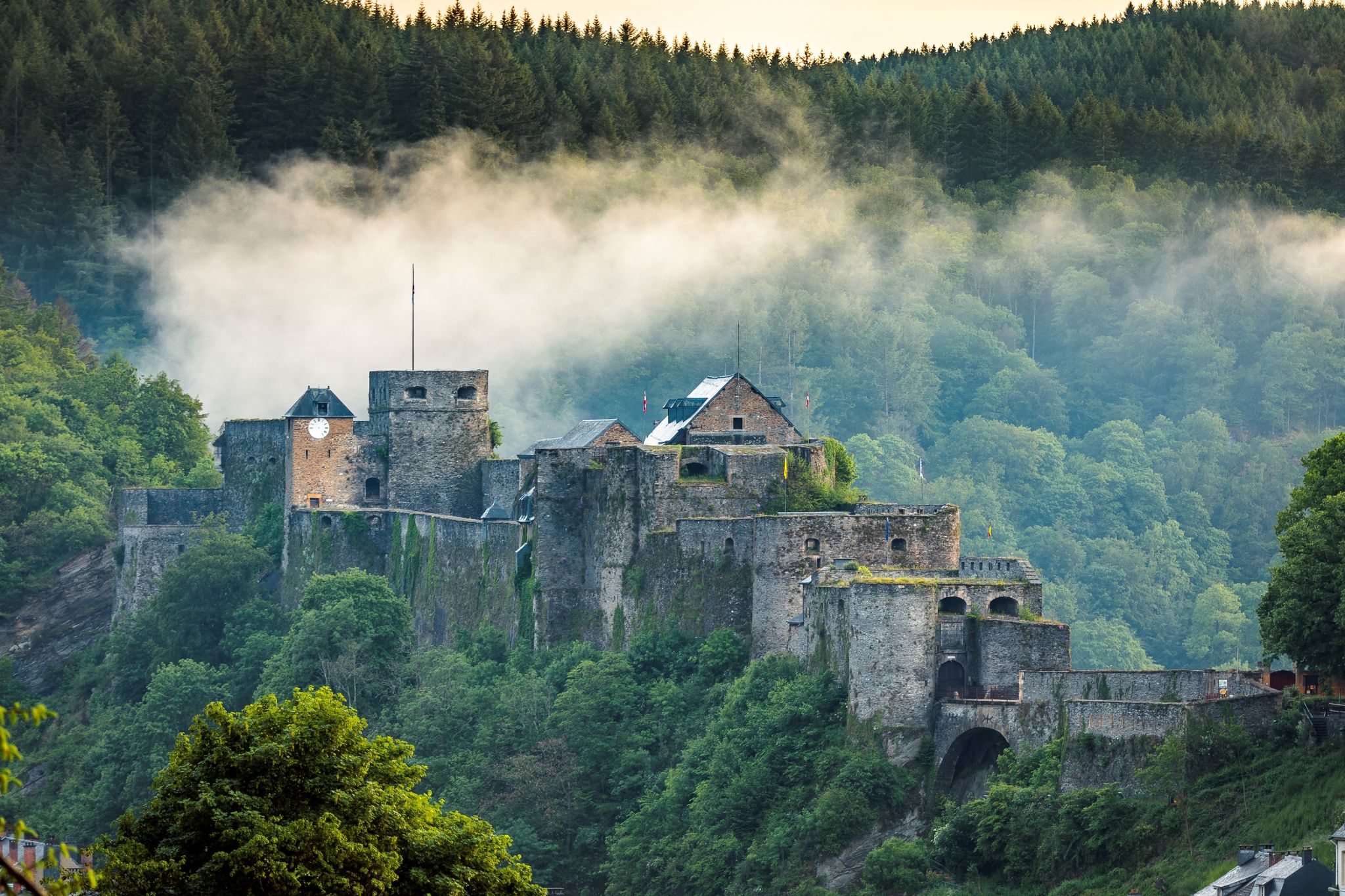
Hiking along majestic castles and nature – Belgian Ardennes

Traffic-free bike rides around Durbuy
Traffic-free bike rides around Durbuy
Other adventures around Durbuy


Tips from the Community

The elegant, slightly curved steel structure was designed by the renowned Walloon engineering firm Greisch and built between 2003 and 2004. It has a total length of 80 meters and weighs around 67 tons. The bridge has an important tourist and practical function: it directly connects the historic, medieval town center of Durbuy with the green riverbank on the opposite side, where, among other things, the famous Le Parc des Topiaires (topiary park) is located. From the bridge, you also have a wonderful view of the wooded hills of the Ardennes and the historic backdrop of the town.
4
0

Very idyllic stretch of Ourthe, beautiful side arm
0
0

Bucolic road running alongside the Del Hé stream.
0
0
Bucolic route following the Hé stream.
0
0


Durbuy is first mentioned in 1078 (as Dolbui) and in 1084 (under the current name). The first traces of habitation are found during excavations in the Anticlinaal cave by Count Pierre d'Ursel. The d'Ursel family still inhabits Durbuy Castle. Before the current castle, there were already others. Based on the archives of Luxembourg, a castle was destroyed and in the eleventh century, another was built by Henry II the Lame, who had received the domain from his mother Rageline, sister of Pope Stephen II, and her husband Albert II of Namur. Around 1156, that castle was severely damaged by flames and during the succession wars of the Duchy of Limburg, it was destroyed several more times. From 1412, Durbuy came into the hands of the House of Burgundy and at the end of the fifteenth century, the then-existing castle was destroyed by Maximilian of Austria, like all the castles of the la Marck family: besides Durbuy, these also include the castles of Logne and La Roche. In 1628, Baron Antoine Schetz of Grobendonck leased the Durbuy estate for 40,000 gold marks, a very considerable sum. Besides being a baron, he was also Count of Grobbendonk, Lord of Tilburg and Goirle, Pulle and Pulderbos, and Wezemaal. He was in the service of the Spanish and had led the defense of 's-Hertogenbosch during the Eighty Years' War. At the age of 71, he was also governor of the city of Leuven during the Siege of Leuven. And he was the first in a long line of the d'Ursel family who, to this day, inhabit the castle. In 1731, the castle was rebuilt by the then Duke of Ursel. Countess Auguste d'Ursel, who acquired the d'Ursel family's possessions in Durbuy, then modernized the castle from 1880 to 1882 with the help of architect Thirian from Namur. During the Second World War, the castle was occupied several times and in 1944, during the Battle of the Bulge, it was used as a field hospital by the American liberators, with the billiard table serving as an operating table. Sources: historical overviews in Word documents on the website of Count Jean-Michel d'Ursel, current resident, at https://www.chateaudedurbuy.be/historique.html
6
0
At approximately 37 meters, the top of the Anticline, also known as the Homalius Rock and especially the Falize Rock, is literally the highest point in Durbuy. It has been a highlight for many visitors for years, thanks in part to the surroundings and beautiful water features. The rock is somewhat older than the average visitor. It's said to be more than 300 million years old. However, the rock layers are much older: around 375 million years old. The name Anticline comes from the geological phenomenon known as an anticline. It's the opposite of a syncline. While the former is a fold formed over many years, with the innermost layers being the oldest and the folds running downwards, synclines have folds running downwards. Such folds can form for various reasons and range from very small to large, as seen here. Originally, everything was, of course, horizontal. The inverted U-shape created by uplift in Durbuy is not only beautiful to see but also special. And Durbuy has beautifully highlighted this. Another beautiful anticline can be found in Han-sur-Lesse, also in the Famenne-Ardenne region, albeit in the province of Namur (here we are in Luxembourg), where it has been given the name "Tête de bouc" (Tick of the Rock). There's a waterfall and a large water feature at the end of the expansive pond in front of the rock, which you can also climb. And everywhere there's space to admire it all while sitting and relaxing—or enjoying the water. Don't forget the many smaller works of art and curiosities, and take a look in the water.
8
0

Frequently Asked Questions
How many no-traffic road cycling routes are available in Durbuy?
Durbuy offers a wide selection of road cycling routes designed to minimize traffic, with over 35 routes available. These range from easy to difficult, ensuring options for various fitness levels.
What kind of terrain can I expect on Durbuy's no-traffic road cycling routes?
The Durbuy region, nestled in the Belgian Ardennes, features diverse terrain. You'll encounter a mix of rolling hills, deep valleys, and lush forests. While some routes offer challenging climbs, others provide more gentle gradients, often following scenic river valleys like the Ourthe.
Are there any easy, family-friendly no-traffic road cycling routes in Durbuy?
Yes, Durbuy has several easy, car-free options suitable for families. Routes often utilize the RAVeL paths, which are dedicated greenways. An example is the Durbuy — Old Town and Castle – Ourthe River in Barvaux loop from Durbuy, which is rated easy and covers 13.6 km.
Can I bring my dog on these car-free cycling routes?
Many of the car-free routes, especially those on RAVeL paths, are generally dog-friendly, provided your dog is kept on a leash and you adhere to local regulations. Always ensure your dog is comfortable with cycling distances and other path users.
What scenic views or natural attractions can I see along Durbuy's no-traffic routes?
Durbuy's routes offer stunning natural beauty. You can enjoy picturesque views of the Ourthe River valley, pass through dense forests, and discover unique geological features. Keep an eye out for viewpoints like the Anticline (Roche à Sept Heures) for panoramic vistas of Durbuy. You might also encounter natural highlights such as the Isbelle Karst Spring or the Caves and Cliffs along the Ourthe.
Are there historical sites or charming villages to visit on these routes?
Absolutely. Many routes weave through charming villages and past historical landmarks. You can cycle past the historic Durbuy Castle, explore the cobbled streets of Durbuy's old town, or visit the ancient Megalithic fields of Wéris. The Durbuy — Old Town and Castle – Wéris Dolmen loop from Bomal is a great option to combine cycling with historical exploration.
Where can I park my car to access these no-traffic road cycling routes?
Parking is generally available in and around Durbuy and its surrounding villages like Barvaux and Bomal, which serve as common starting points for routes. Look for designated parking areas near RAVeL path access points or town centers.
Is Durbuy accessible by public transport for cyclists?
Yes, Durbuy and nearby towns like Barvaux are connected by public transport, including train services, which can often accommodate bicycles. This allows for flexible travel and access to various starting points for your cycling adventures.
What is the best time of year for no-traffic road cycling in Durbuy?
The spring and autumn months typically offer the most pleasant conditions for road cycling in Durbuy, with milder temperatures and beautiful scenery. Summer can also be excellent, though routes might be busier. Always check the local weather forecast before heading out.
Are there any circular no-traffic road cycling routes in the Durbuy area?
Yes, many of the no-traffic road cycling routes in Durbuy are designed as loops, allowing you to start and end in the same location. For example, the Durbuy — Old Town and Castle – Ourthe River in Barvaux loop from Bomal offers a circular experience.
What do other cyclists say about the no-traffic road cycling experience in Durbuy?
The Durbuy area is highly rated by the komoot community, with an average score of 4.4 stars. Reviewers often praise the region's stunning natural beauty, the variety of terrain, and the peaceful, car-free sections that make for an enjoyable and safe cycling experience.
Can I rent a road bike in Durbuy?
Yes, Durbuy has several bike hire services available, including options for road bikes and electrically assisted bicycles, which can be particularly helpful for tackling the region's hilly terrain. It's advisable to book in advance, especially during peak season.
Most popular attractions around Durbuy

Get inspired with the komoot mobile app


Explore more
Browse the best Road cycling routes in other regions.
