The best traffic-free bike rides around Ouffet
4.1
(50)
1,007
riders
123
rides
No traffic gravel bike trails around Ouffet are found within the Belgian Ardennes, characterized by rolling hills, dense forests, and picturesque river valleys. The terrain offers continuous undulating paths with significant elevation changes, providing both challenging climbs and exhilarating descents. Extensive forests provide a mix of surfaces, from fast forest gravel to dirt roads. The Ourthe River carves through valleys, contributing to varied routes and scenic beauty.
Best no traffic gravel bike trails around Ouffet
- The most popular no traffic…
Last updated: May 19, 2026
16
riders
46.8km
04:05
970m
970m
Hard gravel ride. Very good fitness required. Mostly paved surfaces. Suitable for all skill levels.
4.0
(1)
40
riders
28.5km
01:44
320m
320m
Moderate gravel ride. Good fitness required. Mostly paved surfaces. Suitable for all skill levels.

Sign up for free
4.6
(5)
34
riders
46.5km
02:51
490m
490m
Hard gravel ride. Very good fitness required. Mostly paved surfaces. Suitable for all skill levels.
3.0
(2)
13
riders
40.3km
02:45
580m
580m
Hard gravel ride. Very good fitness required. Mostly paved surfaces. Suitable for all skill levels.
11
riders
18.1km
01:18
270m
270m
Moderate gravel ride. Good fitness required. Mostly paved surfaces. Suitable for all skill levels.
Get access to more routes and recommendations from other explorers.
Sign up for free
Already have an account?
Our route recommendations are based on thousands of hikes, rides, and runs completed by other people on komoot.
Start today with a free account
Your next adventure awaits.
Login or Signup

Other adventures around Ouffet

Tips from the Community

Nice change to cycle through the farmlands with beautiful hilly landscape all around
0
0

Set in beautiful, verdant surroundings, this stunning 35 meters high limestone rock, towers out above the river Ourthe. Also known as the « Roche à Hierneux », the left part of the rock lies under water, while the rock itself numbers 4 intriguing cavities, one of which goes right through the rock.
4
0
Formerly spelled Comblenz, this locality, like its neighbor Comblain-la-Tour, owes its name to the Latin confluentes which means confluence. The German city of Koblenz has the same etymology. "The first castellan of Comblain whose name we know was probably Raoul de Comblain (Rr dulfus de Comblenz) whose wife was called Ide (October 11, 1146)" (source: "Les Echos de Comblain" n°1970.12, Emile Detaille). The inhabitants of Comblain-au-Pont are called Comblennois.
3
0
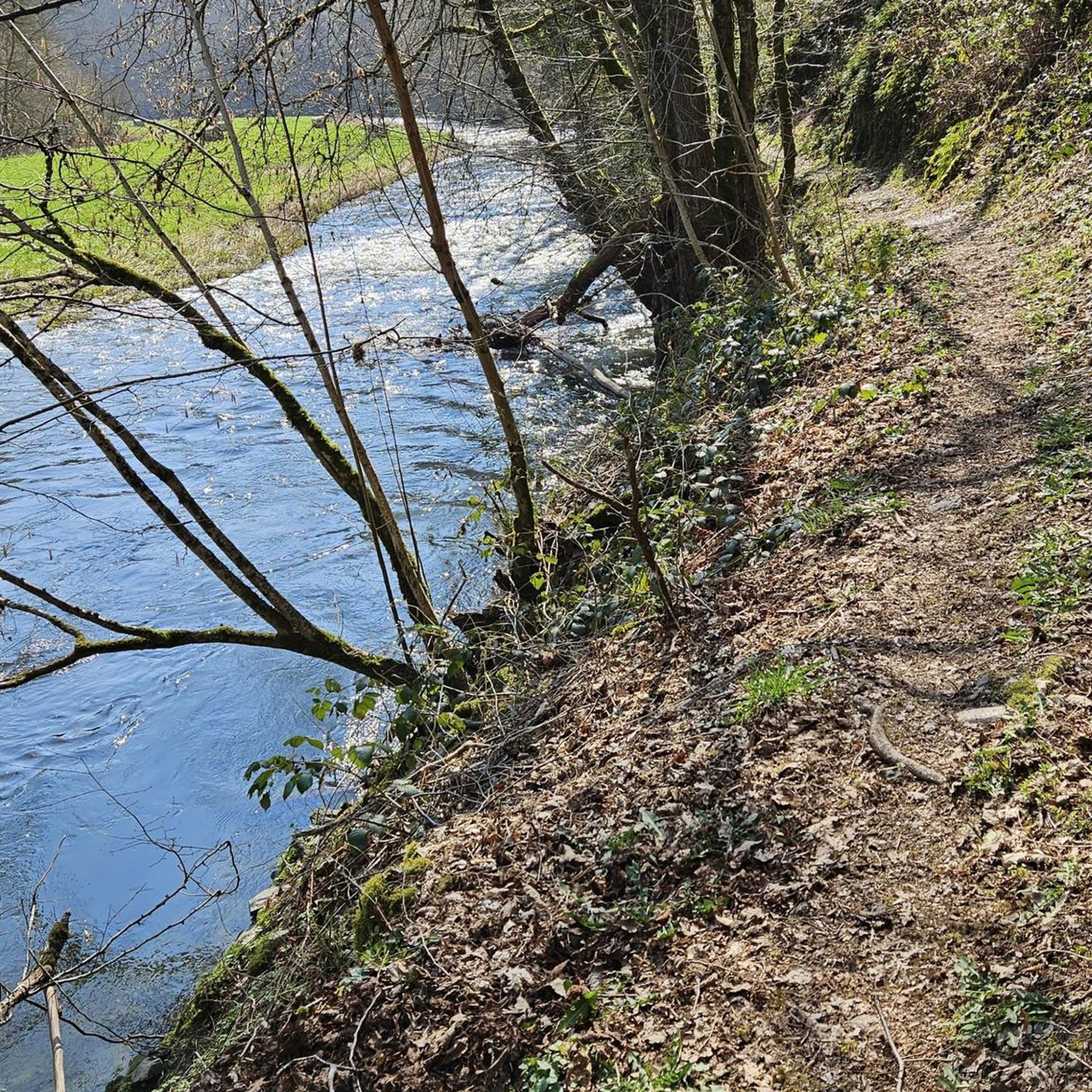
The stunning scenery makes up for the bumpy road surface in some places.
2
0

Durbuy is first mentioned in 1078 (as Dolbui) and in 1084 (under the current name). The first traces of habitation are found during excavations in the Anticlinaal cave by Count Pierre d'Ursel. The d'Ursel family still inhabits Durbuy Castle. Before the current castle, there were already others. Based on the archives of Luxembourg, a castle was destroyed and in the eleventh century, another was built by Henry II the Lame, who had received the domain from his mother Rageline, sister of Pope Stephen II, and her husband Albert II of Namur. Around 1156, that castle was severely damaged by flames and during the succession wars of the Duchy of Limburg, it was destroyed several more times. From 1412, Durbuy came into the hands of the House of Burgundy and at the end of the fifteenth century, the then-existing castle was destroyed by Maximilian of Austria, like all the castles of the la Marck family: besides Durbuy, these also include the castles of Logne and La Roche. In 1628, Baron Antoine Schetz of Grobendonck leased the Durbuy estate for 40,000 gold marks, a very considerable sum. Besides being a baron, he was also Count of Grobbendonk, Lord of Tilburg and Goirle, Pulle and Pulderbos, and Wezemaal. He was in the service of the Spanish and had led the defense of 's-Hertogenbosch during the Eighty Years' War. At the age of 71, he was also governor of the city of Leuven during the Siege of Leuven. And he was the first in a long line of the d'Ursel family who, to this day, inhabit the castle. In 1731, the castle was rebuilt by the then Duke of Ursel. Countess Auguste d'Ursel, who acquired the d'Ursel family's possessions in Durbuy, then modernized the castle from 1880 to 1882 with the help of architect Thirian from Namur. During the Second World War, the castle was occupied several times and in 1944, during the Battle of the Bulge, it was used as a field hospital by the American liberators, with the billiard table serving as an operating table. Sources: historical overviews in Word documents on the website of Count Jean-Michel d'Ursel, current resident, at https://www.chateaudedurbuy.be/historique.html
6
0

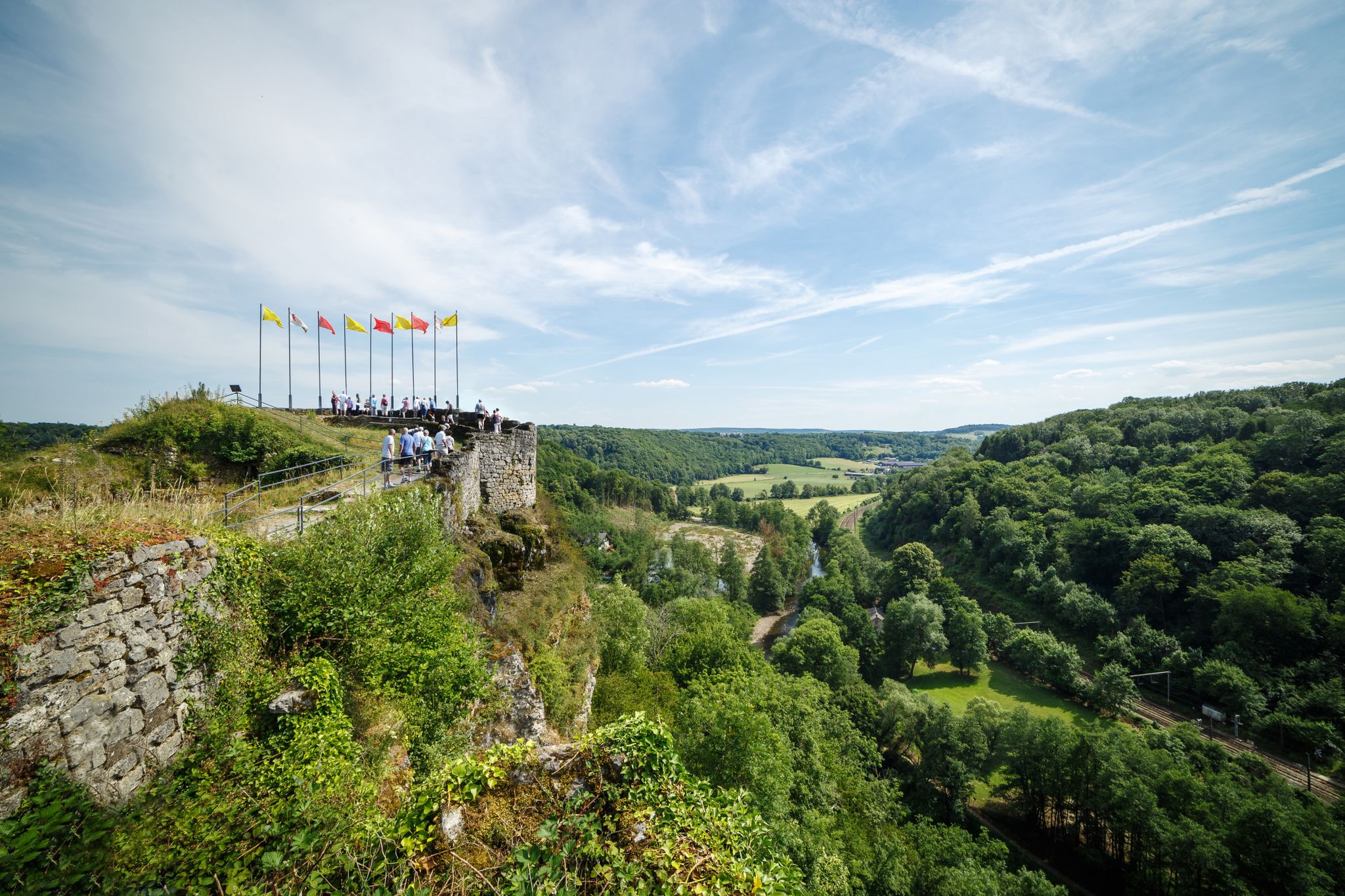
High point overlooking the town of Aywaille
0
0


Frequently Asked Questions
How many no traffic gravel bike trails are there around Ouffet?
There are over 100 dedicated no-traffic gravel bike routes available around Ouffet, offering a wide range of experiences for all skill levels. These trails allow you to explore the beautiful Ardennes landscape without vehicle interference.
What is the typical terrain like for gravel biking in the Ouffet region?
The Ouffet region, nestled in the Belgian Ardennes, features a diverse landscape perfect for gravel biking. You'll encounter rolling hills, dense forests, and picturesque river valleys, particularly along the Ourthe River. Expect a mix of surfaces, from well-maintained gravel roads and dirt tracks to some more challenging sections, ensuring a varied and engaging ride.
What is the best time of year to go gravel biking in Ouffet?
Spring and autumn are generally considered the best times for gravel biking in Ouffet. The weather is usually mild, and the natural scenery is particularly vibrant with spring blossoms or autumn foliage. Summer can also be pleasant, but be prepared for potentially warmer temperatures. Winter rides are possible, but some trails might be muddy or require more robust tires due to wet conditions.
Are there any family-friendly no traffic gravel bike routes in Ouffet?
Yes, while many routes offer a challenge, there are options suitable for families. Look for routes with lower elevation gain and shorter distances. The region's extensive network, including sections of the RAVeL network, often provides smoother, more accessible paths. For example, the Comblain-au-Pont – Ourthe Canal loop from Anthisnes is a moderate option that follows a river valley, offering a scenic experience.
Can I bring my dog on the gravel bike trails around Ouffet?
Many trails in the Ouffet region and the wider Ardennes are dog-friendly, especially those through forests and along river paths. However, it's always best to check local regulations or specific route details, as some nature reserves might have restrictions. Ensure your dog is well-behaved and kept on a leash where required, especially when encountering other cyclists or wildlife.
What kind of attractions or landmarks can I see along the gravel bike routes?
The Ouffet area is rich in natural beauty and historical sites. You can cycle past charming villages, historical buildings, and natural monuments. Notable attractions include the medieval town of Durbuy — Old Town and Castle, the impressive Modave Castle, and unique geological formations like The Anticline and Sy Rocks. The Wéris Dolmen also offers a glimpse into ancient history.
Are there circular gravel bike routes available in Ouffet?
Yes, many of the gravel bike routes around Ouffet are designed as circular loops, allowing you to start and finish at the same point. This is convenient for those traveling by car. An example is the challenging Stone Water Fountain – Narrow Forest Path loop from Hamoir, which offers a full circuit through varied terrain.
What are the difficulty levels of the gravel bike trails in Ouffet?
The trails around Ouffet cater to various skill levels. While the majority (around 41 routes) are rated as 'moderate', offering a good balance of challenge and enjoyment, there are also over 70 'difficult' routes for experienced riders seeking significant elevation changes and technical sections. A few 'easy' routes are also available for a more relaxed experience.
Where can I find parking for gravel biking in the Ouffet area?
Parking is generally available in and around the main villages and starting points of popular trails in the Ouffet region. Look for designated parking areas in towns like Ouffet, Hamoir, Anthisnes, or Ocquier, which often serve as trailheads. It's advisable to check specific route descriptions for recommended parking spots.
Is public transport an option to reach gravel bike trails near Ouffet?
While Ouffet itself is a smaller municipality, the wider region of Wallonia has some public transport options. Trains connect to larger towns like Liège or Marche-en-Famenne, from where local buses might serve smaller villages. However, direct access to specific trailheads via public transport can be limited, so planning ahead is crucial. Bringing your bike on public transport may also have restrictions.
What do other gravel bikers enjoy most about the Ouffet region?
The Ouffet area is highly rated by the komoot community, with an average score of 4.16 stars. Reviewers often praise the region's quiet, traffic-free routes, the diverse and challenging terrain of the Ardennes, and the stunning natural beauty, particularly the dense forests and river valleys. The opportunity to combine cycling with exploring charming villages and historical sites is also frequently highlighted.
Are there any routes that follow the RAVeL network for easier riding?
Yes, the Walloon region, including areas accessible from Ouffet, incorporates sections of the RAVeL network (Réseau Autonome de Voies Lentes). These are often old railway lines or towpaths converted into smooth, traffic-free paths, ideal for easier gravel biking or family rides. The Roche aux Corneilles – RAVeL route along the Ourthe loop from Ocquier is a great example, offering a scenic ride along the Ourthe River.
Most popular attractions around Ouffet

Get inspired with the komoot mobile app


Explore more
Browse the best Gravel rides in other regions.
