The best traffic-free bike rides around Campiglia Marittima
4.5
(253)
2,786
riders
13
rides
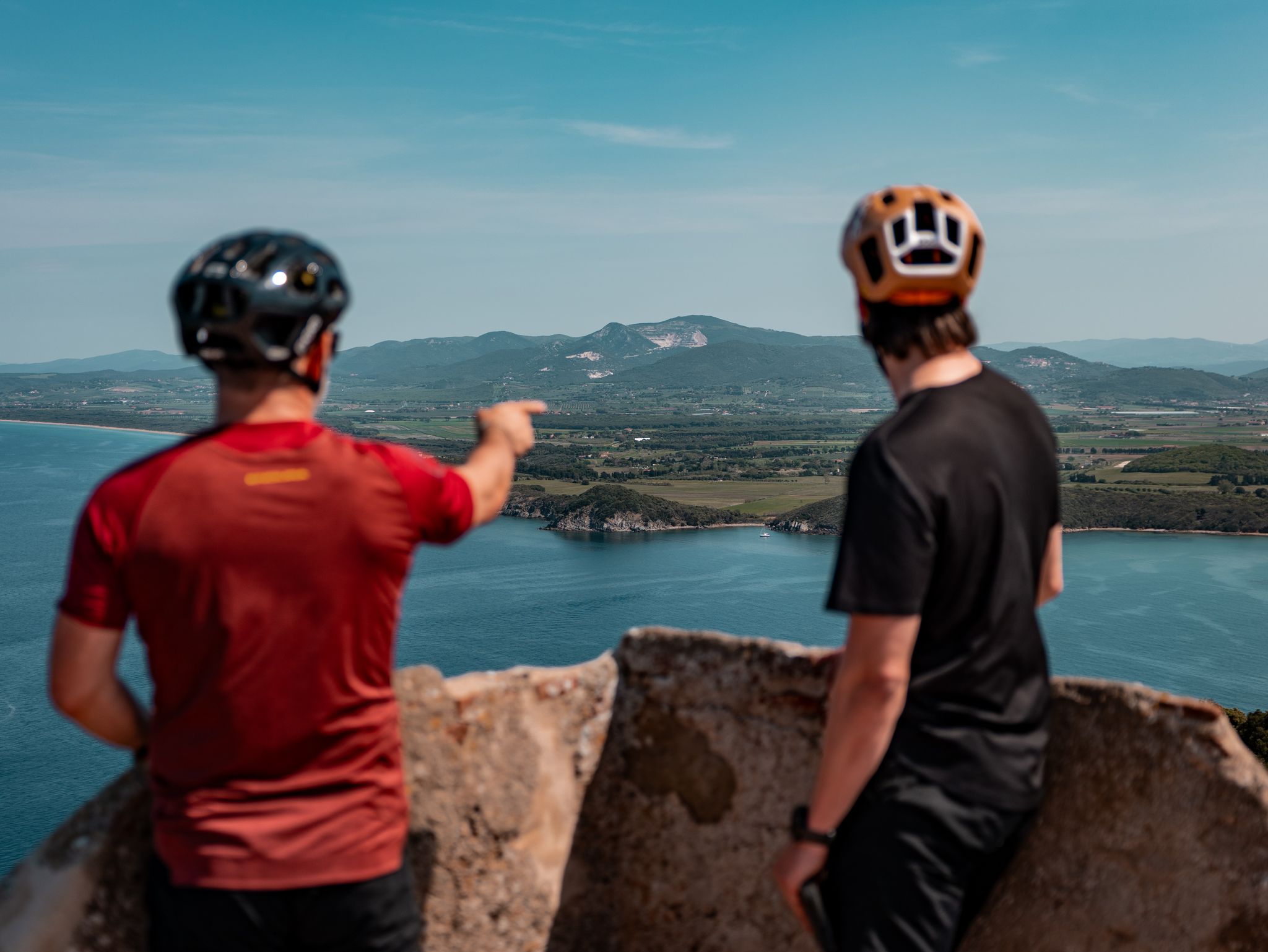
No traffic touring cycling routes around Campiglia Marittima traverse a landscape characterized by soft valleys, hills, and extensive Mediterranean scrub. The region features forests of chestnut, oak, and cork trees, offering varied terrain for cyclists. Panoramic views of the Tuscan Archipelago and the Gulf of Baratti are present along many routes. The area combines countryside with proximity to the sea, providing diverse natural settings for cycling.
Best no traffic touring cycling routes around Campiglia Marittima
- The most popular no traffic…
Last updated: July 27, 2026
4.6
(9)
99
riders
Hard bike ride. Very good fitness required. Mostly paved surfaces. Suitable for all skill levels.
61
riders
21.0km
02:20
720m
720m
Hard bike ride. Very good fitness required. Mostly paved surfaces. Suitable for all skill levels.

Sign up for free
5.0
(2)
24
riders
Hard bike ride. Very good fitness required. Mostly paved surfaces. Suitable for all skill levels.
5.0
(1)
18
riders
21.9km
01:57
420m
420m
Moderate bike ride. Good fitness required. Mostly paved surfaces. Suitable for all skill levels.
7
riders
38.7km
03:51
1,050m
1,050m
Hard bike ride. Very good fitness required. You may need to push your bike for some segments of this route.
Get access to more routes and recommendations from other explorers.
Sign up for free
Already have an account?
Our route recommendations are based on thousands of hikes, rides, and runs completed by other people on komoot.
Start today with a free account
Your next adventure awaits.
Login or Signup
Other adventures around Campiglia Marittima

Tips from the Community

The Pieve di San Giusto in Suvereto is one of the most important and fascinating Romanesque buildings in the province of Livorno. Located at the entrance to the medieval village in Piazza Vittorio Veneto, its existence has been documented since 923. The current building, however, dates back to 1189, the year it was rebuilt by the masters Barone Amico and Bono da Calci. It features elements of light limestone alternating with dark bands of a typically Pisan style. The main entrance is flanked by two columns supporting two apotropaic lions. The structure has a single nave with a visible wooden truss ceiling. Inside, an ancient, finely decorated marble baptismal font is preserved. In an internal niche, there are remains of medieval frescoes; on the transept, the epigraph attesting to the completion date (1189) is still legible.
0
0
When talking about the fortifications of Suvereto, it is necessary to distinguish: La Rocca Aldobrandesca: It is the highest fortified complex in the village, built for military purposes to guard the fief. It includes a quadrangular tower (medieval period) and a palace. Today, it also houses a museum. Il Palazzo Comunale: The administrative heart, built in 1201. It is located in the center of the village and is topped by the Campanone tower (or clock tower). It is famous for the Loggia dei Giudici. Il Torrione: It is the main southern access gate (dated 14th-15th century) that opens into the defensive wall. La Porticciola: Also known as Porta di Sopra, it is the northern gate of the village. Also dating back to the medieval period (around 1300), it served as a second checkpoint.
1
0
The Romanesque portal of the Pieve di San Giusto in Suvereto. The facade is decorated with an elegant portal surmounted by a round arch, famous for its carved capitals. Although it existed before the year 1000, the current structure was rebuilt in the 12th century.
0
0

Delicious, nice to sit, but expensive in relation.
1
0
The historic center of Campiglia Marittima is a well-preserved medieval Tuscan village on the Etruscan Coast, perched on a hill with panoramic views. Characterized by cobbled alleys, arches, and ancient walls, it houses the Rocca di Campiglia, the Palazzo Pretorio, the Pieve di San Giovanni, and offers picturesque views, artisan shops, and typical taverns.
0
0
The Church of San Giusto is the guardian of millennia-old stories and a timeless charm. A majestic church, whose origins date back to between the 9th and 12th centuries, located next to the Church of San Michele Arcangelo, it is not only a sacred building, but a piece of history can be found in every corner. Named after San Giusto, bishop of Volterra, its origins are linked to the legend of the African exiled bishops, San Giusto, San Cerbone, San Fiorenzo, and San Regolo, who landed in the Val di Cornia in the 6th century, leaving an indelible mark throughout the valley. It is no coincidence, in fact, that San Fiorenzo is the patron saint of Campiglia Marittima and the Cathedral of Massa Marittima is dedicated to San Cerbone. The gabled façade, the evocative portal, and the quatrefoil rose window, with its black and white band decoration, are hallmarks of the Tuscan Romanesque style.
0
0
The Parish Church of San Giusto in Suvereto is one of the most interesting Romanesque buildings in the province of Livorno. The church, mentioned as early as 923, was rebuilt in 1189 by the masters Barone Amico and Bono da Calci. The façade features a portal flanked by two columns with lions, a decorated architrave, and a quatrefoil oculus at the top. The interior, with a single nave, features a late-medieval octagonal baptismal font and several frescoes. The bell tower, with its crenellated top, underwent restoration in the 19th century following a lightning strike.
1
0

Great place to stop for a bite to eat.
1
0
Frequently Asked Questions
How many no traffic touring cycling routes are available around Campiglia Marittima?
There are 16 dedicated no traffic touring cycling routes around Campiglia Marittima, offering a variety of experiences for different skill levels.
What is the best time of year for no traffic touring cycling in Campiglia Marittima?
The region is ideal for touring cycling in autumn, winter, and spring. The mild climate during these seasons makes for comfortable rides, allowing you to enjoy the scenic ups and downs through the hills and vineyards without the summer heat.
Are there any easy, traffic-free touring routes suitable for beginners or families?
Yes, there are easy routes available. For a gentle ride, consider the Tufaia Lake – Laghetti di Venturina loop from Villa Toscana. This route is approximately 15 km long with minimal elevation gain, perfect for a relaxed outing.
What kind of landscapes and natural features can I expect on these routes?
You'll experience a diverse tapestry of landscapes, from soft valleys and hills to extensive Mediterranean scrub and forests of chestnut, oak, and cork trees. Many routes offer panoramic views of the Tuscan Archipelago, the Gulf of Baratti, and on clear days, even the coast of northern Corsica.
Are there any historical or cultural attractions along the no traffic touring routes?
Absolutely. The region is rich in history. You can explore charming medieval villages like Suvereto, known for its beauty, or pass by historical sites. For example, the Il Pozzino Cove – Populonia Castle loop from I Gelsi Ristorante - Pizzeria takes you near Populonia Castle, offering a glimpse into the area's past.
Can I find longer, more challenging no traffic touring routes?
Yes, for those seeking a challenge, there are several difficult routes. The Castello di Magona – Suvereto Historic Center loop from Campiglia Marittima is a demanding option, covering over 42 km with significant elevation changes, leading you through hilly terrain and past historic centers.
What do other touring cyclists enjoy most about the routes in Campiglia Marittima?
The komoot community highly rates the touring cycling experience in Campiglia Marittima, with an average score of 4.5 stars. Reviewers often praise the quiet, scenic roads, the diverse landscapes, and the opportunity to combine cycling with cultural exploration and local food and wine experiences.
Are there any specific viewpoints or natural highlights to look out for?
Many routes offer stunning vistas. The Narrow Forest Trail – View of the Gulf loop from Cafaggio, for instance, provides breathtaking views of the Gulf. You can also find natural highlights like the Padule Orti-Bottagone Nature Reserve or the serene Bicocchi Lake near some routes.
Are there any caves or unique geological features accessible from the routes?
Yes, the area has interesting geological sites. You might find caves like the Buca del Fico near the Ragnaia or the Buca dell'Aquila (Etruscan Cave) on Via delle Ferruzze, which offer a unique natural and historical experience, often accessible via short detours from cycling paths.
Can I combine cycling with wine tasting or local food experiences?
Absolutely. The Val di Cornia and Monteregio areas are renowned for their vineyards. Many routes pass through these wine regions, offering opportunities for wine tasting at local cellars. Villages like Suvereto are also excellent for sampling local game and traditional Tuscan cuisine.
Are there any thermal baths nearby for relaxation after a ride?
Yes, for post-ride relaxation, the thermal baths at Venturina Terme and Sassetta are easily accessible. These natural springs and wellness facilities provide a perfect way to unwind after exploring the region by bike.
Are the no traffic routes typically circular or point-to-point?
Many of the no traffic touring routes around Campiglia Marittima are designed as circular loops, allowing you to start and finish at the same point. This makes planning your ride and logistics, such as parking, much more convenient.
Most popular routes around Campiglia Marittima
Most popular attractions around Campiglia Marittima

Get inspired with the komoot mobile app


Explore more
Browse the best Cycling routes in other regions.
