The best traffic-free bike rides in Xubia-Castro
4.4
(112)
1,169
riders
37
rides
No traffic touring cycling routes in Xubia-Castro traverse a region defined by the Grande de Xuvia River and its tributary, the Castro River, which flow into the Ría de Ferrol. The landscape features well-preserved flora, including oak and chestnut forests along the riverbanks and valleys. The Sierra de Forgoselo mountain range offers gently undulating forms, reaching approximately 500 meters in altitude, with varied terrain including small forests and grasslands.
Best no traffic touring cycling routes in Xubia-Castro
- The most popular…
Last updated: October 30, 2026
3
riders
23.1km
01:34
360m
360m
Moderate bike ride. Good fitness required. Mostly paved surfaces.
15
riders
44.1km
03:54
1,020m
1,020m
Hard bike ride. Very good fitness required. You may need to push your bike for some segments of this route.

3.5
(2)
26
riders
56.4km
04:25
850m
850m
Hard bike ride. Very good fitness required. Mostly paved surfaces.
4
riders
75.8km
05:39
1,020m
1,020m
Hard bike ride. Very good fitness required. You may need to push your bike for some segments of this route.
4.0
(5)
35
riders
52.0km
03:42
630m
630m
Hard bike ride. Very good fitness required. Mostly paved surfaces.
Get access to more routes and recommendations from other explorers.
Already have an account?
Our route recommendations are based on thousands of hikes, rides, and runs completed by other people on komoot.
Start today with a free account
Your next adventure awaits.


Other adventures in Xubia-Castro

Tips from the Community

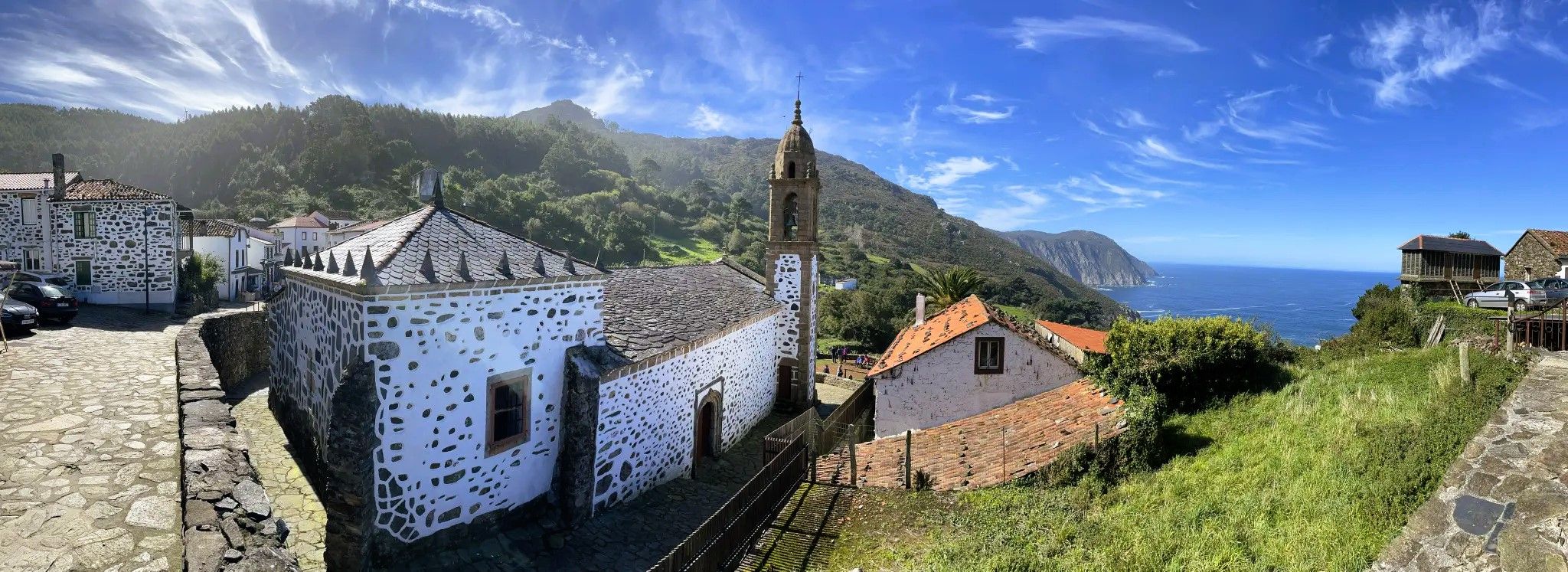
An ancient but very well-preserved and visitable monastery, very pretty and small, so you can see it in just a few minutes.
1
0
A very well-preserved ancient monastery that can be visited (I don't know the opening hours) is located on the English Way to Santiago. A quick visit is recommended (it's small but beautiful), and then continue up the path on the left.
0
0

It is a Romanesque building with additions of the Galician Baroque of the 18th century. A brief visit to the church and the monastic dependencies can show us a series of data that allude to the continuous building development of this monastery.
0
0

Together with the Castelo de San Felipe, on the opposite bank, they guarded the entrance to the Ferrol Estuary.
0
0


You can only get the stamp for the pilgrim ID here on Saturdays and Sundays.
3
0

One of the three fortresses that protect the entrance to the Ferrol estuary where the sea narrows at Punta da Redonda, forming part of the "Triángulo de Fogo", since there was no corner where the cannons could not reach with their fire. The Castelo da Palma, was built as a watchtower in the 16th century
2
1
Path up to the Montefaro area with its spectacular views of a large part of the Ferrol and Betanzos estuaries. Over the years, numerous fortifications and watchtowers were built to defend the Ferrol estuary and the Ártabro Gulf as early as the 16th century. Today a public area for recreational and outdoor activities.
1
1
Frequently Asked Questions
How many no-traffic touring cycling routes are available in Xubia-Castro?
There are over 25 dedicated no-traffic touring cycling routes in Xubia-Castro, offering a variety of experiences for cyclists looking to explore the region's natural beauty without vehicle interference.
Are there any easy no-traffic touring cycling routes suitable for beginners in Xubia-Castro?
While many routes in Xubia-Castro are rated as difficult due to elevation changes, the region offers sections along river systems that are generally flatter. For a more relaxed experience, consider exploring parts of the Xuvia Promenade – Xuvia Mill loop from Xuvia, which features accessible paths along the river, though the full loop is challenging.
What are the typical lengths of the car-free bike routes in Xubia-Castro?
The no-traffic touring cycling routes in Xubia-Castro vary significantly in length. For example, the Ría de Ferrol – Xuvia Promenade loop from O Alto do Castiñeiro is approximately 47 km, while the Xuvia Promenade – Frouxeira Lagoon loop from O Alto do Castiñeiro extends to about 73 km. Most routes range from 40 to 75 km, providing substantial distances for touring.
What natural features can I expect to see along the no-traffic touring cycling routes?
The routes often follow the Grande de Xuvia River and its tributary, the Castro River, offering lush scenery through oak and chestnut forests. You'll encounter diverse flora and fauna, natural lakes, and potentially views of the Ría de Ferrol. The region is part of the Natura 2000 network, highlighting its well-preserved natural environment.
Are there any family-friendly no-traffic bike trails in Xubia-Castro?
While many routes have challenging sections, the flatter parts along the Xuvia Promenade are generally suitable for families. These sections provide a safe, car-free environment to enjoy the river scenery. Always check the route details for elevation and surface conditions to ensure it matches your family's abilities.
What is the best time of year for no-traffic touring cycling in Xubia-Castro?
The best time to cycle in Xubia-Castro is typically during spring (April to June) and early autumn (September to October). During these periods, the weather is generally mild and pleasant, and the natural landscapes are at their most vibrant, making for ideal cycling conditions.
Where can I find parking access for Xubia-Castro's no-traffic cycling trails?
Parking is generally available in the towns and villages that serve as common starting points for these routes, such as Xuvia or O Alto do Castiñeiro. Specific parking information can often be found in the detailed descriptions of individual tours on komoot.
Are there cafes or refreshment stops along the no-traffic bike routes in Xubia-Castro?
While the routes themselves are car-free, they often pass through or near small towns and villages where you can find local cafes, restaurants, and shops to refuel. It's always a good idea to check the route map on komoot for points of interest and plan your stops accordingly.
What do other touring cyclists enjoy most about cycling in Xubia-Castro?
The area is highly rated by the komoot community, with an average score of 4.5 stars. Reviewers often praise the tranquil environment, the stunning riverine landscapes, and the opportunity to experience Galicia's natural beauty away from traffic. The varied terrain, from serene estuaries to dense forests, is also frequently highlighted.
Are there any circular car-free bike routes in Xubia-Castro?
Yes, many of the no-traffic touring cycling routes in Xubia-Castro are designed as loops, allowing you to start and end at the same point. Examples include the Xuvia Promenade – Xuvia Mill loop from Xuvia and the Cabanas Beach – Cabo Prior Lighthouse loop from O Alto do Castiñeiro, providing convenient options for day trips.
Can I reach the no-traffic touring bike trails in Xubia-Castro using public transport?
Public transport options, such as regional buses or trains, can connect you to larger towns in the Ferrolterra region, including those near Xubia-Castro. From these points, you may need to cycle a short distance to reach the start of the car-free trails. It's advisable to check local public transport schedules and bike carriage policies in advance.
Most popular routes in Xubia-Castro

Get inspired with the komoot mobile app


Explore more
Browse the best Cycling routes in other regions.
