The best traffic-free bike rides around Lenauer Forst
4.6
(161)
1,257
riders
30
rides
No traffic road cycling routes around Lenauer Forst traverse a landscape characterized by rolling hills, dense forests, and river valleys in the Upper Palatinate region of Bavaria. The area features prominent natural landmarks such as the Fichtelnaab River and the Steinwald mountain range. Road cyclists can expect varied terrain, including gentle climbs and descents, suitable for exploring the region's natural beauty and historical sites.
Best no traffic road cycling routes around Lenauer Forst
- The most popular no traffic road cycling…
Last updated: November 11, 2026
4.8
(4)
34
riders
36.3km
01:54
530m
530m
Moderate road ride. Good fitness required. Mostly well-paved surfaces and easy to ride.
13
riders
66.9km
03:20
670m
670m
Moderate road ride. Good fitness required. Mostly well-paved surfaces and easy to ride.

8
riders
51.1km
02:17
410m
410m
Moderate road ride. Good fitness required. Mostly well-paved surfaces and easy to ride.
4
riders
51.9km
02:30
500m
500m
Moderate road ride. Good fitness required. Mostly well-paved surfaces and easy to ride.
3
riders
45.6km
02:13
440m
440m
Moderate road ride. Good fitness required. Mostly well-paved surfaces and easy to ride.
Get access to more routes and recommendations from other explorers.
Already have an account?
Our route recommendations are based on thousands of hikes, rides, and runs completed by other people on komoot.
Start today with a free account
Your next adventure awaits.
Popular around Lenauer Forest
Tips from the Community

Pilgrimage Church of St. Barbara Traces of prehistoric settlements can be found on the Barbaraberg. In pre-Christian times, a Slavic cemetery with 161 documented graves, discovered in 1972 during excavations, was located here. Archaeologically secured is a Romanesque hall church from around the year 1000. It is reported that pilgrimages to the "Church of St. Barbara" and to the wooden carved image of St. Barbara took place as early as the end of the 14th century. During the Reformation, these pilgrimages were forbidden, which led to decay. In 1661, at the instigation of the Kemnath parish priest Balthasar Grosch, the chapel was rebuilt and adorned with the miraculous image that had been found buried in a stable. Under Abbot Dominikus I. von Lieblein, a church in the Rococo style was built here between 1741 and 1756 in honor of St. Barbara. The church building was cruciform and had five altars. The vaults of the nave were decorated with images from the life of St. Barbara. Pilgrimages to the Barbaraberg were resumed. In the course of secularization, the Barbara Church was also closed and sold in 1803. The miraculous image and the relics of St. Barbara remained on site, while the rest of the furnishings were sold to other parishes. The church space was converted into a barn. Due to damage to the roof, the crossing dome and the interior were demolished in 1888. In 1914, the church was partially incinerated by a lightning strike. The Barbara statue in the gable of the facade, which has been headless ever since, still commemorates this. In 1919, the Munich cathedral chapter canon Michael Hartig acquired the remains and had a small chapel built, which was consecrated in 1921. Originally, he wanted to establish a recreational home for the diocesan priests of Munich here. However, the association founded for this purpose was dissolved in 1929. He then donated the buildings to the Speinshart Monastery, in whose possession they remain to this day. In 1976/77, an external renovation took place, followed by interior restoration from 1992 to 1994. What remains of the church is the still magnificent facade, flanked by buildings that formerly served for the accommodation of monastery members and later for agricultural purposes. Sparse remains of the walls of the former church are still preserved. Source: Excerpts from www.wikipedia.de
5
0

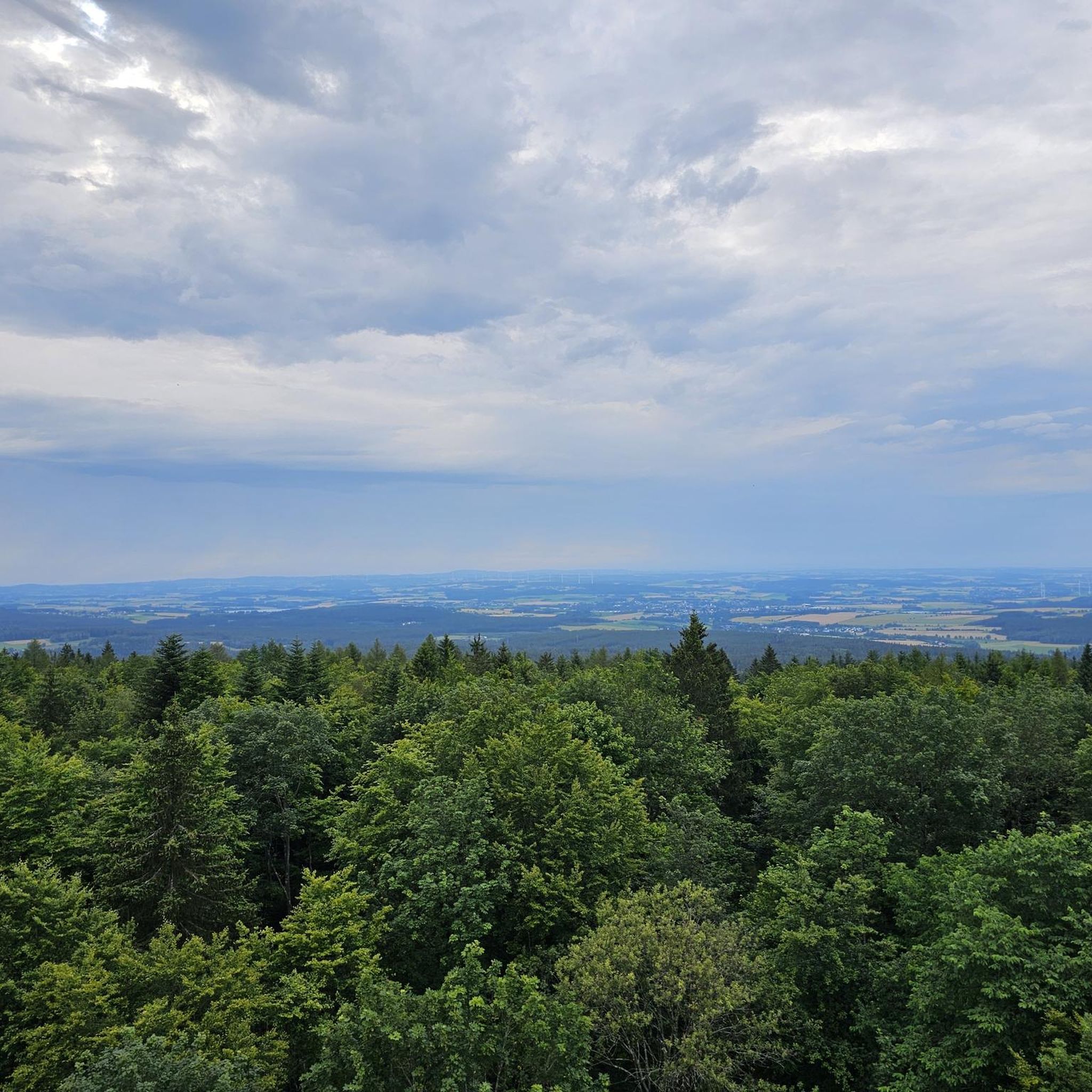
Magnificent landscape with many beautiful impressions
0
0


very nice view of the Kemnather Altstadt
0
0

Kemnath town center with former district court
1
0
Church tower of the Assumption of Mary in KEM
1
0

The chapel was locked when we were there, but you can see inside very well through a small window.
1
0

I love this pond landscape here.
2
0
Frequently Asked Questions
How many traffic-free road cycling routes are available in the Lenauer Forest region?
The Lenauer Forest region offers a good selection of traffic-free road cycling routes, with over 30 tours available. These routes are designed to provide a peaceful cycling experience away from vehicle traffic.
Are there easy or beginner-friendly traffic-free road cycling routes in Lenauer Forest?
Yes, the region is well-suited for cyclists of all abilities. There are 7 easy routes specifically designed for a relaxed pace, often featuring low gradients. The broader Lenneroute, which winds through the region, is known for being generally manageable for less experienced cyclists and families.
What kind of terrain can I expect on traffic-free road cycling routes in Lenauer Forest?
You can expect a diverse landscape featuring lush green forests, wide meadows, and picturesque river valleys. While primarily following the Lenne River, the routes include rolling hills that offer varied terrain with some easy climbs, providing a scenic and engaging ride.
Are there any family-friendly traffic-free road cycling options in Lenauer Forest?
Absolutely. Many of the routes, particularly the easier ones, are suitable for families. The Lenneroute itself is known for its low gradients and well-maintained paths, making it a great choice for a family outing. You'll find plenty of charming villages and natural beauty to enjoy together.
Where can I find parking for traffic-free road cycling routes in Lenauer Forest?
While specific parking spots vary by route, many towns and villages along the Lenneroute offer designated parking areas. It's advisable to check the starting points of individual tours on komoot, such as the Fichtelnaab River – Steinwald Country Inn loop from Ebnath, for detailed parking information.
Are there circular traffic-free road cycling routes available?
Yes, many of the routes in the Lenauer Forest region are designed as circular tours, allowing you to start and end at the same point. Examples include the View of Rauher Kulm – St. Johannis Church (Bayreuth) loop from Immenreuth or the View of Armesberg – View of Rauher Kulm loop from Immenreuth, which offer convenient round trips.
What are some scenic viewpoints or attractions along the traffic-free road cycling routes?
The region is rich in natural beauty and cultural sights. You'll encounter picturesque half-timbered villages, and have opportunities for unforgettable views of fairytale castles like Altena Castle. Towards the end of the Lenneroute, you can also enjoy the impressive Ruhr reservoirs. For more detailed information on the region's offerings, you can visit nrw-tourism.com.
What is the best season for traffic-free road cycling in Lenauer Forest?
The spring, summer, and early autumn months generally offer the best conditions for road cycling in the Lenauer Forest region. During these seasons, the weather is typically mild, and the natural scenery, with its lush forests and meadows, is at its most vibrant. Winter cycling is possible, but some paths might be affected by snow or ice.
Can I find cafes or places to stop for refreshments along these routes?
Yes, the Lenauer Forest region, particularly along the well-established Lenneroute, offers good infrastructure. You'll find numerous charming half-timbered villages and towns along the way where you can stop for refreshments, enjoy local cuisine, and take a break.
What do other cyclists say about the traffic-free road cycling routes in Lenauer Forest?
The komoot community highly rates the road cycling experience in the Lenauer Forest region, with an average score of 4.51 out of 5 stars. Reviewers often praise the quiet, traffic-free nature of the routes, the beautiful natural scenery, and the well-maintained paths that make for an enjoyable ride.
Are there any longer, more challenging traffic-free road cycling routes for experienced riders?
While many routes feature low gradients, the region also offers options for more experienced riders. There are 22 moderate and 2 difficult routes that provide longer distances and more significant elevation changes. For example, the Speinshart Abbey – Kemnath Town Center loop from Immenreuth covers over 65 km with substantial elevation gain, offering a good challenge.
How long are the typical traffic-free road cycling routes in Lenauer Forest?
The length of traffic-free road cycling routes in Lenauer Forest varies significantly. You can find shorter routes, such as the Fichtelnaab River – Steinwald Country Inn loop from Ebnath at around 35 km, up to longer tours like the View of Rauher Kulm – St. Johannis Church (Bayreuth) loop from Immenreuth which is over 66 km, providing options for different preferences and fitness levels.
Most popular routes around Lenauer Forst

Get inspired with the komoot mobile app


Explore more
Browse the best Road cycling routes in other regions.
