The best traffic-free bike rides around Hirschwald
4.5
(189)
5,484
riders
91
rides
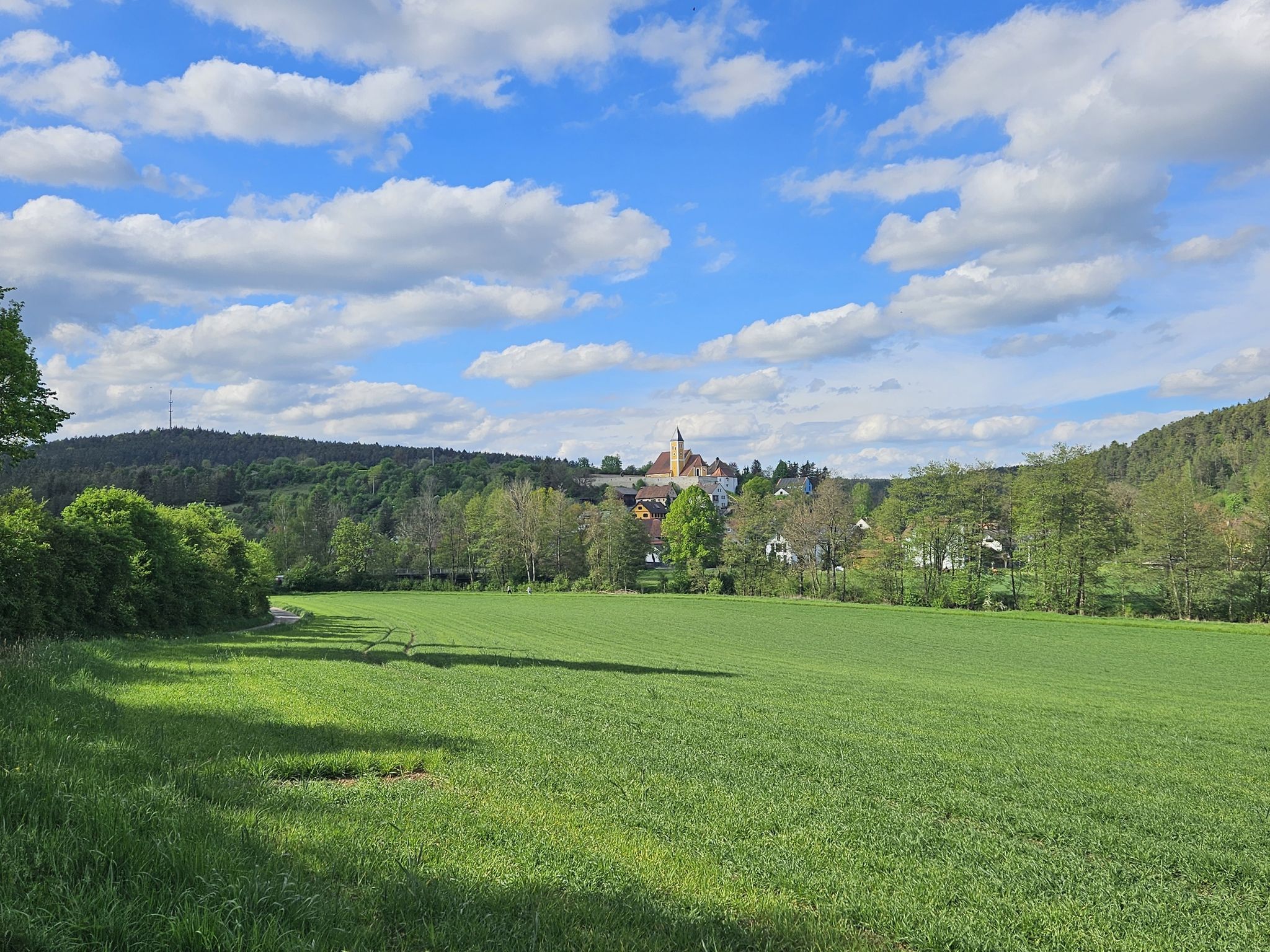
No traffic road cycling routes around Hirschwald Nature Park traverse a varied landscape of smooth valleys, pastured plateaus, and open countryside. The region is characterized by its diverse topography, including the Lauterach Valley, known for its unique vegetation and picturesque views. Cyclists will find routes that follow river valleys and former railway lines, providing generally smooth surfaces for road bikes. This area offers a blend of natural scenery and historical points of interest.
Best no traffic road cycling routes around…
Last updated: May 31, 2026
5.0
(3)
52
riders
30.4km
01:41
170m
170m
Moderate road ride. Great for any fitness level. Some segments of this route may be unpaved and difficult to ride.
28
riders
23.1km
00:59
190m
190m
Easy road ride. Great for any fitness level. Mostly well-paved surfaces and easy to ride.

Sign up for free
22
riders
65.5km
02:52
550m
550m
Moderate road ride. Good fitness required. Mostly well-paved surfaces and easy to ride.
5.0
(2)
17
riders
41.6km
01:56
460m
460m
Moderate road ride. Good fitness required. Mostly well-paved surfaces and easy to ride.
5.0
(1)
8
riders
24.0km
01:10
300m
300m
Easy road ride. Great for any fitness level. Mostly well-paved surfaces and easy to ride.
Get access to more routes and recommendations from other explorers.
Sign up for free
Already have an account?
Our route recommendations are based on thousands of hikes, rides, and runs completed by other people on komoot.
Start today with a free account
Your next adventure awaits.
Login or Signup


Other adventures around Hirschwald

Tips from the Community

An old hilltop castle, long used as a monastery by various religious orders. Today it houses the police academy. It lies on a dolomite spur above the valley. This is also where the "Hochholz Trail" begins, which is not to be missed.
0
0

The Kastl castle complex has towered over the Lauterach Valley since the 10th century. In 1098, it was decided to convert the castle into a monastery. Description: It was founded in 1103, and the choir and St. Egidius Chapel were consecrated in 1129. Construction of the monastery church was completed at the end of the 12th century. Through constant renovations and expansions, the church acquired its present appearance. In 1782, it became the property of the Knights of Malta. The basilica has been used as a parish church since 1808. A late Gothic main portal, a four-bay barrel vault, the alternating support of columns and pillars in the nave, and the Gothic stone tomb in the vestibule, which was once the tomb of the deceased Princess Anna, make the church a true gem. Princess Anna was the daughter of King Ludwig the Bavarian and died in 1319. The mummy of the one-and-a-half-year-old "Kastl Child" was preserved until the end of 2013 and can be viewed again. The antechamber also houses the sarcophagus of General Schweppermann. [ Source: https://www.ostbayern-tourismus.de/attraktionen/klosterburg-kastl-fd22a56fae ]
1
0

Very beautiful monastery castle currently serves as a police training center
0
0

Theuern Castle is a castle in Theuern, in the municipality of Kümmersbruck, in the Amberg-Sulzbach district of Bavaria. The preserved buildings are listed as a historic monument under file number D-3-71-136-20. "Archaeological findings from the Middle Ages and the modern era in the area of the Catholic parish church of St. Nicholas and the former Hofmark Castle of Theuern, including traces of predecessor buildings and older construction phases of the church and the noble residence," are also listed as an archaeological monument under file number D-3-6637-0078. "Archaeological findings from the abandoned late medieval and modern iron hammer mill in Theuern" are also listed as an archaeological monument under file number D-3-6637-0118.
0
0

Great monastery castle with an amazing view - be sure to take the small juniper hiking trail!
0
0

Kastl Abbey Castle is the largely preserved hilltop castle and later Kastl Monastery, located on a long dolomite peak above the Lauterach Valley, high above Kastl in the Amberg-Sulzbach district of Bavaria. It is listed as an architectural monument under the file number D-3-71-132-21. "Archaeological findings from the Middle Ages and the early modern period in the area of the former Benedictine Abbey of Kastl" are also listed as an archaeological monument under the file number D-3-6636-0070. The castle complex was probably founded in the Carolingian period. In 954, Margrave Luitpold of Austria is said to have received Kastl Castle as a fief. In the same year, Luitpold owned the entire Heubischgau region, including Kastl, Habsberg, Illschwang, and Sulzbach. In 1098, the castle had three owners: Count Berengar of Sulzbach, Frederick I of Habsberg-Kastl with his son Count Otto of Habsberg-Kastl, and Luitgard of Zähringen, wife of Margrave Diepold II of Vohburg. Between 1098 and 1102, the owners agreed to convert the castle into a Benedictine monastery.[1] On May 12, 1102, Pope Paschal II confirmed the founding of the monastery. Source: Wikipedia
3
0

The Theuern church dates from the middle of the 18th century. The church tower, which was originally not connected to the church and probably also served as a defense, still shows Romanesque echoes today; its foundations date back to the middle of the 12th century. The central painting on the high altar shows scenes from the life of Saint Nicholas. Above it is a picture of the Holy Trinity. The altar is framed by statues of Saint Joseph and Saint Francis Xavier. The left side altar is dedicated to the Holy Cross, the right one to Saint John Nepomuk. The chancel contains gravestones and tombstones of some of the castle owners and priests. The pulpit, the organ and a statue of the scourged Jesus are also impressive.
8
0

Quiet connecting road between Brunn and Niesaß. Asphalt in order
0
0
Frequently Asked Questions
How many no traffic road cycling routes are available in Hirschwald?
There are over 90 dedicated no traffic road cycling routes in the Hirschwald region, offering a wide range of options for cyclists looking for peaceful rides. Most of these routes are of moderate difficulty, but there are also easy and challenging options available.
What kind of terrain and surfaces can I expect on no traffic road cycling routes in Hirschwald?
The Hirschwald Nature Park features diverse landscapes, including smooth valleys, pastured plateaus, and gentle meadows. Many no traffic routes, particularly sections of the Schweppermann Bike Trail, run on former railway lines, providing a smooth and excellent surface ideal for road bikes. The Lauterach Valley also offers wonderful cycling paths, often described as having good surfaces.
What is the best time of year for no traffic road cycling in Hirschwald?
The region is beautiful throughout the warmer months. Spring and autumn offer pleasant temperatures and vibrant scenery. The Lauterach Valley, often called 'Bavarian Tuscany,' is particularly picturesque with unique vegetation in spring and summer, making it a great choice for scenic rides.
Are there any family-friendly no traffic road cycling routes in Hirschwald?
Yes, Hirschwald offers several easy no traffic road cycling routes suitable for families. These routes typically feature gentler gradients and smooth surfaces, ensuring a comfortable experience for all ages. For example, the route Wolfsbach Chapel loop from Ebermannsdorf is rated as easy.
What cultural or historical attractions can I visit along no traffic road cycling routes in Hirschwald?
You can discover several historical sites. The Kastl Town Hall – Kastl Monastery Castle loop from Ursensollen takes you past the romantic Klosterburg in Kastl. Other notable attractions in the wider region include the Hammerschloss in Theuern, which houses the Mining and Industry Museum, and the Asam Cloister in Ensdorf.
Are there any natural landmarks to see while road cycling in Hirschwald?
Absolutely. The Lauterach River valley is a highlight, known for its diverse wildlife like kingfishers and trout. You might also encounter unique vegetation such as wild orchids and juniper bushes on the south-facing hillsides. Other natural features include the Rammertsbrunn Spring.
What do other road cyclists appreciate about the no traffic routes in Hirschwald?
The komoot community highly rates the no traffic road cycling routes in Hirschwald, with an average score of 4.55 stars. Reviewers often praise the stunning scenery of Bavaria's Jura, the quiet and peaceful nature of the routes, and the excellent surfaces, especially on sections that follow former railway lines, which are perfect for road bikes.
Are there circular no traffic road cycling routes available in Hirschwald?
Yes, many of the no traffic road cycling routes in Hirschwald are designed as circular loops, allowing you to start and end at the same point. An example is the Amberg's "Stadtbrille" – Wolfsbach Chapel loop from Kümmersbruck, which offers a varied ride.
Where can I park my car when starting a no traffic road cycling route in Hirschwald?
Many villages and towns within or near the Hirschwald Nature Park, such as Kümmersbruck, Ebermannsdorf, and Ursensollen, serve as common starting points for routes and typically offer parking facilities. It's advisable to check specific route descriptions for recommended parking areas near trailheads.
Can I reach the no traffic road cycling routes in Hirschwald by public transport?
While some larger towns in the region may have train or bus connections, direct public transport access to all trailheads within the Hirschwald Nature Park can be limited. Planning your route in advance and checking local transport schedules for connections to starting points like Amberg is recommended.
Are there places to eat or stay near the no traffic road cycling routes in Hirschwald?
Yes, the region is dotted with charming villages that offer opportunities for refreshments and accommodation. You can find traditional Bavarian inns and cafes. For example, the Beer garden "Old Station" Theuern is a popular spot. Many routes pass through or near these villages, making it easy to plan a stop.
Are there any longer no traffic road cycling routes for more experienced cyclists?
Yes, for those seeking a longer challenge, routes like the Platt Brewery Inn – View of the Vils in Vilshofen loop from Kümmersbruck offer a substantial distance and elevation gain. While most routes are moderate, there are also more difficult options available for experienced road cyclists.
Most popular attractions around Hirschwald

Get inspired with the komoot mobile app


Explore more
Browse the best Road cycling routes in other regions.
