The best traffic-free bike rides around Payerbach
4.7
(177)
3,820
riders
18
rides
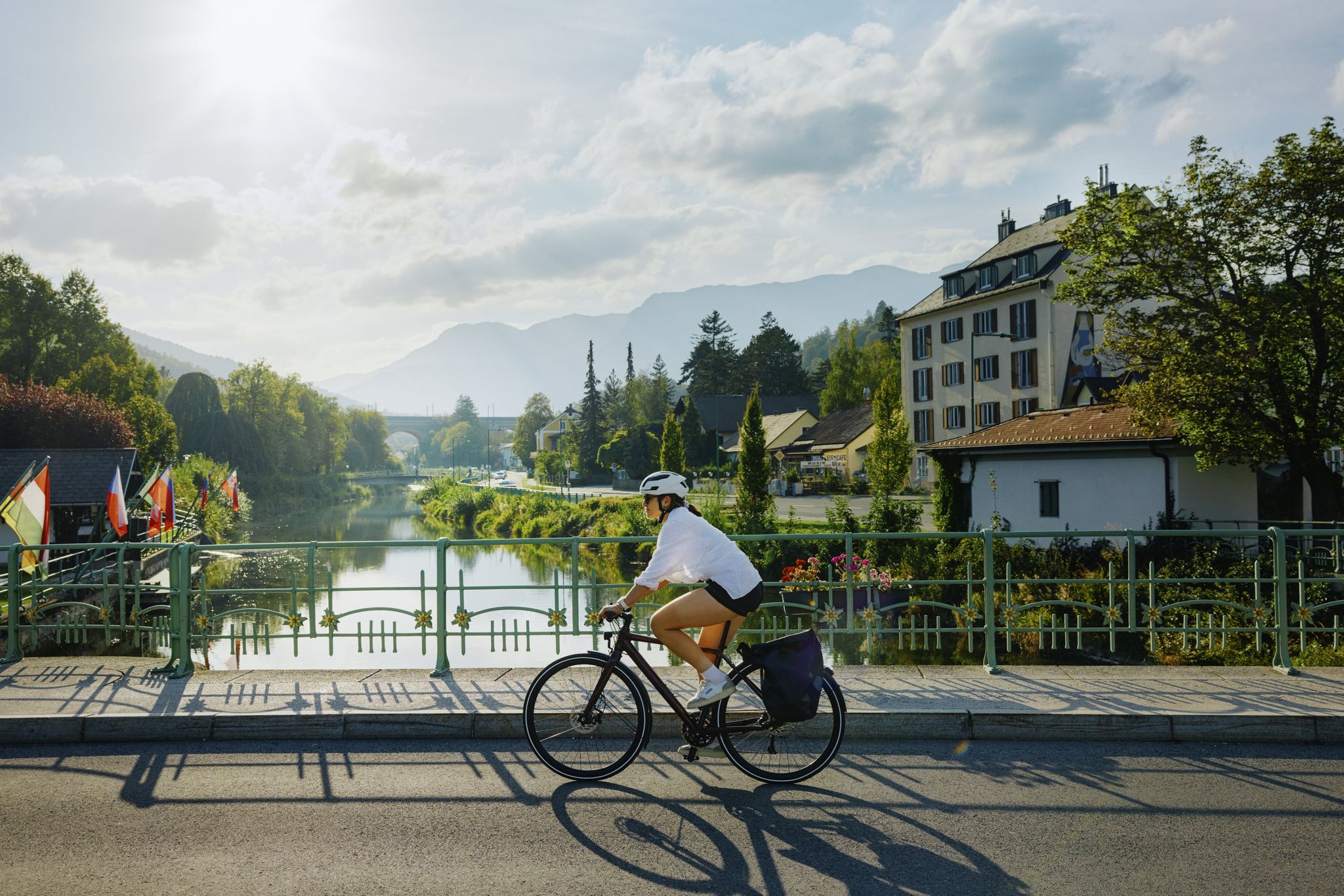
Road cycling around Payerbach offers diverse landscapes in the Vienna Alps, situated between the Rax, Schneeberg, and Semmering mountains. The region features green hills, extensive forests, and the Schwarza River, providing varied terrain for road cyclists. Routes often include well-paved surfaces, with some segments on harder routes potentially unpaved. The area is characterized by significant elevation changes, catering to various fitness levels.
Best no traffic road cycling routes around Payerbach
- The most popular no traffic road cycling route is Kalte Rinne Viaduct – Semmering Bend loop from Katastralgemeinde Hirschwang, a 33.7 miles (54.2 km) difficult trail that takes 3 hours 29 minutes to complete. This route features significant elevation gain, climbing over 1,500 meters.
- Another top favourite among local road cyclists is Public Toilets – Gasteil Sculpture Park loop from Payerbach-Reichenau, a moderate 20.9 miles (33.7 km) path. This route offers a balanced ride through the local landscape, with over 400 meters of ascent.
- Local road cyclists also love the Kalte Rinne Viaduct – Kalte Rinne Viaduct loop from Reichenau, an 18.3 miles (29.4 km) trail leading through the scenic area around the Kalte Rinne Viaduct, often completed in about 1 hour 53 minutes.
- Road cycling around Payerbach is defined by alpine scenery, river valleys, and mountain passes, with options ranging from moderate climbs to challenging ascents. The network offers options for different ability levels, including easy no traffic road cycling routes and advanced no traffic road bike trails.
- The routes in Payerbach are highly rated by the komoot community with an average score of 4.7 stars from more than 150 reviews. More than 3,500 road cyclists have used komoot to explore Payerbach's varied terrain.
Last updated: July 24, 2026
4.8
(4)
66
riders
54.2km
03:27
1,530m
1,530m
Hard road ride. Very good fitness required. Mostly well-paved surfaces and easy to ride.
5.0
(2)
54
riders
Moderate road ride. Good fitness required. Mostly well-paved surfaces and easy to ride.

Sign up for free
5.0
(1)
23
riders
29.7km
01:52
800m
800m
Moderate road ride. Good fitness required. Mostly well-paved surfaces and easy to ride.
5.0
(2)
26
riders
34.2km
01:54
660m
660m
Moderate road ride. Good fitness required. Some segments of this route may be unpaved and difficult to ride.
5.0
(1)
12
riders
21.1km
01:19
480m
480m
Moderate road ride. Good fitness required. Some segments of this route may be unpaved and difficult to ride.
Get access to more routes and recommendations from other explorers.
Sign up for free
Already have an account?
Our route recommendations are based on thousands of hikes, rides, and runs completed by other people on komoot.
Start today with a free account
Your next adventure awaits.
Login or Signup



Tips from the Community

Absolutely recommendable place in the beautiful surroundings of the Semmering area. The menu is varied, the food was very good and the service first-class. Full marks for the Loos Haus, we will come back.
0
0
From the Payerbach-Reichenau station, the first major structure of the Semmering Railway can already be made out. With a length of 227.6 meters and a height of 24.7 meters, the viaduct forms the longest structure of its kind on the Semmering line.
0
0
The church was initially a branch church of the former parish church in the present-day Gloggnitz Castle and was incorporated into the Formbach Abbey. Documentarily, Payerbach became its own parish in 1379. In 1446 the church was destroyed and in 1447 it was restored and reconsecrated according to documents. The western and northern walls of the nave contain a Romanesque core from the 12th century. The choir and the southern sacristy are from the 14th century. The nave was extended to the south in the second half of the 15th century, around 1510 the late Gothic tower, popularly known as the "Black Tower", was built, and around 1525 the nave was vaulted. During the Turkish wars, the church served as a fortified church. In the 18th century, the southern sacristy was extended with an oratory. In 1828, a new sacristy with an oratory on the upper floor was added to the north, and a portal hall was added to the west. Between 1880 and 1884, a regothicization took place. In 1970 the church was restored internally and the neo-Gothic furnishings were removed. In 1973 the church was restored externally.
0
0
The ensemble with the gallery, a café with organic delicacies and the sculptures is definitely worth seeing. Plan enough time for the hike across the meadows near the estate. The entire circuit takes approx. 1 1/2 hours.
0
0
The church was initially a branch church of the former parish church in the present-day Gloggnitz Castle and was incorporated into the Formbach Abbey. Payerbach became its own parish in 1379 according to documents. The church was destroyed in 1446 and rebuilt and reconsecrated in 1447 according to documents.
0
0
In 1094, the Benedictine monastery of Vornbach was elevated to an abbey. To the east, the donation of territories in the Neunkirchen-Pitten-Gloggnitz area to the Benedictines enabled the founding of a Vornbach filial monastery in Gloggnitz. After the completion of the new Christ the King Church (1962) near the town center, the monastery church became the former parish church.
2
0


Gloggnitz Castle has shaped the townscape of Gloggnitz for centuries. The former Benedictine abbey impresses visitors with its historic courtyard and tranquil location on the edge of the town center. Today, the castle serves as a cultural and event venue, blending history with vibrant community life.
6
0
Frequently Asked Questions
How many no-traffic road cycling routes are available around Payerbach?
There are 18 dedicated no-traffic road cycling routes around Payerbach listed in this guide. These routes offer a variety of experiences, from moderate to challenging, ensuring options for different fitness levels.
Are there any easy no-traffic road cycling routes suitable for beginners in Payerbach?
Yes, Payerbach offers a few easy no-traffic road cycling routes perfect for beginners or those seeking a relaxed ride. These routes typically feature less elevation gain and shorter distances. While specific easy routes aren't detailed here, you can find options within the guide that are rated 'easy'.
What kind of terrain can I expect on the no-traffic road cycling routes in Payerbach?
The no-traffic road cycling routes in Payerbach traverse diverse terrain, from scenic river valleys along the Schwarza River to challenging ascents into the Vienna Alps. You'll find mostly well-paved surfaces, though some harder routes might include short unpaved sections. Expect green hills, extensive forests, and stunning mountain backdrops from the Rax, Schneeberg, and Semmering mountains.
Are there any family-friendly no-traffic road cycling routes in Payerbach?
While many routes in Payerbach involve significant elevation, the Public Toilets – Gasteil Sculpture Park loop from Payerbach-Reichenau is a moderate option that could be suitable for families with older children or those comfortable with a 33.7 km ride and some elevation. For younger families, look for routes with minimal elevation gain, often found along the Schwarza River.
What are some notable landmarks or attractions I can see along the no-traffic road cycling routes?
Payerbach's routes offer access to several fascinating landmarks. You can cycle past the impressive Schloss Gloggnitz, or the historic Reichenau an der Rax Castle. The region is also famous for the UNESCO World Heritage Semmering Railway, with its iconic viaducts like the Schwarza Viaduct. For natural beauty, the Höllental Valley and the Schwarza River are prominent features.
When is the best time of year to go road cycling in Payerbach?
The best time for road cycling in Payerbach is generally from spring through autumn, when the weather is mild and the landscapes are vibrant. The region's diverse terrain makes it enjoyable across these seasons, with summer offering lush greenery and autumn providing beautiful fall foliage. Always check local weather conditions before heading out.
Are there any circular no-traffic road cycling routes in Payerbach?
Yes, many of the no-traffic road cycling routes around Payerbach are circular, allowing you to start and end at the same point. For example, the challenging Kalte Rinne Viaduct – Semmering Bend loop from Katastralgemeinde Hirschwang and the moderate Schloss Gloggnitz – Payerbach Viaduct loop from Kurhaus are both circular tours.
What is the difficulty range of the no-traffic road cycling routes in Payerbach?
The no-traffic road cycling routes in Payerbach cater to a wide range of abilities. You'll find 2 easy routes, 13 moderate routes, and 3 difficult routes. The more challenging options, like the Kalte Rinne Viaduct – Semmering Bend loop, involve significant elevation gains and require very good fitness, while moderate routes offer a balanced challenge.
Are there options for parking near the no-traffic road cycling routes in Payerbach?
Yes, Payerbach and its surrounding towns, such as Gloggnitz and Reichenau an der Rax, typically offer parking facilities. Many routes start from central locations or trailheads where parking is available, making it convenient to access the no-traffic cycling paths.
Can I access the no-traffic road cycling routes in Payerbach using public transport?
Payerbach is well-connected by public transport, particularly via the Semmering Railway, a UNESCO World Heritage site. This makes it feasible to reach the starting points of many routes without a car. Check local train and bus schedules for the most convenient access points to the cycling trails.
Are there any mountain huts or cafes along the no-traffic road cycling routes for refreshments?
Yes, the Payerbach region is dotted with mountain huts and cafes that provide excellent resting points and refreshments for cyclists. You might find cozy spots like the Pottschacher Hut or Waldburganger Hut, offering regional specialties. These are great places to refuel and enjoy the scenic views during your ride.
What do other road cyclists enjoy most about the no-traffic routes in Payerbach?
The komoot community highly rates the road cycling experience in Payerbach, with an average score of 4.7 stars. Reviewers often praise the stunning alpine scenery, the variety of routes catering to different fitness levels, and the peaceful, traffic-free nature of the paths. The combination of challenging climbs and serene valley rides, alongside historic landmarks, is frequently highlighted.
Most popular routes around Payerbach
Most popular attractions around Payerbach

Get inspired with the komoot mobile app


Explore more
Browse the best Road cycling routes in other regions.
