The best hikes from bus stations around Bergisch Gladbach
4.5
(9442)
35,647
hikers
534
hikes
Hiking around Bergisch Gladbach offers diverse and scenic natural landscapes within the Bergisches Land Nature Park. The region is characterized by rolling hills, lush forests, and picturesque valleys, providing varied terrain for outdoor activities. Numerous reservoirs and lakes, such as the Dhünn Reservoir, are also prominent features. These natural elements create a compelling environment for bus station hiking trails, accessible throughout the year.
Best bus station hiking trails around Bergisch Gladbach
- The most popular bus station hiking route is Zweiffel…
Last updated: October 27, 2026
4.8
(328)
923
hikers
10.4km
02:56
230m
230m
Moderate hike. Good fitness required. Easily walkable paths.
4.7
(227)
792
hikers
15.9km
04:19
230m
230m
Moderate hike. Good fitness required. Easily walkable paths.

4.8
(6)
23
hikers
26.0km
07:17
500m
540m
Hard hike. Very good fitness required. Mostly walkable paths. Sure-footedness required.
4.7
(212)
621
hikers
6.34km
01:48
140m
140m
Easy hike. Easily walkable paths.
4.7
(248)
858
hikers
18.7km
05:02
230m
230m
Hard hike. Very good fitness required. Easily walkable paths.
Get access to more routes and recommendations from other explorers.
Already have an account?
Our route recommendations are based on thousands of hikes, rides, and runs completed by other people on komoot.
Start today with a free account
Your next adventure awaits.
Popular around Bergisch Gladbach
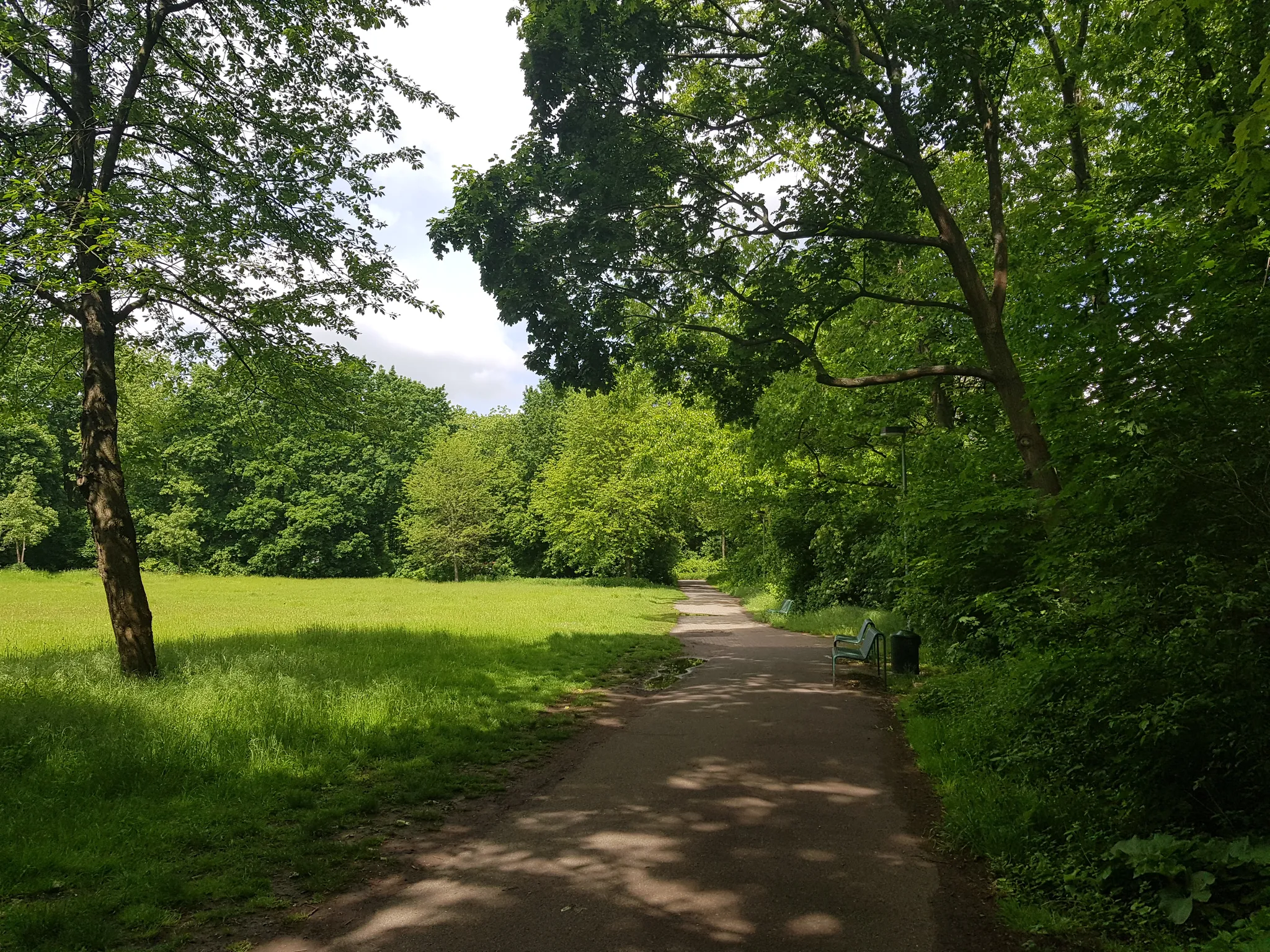
Germany's Cologne Trail — Explore Cologne's surprising sides
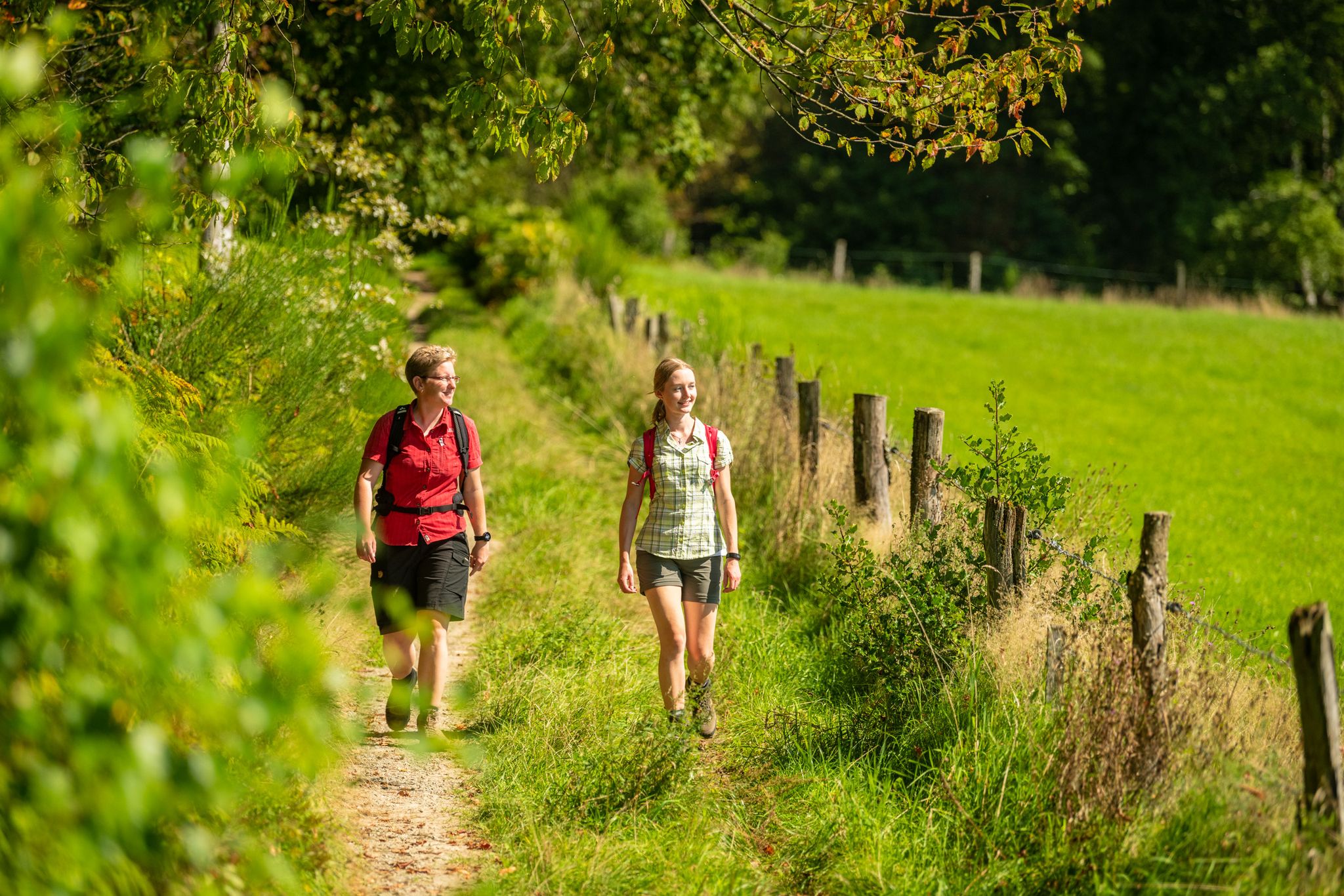
Bergische Rambles – themed and adventure trails in the Bergisches Land region
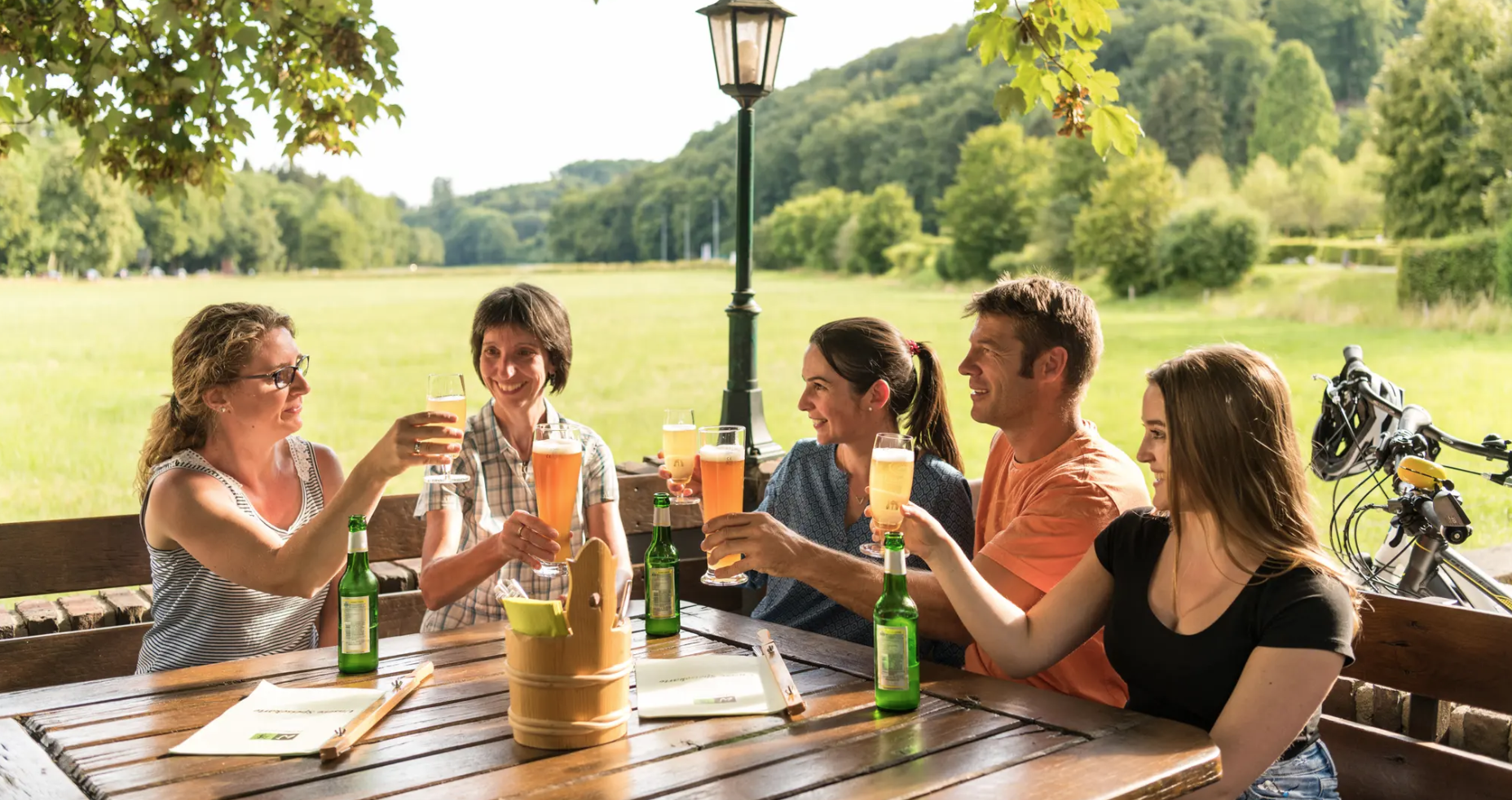
Hike and indulge in regional delights in Bergisches Land
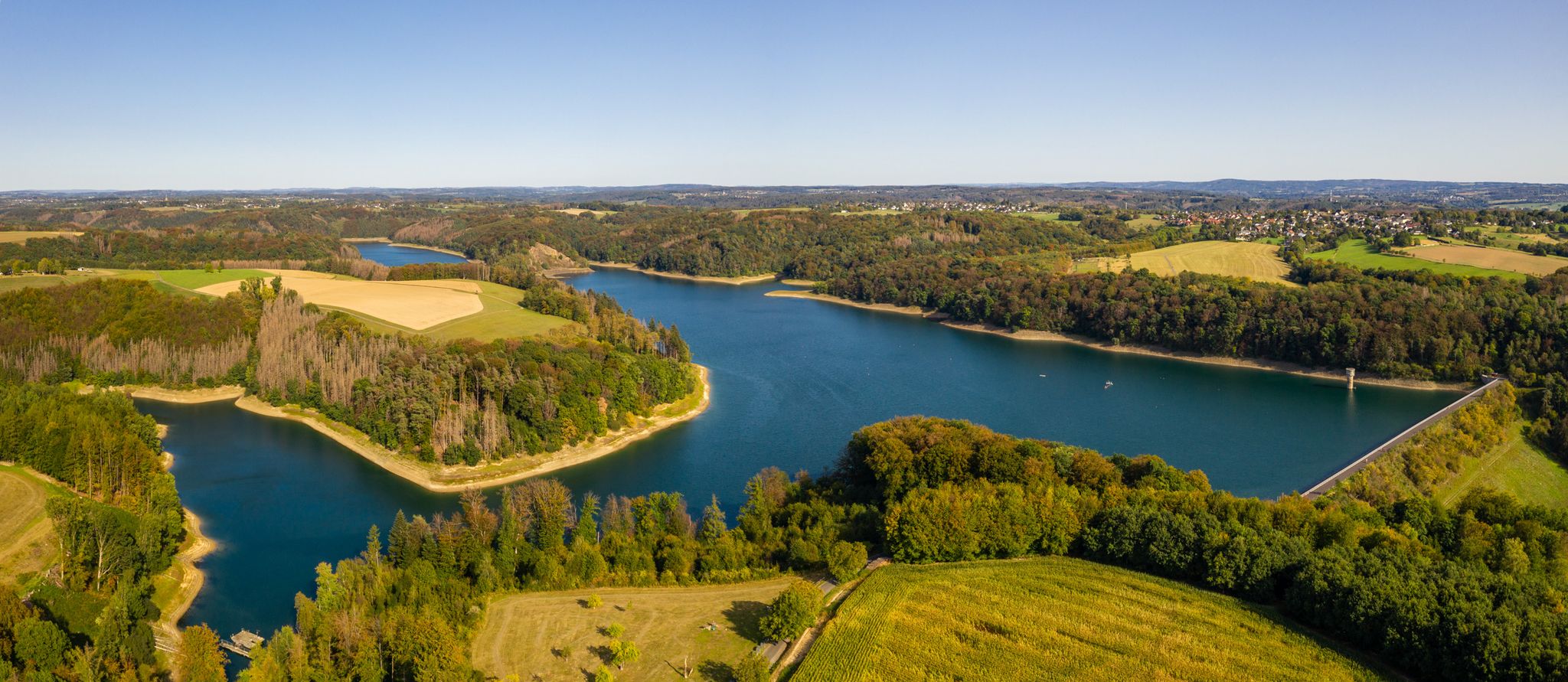
The Bergische Weg - Germany's most beautiful hiking trail 2024
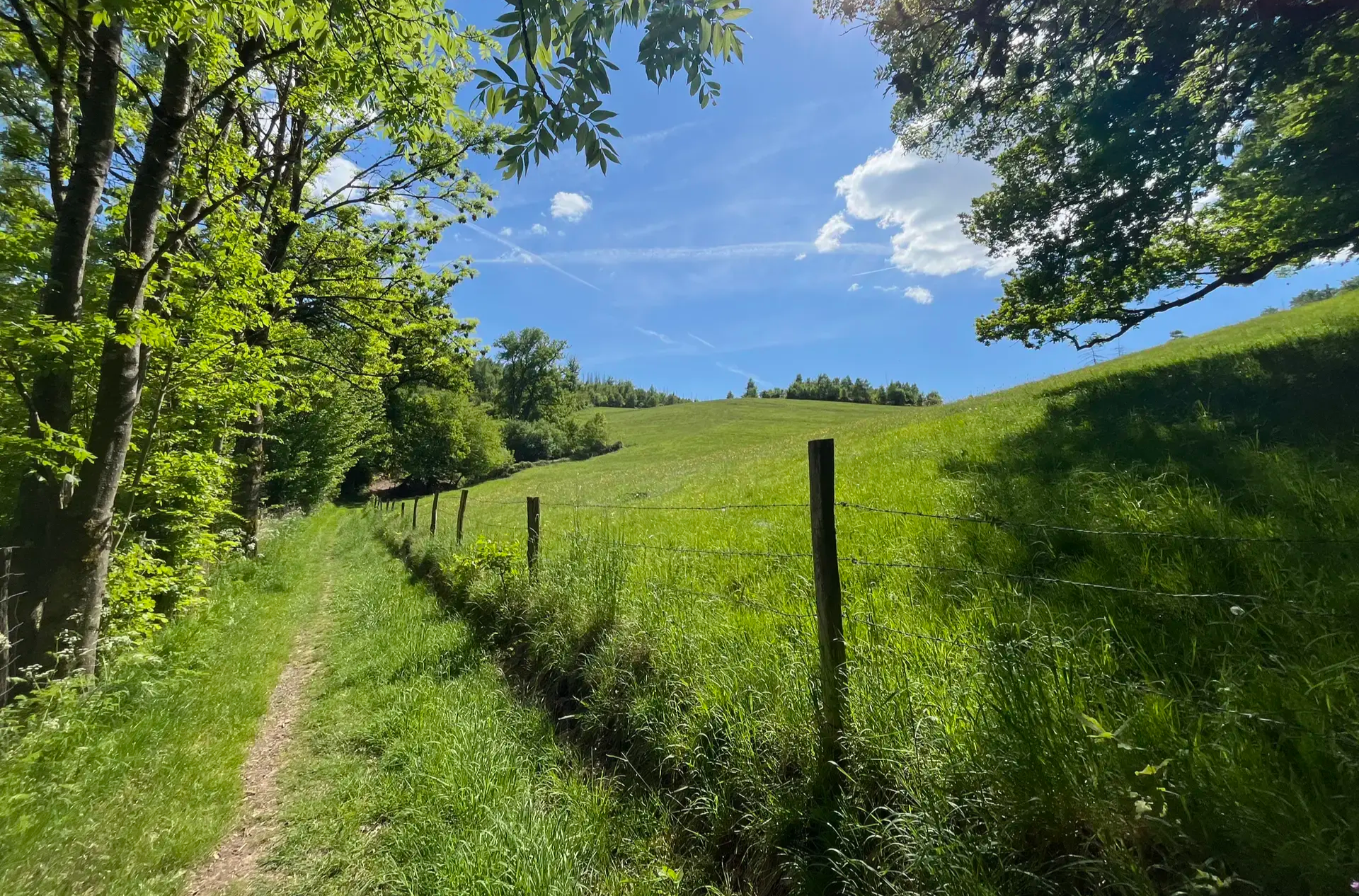
Wasser, Wald und Weitblick – Aktivtouren im Bergischen Land
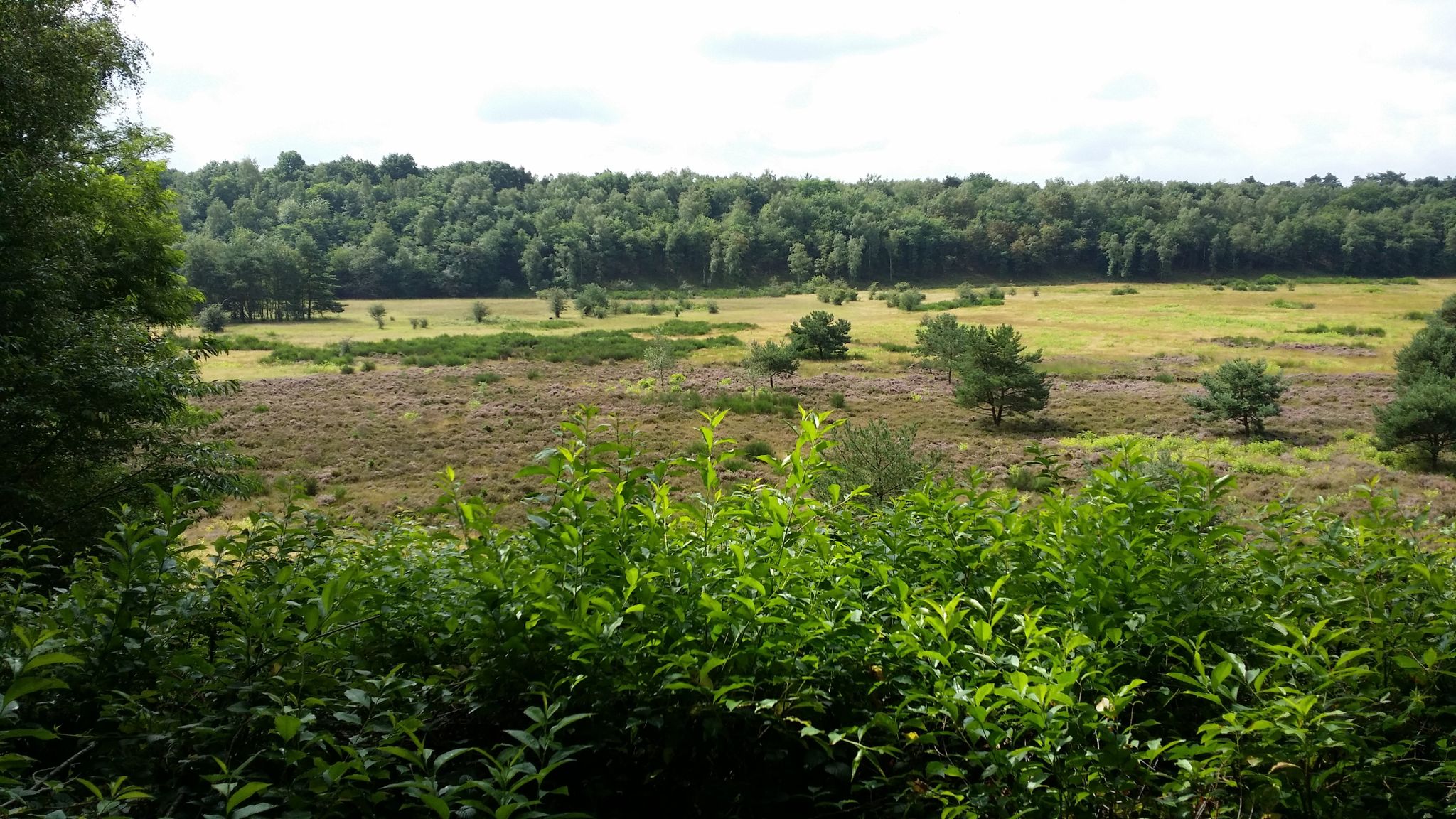
Audiotouren im DBU-Naturerbe Wahner Heide
Other adventures around Bergisch Gladbach


Tips from the Community

On the wooded slope of the Hardt near Herkenrath, ore was mined for about four decades starting in the 1850s. The Blücher mine was part of the Bensberg ore district. Lead and zinc ores were primarily extracted. While expanding a tunnel, miners encountered significantly older mine sections, which likely date back to the Middle Ages. After 1870, production steadily declined, and the mine was closed in 1893. Since 1997, all surviving surface traces of the mining activity have been protected as an archaeological monument. A Naturfreundehaus (Friends of Nature house) has been housed in the former foreman's house since 1960.
1
0

The Milchborntal is one of the most beautiful green valleys in the region with many beech trees. The Milchbornbach flows here and owes its name to a milky-turbid coloration of the spring water.
0
0

The Saaler Mühle recreation park is a green jewel on the outskirts of Bergisch Gladbach-Bensberg – a place where nature, relaxation, and small adventures come together perfectly. 🌿💚 Nestled in a wonderful landscape with a large lake, old trees, and historical traces, the park invites you to linger, move, and enjoy.
0
0

On hot, sunny days, this hollow path, carved into the soft loess soil by the growth of trees on both sides, is a very welcome, shady respite from the open fields. Following the ascent, the hiker reaches the beautiful, half-timbered St. Rochus Chapel.
10
0

<< Grube Blücher im Naturschutzgebiet Hardt >> "... Historical development Industrial mining began here when the Blücher mining field was claimed on July 28, 1847. The progress in the zinc industry led to a real zinc rush in the Bensberg ore district at that time, in which Belgian businessmen played a significant role. The Blücher mine was officially awarded on June 28, 1850, to Charles Détilleux, a Belgian entrepreneur living in Paris. At the same time, he was awarded the Napoleon mine in the western part of the deposit. The mines, named after the opponents of Waterloo, were managed together from the beginning. In March 1855, they received permission to build an associated ore processing plant. All rights and facilities were transferred in 1857 to the Rheinischer Bergwerks-Aktienverein Saturn, which was founded in the same year in Cologne by predominantly Belgian shareholders. In the first years of operation, zinc ores were mainly picked out from the older, pre-industrial waste heaps, because the previously worthless zinc ore had simply been dumped by "the old ones." Thus, for example, in 1854, about 3,800 centners of zinc ore concentrate could be obtained compared to only 13 centners of lead ore concentrate. In the following years, this ratio normalized until it was about 1 to 7 in 1862, thus adapting to the geological conditions of the deposit. Deep mining also initially achieved good results, especially at the 40 and 70-meter levels. In 1861, the machine shaft was modernized with a new steam boiler. The processing plant was expanded with new stamping and rolling mills as well as jigging machines and was moved uphill. Neighboring mining fields were purchased to enable long-term operation. In November 1862, the Katzbach and Wahlstatt mines were integrated. The Blücher mine became for a short time one of the most profitable mines in the region and especially for the Saturn company. The number of employees rose to almost 280 people. Zinc production in particular was of great importance and was only surpassed at that time by the Lüderich mine. In 1869, further neighboring operations were incorporated, including Galvani, Madonna, and Norma. The "Consolidated Blücher Mine" now comprised 13 mining fields, which extended over almost the entire forest area of the Hardt..." THE SUBSEQUENT HISTORY AND FURTHER INFORMATION: https://www.kuladig.de/Objektansicht/KLD-267703
0
0
Anyone who enjoys water, forests, and the loud chatter of ducks and geese will truly enjoy this loop around Lake Bensberg. This lake is also popular with joggers. 👍
2
0

From the bench at Lerbach, you have a view of an idyllic wetland area. Supposedly, "special species" can be found there. But the authorities would not reveal exactly which ones when asked. Is it even true? The neighboring sand piles, ravines, and embankments are very popular with children for playing. This is allowed because the quarry area is—unlike the surrounding NSG Hardt nature reserve—exempt from nature conservation regulations. https://nsg.naturschutzinformationen.nrw.de/nsg/de/fachinfo/gebiete/gesamt/GL-066
6
0

A beautiful hiking area 🥾🍀🤩
2
0
Frequently Asked Questions
How many bus-accessible hiking trails are there around Bergisch Gladbach?
The Bergisch Gladbach region offers a vast network of over 530 hiking trails that are easily accessible by bus. This includes a wide range of options, from leisurely strolls to more challenging routes, ensuring there's something for every hiker.
Are there easy hiking trails accessible by bus in Bergisch Gladbach?
Yes, Bergisch Gladbach is home to over 360 easy hiking trails that can be reached via public transport. Many of these routes wind through picturesque areas like the Lerbacher Wald or along the Strunde valley. An example of an easy route is the Gut Lerbach Milk Station – St. Rochus Chapel, Sand loop from Strundetal, which offers a pleasant walk through varied landscapes.
What kind of terrain can I expect on bus-accessible hikes in Bergisch Gladbach?
Hikes around Bergisch Gladbach accessible by bus feature diverse terrain, from rolling hills and lush forests to picturesque valleys and heathland. You'll encounter well-maintained paths, natural forest floors, and sometimes gentle ascents, particularly in areas like the Königsforst or Lerbacher Wald. The region's characteristic landscape within the Bergisches Land Nature Park ensures varied and scenic walking experiences.
Are there circular hiking routes that start and end at bus stations?
Yes, many of the bus-accessible trails in Bergisch Gladbach are designed as circular routes, allowing you to start and finish your hike conveniently at the same bus stop. For instance, the Zweiffel Castle – Herrenstrunder Pond loop from Bergisch Gladbach is a moderate circular tour that offers diverse scenery.
What natural attractions can I discover on bus-accessible hikes in Bergisch Gladbach?
Bus-accessible hikes in Bergisch Gladbach lead to numerous natural attractions. You can explore the expansive Königsforst nature reserve with its ancient forests and streams, or the scenic Lerbacher Wald known for its quarry ponds. Some routes may also take you near the Dhünn Reservoir, Germany's second-largest drinking water dam, surrounded by rich natural habitats. You might even reach Mount Troodelöh — Cologne's Highest Point or Tütberg (Highest point in the Königsforst).
Are there any historical landmarks or castles along these bus-accessible routes?
Absolutely. The region is rich in history and features several impressive landmarks accessible from bus stops. You can often find routes that pass by magnificent structures like Bensberg Castle or the grand Bensberg Palace. Other historical sites, such as traditional half-timbered houses in charming villages, are also common sights along the trails.
Can I find viewpoints on hikes accessible by bus in Bergisch Gladbach?
Many bus-accessible hiking trails in Bergisch Gladbach offer impressive panoramic views from hilltops, especially within the rolling landscapes of the Bergisches Land. Keep an eye out for routes that lead to elevated points, such as the Unobstructed view of the Cologne countryside from Lüderich, providing stunning vistas of the surrounding countryside.
Are there family-friendly hiking options accessible by bus in Bergisch Gladbach?
Yes, Bergisch Gladbach offers many family-friendly hiking options that are easily reached by bus. These trails are typically shorter, have gentler gradients, and often pass by interesting features or picnic spots. The diverse natural settings, such as the Königsforst, provide engaging environments for children to explore.
Are dogs allowed on bus-accessible hiking trails in Bergisch Gladbach?
Generally, dogs are welcome on most hiking trails in Bergisch Gladbach, provided they are kept on a leash, especially in nature reserves and near wildlife. It's always a good idea to check local signage for specific rules in certain areas, but the region is largely dog-friendly for responsible owners.
What is the best time of year for hiking in Bergisch Gladbach using public transport?
Bergisch Gladbach's temperate climate makes it enjoyable for hiking throughout the year. Spring brings blooming wildflowers, summer offers lush green landscapes, and autumn transforms the forests into a spectacle of colors. Even mild winters can be pleasant for a crisp walk. Public transport operates reliably in all seasons, making bus-accessible hikes a year-round option.
Are there cafes or pubs near bus-accessible hiking trails for refreshments?
Yes, you'll often find charming cafes, traditional pubs, or restaurants in the villages and towns that serve as starting or ending points for bus-accessible hikes. These establishments are perfect for a refreshment break or a meal after your walk. Some routes might even pass by places like the Flohberg Pub, offering a convenient stop.
What do other hikers enjoy most about hiking in Bergisch Gladbach?
The komoot community highly rates the hiking experience in Bergisch Gladbach, with an average score of 4.49 stars. Reviewers often praise the region's diverse and well-maintained trails, the serene beauty of its forests and valleys, and the convenience of accessing many routes via public transport. The variety of landscapes, from the Königsforst to the charming Strundetal, is frequently highlighted as a major draw.
Are there any more challenging bus-accessible hikes in the area?
For those seeking a greater challenge, Bergisch Gladbach also offers more difficult bus-accessible routes. These trails typically feature longer distances and more significant elevation changes. An example is the Grube Cox Lakes – Bensberg Castle loop from Gierather Wald, which provides a demanding yet rewarding experience through varied terrain.
Most popular routes around Bergisch Gladbach
Most popular attractions around Bergisch Gladbach

Get inspired with the komoot mobile app


Explore more
Browse the best Hikes in other regions.
