The best traffic-free bike rides around Ardesio
4.6
(435)
6,791
riders
48
rides
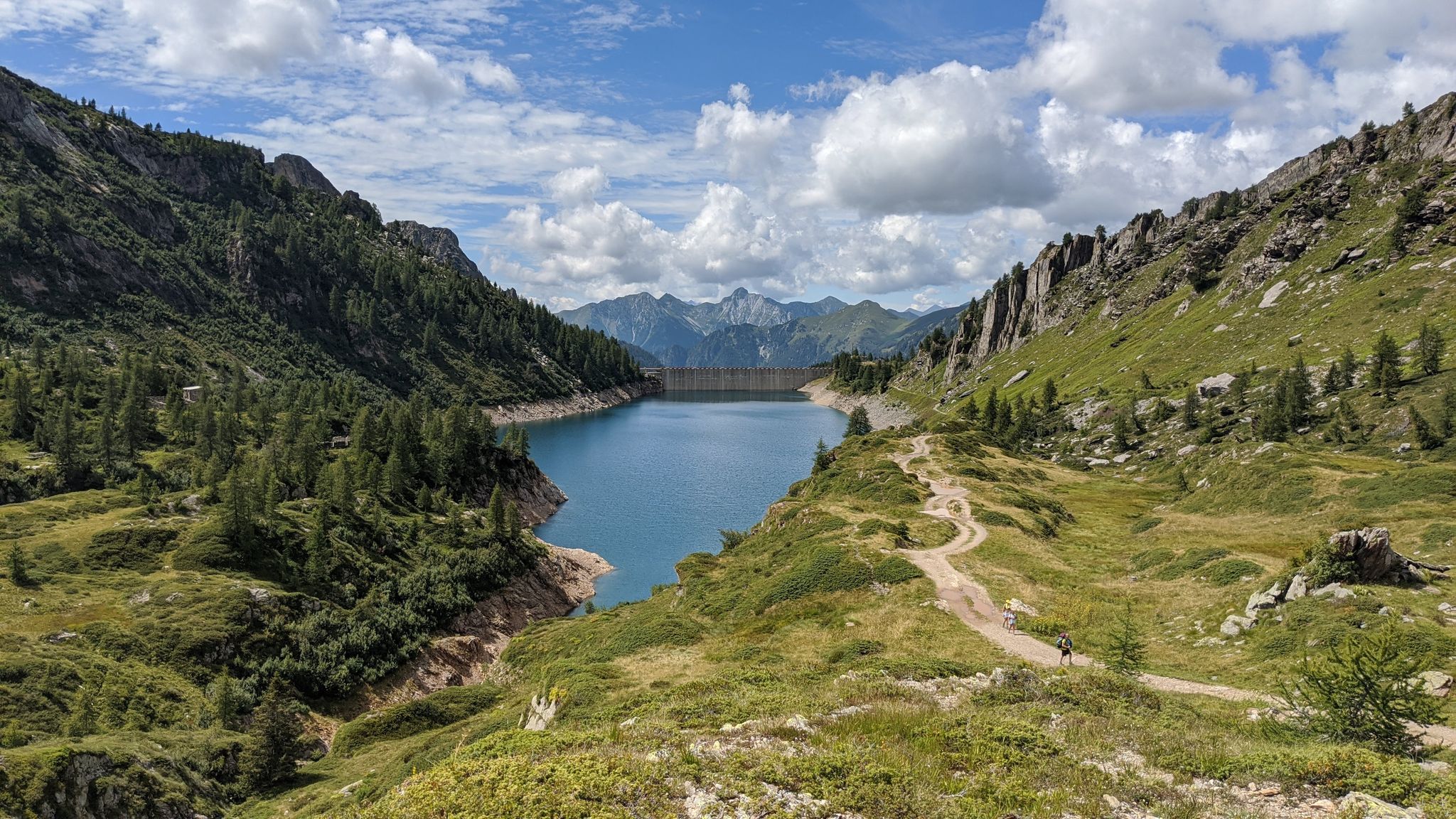
No traffic touring cycling routes around Ardesio are set within Italy's Seriana Valley, characterized by its dramatic mountainous terrain at the foot of the Orobic Prealps. The region features dense fir woods, various valleys, and the River Serio flowing through the area, contributing to varied gradients. Small lakes dot the landscape, offering scenic routes for cyclists. This diverse environment provides a range of experiences, from challenging ascents to more leisurely paths.
Best no traffic touring cycling routes around Ardesio
- The…
Last updated: May 30, 2026
5.0
(1)
91
riders
80.3km
05:39
1,470m
1,470m
Hard bike ride. Very good fitness required. Mostly paved surfaces. Suitable for all skill levels.
4.0
(1)
29
riders
24.0km
02:27
890m
900m
Hard bike ride. Very good fitness required. You may need to push your bike for some segments of this route.

Sign up for free
5.0
(1)
21
riders
25.5km
02:02
640m
640m
Hard bike ride. Very good fitness required. You may need to push your bike for some segments of this route.
25
riders
33.0km
02:30
810m
810m
Hard bike ride. Very good fitness required. Mostly paved surfaces. Suitable for all skill levels.
11
riders
14.0km
01:07
400m
400m
Moderate bike ride. Good fitness required. Mostly paved surfaces. Suitable for all skill levels.
Get access to more routes and recommendations from other explorers.
Sign up for free
Already have an account?
Our route recommendations are based on thousands of hikes, rides, and runs completed by other people on komoot.
Start today with a free account
Your next adventure awaits.
Login or Signup

Other adventures around Ardesio

Tips from the Community

The Passo di Ganda is a pass in the Orobie Prealps located above Gazzaniga, between the hamlets of Orezzo and Aviatico, at an altitude of about 1060 m. It is known above all for the cycling climb, also made famous by the Giro di Lombardia.
0
0


The Ginami castle or Buccelleni castle is located in the ancient market square then Piazza Dante in Gromo in the upper Seriana valley, it was built in the 13th century by the Buccelleni family for military use as evidenced by the armigerous tower, a symbol of the town. Built on a spur, height or grumo of rock, it will probably be this position that gives the name to the village, which in fact is not mentioned in official documents until the dawn of the 13th century.
0
0
Gromo, which is part of the circuit of “The most beautiful villages in Italy” and has obtained the “Orange Flag” from the Touring Club Italiano, rises on a rocky promontory, surrounded by meadows and fir forests. The town, famous in antiquity for its iron and silver mines and for its white weapon factories, maintains the compact medieval fabric in the upper part of the inhabited area.
0
0
In the 1950s, the painting of Saint Christopher was created to cover new modifications.
0
0
Built in 1226 by the eldest son of the Ginami dei Licini family on a rocky spur overlooking the Serio river, an obligatory transit point. The complex, built as a refuge and family residence, consists of a rectangular central body, two wings, and the central tower that stands out over the square. An elegant courtyard has been created in the space between the two wings; the garden has been laid out on several levels, separated by stone walls and connected by staircases. The masonry of large, roughly squared blocks remained unchanged until the 16th century when the Venetian Republic imposed the replacement of the small drawbridge with a larger one; the entrance door was also enlarged and now the large round arch portal, which leads into the central courtyard, is clearly visible. There were then further changes that altered the medieval character even inside the building.
0
0
The erratic boulder, a reddish-purple Verrucano parallelepiped, has a volume of approximately 20 m3 and protrudes approximately 130 cm from the ground. The east and west walls have detached from the boulder due to weathering, rotating slightly outward and reveal the outline of steps carved to facilitate access to the boulder. The upper part, slightly concave and sloping toward the valley, features several incisions, cup marks, and channels, roughly crafted but arranged with a certain symmetry: they are distributed mainly along three parallel lines. The north-facing face also displays a series of cup-marked incisions arranged in an oblique line. The shape and distribution of these incisions are such that they cannot be considered natural in origin. This altar boulder was presumably a sacred place of the ancient priests, the Celtic Druids. Perhaps a place of sacrifice. According to studies conducted here and elsewhere in the Alps, it is believed that the altar stone was used for sacred rites between the third and first millennium BC. In reality, the sacredness of this place extends beyond prehistory. The name "Sedornia" is a transformation of the Roman name "Sáturnia," thus another religious element, the god Saturn, god of nature, prosperity, and abundance.
0
0
small bridge that allows you to safely cross the Val Sedornia stream
0
0
Frequently Asked Questions
How many no-traffic touring cycling routes are available around Ardesio?
There are over 50 dedicated no-traffic touring cycling routes around Ardesio, offering a wide range of options for various skill levels. You'll find everything from easier paths to more challenging ascents.
What kind of terrain and scenery can I expect on these routes?
The routes around Ardesio offer incredibly diverse and picturesque landscapes. You'll cycle through dramatic mountainous terrain at the foot of the Orobic Prealps, dense fir woods, and scenic valleys. The River Serio flows through the area, and small lakes dot the landscape, providing varied gradients and stunning views. Expect alpine scenery, including Dolomite-like peaks reflecting in small lakes, especially around the hamlet of Valcanale.
Are there any easy no-traffic touring cycling routes suitable for beginners or families?
Yes, Ardesio offers several easier no-traffic touring cycling routes. For instance, the Church of the New Dead – Historic Center of Clusone loop from Piario is a moderate option that is relatively shorter and has less elevation gain, making it suitable for those looking for a more relaxed ride. The region's network includes 13 routes specifically rated as easy.
What do other touring cyclists enjoy most about the no-traffic routes in Ardesio?
The touring cycling routes in Ardesio are highly rated by the komoot community, with an average score of 4.6 stars from over 400 reviews. Cyclists frequently praise the stunning natural beauty, the variety of terrain, and the peaceful, car-free sections that allow for an immersive experience in the Orobic Alps.
Are there any circular touring cycling routes in the Ardesio area?
Yes, many of the no-traffic touring cycling routes around Ardesio are designed as loops, allowing you to start and finish in the same location. A popular option is the Clusone Pine Forest – Selvino Switchbacks loop from Piario, which offers a substantial ride through varied landscapes.
What interesting landmarks or natural attractions can I see along these routes?
The routes often pass by or offer access to several notable attractions. You might encounter the historic Gleno Dam and Lake, offering panoramic views. Other natural highlights include the Sambuzza Valley Waterfall or the serene Lago Moro. The charming 17th-century Pagliari Village is also a cultural point of interest in the wider region.
Where can I park my car when starting a touring cycling route in Ardesio?
Many villages and hamlets in the Ardesio area, such as Valcanale, Gromo, or Piario, serve as popular starting points for cycling routes and typically offer public parking facilities. It's advisable to check local signage for specific parking regulations and availability, especially during peak seasons.
What is the best time of year for no-traffic touring cycling in Ardesio?
The best time for touring cycling in Ardesio is generally from late spring through early autumn (May to October). During these months, the weather is typically mild and pleasant, and the mountain passes are clear of snow. Summer offers the warmest temperatures, while spring and autumn provide vibrant foliage and fewer crowds.
Are there any challenging no-traffic touring cycling routes for experienced riders?
Absolutely. Ardesio is known for its challenging mountainous terrain, and many routes feature significant elevation gains. For experienced riders seeking a demanding ride, consider the Gromo Historic Village – Ginami Castle of Gromo loop from Gromo, which includes over 1000 meters of ascent. There are 26 routes rated as difficult in the area.
Can I find routes that combine cycling with cultural or historical exploration?
Yes, Ardesio's routes often weave through areas rich in history and culture. For example, the Fountain in the Square of Ogna – Valzurio Village loop from Valzurio allows you to experience charming local villages. The region also boasts the Sanctuary of the Madonna delle Grazie and the Museo Etnografico dell'Alta Val Seriana, offering insights into local traditions.
Most popular attractions around Ardesio

Get inspired with the komoot mobile app


Explore more
Browse the best Cycling routes in other regions.
