The best city hikes and walks in Nsg Lemberg
4.6
(11570)
47,523
hikers
10
hikes
Urban hiking trails in Nsg Lemberg offer accessible paths through city parks, along riverfronts, and past historical landmarks. The region provides a network of easy routes suitable for exploring urban environments on foot. Hikers can expect varied terrain within city limits, including paved paths and green spaces.
Best urban hiking trails in Nsg Lemberg
- The most popular urban hiking route is Crucenia Thermal Baths – Kornmarkt, Bad Kreuznach loop from Bad Kreuznach, a 1.8 miles (2.8 km) trail that…
Last updated: May 13, 2026
10
hikers
Easy hike. Great for any fitness level. Easily-accessible paths. Suitable for all skill levels.
4.0
(2)
8
hikers
Easy hike. Great for any fitness level. Easily-accessible paths. Suitable for all skill levels.

Sign up for free
8
hikers
Easy hike. Great for any fitness level. Easily-accessible paths. Suitable for all skill levels.
3.0
(2)
7
hikers
Easy hike. Great for any fitness level. Easily-accessible paths. Suitable for all skill levels.
4
hikers
Easy hike. Great for any fitness level. Easily-accessible paths. Suitable for all skill levels.
Get access to more routes and recommendations from other explorers.
Sign up for free
Already have an account?
Our route recommendations are based on thousands of hikes, rides, and runs completed by other people on komoot.
Start today with a free account
Your next adventure awaits.
Login or Signup
Popular around Nsg Lemberg
Other adventures in Nsg Lemberg

Tips from the Community

The Gradierwerke and the brine atomizer are in operation not all year round, but from Easter to November (weather permitting), daily from 8:00 AM to 9:00 PM. Free admission.
0
0

It's quite a climb up towards Kauzenburg.
1
0
Kauzenburg Castle was built around 1200 for the Counts of Sponheim. The small town of Bad Kreuznach, with its ring of walls, grew up around the castle. Over the centuries, the castle expanded into a veritable fortress with a palace. It reached its greatest extent around 1650. Powerful outworks were built around the palace. The great era of Kauzenburg came to an abrupt end when French troops, during the War of Conquest, blew it up in 1689 and burned it to the ground, leaving only the cellar standing. It wasn't until the 19th century that a kind of "manor house"—a grand bourgeois country estate—was built on the site of the ruins. This had to make way in the early 1970s when the architect Gottfried Böhm combined the remaining ruins with a new architectural design reminiscent of castle battlements—a style also used elsewhere. For a long time, the surviving vaulted cellar served as the venue for popular medieval banquets. The restaurant closed a few years ago; today, a catering service leases the premises and offers it for events. Anyone walking around the grounds and the castle can still get a sense of its former grandeur.
0
0

Bad Kreuznach Castle Park is a charming combination of historic landscape park and cultural center, located at the foot of the Kauzenberg mountain and forming a "quiet island of exotic plants" in the middle of the city. The Historical Background of the Park Origins as a manor: The history of the site stretches back a long way. As early as 1605, it was mentioned in a city council protocol as "Bangert" or "Baumgarten," a medieval country estate. From manor to landscape park: In the 18th century, Princess Henriette Amalie of Anhalt-Dessau acquired the property and had the so-called Amalienschlösschen (a castle-like manor house in the neoclassical style) built there. Landscape park: In the 19th century, the estate was transformed by various owners, including the von Recum and Puricelli families, into a romantic landscape park with mature trees, numerous plants, and a picturesque pond. The pond dates back to the time when a moated castle stood on this site. Historical Relics: A memorial column for Jeanette Freifrau von Recum, whose heart was kept in an urn on the column, still stands in the park. 2. The Schlosspark Museum (Amalienschlösschen) The central building in the park is the former manor house, which now houses the Schlosspark Museum. It is a cultural focal point for Bad Kreuznach: Collections: The museum displays collections on art and city history, as well as exhibitions of contemporary art. Cauer Family: A highlight are the sculptures of the Cauer family of sculptors from Bad Kreuznach (four generations, beginning with Emil Cauer the Elder). City History: One focus is on the history of the Bangert manor and the portrayal of Bad Kreuznach as a leading spa town in the 19th century. Hunting Room / Wedding Room: The historically authentic, wood-paneled hunting room was designed at the end of the 19th century by an interior designer for King Ludwig II of Bavaria for the Puricelli family. Today, it serves as a popular wedding venue in the city. 3. Connection to the Kauzenberg and spa resorts Location: The palace gardens are located at the foot of the Kauzenberg, where the Kauzenburg Castle (now a hotel-restaurant) stands. A winding path leads from the park up to the Kauzenberg and offers a fantastic view. Close to the Salinental Valley: Although the palace gardens are a separate entity, they are in close proximity to the spa facilities and the famous Salinental Valley, Europe's largest open-air inhalation facility. A walk along the panoramic path from the palace gardens can lead to the Salinental Valley. The park is open year-round and freely accessible, serving as a haven of peace and tranquility.
1
0
St. Paul's Church is located on the Wörth, an island in the Nahe River, right in the city center between the old town and the new town of Bad Kreuznach. The now Protestant St. Paul's Church was built as a parish church by Count Johann von Sponheim as a three-aisled Gothic basilica starting in 1311 and consecrated in 1332, originally to the Virgin Mary and St. Kilian. From 1558 onward, it became a Reformed church. Destroyed in 1689 by the troops of the French King Louis XIV, its current appearance largely corresponds to the reconstruction of 1781. For many centuries, it was the only building in the city before the Old Nahe Bridge – beyond it lay only pastures. The 61-meter-high Baroque tower was built around 1780. The dilapidated east chancel was converted into a small chapel in the mid-19th century for the numerous English spa guests, where services were held according to the Anglican rite. The Chapel of St. Paul contains portrait gravestones from the late Middle Ages. The church organ, newly consecrated in 2012, and the choral concerts are well worth seeing and hearing. The building boasts the largest church interior between Mainz and Trier. Incidentally, Karl Marx and Jenny von Westphalen were married here on June 19, 1843.
2
0
From this point, William Turner created the sketch for the watercolor "Kreuznach on the Nahe." William Turner was a leading representative of the Romantic movement. He is considered one of the most important European artists. From 1802 onward, Turner undertook journeys that took him along the Rhine through Switzerland to Venice and Rome. He was passionate about travel and created countless sketches and watercolors. In the summer of 1844, at the age of 70, his penultimate journey took him through the Rhine Valley to Switzerland. He also traveled through the valleys of the Moselle, Nahe, and Neckar.
2
0

Marvel and compare between reality and painting
1
0

A very popular photo motif
3
0
Frequently Asked Questions
How many urban hiking trails are available in Nsg Lemberg?
Nsg Lemberg offers a selection of 10 urban hiking routes, all rated as easy. These trails provide accessible ways to explore the region's unique landscapes and features within or close to urban settings.
What kind of landscapes can I expect on urban hikes in Nsg Lemberg?
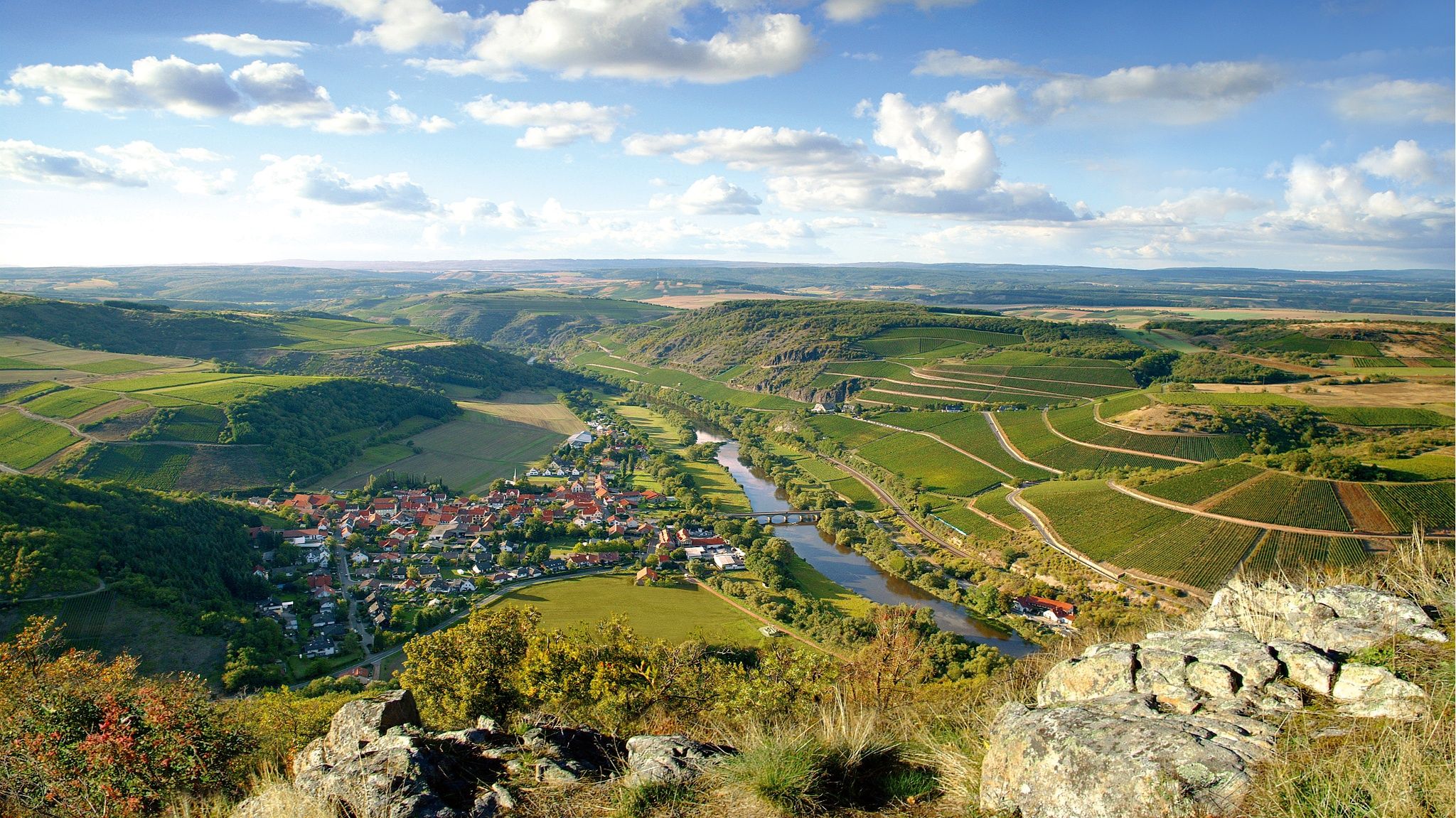
Urban hikes in Nsg Lemberg often feature a mix of natural beauty and townscapes. You'll encounter diverse landscapes including dense forests, unique sandstone rock formations, and varied elevation changes. Many routes offer scenic views of valleys and prominent viewpoints, blending wooded paths with urban exploration.
Are there any easy urban hiking trails suitable for beginners in Nsg Lemberg?
Yes, all 10 urban hiking trails listed for Nsg Lemberg are rated as easy. They are perfect for beginners or those looking for a relaxed walk. An example is the Crucenia Thermal Baths – Kornmarkt, Bad Kreuznach loop from Bad Kreuznach, which is just under 3 km long.
What are the typical lengths and durations of urban hikes in Nsg Lemberg?
The urban hikes in Nsg Lemberg vary in length, generally ranging from around 2.5 km to 4.5 km. Most can be completed within 45 minutes to 1 hour 15 minutes, making them ideal for a quick escape into nature or a leisurely stroll. For instance, the Schlosspark Bad Kreuznach – Kornmarkt, Bad Kreuznach loop from Bad Kreuznach is about 4.5 km and takes approximately 1 hour 10 minutes.
Are there any family-friendly urban walks in Nsg Lemberg?
Absolutely. Given that all urban hikes in Nsg Lemberg are rated as easy, they are generally suitable for families. The shorter distances and minimal elevation gain make them accessible for children. Consider the Franziska Puricelli Hospital – View of Gans and Rotenfels loop from Bad Kreuznach for a pleasant family outing.
Can I bring my dog on urban hiking trails in Nsg Lemberg?
Many urban parks and trails in Nsg Lemberg are dog-friendly, but it's always best to check local regulations for specific areas. Generally, dogs are welcome on leash. The easy nature of these trails makes them suitable for walks with your canine companion.
Are there any circular urban walks available in Nsg Lemberg?
Yes, all the urban hiking routes in Nsg Lemberg are designed as circular loops. This allows for convenient starting and ending points, often bringing you back to where you began. An example is the Kornmarkt, Bad Kreuznach – St. Paul's Church loop from Bad Kreuznach.
What interesting sights or viewpoints can I discover on urban hikes in Nsg Lemberg?
Urban hikes in Nsg Lemberg offer opportunities to see both natural and man-made attractions. You might encounter viewpoints like the View of the Nahe Valley from Lemberghütte Observation Platform or the View of the Nahe valley from the historic Zweiländerblick. Other points of interest include the Silver Lake (Lemberg Nature Reserve) and historical structures like the Oberhäuser Gate.
What is the best time of year for urban hikes in Nsg Lemberg?
Nsg Lemberg is suitable for urban hiking year-round. Spring brings blooming flora, summer offers lush greenery, and autumn provides vibrant foliage. Even in winter, the trails can be enjoyable, though conditions may vary. The region's diverse landscapes ensure a visually appealing experience in any season.
What do other hikers enjoy most about urban hiking in Nsg Lemberg?
The urban hiking trails in Nsg Lemberg are highly rated by the komoot community, with an average score of 4.5 stars. Reviewers often praise the accessibility of the trails, the blend of natural scenery with urban convenience, and the well-maintained paths that make for enjoyable, easy walks.
Are there any urban hikes that pass by historical or cultural landmarks?
Many urban hikes in Nsg Lemberg integrate historical and cultural elements. For example, the St. Wolfgang Church – Franziska Puricelli Hospital loop from Bad Kreuznach might take you past significant buildings or through historic town centers, offering a glimpse into the region's heritage alongside natural beauty.
Most popular routes in Nsg Lemberg
Most popular attractions in Nsg Lemberg

Get inspired with the komoot mobile app


Explore more
Browse the best Hikes in other regions.
