The best traffic-free bike rides in Tiergarten
4.6
(2176)
12,019
riders
225
rides
No traffic touring cycling routes in Tiergarten offer an extensive network of paths through Berlin's largest inner-city park. This expansive green space features diverse landscapes, including sprawling lawns, serene meadows, and cultivated flower beds. The park is characterized by winding tree-lined avenues and numerous reflective ponds and small lakes, providing a tranquil environment for cycling. Its central location makes it a key area for active recreation within the bustling metropolis.
Best no traffic touring cycling routes in Tiergarten
- The most…
Last updated: October 12, 2026
5.0
(1)
15
riders
11.8km
00:40
20m
20m
Easy bike ride. Great for any fitness level. Mostly paved surfaces. Suitable for all skill levels.
5.0
(1)
4
riders
16.2km
00:56
30m
30m
Easy bike ride. Great for any fitness level. Mostly paved surfaces. Suitable for all skill levels.

5.0
(1)
8
riders
19.8km
01:07
50m
50m
Easy bike ride. Great for any fitness level. Mostly paved surfaces. Suitable for all skill levels.
3.0
(1)
5
riders
57.3km
03:20
300m
300m
Moderate bike ride. Good fitness required. Mostly paved surfaces. Suitable for all skill levels.
5.0
(1)
5
riders
23.6km
01:20
40m
40m
Easy bike ride. Great for any fitness level. Mostly paved surfaces. Suitable for all skill levels.
Get access to more routes and recommendations from other explorers.
Already have an account?
Our route recommendations are based on thousands of hikes, rides, and runs completed by other people on komoot.
Tips from the Community

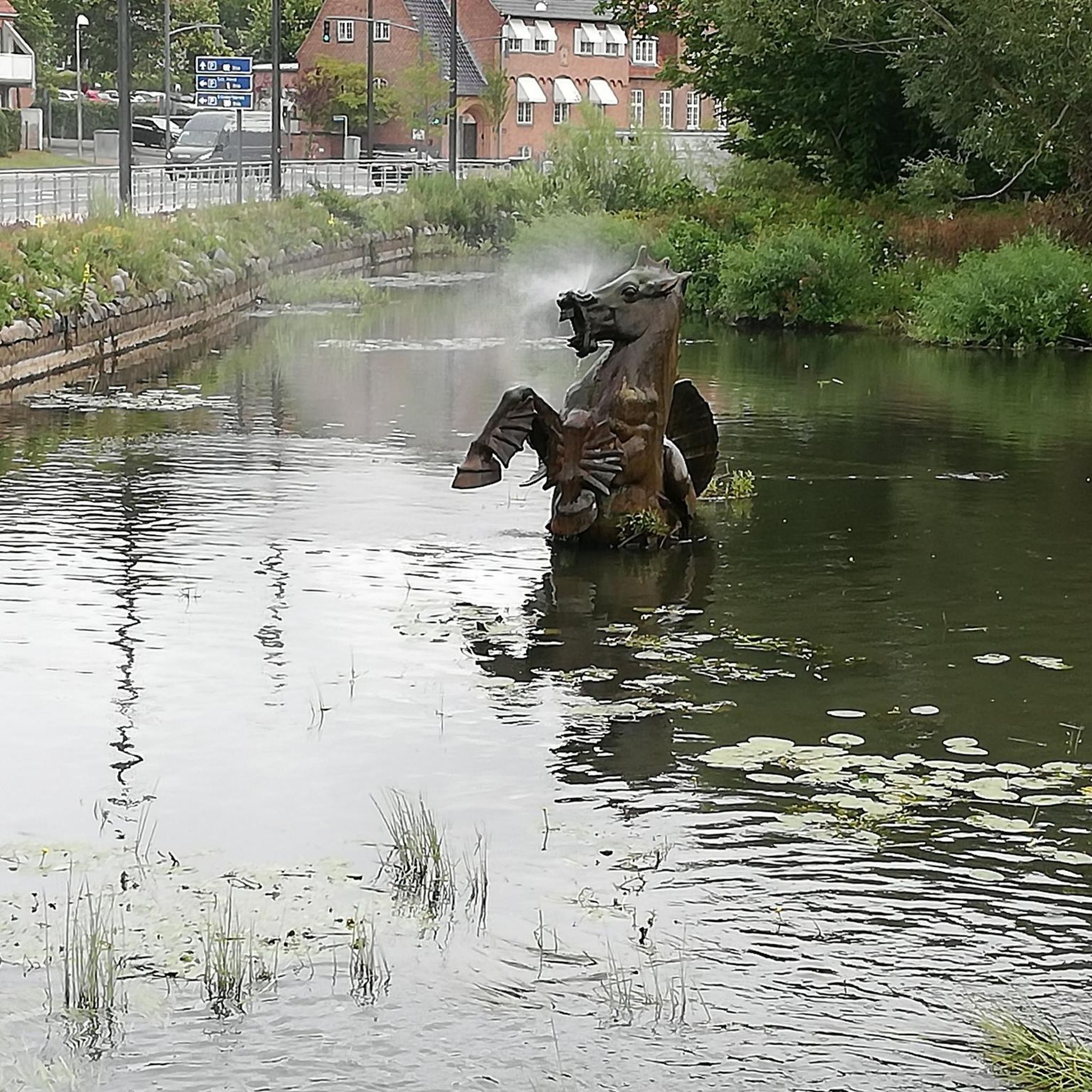
The ducal palace in the northeast corner of the city is a late Gothic building dating back to the 15th century. It was begun by Duke Stefan II of the Wittelsbach dynasty after the destruction of the castle previously located in the southeastern part of the city. His son, Duke Ludwig the Bearded of Bavaria-Ingolstadt, completed it after 1421. It lost its character as a moated palace with a drawbridge over a moat in 1960 when the moats were filled in. The palace served primarily as the official residence of the district judge of Rain, and from 1880 onward, as the director of the district court. Later, it served as accommodation for displaced persons, for school classes, and finally, to this day, as a community center. (https://rain.de/tourismus/sehenswertes/sehenswuerdigkeiten/schloss-und-schlossgarten_id8807)
0
0

Bridge currently difficult to pass due to construction work after the bridge towards the town centre
0
0

Now a beautiful bathing lake
0
0


Very nice tour, unfortunately I hit a hole in Obermotzing
0
0

Beautifully designed castle park in Eglofsheim
1
0

Alteglofsheim Castle The name comes from the Eglofsheim family. Since the 10th century there has been a moated castle here with an associated manor. The castle was rebuilt and expanded several times over the centuries. From 1480 to 1573 the Barons of Parsberg owned the castle and manor. In 1659 Johann Georg Baron von Königsfeld bought the Alteglofsheim estate. In 1685 he became an Imperial Count. In his will in 1694 he left the estate to his grandson Hans Georg Graf von Königsfeld. He was the Minister of State and Conference of Elector Karl Albrecht and First Minister during his time as Emperor. From 1728 to 1734 he had the castle significantly expanded and refurbished. His successor Count Christian Johann August von Königsfeld, Elector's ambassador in Vienna, added the north wing of the castle with the magnificent dining room in 1780. In 1810 the Königsfelder family died out. The Barons of Cetto followed as owners, and in 1835 Prince Maximilian Karl von Thurn und Taxis acquired the castle. The Princes of Thurn und Taxis sold it to a priest in 1939, and it later went to his housekeeper. The war and post-war period led to the castle being used for other purposes, and it fell into increasing disrepair. In 1973 the Free State of Bavaria acquired it and made it available to the University of Regensburg in 1980. In 1989 the castle was designated as the location for the third Bavarian Music Academy. Construction work began in 1992. The Music Academy began operations here in June 1999. After extensive renovations and refurbishments the castle was handed over to its new purpose in September 2000. The late Gothic core of the complex with the 35-meter-high keep in the west dates from the beginning of the 14th century. It towers over the high gable of a building with two round flanking towers from the early 17th century. Around 1680, a wing with a two-aisled chapel in the basement was leaning against it in the south. Around 1730, it was extended to the west after the south-north wing had been started at a right angle to it. Elaborate ceiling frescoes by the Asam brothers and elegant stucco ceilings created by Johann Baptist Zimmermann adorn the castle. Tours of the castle are only possible for groups by prior arrangement. Source: Excerpts from www.wikipedia.de
2
0
St. Wolfgang's Oak - Neueglofsheim The St. Wolfgang's Oak stands near Schloss Haus, near Neueglofsheim. The oak stands in a meadow next to a dirt road. It is one of the largest oaks in Bavaria. A horizontal branch has been supported by wooden posts towards the dirt road for over 100 years. In 1905, the trunk circumference was 8 m at a height of 1 m. According to legend, Saint Wolfgang preached eloquently from this branch. The monumental trunk is very irregular and has strong growths in the lower area. On one side, the trunk has an oval opening that comes from a branch breaking a long time ago. The oak burned in 1878 and 1909. In 1909, it burned on St. Wolfgang's Day. The crown is formed by a few, quite large branches. Holes can be seen everywhere in the branches, which come from smaller branches that have broken off. The vitality is still quite good considering the relatively old age of the oak. Height: 385 m above sea level Tree species: Pedunculate oak Age: around 500 years Chest height: 9.80 m Waist circumference: 9.03 m Height of the tree: 18 m Crown diameter: 15 m Year of measurements: 2021 Source: www.monumentale-eichen.de
7
0
Frequently Asked Questions
How many traffic-free touring cycling routes are available in Tiergarten?
Tiergarten offers a wide selection of traffic-free touring cycling routes, with over 200 options available. These routes cater to various skill levels, including 167 easy, 52 moderate, and 31 difficult tours, ensuring there's a suitable path for every cyclist.
What kind of terrain can I expect on traffic-free cycling routes in Tiergarten?
The traffic-free routes in Tiergarten primarily feature flat, well-maintained paths, making them ideal for touring cyclists. The park's landscape includes sprawling lawns, serene meadows, and tree-lined avenues, offering a smooth and pleasant riding experience. While generally flat, some paths may have very gentle undulations.
Are there any family-friendly, traffic-free cycling routes in Tiergarten?
Yes, Tiergarten is excellent for family-friendly cycling due to its extensive network of car-free paths and generally flat terrain. Many of the easy routes are perfect for families with children, offering a safe and enjoyable environment away from vehicle traffic. The park's diverse landscapes and open spaces provide plenty of opportunities for breaks and exploration.
What landmarks and natural features can I see while cycling in Tiergarten?
While cycling through Tiergarten, you can encounter several iconic landmarks and natural features. Notable sights include the majestic Victory Column (Siegessäule), the tranquil Neuer See (New Pond), and the historic Haus der Kulturen der Welt. The park itself is a natural highlight, with its vast green spaces, cultivated flower beds, and the peaceful English Garden. For more information on the park's attractions, you can visit Visit Berlin's Tiergarten page.
What do other touring cyclists enjoy most about cycling in Tiergarten?
The komoot community highly rates touring cycling in Tiergarten, with an average score of 4.6 out of 5 stars from over 1,300 reviews. Cyclists frequently praise the park's extensive network of car-free paths, its serene atmosphere, and the beautiful natural scenery that provides a peaceful escape within the city. The accessibility to various landmarks and relaxation spots like Café am Neuen See also receives positive mentions.
When is the best time of year to cycle traffic-free routes in Tiergarten?
Tiergarten offers enjoyable cycling experiences year-round. Spring brings legendary rhododendron blooms and fresh greenery, while summer provides lush shade along tree-lined paths. Autumn showcases vibrant foliage, and even winter can be beautiful, with the possibility of ice skating on frozen ponds if conditions allow. For comfortable touring, spring through early autumn generally offers the most pleasant weather.
Are there any circular, traffic-free cycling routes in Tiergarten?
Yes, many of the traffic-free routes in Tiergarten are designed as loops, allowing you to start and end your ride at the same point without retracing your steps. This design is perfect for touring cyclists who want to explore different sections of the park efficiently. For example, the route Griesau Airfield loop from Sonderlandeplatz Griesau is an easy circular option.
Can I access Tiergarten's cycling routes using public transport?
Tiergarten's central location in Berlin makes it highly accessible via public transport. Numerous S-Bahn and U-Bahn stations, as well as bus stops, are located around the park's perimeter, allowing you to easily reach starting points for your cycling tours. This makes it convenient for both locals and visitors to enjoy the traffic-free routes without needing a car.
Are there places to eat or rest along the traffic-free cycling routes?
Yes, Tiergarten offers several spots for refreshments and relaxation. A popular choice is the Café am Neuen See, which transforms into a lively outdoor self-service restaurant and beer garden during summer. You can also find other smaller kiosks and cafes within or bordering the park, providing convenient stops for a break during your ride. The peaceful Rousseau Island is another tranquil spot for a rest.
What is the average length and elevation gain for easy, traffic-free routes in Tiergarten?
Easy, traffic-free routes in Tiergarten typically range from 10 to 20 kilometers in length, with minimal elevation gain, usually less than 50 meters. For instance, the route Puchhof Castle – Schloss Rain loop from Schönach is an easy 16 km ride with only about 33 meters of elevation gain, making it very accessible for all skill levels.
Are there any moderate difficulty traffic-free touring routes in Tiergarten?
Yes, for cyclists looking for a slightly longer or more challenging ride while still avoiding traffic, Tiergarten offers moderate difficulty routes. These routes might cover more ground within the park or connect to nearby car-free paths. An example of a moderate route is St. Wolfgang's oak – Alteglofsheim Castle loop from Mötzing, which spans over 57 km with around 299 meters of elevation gain.
Most popular routes in Tiergarten

Get inspired with the komoot mobile app


Explore more
Browse the best Cycling routes in other regions.
