The best cycling routes around Matilla La Seca
5.0
(1)
17
riders
3
rides
Touring cycling around Matilla La Seca, located in the Tierra del Pan region of Zamora, Spain, offers routes through expansive wheat fields and gently rolling terrain. The landscape is characterized by open agricultural vistas, with the Duero River carving diverse natural features nearby. Cyclists can also find varied environments including valleys with shrubland and nascent streams, providing a mix of scenery. The region's predominantly flat to gently undulating roads are well-suited for touring cyclists seeking manageable gradients.
Best touring cycling routes around Matilla La Seca
- The most popular touring cycling route is Castillo de Villalonso from Toro – circular by Morales de Toro, a 25.5 miles (41.1 km) trail that takes 2 hours 26 minutes to complete. This moderate route offers views of the agricultural landscape and historical sites.
- Another top favourite among local touring cyclists is Plaza Mayor de Toro – Puente de Hierro de Zamora loop from Rural Hotel, a difficult 45.0 miles (72.5 km) path. This route features significant distances and elevation changes, connecting historical towns and river crossings.
- Local touring cyclists also love the Monte La Reina Forest loop from Valdigales, a 13.5 miles (21.7 km) trail leading through forested areas, often completed in about 1 hour 57 minutes.
- Touring cycling around Matilla La Seca is defined by expansive wheat fields, the diverse natural formations of the Duero River, and historic routes like the Camino del Levante. The network offers options for different ability levels, from moderate rides across open plains to more challenging loops with varied terrain.
- The routes in Matilla La Seca are highly rated by the komoot community with an average score of 5.0 stars from a review. More than 10 touring cyclists have used komoot to explore Matilla La Seca's varied terrain.
Last updated: October 3, 2026
2
riders
41.1km
02:26
200m
210m
Moderate bike ride. Good fitness required. Mostly paved surfaces. Suitable for all skill levels.
5.0
(1)
9
riders
72.5km
05:15
300m
300m
Hard bike ride. Very good fitness required. Mostly paved surfaces. Suitable for all skill levels.

2
riders
21.7km
01:57
230m
230m
Moderate bike ride. Good fitness required. Mostly paved surfaces. Suitable for all skill levels.
2
riders
46.7km
02:48
260m
260m
Moderate bike ride. Good fitness required. Mostly paved surfaces. Suitable for all skill levels.
2
riders
47.6km
02:47
260m
260m
Moderate bike ride. Good fitness required. Mostly paved surfaces. Suitable for all skill levels.
Our route recommendations are based on thousands of hikes, rides, and runs completed by other people on komoot.
Start today with a free account
Your next adventure awaits.
Popular around Matilla La Seca

Tips from the Community

The Alcázar of Toro is a historic fortification located in the town of Toro (Zamora, Castile and León), with great heritage and scenic value. It was built in the 10th century during the Christian repopulation, as part of the defensive system against Muslim incursions. It was reinforced in subsequent centuries, especially in the Middle Ages, when Toro acquired strategic importance in the Kingdom of León and later in Castile. It played a prominent role in the War of the Castilian Succession (1475), in the famous Battle of Toro between supporters of Isabella I of Castile and Joanna la Beltraneja.
2
0
It spans the Duero River in Zamora (Castilla y León), connecting Avenida de Portugal (Pinilla neighborhood) with Calle de Salamanca in the city. The project began in 1882, with construction starting in 1892, under the direction of engineer Prudencio Guadalajara, to alleviate the overloading of the old Stone Bridge. Inaugurated in 1900, it represented a significant improvement in handling the growing traffic in the city. It was designed in steel, using a metal lattice structure of the St. Andrew's Cross type, typical of the late 19th century.
3
0

A magnificent pine forest that, in part, housed the Monte la Reina Camp until 1997.
0
0
The inspiration for the Collegiate Church came from the Cathedral of Zamora, and its design also influenced other buildings, such as the Old Cathedral of Salamanca. Construction began in the 12th century under the auspices of the kings of León. It is one of the most characteristic examples of Romanesque in its transitional phase. The works extended over an unusually long period, from the last third of the 12th century to the middle of the 13th. The collegiate church was built in two stages: the first included the side portals, walls and layouts, while the second focused on the roof and a dome with attached towers. If you ever have the opportunity to visit Toro, don't miss the opportunity to explore this wonderful collegiate church. It is a true historical treasure! 🌟
3
1
The Clock Tower, also known as the Clock Arch, is located in the walled area of Toro, in the province of Zamora, Spain. Its construction began in 1719 during the reign of Philip V and was completed nineteen years later. The design is attributed to architect Joaquín Churriguera. The tower is located above the old Market Gate, which dates back to the 15th century and surrounded the first walled area of the city. Its height allows it to be seen from any point in Toro. If you ever visit Toro, don't miss the opportunity to admire this historic tower and its clock. It is a true symbol of the city! 🕰️🌟
2
0
The Plaza Mayor de Toro is located halfway between the Collegiate Church and the Clock Tower. It is a typical Castilian square, surrounded by three-story houses with arcades and balconies with wrought iron bars. The ground floor of these houses are usually occupied by bars and restaurants. If you ever have the opportunity to visit Toro, be sure to stop by the Plaza Mayor and enjoy its lively and welcoming atmosphere. Have a good trip! 🌟
3
0

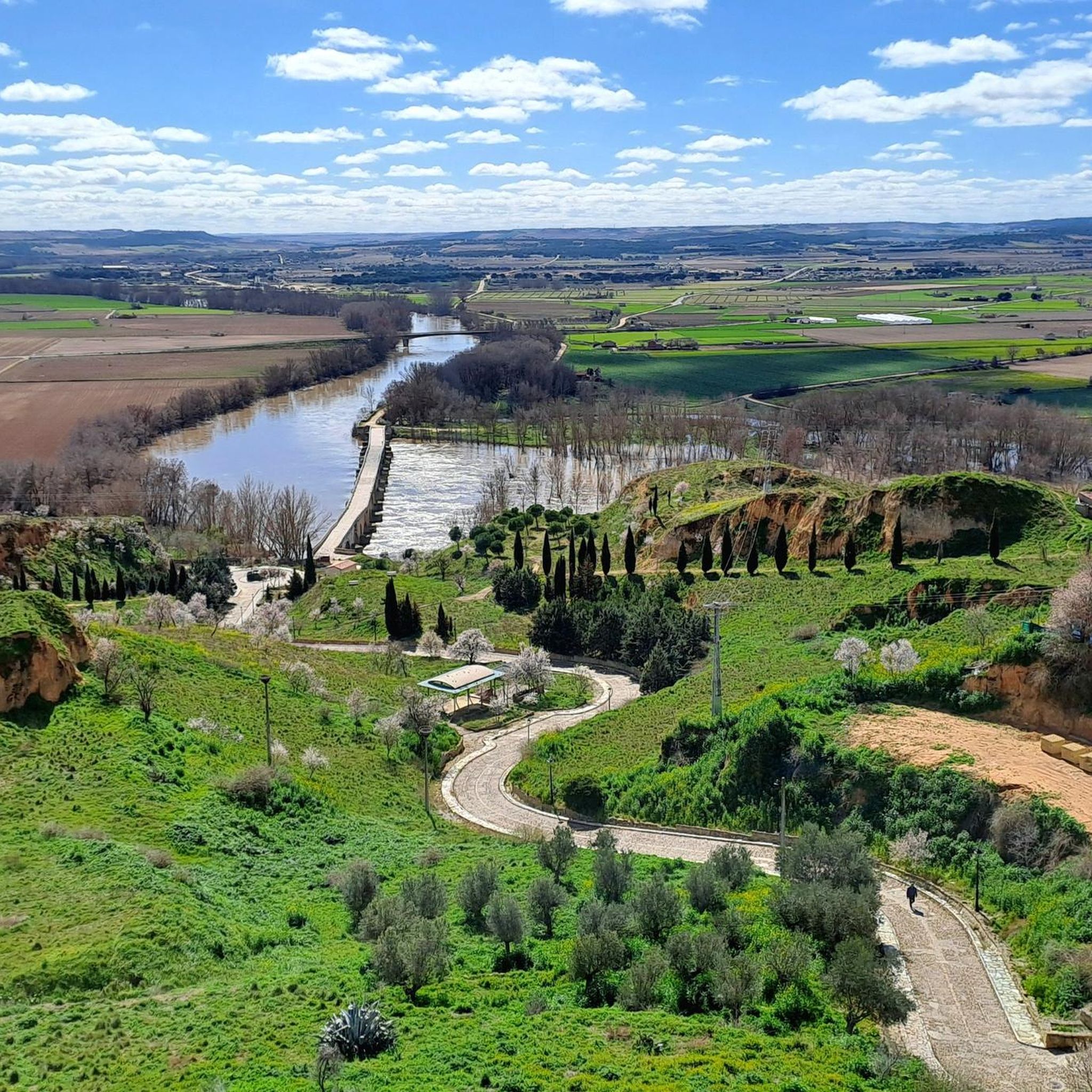
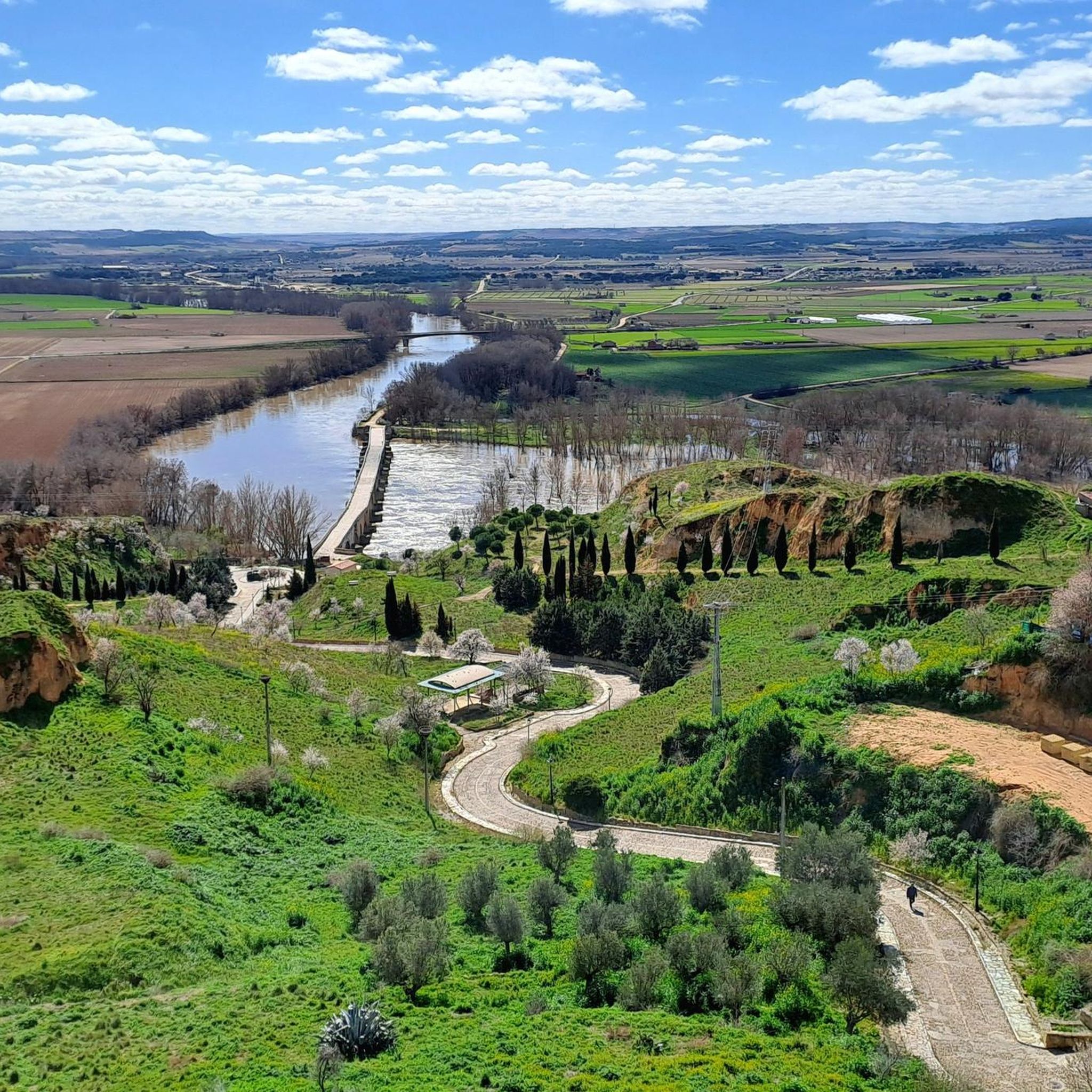
Bridge that helps to cross the waters and the banks of the Río Duero before reaching the city of Zamora.
0
0

The forest here is full of paths that intersect each other. It is the perfect place to practice mountain biking and is the venue for the Vintorobike race that is held annually.
0
0
Frequently Asked Questions
How many touring cycling routes are available around Matilla La Seca?
There are several touring cycling routes around Matilla La Seca, offering a variety of distances and difficulties. Currently, you can find 5 distinct routes, ranging from moderate to difficult, perfect for exploring the Tierra del Pan region.
What kind of terrain can I expect on touring cycling routes near Matilla La Seca?
The terrain around Matilla La Seca, part of the 'Tierra del Pan' (Land of Bread), is predominantly flat to gently rolling, characterized by expansive wheat fields. This makes for scenic rides with manageable gradients. Some routes may also feature sections along the Duero River, offering diverse landscapes from farmland to more dramatic rocky areas, or through localized valleys with bushes and forests.
Are there any circular touring cycling routes in the area?
Yes, several routes are designed as loops, allowing you to start and end in the same location. For example, the Castillo de Villalonso from Toro – circular by Morales de Toro is a moderate 41 km loop. Another option is the Monte La Reina Forest loop from Valdigales, a shorter 21 km moderate route.
What are some interesting landmarks or attractions I can see while cycling near Matilla La Seca?
The region is rich in history and culture. You can cycle past traditional adobe and tapial architecture in villages, ancient dovecotes, and the 17th-century parish church of San Pedro Apóstol in Matilla La Seca itself. Further afield, the nearby town of Toro offers impressive sights like the Collegiate Church of Santa María la Mayor, the historic Plaza Mayor de Toro, and the Clock Tower of Toro. The Duero River also provides scenic views and natural points of interest.
Are there any longer touring cycling routes for experienced cyclists?
For experienced cyclists looking for a longer challenge, the Plaza Mayor de Toro – Puente de Hierro de Zamora loop from Rural Hotel is a difficult 72 km route. This route offers a substantial distance and elevation gain, connecting key towns and showcasing the regional landscape.
What is the best time of year for touring cycling in Matilla La Seca?
Given the agricultural landscape and potential for heat, spring (April-May) and autumn (September-October) are generally the most pleasant times for touring cycling. During these seasons, temperatures are milder, and the scenery of the wheat fields and river areas is particularly beautiful. Summers can be very hot, and winters can be chilly.
Can I find routes that incorporate parts of the Camino de Santiago?
Yes, the 'Camino del Levante a la Vía de la Plata,' a stage of the historic Camino de Santiago, passes through Matilla La Seca's municipal area. This offers a unique opportunity to incorporate sections of this renowned long-distance route into your touring cycling adventures, blending physical activity with historical significance.
What do other touring cyclists say about the routes in Matilla La Seca?
The touring cycling routes in this region are highly regarded by the komoot community, with an average rating of 5.0 stars. Cyclists often praise the serene agricultural landscapes, the historical points of interest, and the generally gentle terrain that makes for enjoyable touring.
Are there any routes that pass through the Monte La Reina Forest?
Yes, the Monte La Reina Forest loop from Valdigales is a moderate 21 km route that takes you through this forested area. It offers a pleasant change of scenery from the open fields, providing shaded sections and a different natural environment to explore.
Are there options for moderate-difficulty touring cycling routes?
Absolutely. Most of the routes available are classified as moderate, making them suitable for a wide range of cyclists. Examples include the Castillo de Villalonso from Toro – circular by Morales de Toro (41 km), the Plaza de Santa Marina – Iglesia de San Lorenzo el Real loop from Toro (46 km), and the Plaza de Santa Marina – Plaza Mayor de Toro loop from Toro (47 km).
Most popular attractions around Matilla La Seca

Get inspired with the komoot mobile app


Explore more
Browse the best Cycling routes in other regions.
