Top 20 Natural Monuments around Bad Bibra
Best natural monuments around Bad Bibra are found within the Saale-Unstrut-Triasland Nature Park, an area characterized by diverse geology and rich ecosystems. This region features extended forests, gentle hills, and deep valleys, offering various natural elements to explore. The town itself is known for its historic spa tradition, centered around a natural spring. Visitors can experience significant natural areas and unique geological formations in this landscape.
Best natural monuments around Bad Bibra
- The most popular natural monuments is Nebra Sky…
Last updated: July 22, 2026
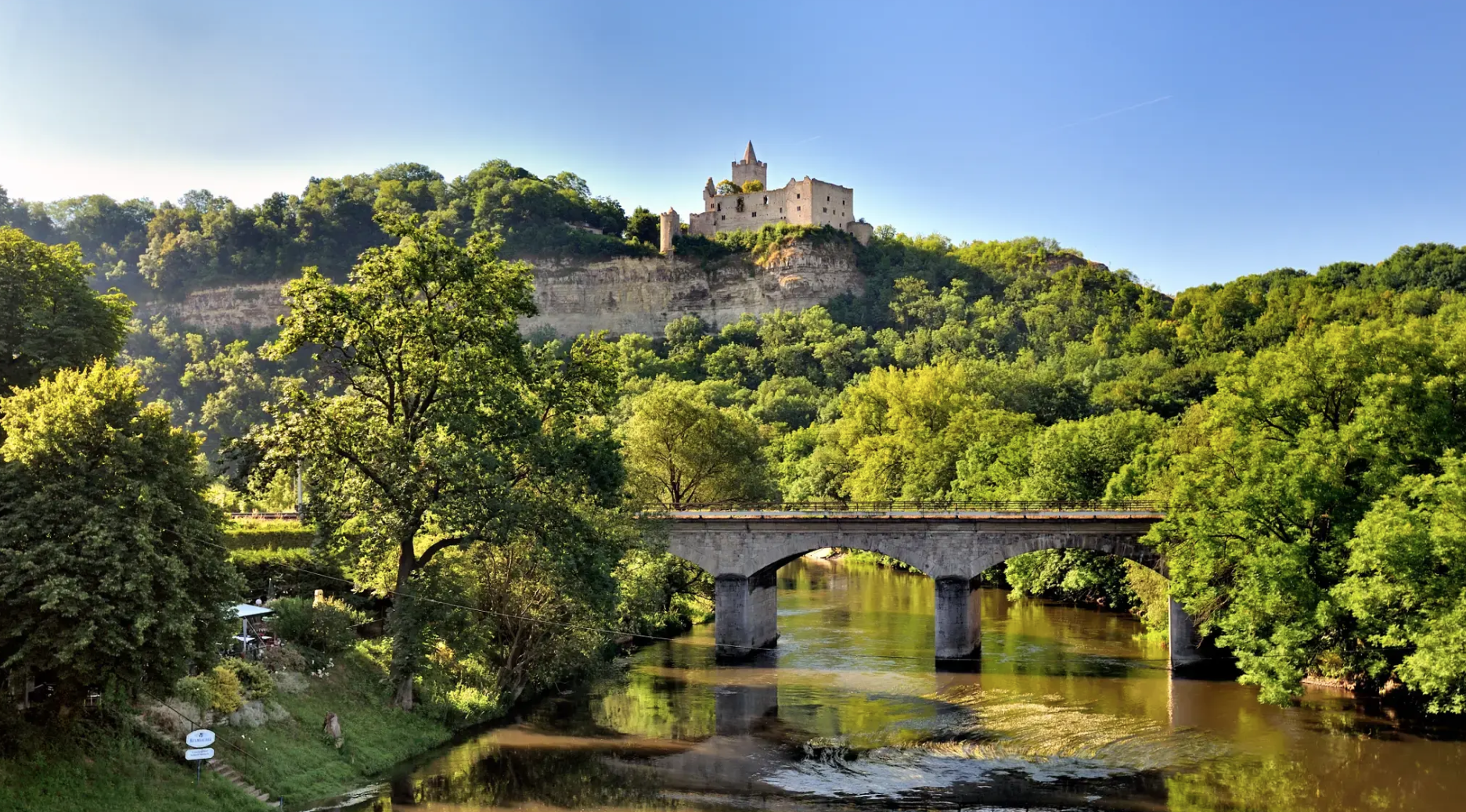
Ducal Vineyard below Neuenburg Castle
Highlight • Structure
High above the wine-growing town of Freyburg lies Neuenburg, the sister castle of Wartburg, founded around 1090 by the Thuringian Count Ludwig the Springer. The first mighty …
Translated by Google •
Tip by

Saale-Unstrut vineyards
Highlight • Natural
Translated by Google •
Tip by

Sign up now to discover places like this
Get recommendations on the best single tracks, peaks, & plenty of other exciting outdoor places.
Sign up for free
Konik horses in the Tote Täler Nature Reserve
Highlight • Natural
Translated by Google •
Tip by

Ducal Vineyard and Vineyard House
Highlight • Structure
Translated by Google •
Tip by

Himmelreich rock outcrop on the Saale River
Highlight (Segment) • Natural Monument
Also, the ways to fall in love.
Translated by Google •
Tip by
Sign up for free to discover even more natural monuments around Bad Bibra.
Sign up for free
Already have an account?
Start today with a free account
Your next adventure awaits.
Login or Signup
Other adventures around Bad Bibra

Tips from the Community

A relaxing stroll along the vineyards offers several places to sit.
0
0

A good road to cycle on (even if it's "only" gravel). The views of the vineyards and the places to stop for refreshments more than compensate for the elevation gain ;-) The latter was manageable, though.
0
0

On geo-trails you can explore the realm of shell limestone and enjoy beautiful views, a real experience.
1
0

Wonderful view of the vineyards, the Saale river and a great cycle path 🚴🏻♂️🚴🏻♀️
2
0


The terraced vineyard located below Neuenburg Castle, with its striking Rococo vineyard house, is a regional landmark. In its current form, it represents a Baroque vineyard as it was created at the end of the 18th century. Wine is served here from April to October, Monday to Thursday from 12 p.m. to 6 p.m., and Friday to Sunday from 12 p.m. to 7 p.m.
15
0

I passed by here thanks to the diversion and it was a beautiful route here.
5
0

Beautiful section of the route, very suitable for souvenir photos.
2
0
Frequently Asked Questions
What unique natural features can I explore around Bad Bibra?
Bad Bibra is known for its diverse geology and rich ecosystems. You can explore the Forst Bibra Nature Reserve, characterized by its Muschelkalk formations, dry valleys, and various forest types, including areas known for orchid hikes. Another significant feature is the historic Gesundbrunnen, an iron-rich spring in the town itself, integral to Bad Bibra's spa tradition. Additionally, the Himmelreich rock outcrop on the Saale River showcases impressive shell limestone layers.
Are there any protected natural areas near Bad Bibra?
Yes, the Forst Bibra Nature Reserve, located southeast of Bad Bibra, is a crucial protected area within the larger Saale-Unstrut-Triasland Nature Park. It preserves valuable mesophilic deciduous forests and xerothermic grasslands. Another notable protected area is the Tote Täler Nature Reserve, home to the Rödel Plateau, a beautiful dry grassland landscape.
Where can I see wildlife around Bad Bibra?
For wildlife spotting, the Tote Täler Nature Reserve is an excellent choice. Here, you might encounter the Konik horses that roam freely. The Forst Bibra Nature Reserve also offers opportunities to observe local flora and fauna, including deer, in its tranquil forest settings.
Are there family-friendly natural monuments around Bad Bibra?
Absolutely. The Konik horses in the Tote Täler Nature Reserve are a popular family attraction, offering a chance to see wild horses. The Nebra Sky Disc discovery site, with its 30-meter-high observation tower, provides an engaging historical and scenic experience for all ages. The Gesundbrunnen in Bad Bibra, with its Kneipp facilities, also offers a unique and interactive experience for families.
What historical or cultural sites are connected to the natural monuments in Bad Bibra?
The Nebra Sky Disc discovery site is a significant historical location, featuring an observation tower that offers insights into the archaeological importance of the Nebra Sky Disc. The Gesundbrunnen in Bad Bibra is a natural spring with a rich history, symbolizing the town's long-standing spa tradition, with its historic Badehausstein dating back to 1779. Additionally, the Ducal Vineyard below Neuenburg Castle combines natural beauty with the historical presence of the well-preserved 12th-century Neuenburg Castle.
What outdoor activities can I do near these natural monuments?
The region around Bad Bibra offers a variety of outdoor activities. You can find numerous hiking trails, such as the 'Himmelsleiter (Forst Bibra) – View of the Old Quarry loop' or the 'Heilandsbrunnen – Sisters' Spring loop'. For running enthusiasts, there are routes like the 'Wangen Railway Station – Langen Gasse Rest Area loop'. Gravel biking is also popular, with trails like the 'View of Wendelstein Castle – View of Wendelstein Castle loop'. You can find more details on these activities in the hiking guide, running guide, and gravel biking guide for Bad Bibra.
Are there hiking trails near the natural monuments in Bad Bibra?
Yes, there are several hiking trails that allow you to explore the natural monuments. For instance, you can hike through the Forst Bibra Nature Reserve, which includes trails like the 'Himmelsleiter (Forst Bibra) – View of the Old Quarry loop'. The 'Heilandsbrunnen – Sisters' Spring loop' is another moderate option that takes you through the local landscape. For more hiking options, refer to the hiking guide for Bad Bibra.
What do visitors enjoy most about the natural monuments around Bad Bibra?
Visitors frequently appreciate the scenic views and the tranquility of the natural landscapes. The geological formations, such as the shell limestone layers at the Himmelreich rock outcrop, are often highlighted as impressive. The opportunity to see wild horses at the Tote Täler Nature Reserve is also a big draw. Many enjoy the combination of nature and history, particularly at sites like the Nebra Sky Disc discovery site with its panoramic views.
Is there parking available near the natural monuments?
While specific parking details for every natural monument are not provided, generally, areas like the Forst Bibra Nature Reserve and the Tote Täler Nature Reserve, which are popular for hiking, will have designated parking areas or roadside parking options. For the Gesundbrunnen, parking is typically available within the town of Bad Bibra. It's advisable to check local signage upon arrival.
What is the best time to visit the natural monuments in Bad Bibra?
The natural monuments around Bad Bibra can be enjoyed throughout the year. Spring is particularly beautiful for experiencing the blooming flora, especially during 'orchid hikes' in the Forst Bibra Nature Reserve. Summer offers pleasant conditions for hiking and outdoor activities. Autumn brings vibrant colors to the forests, and even winter hiking can be a serene experience, though access to some areas like the Nebra Sky Disc observation tower might be restricted in bad weather.
Are dogs allowed on trails near the natural monuments?
Many natural areas and hiking trails in Germany are dog-friendly, provided dogs are kept on a leash. While specific regulations for every natural monument are not detailed, it is generally safe to assume that dogs are welcome on most public trails in the Forst Bibra Nature Reserve and Tote Täler Nature Reserve. Always be mindful of local signage and respect wildlife.
Are there any cafes or accommodation options near the natural monuments?
Bad Bibra itself, being a spa town, offers various accommodation options and places to eat. While specific cafes directly adjacent to every natural monument might be limited, you will find amenities within a short drive or walk from most sites. For example, the Gesundbrunnen is located right in the town center, with cafes and restaurants nearby. The area around Neuenburg Castle also has facilities for visitors.
Most popular routes around Bad Bibra
Most popular attractions around Bad Bibra

Get inspired with the komoot mobile app


Explore more
Extend your search for the best caves by checking out these guides of the top ones around Bad Bibra:
