Top 20 Natural Monuments around Beinerstadt
Best natural monuments around Beinerstadt are found in southern Thuringia, Germany, a region characterized by picturesque forests and rolling hills. The area features prominent natural attractions such as the Großer Gleichberg, a Tertiary volcanic formation, and sections of the Celtic Adventure Trail. Visitors can explore diverse ecosystems, including protected forest reserves and archaeological sites integrated into the natural landscape. This region offers a blend of geological interest and historical context within its natural settings.
Best natural monuments around Beinerstadt
- The…
Last updated: September 28, 2026
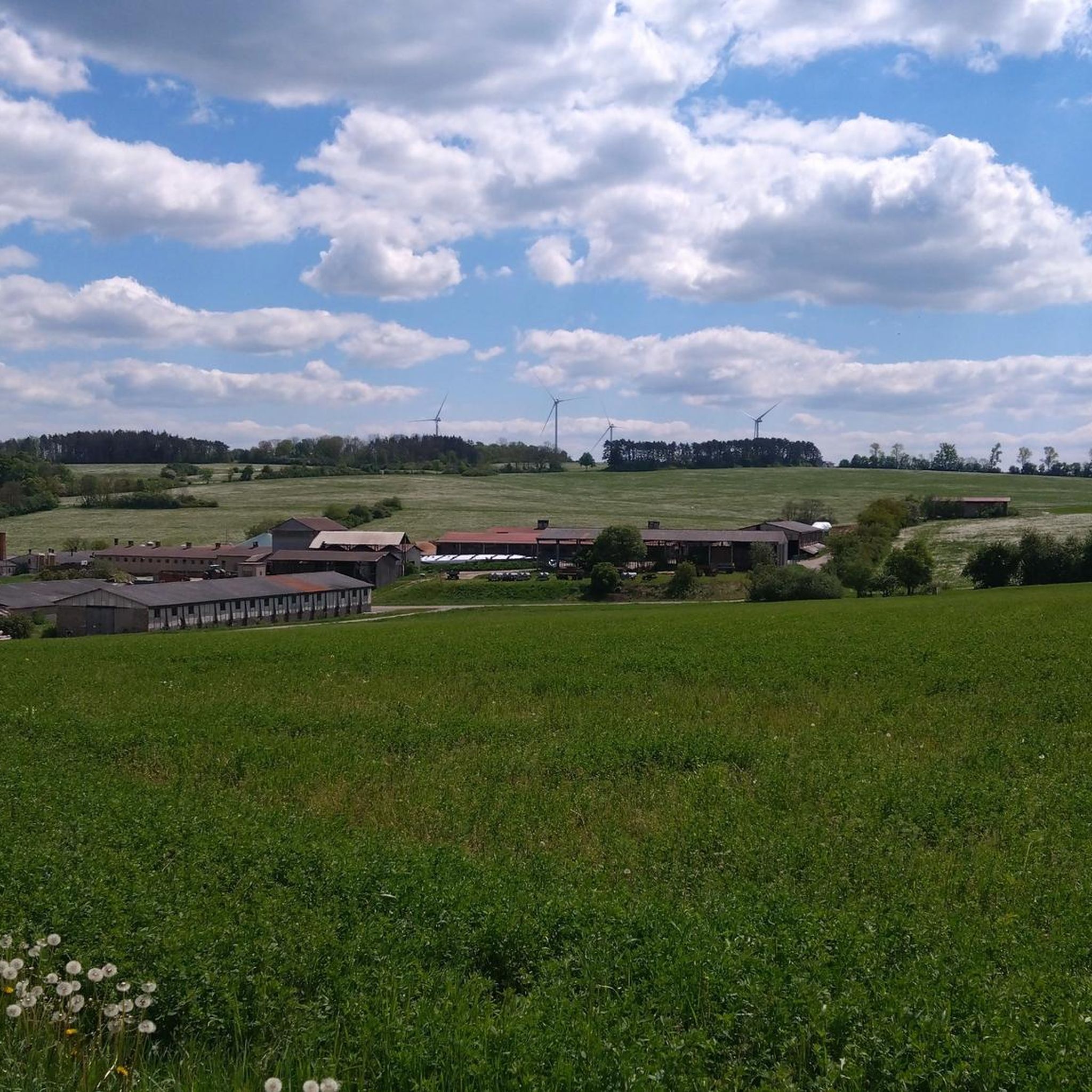
Summit of Großer Gleichberg
Highlight • Summit
Translated by Google •
Tip by

Delphin Spring (Wiesenbrünnle)
Highlight • Natural Monument
Translated by Google •
Tip by
Sign up now to discover places like this
Get recommendations on the best single tracks, peaks, & plenty of other exciting outdoor places.
Römhild Labor Education Camp Memorial
Highlight • Historical Site
The …
Translated by Google •
Tip by

Collapsed Mountain Cliff
Highlight • Natural Monument
Translated by Google •
Tip by

Kroatenkreuz
Highlight • Monument
Translated by Google •
Tip by

Sign up for free to discover even more natural monuments around Beinerstadt.
Already have an account?
Start today with a free account
Your next adventure awaits.

Tips from the Community

A very nice place to rest.
5
0

The Dolphin Fountain (also known as the Meadow Fountain) on the Kleiner Gleichberg near Römhild is a historic, restored spring located on the western slope near the Celtic hillfort. It was inaugurated around 1903, renovated in 2013, and is a popular rest stop along the mountain's hiking trails. It lies on the western slope of the 641-meter-high Kleiner Gleichberg, below the hillfort. The fountain was restored and rebuilt after a long period of disrepair. It is considered a gem by nature lovers. It is the source of the Wiesleinbach stream. Celtic settlement remains and dry stone walls are located nearby. The fountain exemplifies the dedication of the Friends of Steinsburg Association to the upkeep of the site.
8
0
Fountain with seating, pure nature.
17
0

Probably a former guardhouse.
0
0
Be careful at the edge!!!
0
0

From 1939 to 1941, up to 250 Polish prisoners of war from the Mühlberg camp were housed in a barracks camp in the quarry of the basalt works on the Grosser Gleichberg. They had to do forced labor in the quarry, in the city, in agriculture or in the forest, among other things. From 1941 to 1942, a prisoner commando from the main camp in Bad Sulza with 120 prisoners was sent to the quarry. After the quarry was temporarily closed, a maximum of around 400 "foreign ethnic" forced laborers who had broken their contract were interned there in a Gestapo labor education camp from August 1943 to March 1945. The prisoners had to work in the basalt quarry or in the basalt works at Römhild station. They were also used to build bunkers and positions in Mendhausen and for a time in trades and crafts in Römhild and the surrounding area. At least 500 prisoners died in the camp or on the evacuation march in 1945. This includes 25 to 92 prisoners who were unable to march and were shot in a sand cave on the eastern slope of the Grosser Gleichberg. The cave entrance was then blown up, meaning that the mass grave was not found until the end of January 1947. (Wikipedia)
1
0

The dolphin fountain was created and artistically designed by the Thuringian Forest Association Römhild in 1903. Largely destroyed in the early 1970s, the current facility was built 10 years later and was last fundamentally renovated in 2013.
1
0

Below the steep edge of the cliff, a huge sea of rocks beckons, with large chunks of rock that give little indication of the force that came from the rock fall. A legend that is described in full very close to the former Villa Iltenburg tells of another rock fall in 1137. There is no clear evidence of this, but it seems likely. According to the legend, there was once a place called Dörfles, which was inhabited by gypsies or Wends, who were not tolerated in Themar, but were important during the market or for entertainment. Just as the Veßra monastery was founded, a monk set out to visit them, but they threatened him and chased him away. He cursed the inhabitants and wished that the mountain would fall on them as a punishment from God. Only one 16-year-old girl showed interest in his teachings. He met with her regularly outside of the town. He begged her to leave the place, because after every winter, new cracks appeared in the rock. After two years, it finally happened and the mountain broke off one night. When the residents of Themar left the next morning, the village of Dörfles had disappeared and all the residents had perished.
2
0
Frequently Asked Questions
What unique natural features can I explore around Beinerstadt?
The region around Beinerstadt is characterized by its unique geological formations and diverse ecosystems. You can explore the Summit of Großer Gleichberg, a Tertiary volcanic formation offering expansive views. Additionally, the area features protected forest reserves, natural springs like the Delphin Spring (Wiesenbrünnle), and the dramatic Collapsed Mountain Cliff, a result of historical landslides.
Are there family-friendly natural monuments or activities near Beinerstadt?
Yes, several natural monuments around Beinerstadt are suitable for families. The Delphin Spring (Wiesenbrünnle) offers a nice, shady rest area in the forest, perfect for a break. The Großer Gleichberg also features natural educational paths that can be enjoyable for families exploring nature.
What kind of wildlife can be found in the natural monuments around Beinerstadt?
The nature reserve status of areas like the Großer Gleichberg protects diverse wildlife. Visitors might encounter species such as wildcats, spotted and black woodpeckers, and brown long-eared bats. The varied flora, including mountain elm, winter linden, and wild cherry, supports a rich ecosystem.
What historical or cultural sites are integrated with the natural monuments?
The region beautifully blends natural beauty with historical significance. The Summit of Großer Gleichberg is not only a natural landmark but also has historical connections, including the nearby Kleiner Gleichberg with its Celtic wall system. The Kroatenkreuz is a memorial stone commemorating a battle from 1634, nestled within a forest. Additionally, the Römhild Labor Education Camp Memorial on Großer Gleichberg marks a significant historical site within the natural landscape.
Are there hiking trails near the natural monuments around Beinerstadt?
Absolutely. The Großer Gleichberg offers beautiful hiking trails and natural educational paths. For a longer adventure, sections of the 254-kilometer Celtic Adventure Trail traverse southern Thuringia, including areas near Beinerstadt, winding through forests and offering scenic views. You can find more hiking options in the Running Trails around Beinerstadt guide, which includes routes like the 'Evdorf Fountain – Weidig-Jüchsen Dam loop from Exdorf'.
What are the best viewpoints to experience the landscape around Beinerstadt?
The Summit of Großer Gleichberg provides expansive views across Franconia, the Rhön mountains, and the Thuringian Forest. The climb is strenuous but rewarding. The Collapsed Mountain Cliff also offers beautiful viewpoints into the Werra Valley and the Thuringian Forest.
What outdoor activities, besides hiking, can I do near these natural monuments?
Beyond hiking, the area around Beinerstadt is great for cycling and gravel biking. You can explore routes like the 'Werra River Cycle Path – Historic Bridge Near Einhausen loop' for cycling, or 'Former Town Hall Birkenfeld – Rodachaue Viewing Tower loop' for gravel biking. Find more options in the Cycling around Beinerstadt guide and the Gravel biking around Beinerstadt guide.
What do visitors enjoy most about the natural monuments around Beinerstadt?
Visitors frequently highlight the stunning panoramic views from the Summit of Großer Gleichberg, noting that the strenuous climb is well worth the effort. The peaceful, shady rest areas like the Delphin Spring (Wiesenbrünnle) are also highly appreciated for their natural tranquility.
Are there any easy hikes among the natural monuments for beginners?
While some climbs can be intermediate, many paths around the natural monuments are accessible. The natural educational paths on Großer Gleichberg offer a gentler way to explore. For very easy options, consider shorter sections of the Celtic Adventure Trail or the trails leading to the Delphin Spring (Wiesenbrünnle), which is a popular rest stop.
What is the best time of year to visit the natural monuments around Beinerstadt?
The region's natural beauty can be enjoyed throughout the year. Spring and autumn offer pleasant temperatures for hiking and cycling, with vibrant foliage or blooming flora. The diverse forests and educational paths are particularly beautiful during these seasons. Even in winter, some trails can be explored, though conditions may vary.
Can I bring my dog to the natural monuments?
Many natural areas and trails around Beinerstadt are dog-friendly. For example, the Kroatenkreuz, a memorial stone in the forest, is listed as dog-friendly. It's always a good idea to keep dogs on a leash, especially in nature reserves, to protect wildlife and ensure a pleasant experience for all visitors.
Are there any specific geological formations or phenomena to look out for?
Yes, the Großer Gleichberg is a prominent Tertiary volcanic formation, characterized by steep, rocky slopes and abundant basalt blocks. This geological history is evident throughout the landscape. The Collapsed Mountain Cliff is another significant geological feature, showcasing the effects of historical landslides that created a dramatic rock face.
Most popular attractions around Beinerstadt

Get inspired with the komoot mobile app


Explore more
Extend your search for the best caves by checking out these guides of the top ones around Beinerstadt:
