Top 20 Natural Monuments around Reichweiler
Best natural monuments around Reichweiler are found within a region characterized by diverse natural landscapes, including extensive forests and areas of geological interest. The village is situated near the "Boxberg-Reichwalder Wald- und Wiesengebiet," a Landscape Protection Area that preserves natural diversity. Visitors can explore a mix of beech and spruce forests, along with gnarled oaks, birches, and alders along brook banks. This area offers opportunities for hiking and experiencing the natural beauty of the Westrich region.
Best natural monuments around…
Last updated: September 28, 2026
Tiefenbach Trail
Highlight • Trail
Showing Translation
Tip by

Urweiler Quarry
Highlight • Natural Monument
Showing Translation
Tip by

Sign up now to discover places like this
Get recommendations on the best single tracks, peaks, & plenty of other exciting outdoor places.
Miners' Spring
Highlight • Natural Monument
The first evidence of coal mining in this area comes from 1780. The coal was close to the surface and could be extracted in open-cast mining. From 1820, …
Translated by Google •
Tip by
The Big Oak
Highlight • Natural Monument
Translated by Google •
Tip by

Leitersweiler Beeches
Highlight • Forest
The striking group of trees was first mentioned in 1618 at the beginning of the Thirty Years War. The beeches, some of which are more than 450 …
Translated by Google •
Tip by
Sign up for free to discover even more natural monuments around Reichweiler.
Already have an account?
Start today with a free account
Your next adventure awaits.

Tips from the Community

Indeed a big oak. I couldn't quickly read how old it is, but the tree is certainly impressive, although it is a bit hidden among other trees.
1
0

Some of the Leitersweiler beeches are over 300 years old, but unfortunately their lifespan is also limited and some of these impressive trees have fallen in recent years.
1
0

You really have to hike.
3
0

The tree has already seen a lot....
0
0

𝑫𝒊𝒆 "𝑫𝒊𝒄𝒌𝒆 𝑬𝒊𝒄𝒉𝒆" The "thick oak" is a stem oak. It was once dedicated to the god of thunder Donar (Thor). The English oak can be more than 45m high and 600 years and older. Its buds are egg-shaped, somewhat rounded and heaped at the ends of the branches. The flowers are pendulous catkins, singly or in groups. The leaves are spiral, standing. The fruit is a nut in a woody cup. The "thick oak" has a circumference of 4.20m. Source: Text information board
9
0
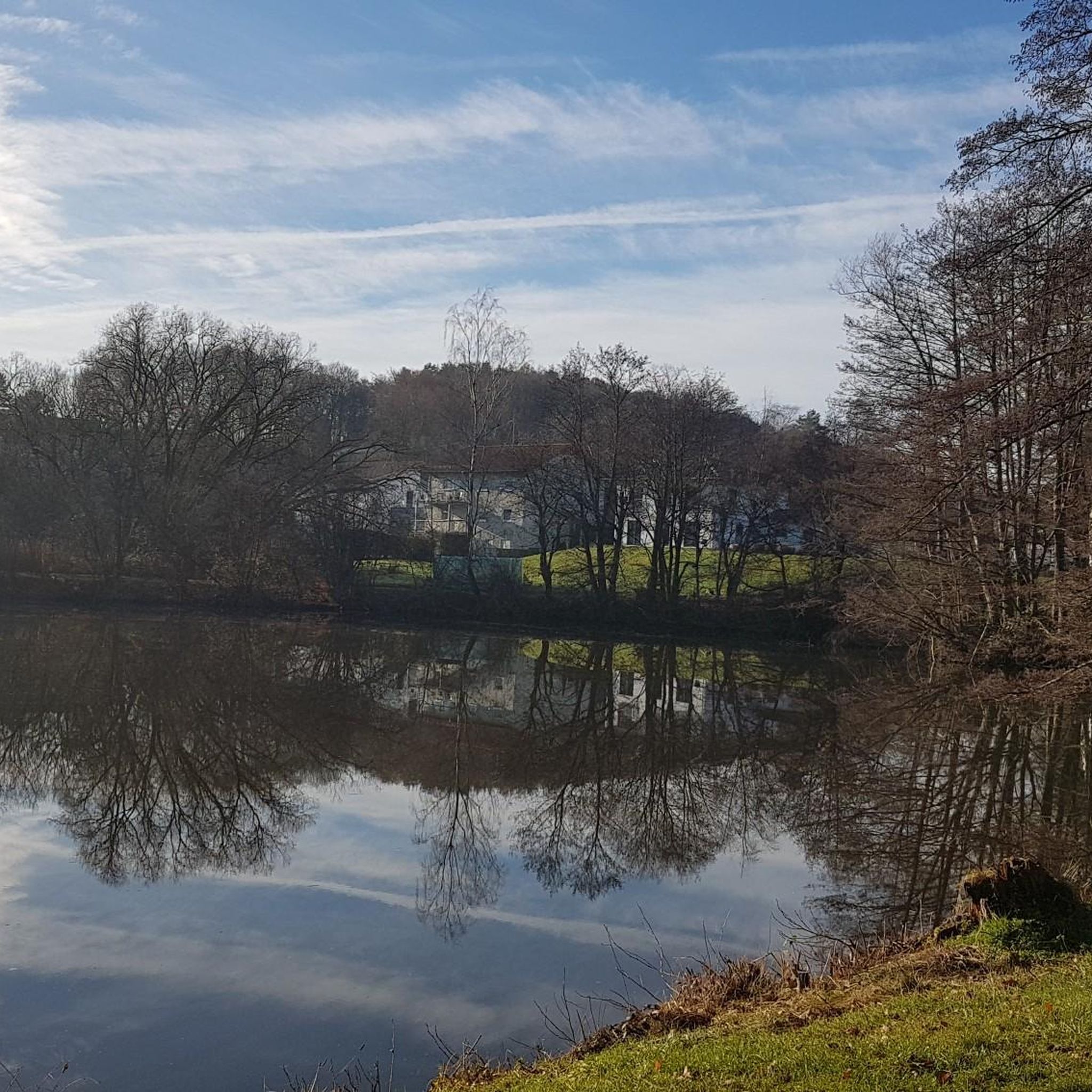
𝐍𝐚𝐭𝐮𝐫𝐬𝐜𝐡𝐮𝐭𝐳𝐠𝐞𝐛𝐢𝐞𝐭 𝐋𝐞𝐢𝐭𝐞𝐫𝐬𝐰𝐞𝐢𝐥𝐞𝐫 𝐁𝐮𝐜𝐡𝐞𝐧 / 𝐓𝐢𝐞𝐟𝐞𝐧𝐛𝐚𝐜𝐡𝐭𝐚𝐥 / 𝐎𝐬𝐭𝐞𝐫𝐰𝐢𝐞𝐬𝐞𝐧 The gnarled shapes of the old "Leitersweiler beeches" open up this nature reserve in the north on a side knoll of the Bosenberg. From the source in the forest at over 400 m, this 110 hectare nature reserve then accompanies the Tiefenbach, which runs through the forest in its natural bed, to its confluence with the Oster. This nature reserve belongs to the European nature reserve system NATURA 2000 and offers e.g. habitats for the birds in need of protection: red kite, kingfisher and black woodpecker. In the valley of the Oster, there is still something very special to see: a "human-made biotope design" planned at the beginning of the 80s, which can be considered one of the first realized facilities of this objective. The wet meadows there were in the 30s by straightening the former Meandering Easter emerged and should be drained in the 70s as part of a land consolidation. However, the resistance of the then strengthening nature conservation movement arose successfully. The meadows were not simply left to nature, but by the nature conservation authority to a pond landscape with islands, shallow water After 25 years it can be said that a considerable pioneering work on the subject of "habitat design" has been achieved, which also gained experience for other measures of water renaturation or biotope design. Source: Text information board
7
0
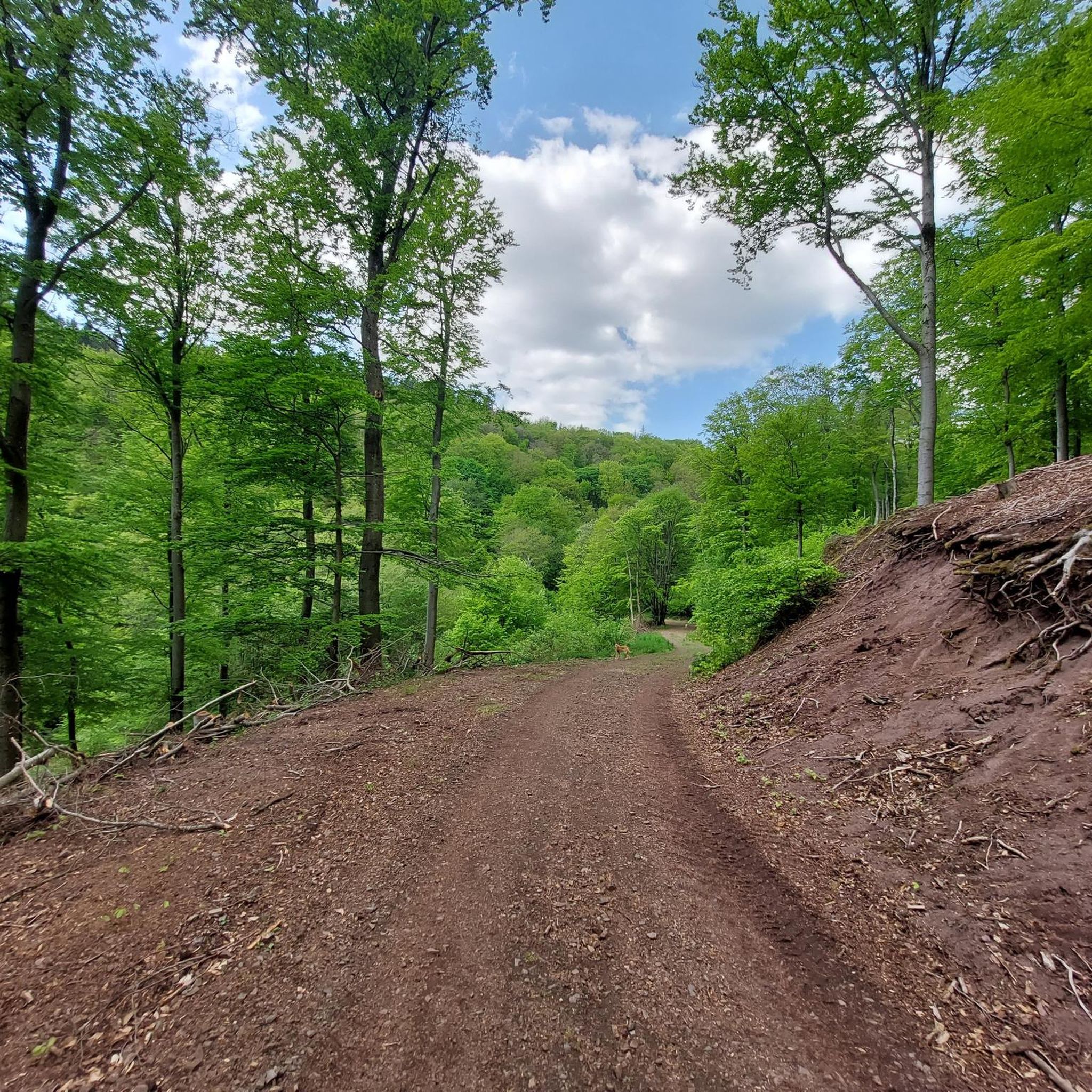
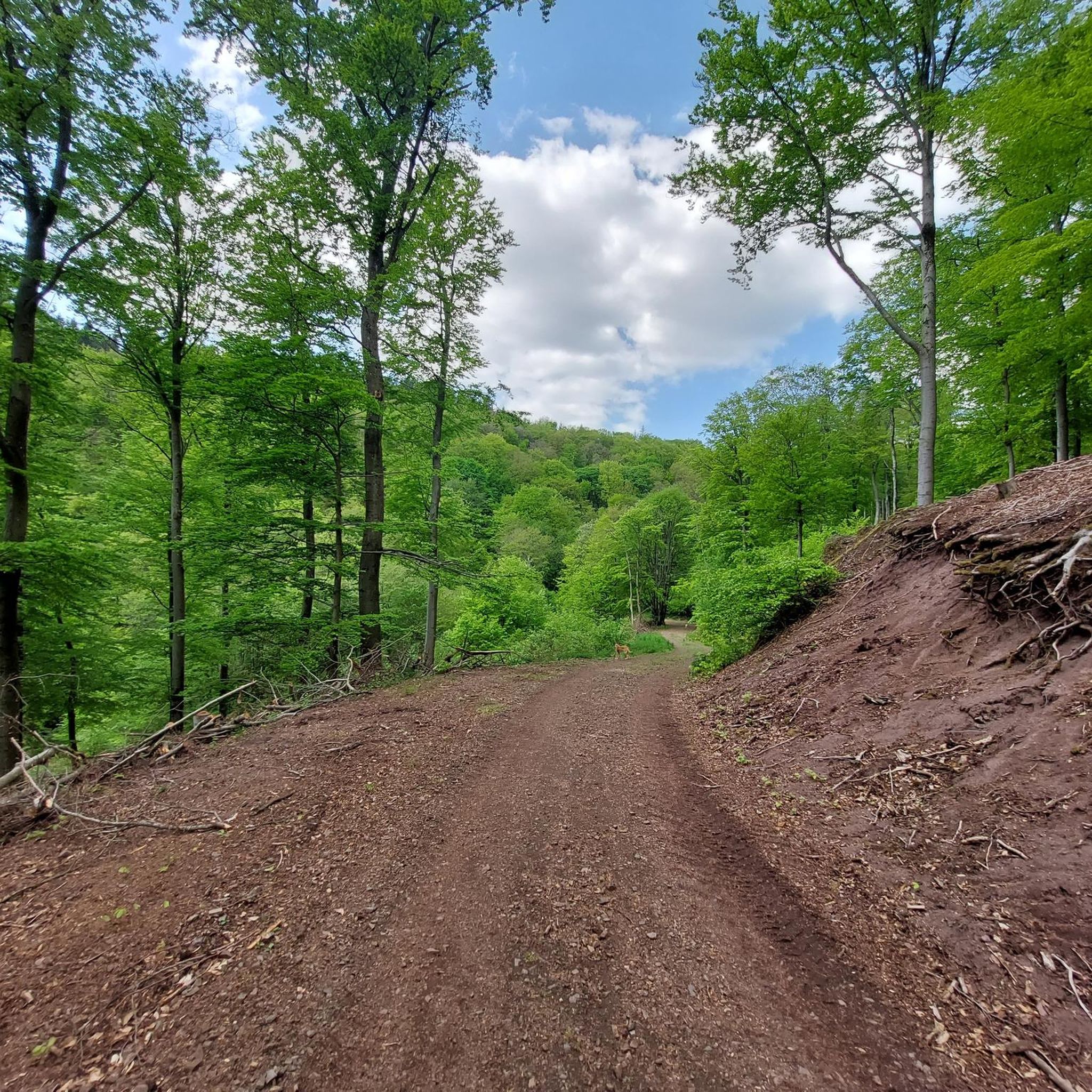
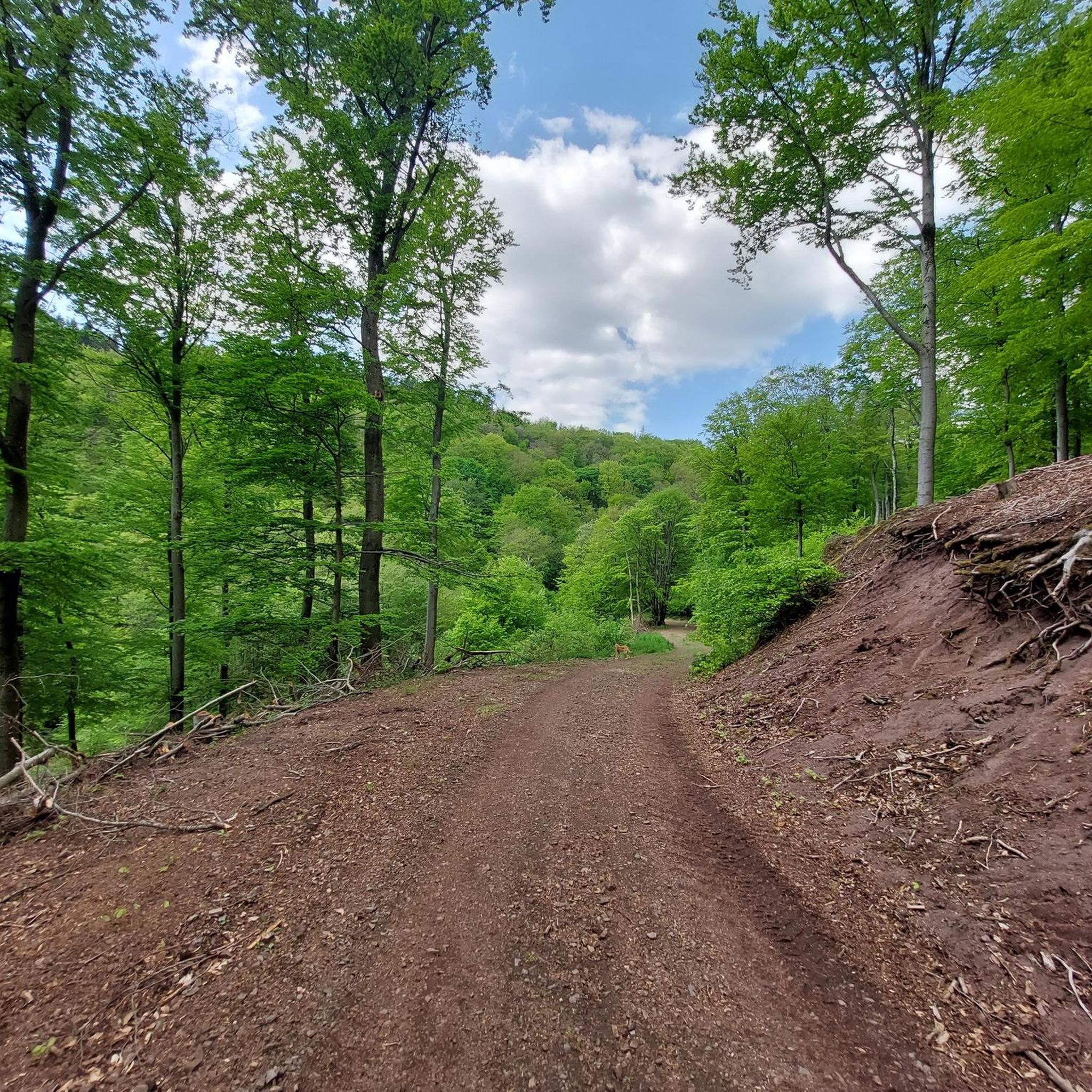
𝐃𝐞𝐫 𝐁𝐞𝐫𝐠𝐦𝐚𝐧𝐧𝐬𝐛𝐫𝐮𝐧𝐧𝐞𝐧 The first evidence of coal mining in this area comes from 1780. The coal was close to the surface and could be extracted in open-cast mining. From 1820, four pits (called Prinzengrube) in the Tiefenbachtal were also mined in tunnels. The concession holders were the brothers Karl and Philipp Cetto from Langenfelderhof, today Wendelinushof. During this period there are talk of 136 employees who extracted almost 14,000 quintals of hard coal. In 1860 the operation was stopped because larger coal seams had meanwhile been discovered on the Saar and Blies. The miners reached the tunnel via the “miners' path”, which is now part of the Tiefenbach path. On their way they passed the source in the Tiefenbachtal and filled up their drinking water here. This spring is still known today as the miner's well. Source: Text information board
9
0
𝐃𝐢𝐞 𝐋𝐞𝐢𝐭𝐞𝐫𝐬𝐰𝐞𝐢𝐥𝐞𝐫 𝐁𝐮𝐜𝐡𝐞𝐧 The striking group of trees was first mentioned in 1618 at the beginning of the Thirty Years War. The beeches, some of which are more than 450 years old, have been under nature protection since 1913. The natural monument is a popular viewpoint and excursion point. At the beginning of the 19th century, next to the beech trees, there was an optical telegraph pole, which belonged to the telegraph line from Metz to Mainz and which made it much easier to transmit messages over long distances. The individual stations were set up on hills around 10 kilometers apart. When the mast was put into operation, the people of Leitersweiler rumored that all important information was now being sent over their heads. Source: Text information board
7
0
Frequently Asked Questions
What are some popular natural monuments to visit around Reichweiler?
Visitors frequently enjoy the Tiefenbach Trail, which winds around the Bosenberg and features rustic footbridges over small valleys. Another highly regarded spot is the Urweiler Quarry, known for its geological significance and unique vegetation. The ancient Leitersweiler Beeches, some over 450 years old, also offer a popular viewpoint.
Are there any natural monuments with historical significance near Reichweiler?
Yes, the region has several. The Miners' Spring, located along the Tiefenbach path, is a historical site where miners once collected their drinking water. Additionally, the Hellerberg Quarry – Historic Agate Mining offers insights into centuries of agate extraction in the area, with visible lava flows and mineral formations.
What kind of natural features can I expect to see around Reichweiler?
Reichweiler is surrounded by diverse natural landscapes. You'll find extensive forests, including beech and spruce, as well as gnarled oaks, birches, and alders along brook banks. The area also features geological formations like quarries, and the broader region includes deep valleys, gorges, and unique rock formations, especially within the nearby NaturWanderPark delux.
Are there family-friendly natural monuments or activities in the area?
The Leitersweiler Beeches are considered family-friendly, offering a beautiful natural setting and a viewpoint. The Hellerberg Quarry – Historic Agate Mining also welcomes families, providing an interesting historical and geological experience.
What outdoor activities can I do near these natural monuments?
The natural monuments around Reichweiler are excellent starting points for various outdoor activities. You can enjoy hiking on trails like the Andesite Rose Trail Sign loop or explore the Great Keufelskopf. For cyclists, the region offers road cycling routes and gravel biking opportunities, including paths like the Fritz-Wunderlich-Wanderweg.
Are there hiking trails that pass by natural monuments?
Yes, the Tiefenbach Trail is a prime example, leading around the Bosenberg and connecting several natural highlights, including the Miners' Spring and offering views towards the Leitersweiler Beeches. Many trails in the region are designed to showcase the natural beauty and geological features.
What is the best time of year to visit the natural monuments around Reichweiler?
The natural monuments around Reichweiler can be enjoyed throughout the year. Spring brings lush greenery and blooming flora, while autumn offers vibrant fall colors in the extensive forests. Summer is ideal for longer hikes and outdoor activities. Even in winter, the tranquil, snow-dusted landscapes can be beautiful, though some passages on trails like the Tiefenbach path might be less accessible after heavy rain or snow.
What makes the natural monuments around Reichweiler unique?
The uniqueness stems from a combination of ancient forests, significant geological formations, and historical sites. The presence of the "Boxberg-Reichwalder Wald- und Wiesengebiet" Landscape Protection Area ensures the preservation of diverse ecosystems. Highlights like the Leitersweiler Beeches, with trees over 450 years old, and quarries like Hellerberg, showcasing historic agate mining, offer a blend of natural beauty and cultural heritage.
Can I find viewpoints among the natural monuments?
Yes, several natural monuments offer excellent viewpoints. The Tiefenbach Trail includes spots like the Fledermauskopf, providing wonderful views of the Sankt Wendel region and the distant Schaumberg. The ancient Leitersweiler Beeches also serve as a popular viewpoint.
What do visitors particularly appreciate about the natural monuments in this region?
Visitors often highlight the tranquility and natural beauty of the area. They enjoy the well-maintained trails, the rustic footbridges, and the clear water of springs like the Miners' Spring. The unique vegetation at sites like the Urweiler Quarry and the historical context of places like the Hellerberg Quarry are also frequently mentioned as appealing aspects.
Are there any protected natural areas near Reichweiler?
Reichweiler is situated near the "Boxberg-Reichwalder Wald- und Wiesengebiet," which has been designated as a Landscape Protection Area since 1968. This area aims to preserve the natural diversity, character, and beauty of the landscape, ensuring a balanced natural environment. The Leitersweiler Beeches are also part of a nature reserve within the European nature reserve system NATURA 2000.
Most popular routes around Reichweiler
Most popular attractions around Reichweiler

Get inspired with the komoot mobile app


Explore more
Extend your search for the best caves by checking out these guides of the top ones around Reichweiler:
