Top 20 Natural Monuments around Gollhofen
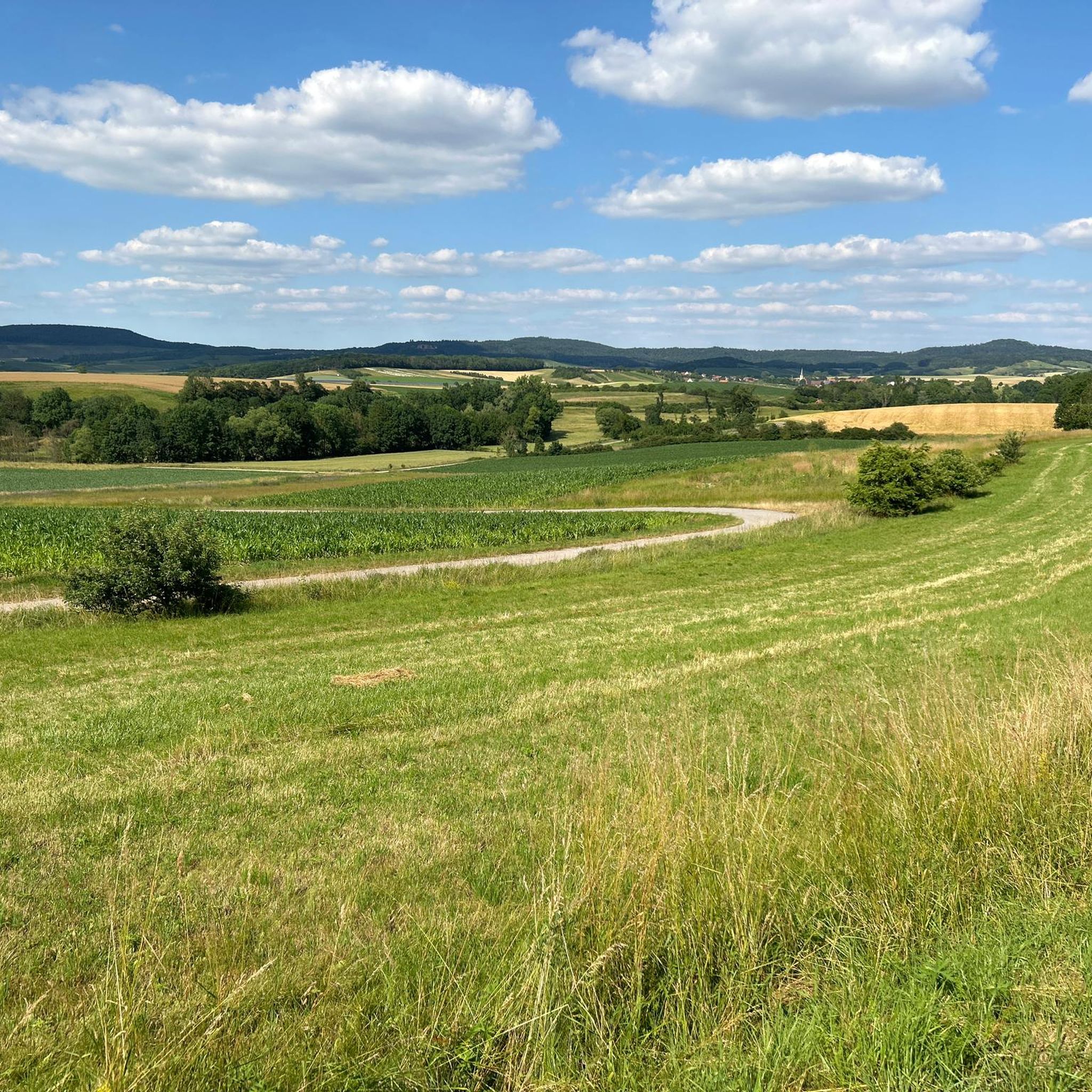
Best natural monuments around Gollhofen are situated within a landscape characterized by its natural beauty and historical significance in Bavaria. The region, including the nearby Landschaftsschutzgebiet des Gollhöfer Güterwaldes, offers diverse natural scenery with forests and green spaces. This protected area provides opportunities for outdoor activities and preserves local flora and fauna. Visitors can explore various natural features and historical sites integrated into the environment.
Best natural monuments around Gollhofen
- The most popular natural monuments is Hohenlandsberg Castle Ruins, a castle ruin located on the 498-meter-high Hohenlandsberg in the southern Steigerwald. This historical site, destroyed in 1554, features well-preserved casemates and ramparts.
- Another must-see spot is Kunigunden Chapel on the Altenberg, a religious building with a significant natural monument. Adjacent to the chapel stands an approximately 1000-year-old lime tree, which is wider than it is high and has a hollow trunk that can be entered.
- Visitors also love Ippesheim Circular Enclosure, a historical site and man-made monument. This reconstruction of one of Europe's oldest circular moats, built around 7,000 years ago, served as a place for observing celestial events.
- Gollhofen is known for ancient trees, unique rock formations, and historical sites integrated into the natural landscape. The area offers a variety of natural monuments to see and explore, from geological features to protected natural areas.
- The natural monuments around Gollhofen are appreciated by the komoot community, with more than 400 upvotes and over 750 photos shared by visitors.
Last updated: November 21, 2026
Hohenlandsberg Castle Ruins
Highlight • Castle
is absolutely one of my favorites
more information at: osingverein.de/hohenland.html
Translated by Google •
Tip by

Hinterfrankenberg Castle Ruins
Highlight • Castle
Translated by Google •
Tip by

Sign up now to discover places like this
Get recommendations on the best single tracks, peaks, & plenty of other exciting outdoor places.
Kunigunden Chapel on the Altenberg
Highlight • Religious Site
Showing Translation
Tip by

Kunigundenstein
Highlight • Natural Monument
Translated by Google •
Tip by

Ippesheim Circular Enclosure
Highlight • Historical Site
Source and more information at: https: //frankens-mehrregion.de/neuheiten/einweihung-des-modells-der-kreisgrabenanlage-bei-ippesheim
and weinbauverein-ippesheim.de/kreisgrabenanlage.htm
Translated by Google •
Tip by
Sign up for free to discover even more natural monuments around Gollhofen.
Already have an account?
Start today with a free account
Your next adventure awaits.
Tips from the Community

Beautiful castle ruin 🤩
3
1

The barrier to the ruins has been partially removed and is now accessible again. As of September 14, 2025. 😉
3
0

The Hinterfrankenberg castle ruins are a fascinating destination for anyone who wants to combine history and nature. The remains of the former castle are idyllically situated on a hill and offer a great view of the surrounding landscape. Although only ruins remain of the castle, you can feel the breath of times gone by here. The old walls, some of which have been reclaimed by nature, are particularly impressive. Sturdy shoes are recommended as the paths to the ruins can be uneven in places. A visit is particularly worthwhile for history buffs and hikers looking for a quiet place to linger. Don't forget to bring your binoculars - the view is worth it!
8
0

Very interesting facility with good care
0
0
Great explanations and impressive facility 😉
0
0

Kunigundenlinde “Millennial” Kunigundenlinde ♁⊙ on the west side of the churchyard Right next to the chapel stands the “millennial” Kunigundenlinde, which is also named after the saint. According to the founding legend of the church, it is said to be the identical tree in which Kunigunde's veil got caught, and for this reason, the little church was built beneath it. Since the historical Kunigunde died as early as 1033, this would confirm the age of the linden tree as over 1000 years. However, the actual age of the tree is highly controversial, and very different figures can be found in the literature. A dendrological age determination of the striking tree is not possible because its trunk is completely hollow and the core of the trunk is missing. It is quite often assumed that the linden tree was planted at the same time as the chapel was built, which would at least attribute an age of 800 years to it. The linden tree itself is a large-leaved lime and a protected natural monument. Its trunk has split into four parts over the centuries of its life and is completely hollow inside. The remaining parts of the trunk shell are supported by massive iron bars. To prevent it from breaking apart under the weight of its own crown, a radical pruning is carried out approximately every 25 years – the Kunigundenlinde has already been completely topped several times during restoration work in recent decades. https://de.wikipedia.org/wiki/Kunigundenkapelle_(Burgerroth)
4
0
After her canonization in 1200, Saint Kunigunde became one of the most popular saints, especially in Franconia. According to legend, the construction of the chapel in Burgerroth goes back directly to her. She had vowed to build three churches and wanted to leave the choice of the building sites to divine providence. She let three veils fly from Bamberg Castle: where they were found, a church was to be built in each case. One of the veils was carried by the wind to the Alten Berg, where it got caught in a linden tree that still stands there today. The small church was intended to serve as a parish church for both Burgerroth and the neighboring village of Buch, but the people of Buch felt the location was too far away. They moved the building material to Buch on their own initiative, but the next day everything was back at the intended site. A carpenter is said to have even lain down on the stones in the evening and woke up the next morning on the stones at the Alten Berg. The people of Buch gave up their resistance and the chapel was built here. Kunigundenstein At a spot 150 m southeast of the chapel in the direction of the Gollach, the saint is said to have prayed and left behind her hand, knee, and foot prints. https://de.wikipedia.org/wiki/Kunigundenkapelle_(Burgerroth)
4
0
The Kunigundenkapelle, dedicated to Cunigunde of Luxembourg, who is particularly venerated in the region, was built around 1230 during the heyday of the Staufer dynasty. The likely builders are Heinrich von Hohenlohe and his son Konrad von Hohenlohe, who resided at the nearby Brauneck Castle. Extensive repairs and alterations were carried out between 1608 and 1609 under Prince-Bishop Julius Echter von Mespelbrunn. This renovation was intended to strengthen the Counter-Reformation. A stone tablet from 1614 points to this renovation. In the middle of the 18th century, during the Baroque period, the walls and ceiling were decorated with stucco. In 1762, the current main altar, depicting the Holy Family, was donated by Thomas Klee from Buch. A final renovation took place around 1900. However, regular church services were only held on St. Cunigunde's Day (March 3) and on the third Rogation Day. After the cemetery also ceased to be used in 1945, the Kunigundenkapelle lost its importance. From 1961 to 1962, excavations were carried out in the chapel, and the current state was established during the subsequent thorough restoration. https://de.wikipedia.org/wiki/Kunigundenkapelle_(Burgerroth)
4
0
Frequently Asked Questions
What kind of natural monuments can I expect to find around Gollhofen?
While Gollhofen doesn't feature traditional single natural monuments like unique rock formations, the region is characterized by its protected natural landscapes. The primary natural area is the Landschaftsschutzgebiet des Gollhöfer Güterwaldes, offering diverse scenery with forests and green spaces. You'll find a blend of natural features and historical sites integrated into the environment, such as ancient trees and castle ruins set within natural surroundings.
Are there any historical sites that are also considered natural monuments in the area?
Yes, several historical sites are deeply intertwined with the natural landscape. For instance, the Hohenlandsberg Castle Ruins are situated on a 498-meter-high mountain in the Steigerwald, offering historical exploration within a natural setting. Similarly, the Kunigunden Chapel on the Altenberg is notable for its adjacent 1000-year-old lime tree, which is a natural monument itself.
What are some family-friendly natural monuments or sites to visit near Gollhofen?
Many sites around Gollhofen are suitable for families. Both the Hohenlandsberg Castle Ruins and the Hinterfrankenberg Castle Ruins are categorized as family-friendly, offering historical exploration in natural settings. Additionally, the Ippesheim Circular Enclosure, a reconstruction of an ancient site for observing celestial events, provides an engaging historical and natural experience for all ages.
Are there hiking trails near the natural monuments around Gollhofen?
Yes, the region offers various hiking opportunities. The Landschaftsschutzgebiet des Gollhöfer Güterwaldes is ideal for walks and enjoying nature. For specific routes, you can explore options like the 'View of Uffenheim Church – Uffenheim Old Town loop from Gollhofen' or the 'Ulsenheim – Wildberghof loop from Gollhofen'. You can find more details on these and other routes in the Cycling around Gollhofen guide, which also features walking paths.
What kind of cycling routes are available near Gollhofen's natural attractions?
Gollhofen offers a variety of cycling routes suitable for different preferences. For touring cyclists, there are easy to moderate loops like the 'Pond in Gülchsheim – View of the Frankenhöhe loop from Gollhofen'. Road cyclists can find longer, moderate routes such as the 'View of Schloss Frankenberg – Obernbreit Town Hall loop from Uffenheim'. Gravel biking enthusiasts can explore routes like the 'Frankenberg Castle – Wine Paradise Barn loop from Uffenheim'. More information is available in the Cycling around Gollhofen, Road Cycling Routes around Gollhofen, and Gravel biking around Gollhofen guides.
What is the Kunigundenstein and its significance?
The Kunigundenstein is a weathered shell limestone rock located on the Alter Berg above the Gollach valley. Legend has it that Saint Kunigunde knelt and prayed here, leaving hand and knee imprints visible as hollows in the stone. It's a striking natural formation with a rich local legend, situated near the Kunigunden Chapel.
Can I visit ancient historical sites that are integrated into the natural landscape?
Absolutely. The Ippesheim Circular Enclosure is a fascinating example. It's a reconstruction of one of Europe's oldest circular moats, built around 7,000 years ago, which served as a place for observing celestial events. This man-made monument is deeply connected to the natural cycles and landscape of the region.
What kind of views can I expect from the natural monuments in Gollhofen?
Many of the natural and historical sites offer excellent viewpoints. For example, both the Hohenlandsberg Castle Ruins and Hinterfrankenberg Castle Ruins are situated on hills, providing great views of the surrounding landscape. The Kunigunden Chapel on the Altenberg also offers scenic vistas from its elevated position.
What is the best time of year to visit the natural monuments around Gollhofen?
The region's natural beauty, particularly the forests and green spaces of the Landschaftsschutzgebiet des Gollhöfer Güterwaldes, can be enjoyed throughout the year. Spring and autumn offer pleasant temperatures for hiking and cycling, with vibrant foliage changes. Summer is great for longer days outdoors, while winter can provide a serene, snow-covered landscape, though some paths might be less accessible.
Are dogs allowed on trails and at natural monuments in the Gollhofen area?
Generally, dogs are welcome on trails in natural areas like the Landschaftsschutzgebiet des Gollhöfer Güterwaldes. However, it's always recommended to keep dogs on a leash, especially in protected areas or near historical sites, to protect local wildlife and ensure a pleasant experience for all visitors. Specific rules may apply to certain monuments or private properties, so always look for local signage.
What makes the lime tree at Kunigunden Chapel so special?
The lime tree adjacent to the Kunigunden Chapel on the Altenberg is approximately 1000 years old and is a natural monument of a very special kind. It's wider than it is high, with a completely hollow trunk that can be entered. Despite its age, it still sprouts new growth every year, making it a living testament to the region's natural heritage and a unique natural feature to explore.
What kind of geological features can be found around Gollhofen?
The region's geology is characterized by features like the weathered shell limestone rock of the Kunigundenstein. While not a region known for dramatic geological formations, the underlying geology influences the landscape, including the hills where castle ruins are found and the soil that supports the local flora.
Most popular attractions around Gollhofen

Get inspired with the komoot mobile app


Explore more
Extend your search for the best caves by checking out these guides of the top ones around Gollhofen:
