Top 18 Natural Monuments around Bergland
Natural monuments Bergland offers a diverse landscape characterized by forests, rivers, and unique geological formations. This region provides numerous opportunities to explore natural features. Visitors can discover a variety of natural monuments, from gorges to ancient trees. The area is known for its scenic beauty and varied topography.
Best natural monuments around Bergland
- The most popular natural monuments is Erlauf Gorge, a gorge that offers breathtaking views along the clear, turquoise waters of the Erlauf. This area is known…
Last updated: October 24, 2026
Erlauf Gorge
Highlight • Gorge
The lower path is a bit difficult to walk at the moment, lots of driftwood etc.
Translated by Google •
Tip by

Persenbeug Market Linden Natural Monument
Highlight • Natural Monument
Translated by Google •
Tip by

Sign up now to discover places like this
Get recommendations on the best single tracks, peaks, & plenty of other exciting outdoor places.
Schauboden Prisoner of War Cemetery
Highlight • Historical Site
Translated by Google •
Tip by

Roman Caves
Highlight • Cave
Translated by Google •
Tip by

Rogelstein
Highlight • Natural Monument
These can wobble a little even with sufficient load (hence the name).
Translated by Google •
Tip by

Sign up for free to discover even more natural monuments around Bergland.
Already have an account?
Start today with a free account
Your next adventure awaits.
Tips from the Community

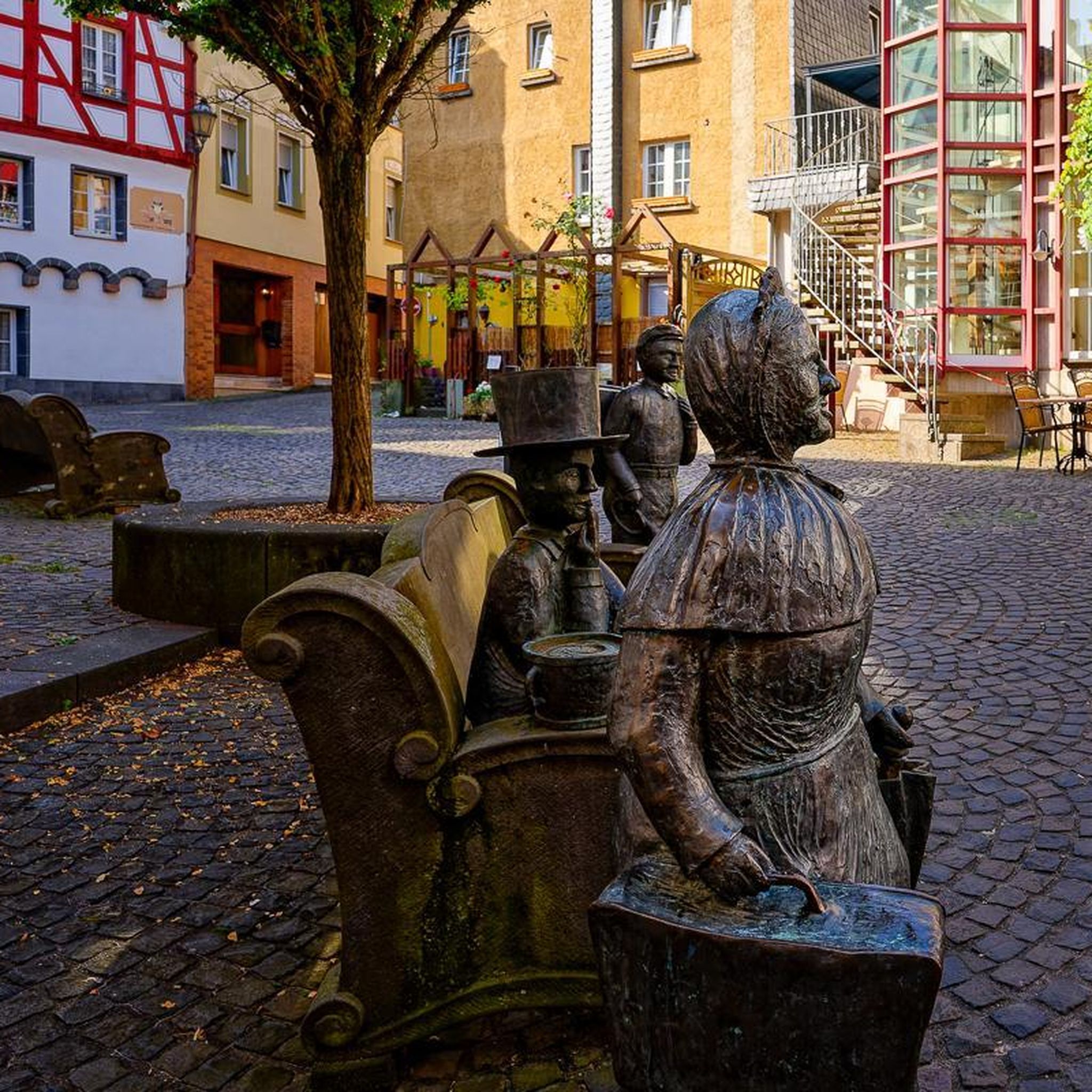
The small alleys ("Hauptstraße") around the town hall square already have a "Wachau flair" 😉
0
0

We caught a dream day, few hikers, sun and blue sky accompanied us through the gorge - definitely take the lower path, it is easy to walk and has 5 exit points.
6
0

The people of Purgstall hold a memorial service every year on the Sunday after All Souls’ Day.
1
0

An impressive, over 600-year-old linden tree, declared a natural monument in 1989. Right next to it is the Café zur Linde, very fitting.
6
0
An impressive, over 600-year-old lime tree that was declared a natural monument in 1989. Right next door is the Café zur Linde, very fitting.
4
0

Very beautiful area The lower path is a bit difficult to walk at the moment, lots of driftwood etc.
8
0

Description The enormous number of prisoners during the First World War made it necessary to set up camps for them for the first time. One of them was in Purgstall on the Erlauf. Thanks to the attention of a local resident, parts of the former k. u.k. Prisoner of war camp from the First World War will be archaeologically examined. The foundations of four prisoner barracks were found, which - unlike the concrete barracks from the Second World War - were purely wooden post buildings. The barracks each measured around 20.70 m in length and around 10.40 m in width. A shallow ditch between the buildings probably served as drainage.Life in the prison camp The prisoner of war camp in Purgstall was built in April 1915, it covered an area of 50 hectares and could accommodate 24,500 prisoners. Camps like this had become necessary because the usual accommodation of prisoners of war in military accommodation, barracks or fortresses was no longer possible due to their large numbers. Entire barrack towns were created in which not only the prisoners lived, but also the infrastructure for supplies and bureaucratic administration. There were also workshops in which the prisoners produced simple consumer goods. In the Hague Land War Code, the predecessor of the Geneva Convention, the conditions of captivity were precisely regulated. Officers were privileged, they did not have to work like the enlisted men and were even entitled to servants. Teams were not allowed to participate in war efforts against their homeland, e.g. B. in the defense industry. Protection against diseases and epidemics posed a particular challenge, which is why great importance was attached to hygiene. From the prison camp to the summer resort After the war, most of the barracks in Purgstall were demolished, but several two-story houses were built on the foundations using the building materials for the summer resort settlement “Schauboden-Föhrenhain”, in which its own sports and leisure culture developed in the 1920s.Tip : The four kilometer long “Path of Peace” leads through the former camp area and provides information about the lives of the prisoners. (Source: https://www.mostviertel.at/alle-ausflugsziel/a-das-kriegspritenenlager)
0
0

Walking through here is an experience in itself, also suitable for families, the water has a very special color, especially when the snow melts in the mountains.
1
0
Frequently Asked Questions
What types of natural monuments can I explore in the Bergland region?
The Bergland region offers a diverse range of natural monuments, including impressive gorges, ancient trees, and unique rock formations. You can also discover beautiful river landscapes and extensive forest areas, providing a rich variety of natural features to explore.
Are there any family-friendly natural monuments in Bergland?
Yes, several natural monuments in Bergland are suitable for families. The Erlauf Gorge is listed as family-friendly, offering breathtaking views along its clear waters. Additionally, the Persenbeug Market Linden Natural Monument, an impressive 600-year-old tree, is also a great family-friendly spot.
What unique geological features can be found among Bergland's natural monuments?
One notable geological feature is Rogelstein, a natural monument consisting of large boulders. These boulders are known for their unique characteristic of wobbling slightly under sufficient load, offering an interesting experience for visitors.
What outdoor activities can I do near the natural monuments in Bergland?
The Bergland region is excellent for outdoor activities. You can find numerous hiking trails, including easy loops like the Erlauf Auweg Kendl. For cyclists, there are MTB trails and running routes available, catering to various fitness levels and preferences.
Are there any historical sites that are also considered natural monuments in Bergland?
Yes, the Schauboden Prisoner of War Cemetery is a unique site that combines historical significance with its natural setting. While primarily a historical site, it is also recognized as a natural monument, offering a blend of cultural and natural exploration.
What do visitors particularly enjoy about the Erlauf Gorge?
Visitors consistently praise the Erlauf Gorge for its exceptional beauty. Many describe it as a 'dream day' experience, highlighting the clear, turquoise waters of the Erlauf river and the picturesque landscape. The lower path through the gorge is highly recommended for an immersive experience amidst dense forests and rocky cliffs.
Can I find ancient trees designated as natural monuments in Bergland?
Absolutely. The Persenbeug Market Linden Natural Monument is a prime example. This impressive linden tree is over 600 years old and was officially declared a natural monument in 1989, standing proudly in the middle of a market square.
Are there specific hiking trails to explore the natural monuments in Bergland?
Yes, the region offers various hiking opportunities. For instance, the 'Stein Runde' is a recommended hike that includes the Rogelstein boulders, along with other notable stones and the ruins of Zelking. You can find more hiking options in the Hiking around Bergland guide.
What is the best way to experience the natural beauty of the Erlauf Gorge?
To fully experience the natural beauty of the Erlauf Gorge, it's highly recommended to take the lower path. This route offers breathtaking views along the clear, turquoise waters and allows you to immerse yourself in the diverse flora and fauna of the Austrian Alps. There are also five exit points along the path for convenience.
Are there any natural monuments in Bergland that offer scenic viewpoints?
Yes, both the Erlauf Gorge and Rogelstein are known for offering scenic viewpoints. The gorge provides stunning vistas of the river and surrounding forests, while Rogelstein, situated in a forest, also serves as a great spot to take in the natural surroundings.
What kind of wildlife might I encounter near Bergland's natural monuments?
The natural monuments in Bergland, particularly areas like the Erlauf Gorge, are known for their diverse flora and fauna. While specific species aren't detailed, the presence of dense forests and clear rivers suggests a rich ecosystem where you might observe various birds, small mammals, and aquatic life typical of the Austrian Alps.
Is it possible to visit Bergland's natural monuments during winter?
While the guide doesn't specify winter conditions for all monuments, the general mountainous nature of Bergland suggests that winter visits are possible, especially for hiking. However, conditions can vary, and some paths, like the lower path in Erlauf Gorge, might be more challenging due to driftwood or snow. Always check local conditions before planning a winter trip.
Most popular routes around Bergland
Most popular attractions around Bergland

Get inspired with the komoot mobile app


Explore more
Extend your search for the best caves by checking out these guides of the top ones around Bergland:
