Top 20 Natural Monuments around Leopoldsdorf
Best natural monuments around Leopoldsdorf offer insights into the diverse landscapes of the Marchfeld region in Lower Austria. This area is characterized by its proximity to the Danube River, featuring floodplain ecosystems, unique sand dunes, and historical individual trees. The region provides opportunities to explore protected natural features and significant historical sites integrated with nature. It is a location where natural beauty meets historical significance, offering varied outdoor experiences.
Best natural monuments around Leopoldsdorf
- The most popular natural monuments is Liesingbach Restoration, a river that is undergoing renaturation to create new habitats for plants and animals. This project aims to redesign the river in a nature-friendly way and improve flood protection.
- Another must-see spot is Liechtenstein Castle, a historic castle that also functions as a natural monument. This ancestral seat of the Princes of Liechtenstein offers a blend of historical architecture and natural surroundings.
- Visitors also love Breite Föhre Rest Area, a site historically known for a significant natural monument, a large pine tree. This location provides a wide view down to the valley of the Vienna Basin.
- Leopoldsdorf is known for its diverse natural monuments, including individual protected trees, river landscapes, and unique inland sand dunes. The area offers a variety of natural features to explore, from ancient trees to renatured river sections.
- The natural monuments around Leopoldsdorf are appreciated by the komoot community, with more than 600 upvotes and over 100 photos shared.
Last updated: October 11, 2026
Breite Föhre Rest Area
Highlight • Rest Area
Breite Föhre was a popular excursion destination on the slopes of the Anninger near Mödling, from which there is a wide view down to the valley of the Vienna Basin. The tree was one of the most famous natural monuments of the 19th century in the area of Vienna, whose age goes back to the 16th century (dead in 1988, remains in the Lower Austria State Museum).
Translated by Google •
Tip by

Liesingbach Restoration
Highlight • River
The renaturation of the Liesingbach is taking place in six parts, which should be completed by the end of 2027. The first component was completed in April 2021 and covers the section between Karl-Sarg-Gasse and Rudolf-Waisenhorn-Gasse in the 23rd district. The second part is scheduled to start in November 2022 and will cover the section between Großmarktstraße and Gutheil-Schoder-Gasse. The other components will be tackled in the following years.
The renaturation of the Liesingbach brings many advantages for people and nature. The bank areas will be flattened, planted and provided with stones and rootstocks to create habitats for animals and plants. The water quality will be improved by building an additional rainwater channel. Flood protection is increased by hydraulic engineering modifications being made to the retention basins. The residents benefit from more green space by the water, which invites you to walk, cycle or relax
Translated by Google •
Tip by

Sign up now to discover places like this
Get recommendations on the best single tracks, peaks, & plenty of other exciting outdoor places.
Liechtenstein Castle
Highlight • Castle
Translated by Google •
Tip by

Confluence of the Triesting and the Schwechat rivers
Highlight • River
The course of the many rivers and streams in this "water-rich" part of the Vienna Basin is quite complicated: Above is the Laxenburg Palace Park, the Laxenburg Canal, which branches off from the Triesting in Münchendorf, and from the Heidbach, which branches off the Schwechat in the Baden area - also called Badner Mühlbach - flows through. The Laxenburg canal culverts the Schwechat south-east of the palace gardens. In Achau, the Krottenbach, the Mödlingbach and the outflow from the pond in the Laxenburg Palace Park, the Lobenbach, first come together. The Schwechat - also called "Aubach" here - and the Triesting follow immediately afterwards. The Schwechat - the new name for all flowing waters - in turn has two rivers, the Mitterbach - the name for the Schwechat below the imperial indulgences to Schwechat - and the original Schwechat, i.e. the Schwechat-Werksbach. Only in Schwechat itself, at the confluence of the Liesingbach, do these waters unite again to form the Schwechat. (from a writing by SC Maria Lanzendorf)
Translated by Google •
Tip by

Monument in memory of the approximately 18,000 soldiers of the Red Army who died in battle during the liberation of Vienna.
The Liberation Monument (also a monument in honor of the soldiers of the Soviet Army), popularly known as the Russian Monument on 3rd Schwarzenbergplatz, stands on that part of the square that was called Stalinplatz from April 1946 to July 1956. The hero's monument to the unknown Russian soldier, erected on behalf of the Red Army to commemorate the liberation of Vienna by the Red Army, on whose 20 meter high base rises the twelve meter high statue of a Red Guard soldier with a flag in his hand, stands against the background of an eight meter high balustrade, at each end of which a group of two fighters was attached. The monument was built exactly in the main axis of the square so that it can be clearly seen from the Ringstrasse.
The design came from Major C. G. Yakovlev, the sculptures were created by Lieutenant M. A. Intisaryan, and the overall management was by Major Engineer M. S. Schönfeld; Montage Ernst Hawlik (Vienna 3). The monument bears the inscription (in Russian): Eternal glory to the heroes of the Red Army, who fell in the fight against the German-fascist robbers of the freedom and independence of the peoples of Europe. In front of the central column with the statue, a tilted metal cube was erected at the end of the 1970s (according to POREM 1986), which reads in German and Russian: Monument in honor of the soldiers of the Soviet Army who fell for the liberation of Austria from fascism . April 1945. Creator of the monument: sculptor M. A. Intesaryan architect S. G. Yakovlev. The monument was inaugurated on August 19, 1945."
The monument was prepared by the Red Army before the capture of Vienna and was ceremoniously unveiled on August 19, 1945, when the Soviet armed forces were still solely occupying Vienna (see also Allied Occupation). The 3rd District passed into the administration of the British Army on September 1, 1945. The monument was therefore not in the Soviet sector; The 4th district, which was occupied by the Soviets until 1955, is directly adjacent to the monument.
The social democratic "Arbeiter-Zeitung" wrote about the unveiling of the monument in its lead story of August 21, 1945, saying that it was a symbol of faith and gratitude.[1] After the top Soviet officers Gusev and Krainyukov, State Chancellor Karl Renner, who appeared at the head of the provisional state government, spoke at the unveiling. He thanked the holy Russian people and Generalissimo Stalin for the liberation of the country. After Renner, top ÖVP politician Leopold Figl and KPÖ representative Ernst Fischer spoke, followed by retired mayor General Theodor Körner, who, as agreed, took the monument into the care of the city administration. Generals and soldiers from all four Allied armies took part in the opening of the monument; a parade of American, English, French and Soviet soldiers concluded the opening.
The monument is repeatedly the target of attacks: on August 18, 1962, an explosive attack was carried out on the liberation monument, and in the 2000s it was repeatedly defaced with paint.
Text / Source: City of Vienna
geschichtewiki.wien.gv.at/Befreiungsdenkmal
Translated by Google •
Tip by

Sign up for free to discover even more natural monuments around Leopoldsdorf.
Already have an account?
Start today with a free account
Your next adventure awaits.

Tips from the Community

A great recreation area just outside Vienna
1
1

Liberation Monument (Soldiers of the Red Army) Memorial in memory of the approximately 18,000 Red Army soldiers who fell in battle during the liberation of Vienna. The Liberation Monument (also known as the Monument in Honor of the Soldiers of the Soviet Army), popularly known as the Russian Monument on 3rd Schwarzenbergplatz, stands on the part of the square that was called Stalinplatz from April 1946 to July 1956. The Heroes' Monument to the Unknown Russian Soldier, erected on the Red Army's orders to commemorate the liberation of Vienna, on whose 20-meter-high base stands the twelve-meter-high statue of a Red Guard with a flag in his hand, stands against the backdrop of an eight-meter-high balustrade, at each end of which a group of two fighters was attached. The monument was erected exactly on the main axis of the square, so that it can be easily seen from the Ringstrasse. The design was by Major C. G. Jakowlew, the sculptures were created by Lieutenant M. A. Intisarjan, the overall management was carried out by Major Engineer M. S. Schönfeld; assembly was carried out by Ernst Hawlik (Vienna 3). The monument bears the following inscription (in Russian): Eternal glory to the heroes of the Red Army who fell in battle against the German fascist robbers of the freedom and independence of the peoples of Europe. In front of the central column with the statue, a tilted metal cube was erected in the late 1970s (according to POREM 1986), on which one can read in German and Russian: Monument in honor of the soldiers of the Soviet Army who fell for the liberation of Austria from fascism. April 1945. Creator of the monument: sculptor M. A. Intesarjan, architect S. G. Jakowlew. The monument was inaugurated on August 19, 1945." The monument was prepared by the Red Army before the capture of Vienna and was ceremoniously unveiled on August 19, 1945, when the Soviet forces still occupied Vienna alone (see also Allied Occupation). The 3rd district came under the administration of the British Army on September 1, 1945. The monument was therefore not in the Soviet sector; however, the 4th district, which was occupied by the Soviets until 1955, is immediately adjacent to the monument. Text / Source: City of Vienna https://www.geschichtewiki.wien.gv.at/Befreiungsdenkmal
14
1


Relaxed path on the edge of the Liesingbach.
1
2

Bombastic memorial for the liberation from Nazi rule. Reminiscent of monuments in the East. The fountain is particularly beautiful in the morning, when the sunlight creates a rainbow 🌈 in the water.
5
1

Great place for a short rest.
1
0

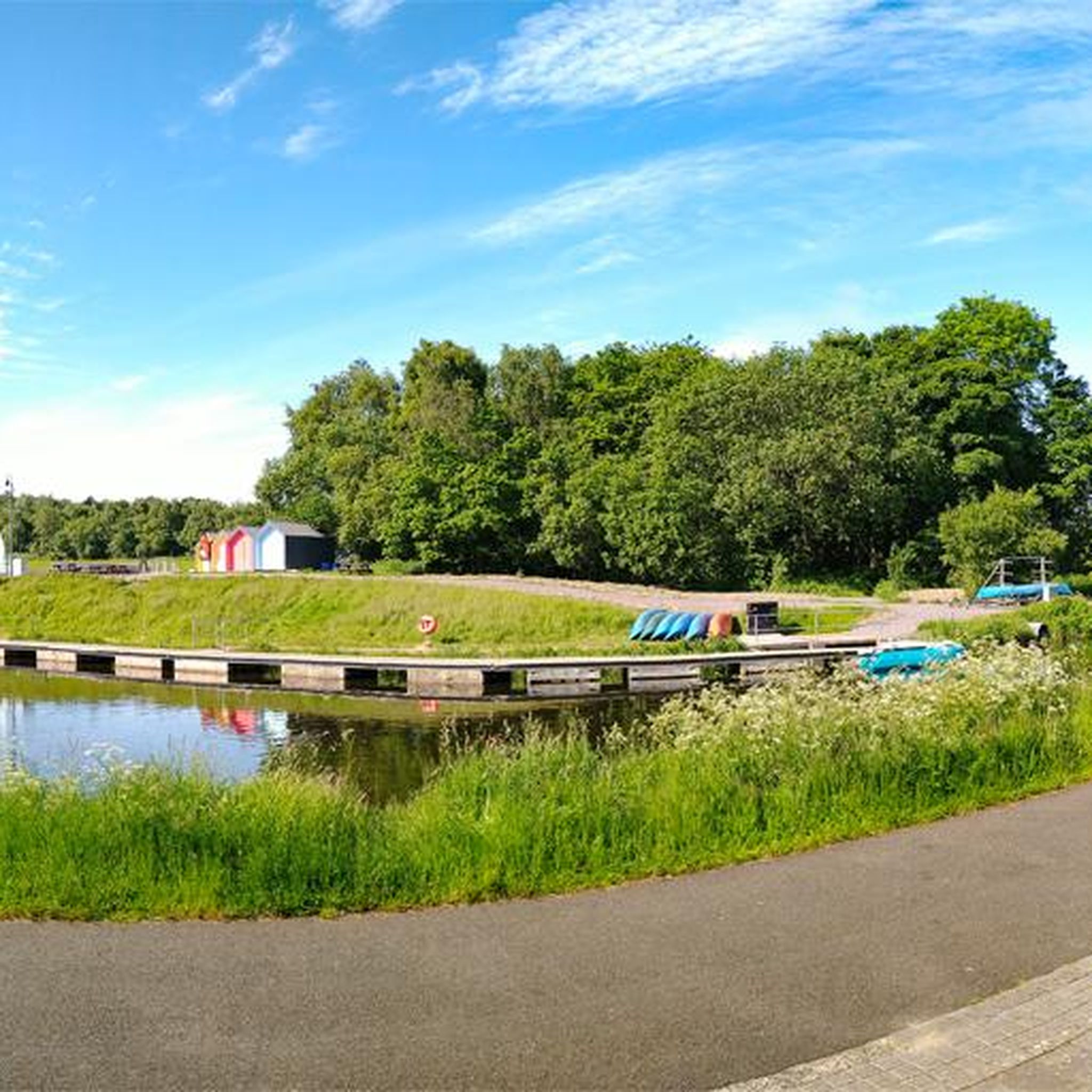
The Liesingbach is gradually being renatured in order to create new habitats for a variety of plants and animals. This is particularly visible in this area.
3
3
Frequently Asked Questions
What unique natural monuments can I find directly in Leopoldsdorf im Marchfeld?
Within Leopoldsdorf im Marchfeld itself, a notable natural monument is a designated Plane tree (Platane). This impressive tree, declared a natural monument in 1963, is located at the exit of the castle park towards Meierhof. It stands out for its age, size, and historical association, offering a unique example of a protected individual tree.
What are some of the most popular natural monuments near Leopoldsdorf?
Visitors frequently enjoy the Liesingbach Restoration, a project focused on renaturing the river to create new habitats and improve flood protection. Another popular spot is Liechtenstein Castle, which combines historical architecture with natural surroundings. The Breite Föhre Rest Area, known for its historical pine tree and wide views, is also highly appreciated.
Are there family-friendly natural monuments to visit around Leopoldsdorf?
Yes, several natural monuments are suitable for families. The Liesingbach Restoration offers green spaces by the water for walking and relaxing. Liechtenstein Castle and the Breite Föhre Rest Area are also categorized as family-friendly. Additionally, the Confluence of the Triesting and the Schwechat rivers provides a nice resting place with the possibility of swimming, making it enjoyable for all ages.
What kind of natural features can I expect to see in the region around Leopoldsdorf?
The region offers a diverse range of natural features. You can explore floodplain ecosystems along the Danube, unique inland sand dunes at the Weikendorfer Remise Nature Reserve, and historical individual trees like the Plane tree in Leopoldsdorf or The Proud Pine in Strasshof. River landscapes, such as the Confluence of the Triesting and the Schwechat rivers, are also prominent.
What historical or cultural sites are integrated with natural monuments in this area?
The region beautifully blends natural and historical significance. Liechtenstein Castle, an ancestral seat with 900 years of family history, is a prime example. The Breite Föhre Rest Area is historically known for its significant old pine tree. Even the Confluence of the Triesting and the Schwechat rivers features historical imperial indulgences. Furthermore, The Proud Pine in Strasshof is a living monument from reforestation efforts initiated by Empress Maria Theresa.
Are there opportunities for wildlife spotting near Leopoldsdorf's natural monuments?
Yes, particularly at the Donau-Auen National Park, which is one of Central Europe's largest intact floodplain landscapes. It's home to over 700 plant species and a rich variety of wildlife, including over 30 mammal species, 21 amphibians and reptiles, and more than 100 bird species like the white-tailed eagle and kingfishers. The Old Danube Oxbow at Schönau is an excellent spot for birdwatching.
What outdoor activities can I do near these natural monuments?
The area offers various outdoor activities. You can find numerous easy hikes, such as the Wiesmayerhof Deer Enclosure loop, or the Hennersdorf Parish Church loop. For more challenging adventures, there are mountain hikes like the Mödlinger Via Ferrata. Mountain biking enthusiasts can explore trails like the Kottingbrunn Castle Park loop. You can find more details on these activities in the easy hikes, MTB trails, and mountain hikes guides around Leopoldsdorf.
What is the best time to visit the natural monuments and attractions in the Marchfeld region?
Spring and early summer are particularly rewarding for experiencing the vibrant flora, especially at the Weikendorfer Remise Nature Reserve. The Donau-Auen National Park offers opportunities for nature exploration year-round, with boat tours available during warmer months. For general outdoor activities, the milder seasons typically provide the most comfortable conditions.
Are there any natural monuments that are wheelchair accessible?
The Schwarzenbergplatz in Vienna, featuring the High Jet Fountain, is noted as wheelchair accessible. While not directly in Leopoldsdorf, it is a significant natural monument in the broader region that offers accessibility.
What makes the Weikendorfer Remise Nature Reserve a unique natural monument?
The Weikendorfer Remise, Austria's oldest nature reserve, is unique due to its rare Pannonian ecosystem. It features distinctive inland sand dunes and extensive dry grasslands, creating a steppe-like heathland landscape. It's a haven for rare flora like yellow sand everlasting and feather grass, and provides breeding grounds for endangered bird species such as the European nightjar.
What do visitors enjoy most about the natural monuments around Leopoldsdorf?
Visitors appreciate the diverse landscapes, from renatured river sections to historical trees and unique sand dunes. Many enjoy the opportunities for rest and relaxation, the fantastic views from spots like Liechtenstein Castle, and the chance to explore areas where nature and history intertwine. The community has shared over 100 photos and given more than 600 upvotes, highlighting the area's appeal.
How can I reach the Donau-Auen National Park from Leopoldsdorf im Marchfeld?
The Donau-Auen National Park stretches from Vienna to the Slovak border, making it accessible from various points. Its proximity to Vienna makes it an ideal day trip destination. While specific public transport routes from Leopoldsdorf would require checking local schedules, the park's visitor hub, the Schloss Orth National Park Centre, is a good starting point for exploring its extensive network of trails and guided excursions.
Most popular routes around Leopoldsdorf
Most popular attractions around Leopoldsdorf

Get inspired with the komoot mobile app


Explore more
Extend your search for the best caves by checking out these guides of the top ones around Leopoldsdorf:
