Top 20 Natural Monuments in Malaysia
Best natural monuments in Malaysia include a diverse range of geological formations, ancient rainforests, and marine environments. The country's landscape features extensive cave systems, towering peaks, and unique coastal ecosystems. These sites offer insights into Malaysia's natural heritage and provide varied outdoor experiences. The terrain encompasses limestone karst, dense tropical jungle, and volcanic structures.
Best natural monuments in Malaysia
- The most popular natural monuments is Seven Wells Waterfalls (Telaga Tujuh), a waterfall featuring seven connected natural pools fed by…
Last updated: May 27, 2026
Batu Caves Temple Complex
Highlight • Cave
Tip by

Seven Wells Waterfalls (Telaga Tujuh)
Highlight • Waterfall
Tip by

Sign up now to discover places like this
Get recommendations on the best single tracks, peaks, & plenty of other exciting outdoor places.
Sign up for free
Low's Peak, Mount Kinabalu
Highlight • Summit
Translated by Google •
Tip by

Taman Eko Rimba KL (Bukit Nanas Forest Reserve)
Highlight • Forest
Translated by Google •
Tip by

Kinabalu Park Botanical Garden
Highlight • Natural
Translated by Google •
Tip by

Batu Boulder
Highlight • Natural Monument
Tip by

Lata Berkoh Cascades
Highlight • Waterfall
Translated by Google •
Tip by

Ramayana Cave
Highlight • Cave
Translated by Google •
Tip by
Temple Rock and Strangler Fig Tree
Highlight • Natural Monument
Tip by

Blue Lagoon Waterfall, Hutan Simpanan Kekal Ayer Hitam
Highlight • Waterfall
Tip by

Sign up for free to discover even more natural monuments in Malaysia.
Sign up for free
Already have an account?
Start today with a free account
Your next adventure awaits.
Login or Signup

Tips from the Community

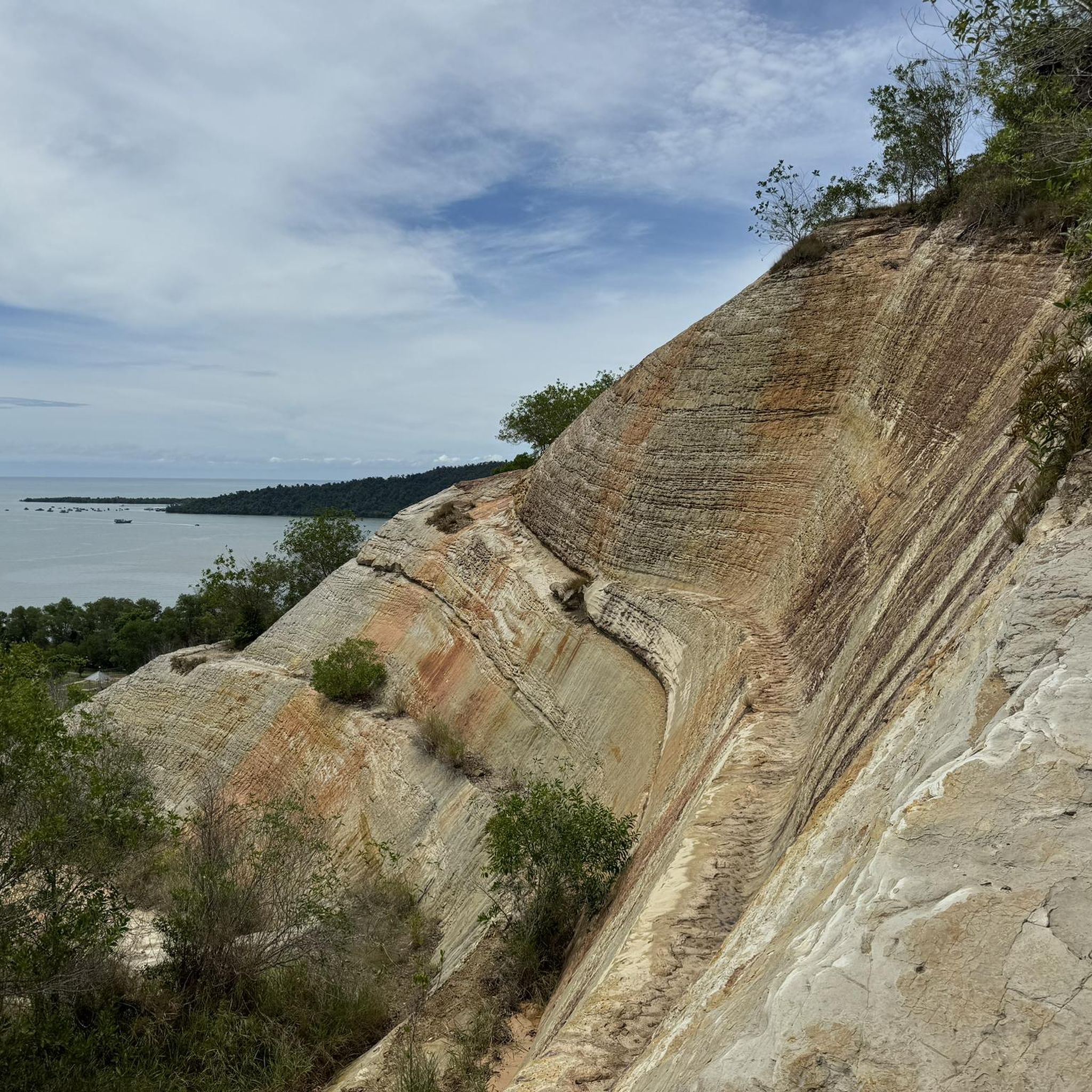
this area ve been an OFF zone for quite some tine due to safety reasons. The rooties r quite weak, the structure of the tree fig is rotten . The place is quite isolated as not many hiiking this area
1
0

side cave to the main temple. Lots of neon lights and everything very artificial. For me the 15MR entrance fee wasn't worth it. But who likes it? The main temple is free and was much more impressive.
2
0

It costs RM 5 extra, but it is a nice lap of honour, for example at the end of the Silau Silau Trail
1
0

The small entrance fee is worth it. You should plan on spending 30-45 minutes.
1
0

Very worth seeing, you have to see it
0
0

Beautiful views and pools. Watch out for the monkeys!!! Never leave your luggage lying around.
0
0

On my first visit here in 2018 there was no entry fee. Now, in December 2023, non-Malays (i.e. foreign tourists) will have to pay 40 MYR (approx. 8 euros) entry per person (at least at the entrance at the KL Tower). Since I only wanted to walk across the park once, I politely declined. Then I had to run around the outside in a big arc. A pity.
2
0

Frequently Asked Questions
What types of natural monuments can I explore in Malaysia?
Malaysia offers a diverse range of natural monuments, from ancient rainforests and majestic mountains to intricate cave systems and pristine marine environments. You can discover dramatic karst limestone formations, extensive cave systems like the Batu Caves Temple Complex, and towering peaks such as Low's Peak, Mount Kinabalu. The country also features stunning waterfalls like Seven Wells Waterfalls (Telaga Tujuh) and rich botanical gardens.
Are there family-friendly natural attractions in Malaysia?
Yes, Malaysia has several natural monuments suitable for families. For instance, the Taman Eko Rimba KL (Bukit Nanas Forest Reserve) offers an accessible forest experience within Kuala Lumpur. Near Mount Kinabalu, the Kinabalu Park Botanical Garden is a finely laid out garden perfect for exploring diverse plant life. The Ramayana Cave, part of the Batu Caves complex, is also considered family-friendly.
What are some notable natural landmarks and viewpoints in Malaysia?
Malaysia is home to many impressive natural landmarks and viewpoints. Low's Peak, Mount Kinabalu, offers extensive views from its summit. The Seven Wells Waterfalls (Telaga Tujuh) in Langkawi provides stunning natural pools and scenic vistas. Additionally, the Temple Rock and Strangler Fig Tree offers a unique natural monument and viewpoint.
What outdoor activities can I do near Malaysia's natural monuments?
Many natural monuments in Malaysia are excellent starting points for outdoor activities. You can find numerous hiking trails, from easy strolls to challenging climbs. For example, near various natural sites, you can embark on hikes like the 'View of the Tea Plantations' or 'Mount Angsi Summit'. For more options, explore the Hiking in Malaysia guide or the Waterfall hikes in Malaysia guide. Road cycling routes are also available, as detailed in the Road Cycling Routes in Malaysia guide.
What is the best time to visit natural monuments in Malaysia?
Malaysia generally experiences a tropical climate, but specific regions have different peak seasons. For Borneo's natural parks like Gunung Mulu or Kinabalu National Park, the dry season (typically March to September) is often recommended for trekking and caving, offering clearer skies and more stable weather. For Peninsular Malaysia, the west coast (e.g., Langkawi, Kuala Lumpur) is drier from December to February, while the east coast (e.g., Taman Negara) is best from March to September, avoiding the monsoon season.
Are there challenging natural monuments for experienced trekkers in Malaysia?
Absolutely. For experienced trekkers, the climb to Low's Peak, Mount Kinabalu, is a significant challenge, often undertaken with a guide for sunrise views. Gunung Mulu National Park in Sarawak offers the challenging multi-day trek to the Mulu Pinnacles. Additionally, some trails to waterfalls, such as the Blue Lagoon Waterfall, Hutan Simpanan Kekal Ayer Hitam, are rated as challenging.
What unique geological formations can be found in Malaysia?
Malaysia is rich in unique geological formations. Gunung Mulu National Park in Sarawak is famous for its dramatic karst limestone formations, extensive cave systems including the immense Deer Cave, and the striking Mulu Pinnacles. The Batu Caves Temple Complex features ancient limestone formations approximately 400 million years old. Langkawi UNESCO Global Geopark also showcases ancient limestone formations and impressive caves within its Kilim Karst Geoforest Park.
Can I see wildlife at Malaysia's natural monuments?
Yes, many of Malaysia's natural monuments are biodiversity hotspots. Taman Negara National Park, one of the world's oldest rainforests, is a haven for exotic wildlife including Malayan tigers, Asian elephants, and rare bird species. Bako National Park is known for its proboscis monkeys and diverse ecosystems. Kinabalu National Park is home to thousands of plant species, hundreds of bird species, and unique flora like carnivorous pitcher plants.
What do visitors enjoy most about Malaysia's natural monuments?
Visitors frequently praise the stunning natural beauty and unique experiences. Many are impressed by the immense scale of sites like the Batu Caves Temple Complex, noting the impressive cave formations and cultural significance. The challenging yet rewarding climbs, such as to Low's Peak, Mount Kinabalu, are also highly valued for their incredible views. The opportunity to swim in natural pools at places like Seven Wells Waterfalls is also a popular highlight.
Are there any natural monuments near Kuala Lumpur?
Yes, the Batu Caves Temple Complex is located just north of Kuala Lumpur and is easily accessible. It's a significant Hindu pilgrimage site set within ancient limestone caves. Within Kuala Lumpur itself, the Taman Eko Rimba KL (Bukit Nanas Forest Reserve) offers a natural forest experience with trails and viewpoints.
What should I know about visiting the Batu Caves Temple Complex?
The Batu Caves Temple Complex is a giant limestone cave system and a holiest Hindu site. You'll need to climb a steep flight of 272 steps to reach the main cave temple, guarded by a towering golden statue of Lord Murugan. Be aware of the monkeys on the stairs; it's advisable to avoid carrying edible items as they can be quite intrusive. The complex also includes the Ramayana Cave, which is considered family-friendly.
What kind of natural monuments are found in Langkawi?
Langkawi, a UNESCO Global Geopark, is known for its outstanding natural beauty and geological heritage. A prominent natural monument is the Seven Wells Waterfalls (Telaga Tujuh), featuring seven connected natural pools fed by separate waterfalls. The Kilim Karst Geoforest Park, part of the Geopark, showcases ancient limestone formations, impressive caves, and mangrove forests, which can be explored by boat.
Most popular routes in Malaysia
Most popular attractions in Malaysia

Get inspired with the komoot mobile app


Didn’t find what you were looking for?
Find even more amazing natural monuments in Malaysia by checking out the top Highlights region by region:
Explore more
Extend your search for the best caves by checking out these guides of the top ones in Malaysia:
