Top 18 Natural Monuments in Armenia
Best natural monuments in Armenia showcase the country's diverse landscapes and geological formations. This region features dramatic canyons, volcanic peaks, and serene mountain lakes. Armenia's natural environment offers a variety of outdoor experiences, from high-altitude summits to lush forest areas. The country's unique geological history has created many remarkable natural attractions.
Best natural monuments in Armenia
- The most popular natural monuments is Symphony of Stones, a natural monument that features spectacular basalt columns within the Azat River Gorge. These…
Last updated: July 21, 2026
Symphony of Stones
Highlight • Natural Monument
Tip by

Geghard Rock Monastery
Highlight • Religious Site
Translated by Google •
Tip by

Sign up now to discover places like this
Get recommendations on the best single tracks, peaks, & plenty of other exciting outdoor places.
Sign up for free
Mother Armenia Statue
Highlight • Monument
Translated by Google •
Tip by

Gosh Lake
Highlight • Lake
Tip by

Mount Aragats — South Peak panorama
Highlight • Summit
Tip by

Lake Parz
Highlight • Lake
Tip by

Gyolort Wildflower Meadow
Highlight • Natural
Tip by
Areni-1 Cave
Highlight • Cave
Translated by Google •
Tip by

Shaki Waterfall
Highlight • Waterfall
Tip by
Devil's Bridge (Teufelsbrücke) and Healing Springs
Highlight • Natural Monument
Translated by Google •
Tip by

Sign up for free to discover even more natural monuments in Armenia.
Sign up for free
Already have an account?
Start today with a free account
Your next adventure awaits.
Login or Signup
Tips from the Community


Absolutely beautiful, highly recommend. There’s a beautiful stream near the place with breathtaking nature. The church is really lovely as well.
0
0

The founding of the monastery in the 4th century AD on the site of a pagan spring is attributed to Saint Gregory, the patron saint of the Armenian Apostolic Church (Wikipedia).
5
0

The geological formation is incredible. The path is next to the basalt wall, it will be safe until a rock falls on someone's head. Today, entry was 300 drams. The structure they built for pedestrians is good, I believe it is possible to travel the route with a wheelchair too. I entered from the side that comes from the valley, going down the street next to the entrance to the Temple of the Sun (separate entrance). There is another entrance for those coming by car, and this one has a slightly steep slope. I didn't like the number of cars passing among the pedestrians, it seems to me that it will turn into a place for mass tourism.
0
0

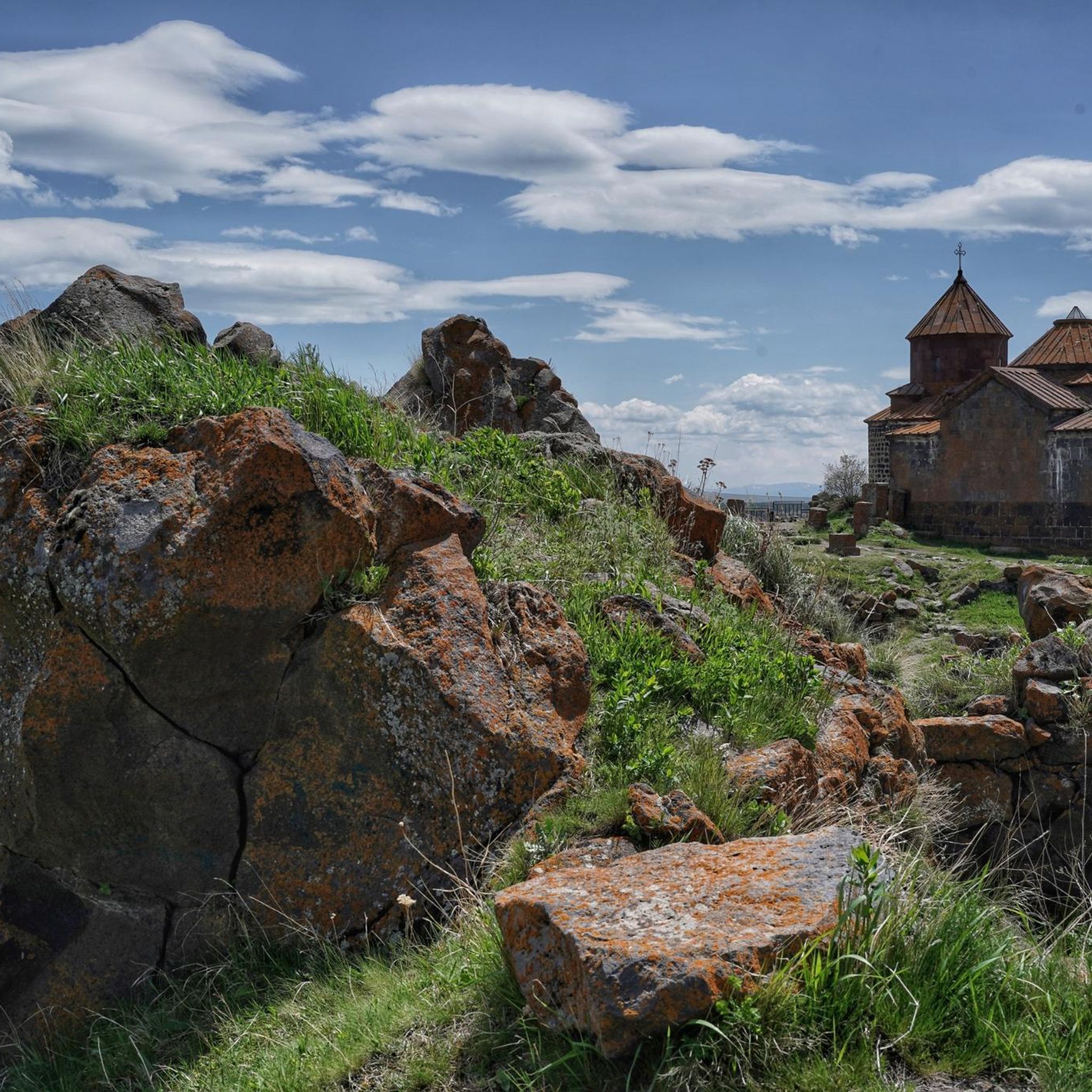
The fascinating Geghard Monastery in Armenia has a special aura and is a spiritual site with a rich history and impressive architecture.
0
0
The most beautiful view of the monument and the area from the neighboring Ferris wheel is.
0
0

The founding of the monastery in the 4th century AD on the site of a pagan spring is attributed to Saint Gregory, patron of the Armenian Apostolic Church. It was destroyed by the Arabs in the 9th century, so no buildings from that period remain. The reconstruction began in 1215. According to an inscription in the main church, the brothers Ivane and Zakhare are considered to be the builders who founded the Zakharjan dynasty, which ruled over Armenia in the 12th century as vassals of the kings of Georgia. In the middle of the 13th century, the monastery came into the possession of the noble Proschjan family, who built their burial place there in the rock. In 1679 the monastery was badly damaged by an earthquake. It remained abandoned and was only populated again by some monks from Echmiadzin after the conquest of Armenia by Russia. It was only restored for tourism in the 20th century. Source: https://de.wikipedia.org/wiki/Kloster_Geghard The monastery has been a UNESCO World Heritage Site since 2000.
2
0
The main church of the monastery is dedicated to Our Lady. It is an east-facing cross-domed church with four corner chapels and a drum with a tent roof. Its vestibule is much larger than the church itself. Four mighty pillars support the arches that divide the Gawit into nine sections. There is a light opening above the larger central square. Source: https://de.wikipedia.org/wiki/Kloster_Geghard Gawit, also Gavit (Armenian Գավիթ), refers to a mostly square vestibule in medieval Armenian architecture, which is attached to monastery churches in the west. Source: https://de.wikipedia.org/wiki/Gawit
0
0
Frequently Asked Questions
What are some of the most unique geological formations to see in Armenia?
Armenia is home to several remarkable geological formations. The Symphony of Stones in the Azat River Gorge features spectacular hexagonal basalt columns, some protruding up to 300 meters, resembling a giant pipe organ. Another unique site is Angels' Canyon in the Ararat Province, known for its distinctive formations that some describe as being 'out of a sci-fi movie'.
Are there any family-friendly natural monuments in Armenia?
Yes, several natural monuments are suitable for families. Lake Parz is a serene mountain lake known for its relaxing atmosphere and is a popular spot for families. The Mother Armenia Statue, while a man-made monument, is located within Victory Park and offers a family-friendly environment with great views over Yerevan. Dilijan National Park also provides lush forests and gentle trails suitable for family outings.
What kind of hiking opportunities are available near Armenia's natural monuments?
Armenia offers diverse hiking opportunities. For easy hikes, you can explore trails around the Symphony of Stones, such as the 5.9 km 'Symphony of Stones – Symphony of Stones loop from Garni'. More challenging treks include climbing Mount Aragats, Armenia's highest peak, or trekking Mount Azhdahak in the Geghama Mountains, which leads to a glacial lake within its crater. You can find more hiking routes in the Easy hikes in Armenia guide.
Which natural monuments are known for their waterfalls?
Armenia boasts several impressive waterfalls. Shaki Waterfall is a notable natural monument. Trchkan Waterfall, considered Armenia's highest, is located on the border of the Shirak and Lori regions and is particularly powerful in spring. Jermuk Waterfall, standing at 70 meters, is another beautiful cascade in the Vayots Dzor province, known for its mineral-rich waters.
Can I combine a visit to natural monuments with historical or cultural sites?
Absolutely. Many natural monuments are located near significant historical and cultural sites. The Symphony of Stones is close to the ancient Garni Temple. The Debed Gorge provides access to the UNESCO World Heritage medieval monasteries of Sanahin and Haghpat. Additionally, Dilijan National Park is home to historic monasteries like Haghartsin and Goshavank, blending nature with rich history.
What is the best time of year to visit Armenia's natural monuments?
The best time to visit Armenia's natural monuments generally depends on the activity. Spring (April-May) and early summer (June) are ideal for seeing waterfalls at their fullest, like Trchkan Waterfall, and for enjoying alpine meadows and wildflowers on Mount Aragats. Autumn (September-October) offers pleasant weather for hiking and vibrant fall foliage, especially in areas like Lastiver Gorge and Dilijan National Park. Summers can be warm, but high-altitude areas remain cooler.
Are there opportunities for camping or overnight stays near natural monuments?
Yes, for those looking to immerse themselves in nature, there are opportunities for camping. Hayeli Lake (Karmir Lake) in Vayots Dzor is a great destination for overnight camping, especially when hiking the Hayeli Lake Loop. Lastiver Gorge in the Tavush region is also popular for campers, offering treehouses and riverside camping spots.
What kind of outdoor activities, besides hiking, can I do near these natural monuments?
Beyond hiking, you can enjoy various outdoor activities. The Debed Gorge offers opportunities for horseback riding and rafting. For cycling enthusiasts, there are numerous routes in Armenia, including difficult road cycling loops from Yerevan and touring bicycle routes around Lake Sevan. You can explore these options in the Cycling in Armenia guide.
Which natural monuments offer scenic viewpoints?
Many natural monuments in Armenia provide breathtaking views. The Mount Aragats — South Peak panorama offers expansive views from Armenia's highest mountain. Mother Armenia Statue, situated on a hill, provides a panoramic vista of Yerevan. Additionally, the Debed Gorge and Dilijan National Park are known for their picturesque landscapes and scenic overlooks.
Are there any natural monuments associated with local legends or myths?
Yes, Armenian culture is rich with legends tied to its natural wonders. Mount Aragats holds significant cultural and historical importance, intertwined with numerous Armenian legends and myths. The Jermuk Waterfall also has a local legend describing it as 'the hair of the mermaid'.
What is the significance of Lake Kari near Mount Aragats?
Lake Kari is a picturesque high-altitude lake situated at 3,200 meters above sea level on the slopes of Mount Aragats. It serves as a common starting point for climbers attempting to summit the mountain's peaks. The lake's serene setting and surrounding alpine environment make it a significant natural landmark in the region.
Where can I find ancient petroglyphs near natural monuments?
You can find ancient petroglyphs on the slopes of Mount Azhdahak in the Geghama Mountains. Trekking through this volcanic region not only offers stunning natural beauty, including a glacial lake, but also provides a glimpse into Armenia's ancient past through these rock carvings.
Most popular attractions in Armenia

Get inspired with the komoot mobile app


Didn’t find what you were looking for?
Find even more amazing natural monuments in Armenia by checking out the top Highlights region by region:
Explore more
Extend your search for the best caves by checking out these guides of the top ones in Armenia:
