Top 7 Natural Monuments in Kluane National Park And Reserve
Best natural monuments in Kluane National Park And Reserve include immense glaciers, towering peaks, and pristine lakes. This UNESCO World Heritage Site in Canada's Yukon is characterized by its vast glaciated landscape, covering approximately 80% of the park. The region is home to Canada's highest mountains and the world's largest non-polar icefields. These unique geological features offer diverse opportunities for exploration and provide significant ecological importance.
Best natural monuments in Kluane National Park And Reserve
- The most popular natural monuments…
Last updated: May 8, 2026
Kluane National Park and Reserve
Highlight • Natural Monument
Translated by Google •
Tip by

Kaskawulsh Glacier
Highlight • Natural Monument
Translated by Google •
Tip by
Sign up now to discover places like this
Get recommendations on the best single tracks, peaks, & plenty of other exciting outdoor places.
Sign up for free
King's Throne
Highlight • Summit
parks.canada.ca/pn-np/yt/kluane/activ/randonnee-hiking/kings-throne
Translated by Google •
Tip by
View of Ä’äy Chù (Slims River) Valley
Highlight • Viewpoint
Translated by Google •
Tip by
Kathleen Lake (Mät’àtäna Män)
Highlight • Lake
Translated by Google •
Tip by
Sign up for free to discover even more natural monuments in Kluane National Park And Reserve.
Sign up for free
Already have an account?
Start today with a free account
Your next adventure awaits.
Login or Signup
Popular around Kluane National Park And Reserve
Tips from the Community

You could spend hours strolling along the shore of this large, beautiful lake, with new views opening up time and time again. Unfortunately, the adjacent trails were closed due to bears.
0
0

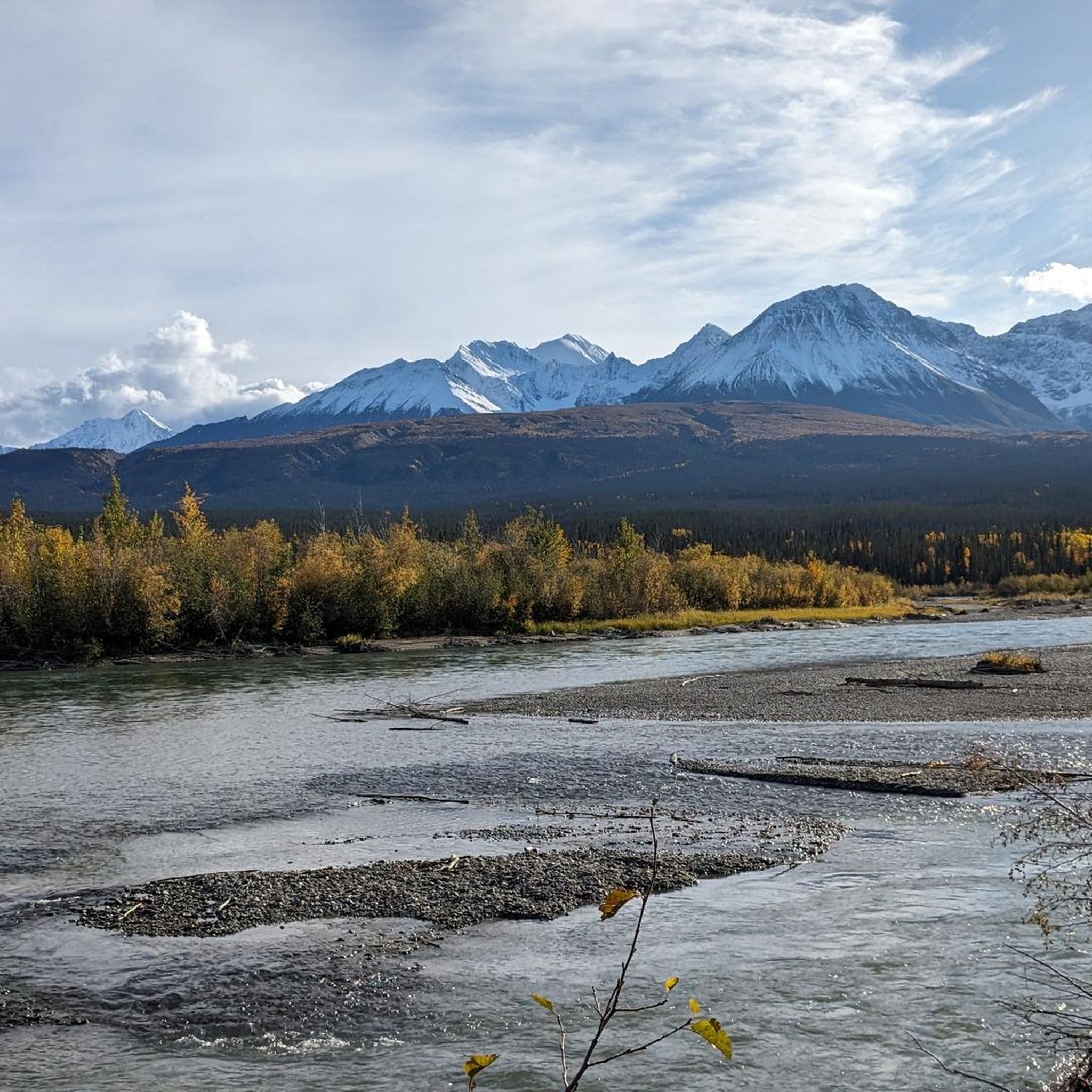
Kluane National Park and Reserve is located in the Yukon Province and borders British Columbia and Alaska. The national park was established in 1976 and protects more than 22,000 km2 of Canada's Northern Coastal Mountains. Kluane and adjacent Wrangell-St. Elias National Park in Alaska were jointly designated a UNESCO World Heritage Site in 1979. Kluane National Park is home to Canada's highest mountains, including Mount Logan (5,959 m), Canada's highest peak. The park features the world's largest non-polar ice fields, covering almost half of the park. https://parks.canada.ca/pn-np/yt/kluane/visit/cartes-maps/PNR-Kluane-NPR https://parks.canada.ca/pn-np/yt/kluane http://parkscanadahistory.com/publications/fact-sheets/eng/kluane.pdf
2
0
The 'Kaskawulsh Glacier' is a huge glacier in the 'St. Elias Mountain Range'. It covers an area of more than 39,000 km2 and consists of two converging outlet glaciers that are more than 6 km wide. The glacial water flows into two major river valleys, the Slims River and the Kaskawulsh River. Due to the retreat of the glacier, however, only a small amount of meltwater has flowed into the Slims River since spring 2016. https://en.wikipedia.org/wiki/Kaskawulsh_Glacier https://eros.usgs.gov/media-gallery/image-of-the-week/kaskawulsh-glacier-canada
2
0
The Slims River (Ä'äy Chù) is a river fed by the 'Kaskawulsh Glacier' in the 'St. Elias Mountain Range', which after about 24 km flows into the southern end of 'Kluane Lake' from there into the Yukon River and the Bering Sea. Like most glaciers worldwide, the 'Kaskawulsh Glacier' has also seen a significant decline over the past few decades. This resulted in the Slims River changing direction in spring 2016. Now, most of the glacial meltwater flows east into the Kaskawulsh River, which feeds the Alsek River and the Pacific Ocean. This was the first time that human-caused climate change was involved in reorganizing a major river. https://en.wikipedia.org/wiki/Slims_River
2
0
The beautifully situated Lake Mät'àtäna Män (Kathleen Lake) is south of Haines Junction on the Haines Highway. Kathleen Lake is one of the national park's main attractions with opportunities for hiking and recreation. There is a well-maintained campsite near the lake with toilets and access to fresh drinking water. https://parks.canada.ca/pn-np/yt/kluane/visit/services/kathleen
2
0
The path to 'King's Throne', a basin below the summit, is steep, unpaved and unmarked. Snow conditions in spring, even in the lower regions, make the ascent difficult. https://parks.canada.ca/pn-np/yt/kluane/activ/randonnee-hiking/kings-throne
2
0

Frequently Asked Questions
What are some unique geological features to explore in Kluane National Park and Reserve?
Kluane National Park and Reserve is renowned for its immense glaciers and towering peaks. You can witness the sheer scale of the Kaskawulsh Glacier, one of the largest non-polar icefields in the world, which dramatically sculpts the landscape. The park is also home to Canada's highest peak, Mount Logan, and features the dynamic Slims River (Ä'äy Chù) Valley, which has seen significant changes due to glacial retreat.
Beyond the most popular spots, what other significant natural monuments can I discover in Kluane National Park and Reserve?
While King's Throne and Kathleen Lake (Mät’àtäna Män) are popular, consider exploring the vast Kluane National Park and Reserve itself, which encompasses the world's largest non-polar icefields and the majestic Saint Elias Mountains. The Alsek River, a Canadian Heritage River, also offers an adventurous way to experience the park's untamed beauty.
What makes Kluane National Park and Reserve a UNESCO World Heritage Site?
Kluane National Park and Reserve, along with adjacent Wrangell-St. Elias National Park in Alaska, was designated a UNESCO World Heritage Site due to its exceptional natural beauty, immense glaciers, towering peaks like Mount Logan, and its crucial ecological significance as one of the world's largest protected wilderness areas.
Are there family-friendly natural monuments in Kluane National Park and Reserve?
Yes, Kathleen Lake (Mät’àtäna Män) is an excellent family-friendly option. It's an accessible and scenic lake known for its clear turquoise waters, perfect for day use, picnicking, and enjoying the natural environment. There's also a well-maintained campsite nearby.
What is the best time to visit the natural monuments in Kluane National Park and Reserve?
The best time to visit is generally during the summer months (June to August) when the weather is mildest, trails are most accessible, and wildflowers are in bloom, especially in areas like the Auriol Range. This period offers the best conditions for hiking, paddling, and flightseeing tours.
What kind of wildlife can I expect to see near the natural monuments?
Kluane National Park and Reserve is home to diverse wildlife. You might spot Dall sheep near the Tachäl Dhäl Visitor Centre in the Slims River Valley, or even grizzlies and eagles if you're rafting along the Alsek River. The park's vast wilderness supports a variety of species, so always be bear aware and keep a safe distance.
Are there accessible natural monuments for visitors with limited mobility?
While many trails in Kluane National Park and Reserve can be challenging, Kathleen Lake (Mät’àtäna Män) offers good accessibility for day use and enjoying the scenic views from designated areas. For specific accessibility information on other sites, it's recommended to check with Parks Canada directly.
What outdoor activities can I do near these natural monuments?
Near the natural monuments, you can enjoy a variety of outdoor activities. Hiking is very popular, with routes like the Saint Elias Lake Trail or the Auriol Trail. You can find more details on these and other hiking options in the Hiking in Kluane National Park And Reserve guide.
Are there hiking trails near the natural monuments in Kluane National Park and Reserve?
Absolutely. Many natural monuments are accessible via hiking trails. For instance, the challenging trail to King's Throne offers panoramic views, and trails around Kathleen Lake (Mät’àtäna Män) provide scenic walks. You can explore various options, including easy and moderate trails, in the Hiking in Kluane National Park And Reserve guide.
What do visitors enjoy the most about the natural monuments in Kluane National Park and Reserve?
Visitors consistently praise the breathtaking panoramic views, especially from challenging hikes like the one to King's Throne. The serene beauty of places like Kathleen Lake (Mät’àtäna Män) and the awe-inspiring scale of the glaciers, such as Kaskawulsh Glacier, are also frequently highlighted as unforgettable experiences.
Can I find easy hiking trails to experience the natural monuments?
Yes, there are easy hiking trails available. For example, the Soldiers Summit trail offers an easy experience, and there are gentle loops around Kathleen Lake (Mät’àtäna Män). For more easy options, consult the Easy hikes in Kluane National Park And Reserve guide.
What should I wear when hiking to natural monuments in Kluane National Park and Reserve?
Given the varied terrain and weather conditions, it's best to dress in layers. Sturdy hiking boots are essential, especially for challenging trails like King's Throne, which can have snow even in lower regions during spring. Always be prepared for sudden weather changes, including rain and cooler temperatures, even in summer.
Most popular routes in Kluane National Park And Reserve
Most popular attractions in Kluane National Park And Reserve

Get inspired with the komoot mobile app


Explore more
Extend your search for the best caves by checking out these guides of the top ones in Kluane National Park And Reserve:
