Hallerbos - Lembeekbos - Maasdalbos
Hallerbos - Lembeekbos - Maasdalbos
Top 14 Natural Monuments in Hallerbos - Lembeekbos - Maasdalbos
Best natural monuments in Hallerbos - Lembeekbos - Maasdalbos are found in Belgium's Flemish Brabant, offering distinct natural features. The Hallerbos is an ancient forest renowned for its spring bluebell bloom and impressive giant sequoias. Lembeekbos is a protected Natura 2000 area, historically connected to the larger regional forests. Maasdalbos, also a protected nature reserve, features the Maasdalbeek stream and specific thicket habitats supporting local biodiversity.
Best natural monuments in Hallerbos - Lembeekbos - Maasdalbos
- The most popular natural monuments…
Last updated: May 24, 2026
Hallerbos — The Bluebell Forest
Highlight • Forest
Translated by Google •
Tip by

Hallerbos
Highlight • Forest
Tip by

Sign up now to discover places like this
Get recommendations on the best single tracks, peaks, & plenty of other exciting outdoor places.
Sign up for free
Steenputbeek Valley
Highlight (Segment) • Forest
Translated by Google •
Tip by

Maasdalbeek Springs and Burial Mound
Highlight (Segment) • Natural Monument
Translated by Google •
Tip by

Rodenem Quarry
Highlight • Natural Monument
Translated by Google •
Tip by
Sign up for free to discover even more natural monuments in Hallerbos - Lembeekbos - Maasdalbos.
Sign up for free
Already have an account?
Start today with a free account
Your next adventure awaits.
Login or Signup
Popular around Hallerbos - Lembeekbos - Maasdalbos
Hiking in Hallerbos - Lembeekbos - Maasdalbos
Running Trails in Hallerbos - Lembeekbos - Maasdalbos
Road Cycling Routes in Hallerbos - Lembeekbos - Maasdalbos
Cycling in Hallerbos - Lembeekbos - Maasdalbos
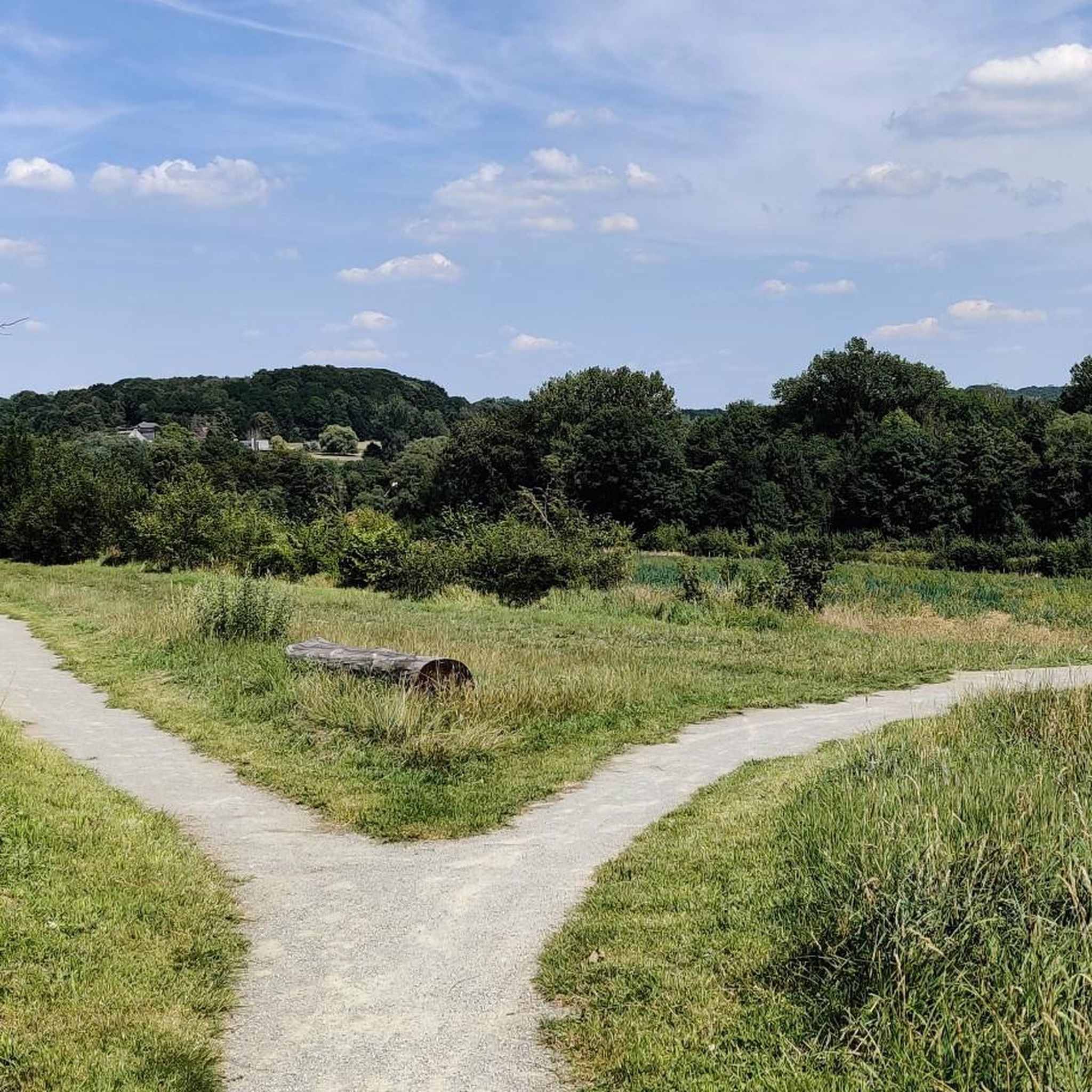
MTB Trails in Hallerbos - Lembeekbos - Maasdalbos

Gravel biking in Hallerbos - Lembeekbos - Maasdalbos
Tips from the Community

The Maasdalbeek originates in the Maasdalbos. Spring water also bubbles up here locally. This creates special plants, the most striking of which is the marsh marigold. There are also many shrubs here. The blackthorn butterfly is a butterfly that lives in blackthorn thickets or at the edge of forests. It likes warm sunny places. The female lays her eggs in the leaf axils of the blackthorn. The eggs are smaller than a pinhead and look like a squashed golf ball. Look for the eggs in winter or early spring, when the shrubs do not yet have leaves and flowers. Furthermore, small springwort, thick-grained moss, blue tuberous curtain mushroom, blue-spotted knight's mushroom and wild hyacinth grow here. The population of bats, including the pipistrelle bat and the water bat, is expanding. More and more deer are also being spotted. Numerous birds, such as the tawny owl, the sparrowhawk, the buzzard, the black woodpecker and the woodcock, also do well here. The pin-legged salamander can also be found here.
3
0

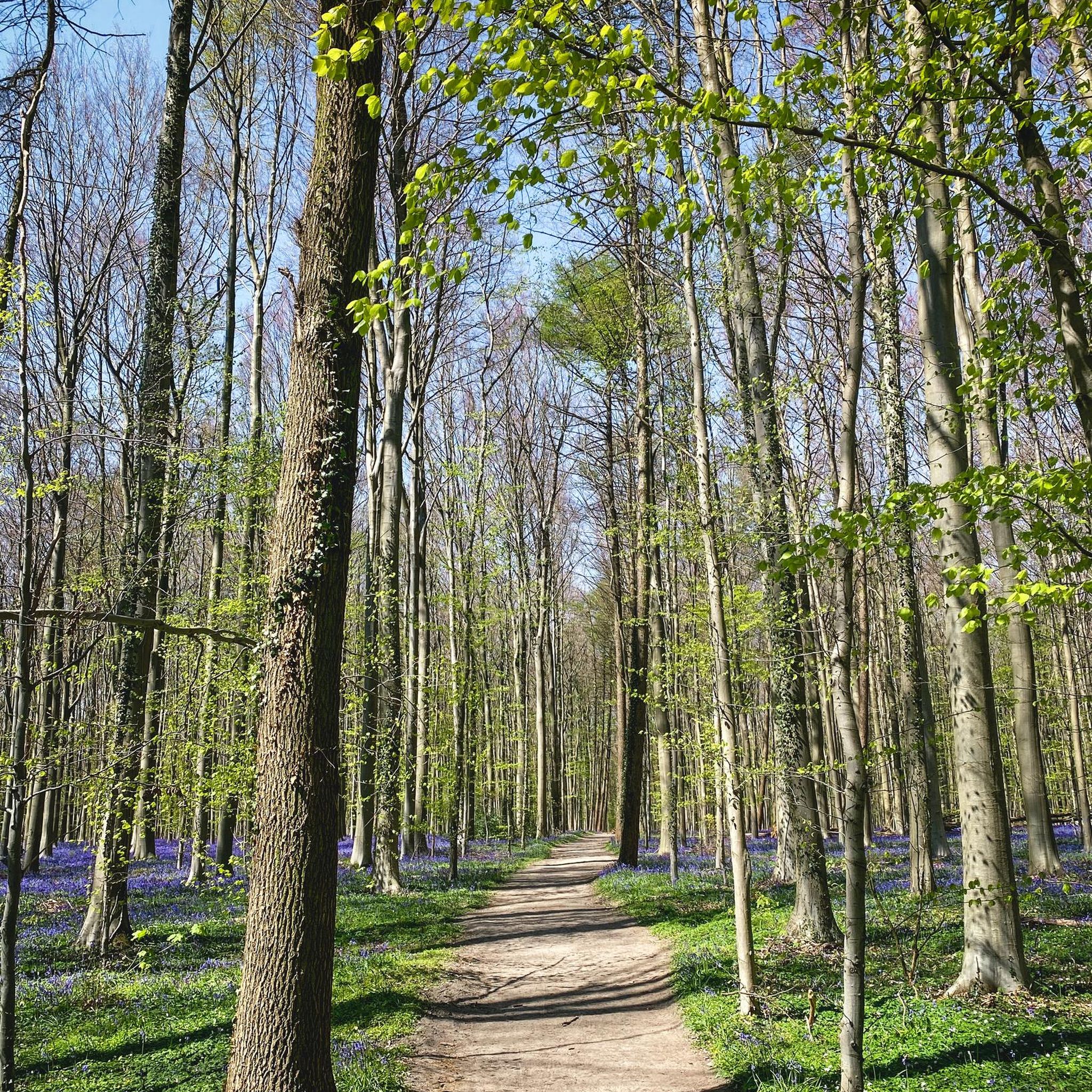
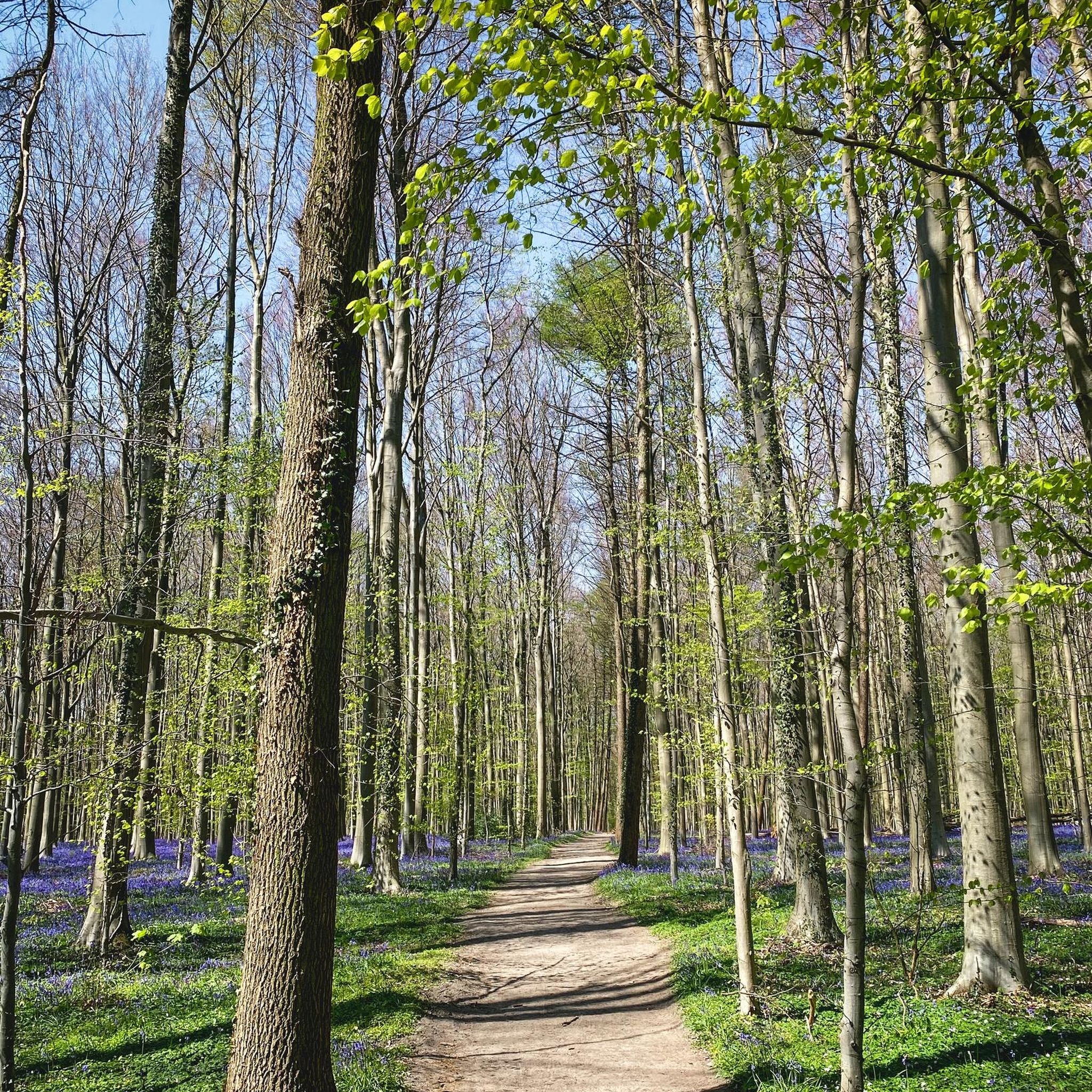
Beautiful forest outside busy Brussels. End of April the forest get's a natural carpet colouring practically the whole forst in a blue/purple color. Magic! Make sure to walk a bit further then the classic entrance to enjoy the peaceful nature.
3
0

The ‘Hallerbos’, also known as the blue forest, is one of the 3 extensive forest areas in the Brussels capital area. It is an ancient forest with a mix of young and older trees. The giant Sequoia trees are pretty impressive as well as the beautiful purple carpet of bluebells, which bloom around mid-April. Crossing the forests on a mix of gravel and singletrack dirt roads make up for a visit well worth it!
0
0

Magnificent walk in the Bois de Hal, a veritable carpet of flowers, endless hyacinths, it's splendid.
2
0

Well worth it, during the flowering of the wild bluebells
3
0

The Hallerbos is part of the Flemish Ecological Network, has been a Flemish nature reserve since 2021 and is European protected as a 'Natura 2000 area'. The hilly Hallerbos is a crowd favorite thanks to a beautiful purple carpet of wild hyacinths and white wood anemones, which bloom around mid-April. This creates enchanting and magical images every year. Photographers and nature lovers from far beyond our national borders come to visit this special forest. Forests with so many bluebells are unique in the world.
3
0
This area is located along the Alsembergsesteenweg in Dworp in the Molenbeek valley and is not to be confused with the Steenputbeek reserve that is located on the Steenputbeek. Description of the area Consists of 2 groves. In one of them, the rocks of the Cambrium, some 550 million years old, that were previously mined, emerge. Cobblestones from the Steenput decorate the courtyard of the Brussels city hall. The other grove is much wetter and contains a varied flora of giant horsetail, one berry and wrangroot. Animals and plants The Wrangroot is related to the Christmas rose, has beautiful green flowers and blooms at the end of January. In the 17th century, it was used by farmers against the cow disease "Wrang". The groves are stepping stones between the Hallerbos, Zevenbronnen and the higher plateau forests Begijnenbos and Grootbos.
3
0
We start this walk at the vast Molenvijver and on the right we see the beautifully restored old mill house and mill shed. The old water mill has unfortunately disappeared. The Zevenbronn nature reserve owes its name to the string of picturesque ponds and sources in the small valley on the border of 3 municipalities (Sint-Genesius-Rode, Dwerp & Braine-l'Alleud), the Flemish and Walloon Regions and the language border. The ponds and springs once belonged to the priory of the canons of St. Augustine, whose construction started at the end of 1300, then still located in the Sonian Forest. The ponds were protected as landscape in 1947 and are now the property of the Flemish Community. We walk down a narrow path along the seven-spring stream for a while and see the slopes of the valley on the left and right. If we go up the slope to the left further on, we get to see a wonderful panorama. Fields, forests and sunken roads alternate. A wider path takes us to another pond. And another slope at yet another stream and along a footpath back to the large Molenvijver. In the spring it can be swampy so sturdy, suitable walking shoes are necessary.
3
1
Frequently Asked Questions
When is the best time to visit Hallerbos to see the bluebells?
The Hallerbos, famously known as the 'Blue Forest', is best visited in spring to witness its spectacular purple carpet of wild bluebells. This usually occurs around mid-April, often 7 to 10 days after the beech leaves emerge, and lasts until the end of April. The exact timing can vary slightly each year.
Are there family-friendly natural monuments in the Hallerbos - Lembeekbos - Maasdalbos region?
Yes, several natural monuments in the region are considered family-friendly. The Hallerbos — The Bluebell Forest and Hallerbos itself are popular choices, offering well-maintained paths suitable for families. The Steenputbeek Valley also features beautiful hiking trails and a very nice playground for children, making it a great option for families.
What kind of wildlife and flora can I expect to see in Lembeekbos?
The Lembeekbos is a protected Natura 2000 area, indicating its ecological importance. As part of the larger forest complex, it contributes to the region's biodiversity. While specific flora and fauna details for Lembeekbos are not extensively listed, it's known to support a variety of species typical of ancient woodlands and protected nature reserves in the region, including various birds and insects. Its protected status ensures a tranquil environment for nature appreciation.
What are the main natural features of Maasdalbos?
The Maasdalbos is characterized by its unique riparian ecosystems. The Maasdalbeek stream originates within the forest, and local spring water creates conditions for special plants like the marsh marigold. The area also features many thickets, which are crucial habitats for species such as the brown hairstreak butterfly, which thrives in blackthorn thickets. Active conservation efforts are in place to restore old natural vegetation and promote biodiversity.
Are there specific walking routes in Hallerbos suitable for different abilities?
Yes, Hallerbos offers several signposted walking routes. The 4 km Sequoia Walk allows you to see the impressive giant redwood trees. The 7 km Roebuck Walk (Reebokwandeling) traverses different woodland types and offers impressive views of the bluebell carpets. For those with limited mobility, the 4 km Plateau Walk is accessible. You can find more hiking options in the region, including easy routes like the 'Reebok hike' and 'Hyacinth walk', on the Hiking in Hallerbos - Lembeekbos - Maasdalbos guide.
What makes the Steenputbeek Valley a notable natural monument?
The Steenputbeek Valley is notable for its varied flora, historical significance, and unique geological formations. It's part of the De Weikes area managed by Natuurpunt. Historically, Hendrik Conscience enjoyed this area on his hikes. It features two groves, one where 550-million-year-old Cambrium rocks emerge, and another wetter grove with varied flora including giant horsetail and wrangroot. It also serves as a stepping stone for wildlife between larger forest areas.
Can I find giant sequoias in the Hallerbos region?
Yes, the Hallerbos is home to impressive giant redwood trees, also known as giant sequoias. These can be seen along specific routes within the forest, such as the Sequoia Walk. They add another layer of natural wonder to the ancient woodland, complementing the famous bluebell display.
What kind of outdoor activities can I do near these natural monuments?
The region offers a variety of outdoor activities, primarily hiking and running. You can explore numerous trails ranging from easy to difficult. For hiking, consider routes like the 'Reebok hike' or 'Hyacinth walk' in Hallerbos. For running, there are trails such as 'Among the Beeches' or routes around Sept Fontaines Lake. More details on these activities can be found in the Hiking in Hallerbos - Lembeekbos - Maasdalbos and Running Trails in Hallerbos - Lembeekbos - Maasdalbos guides.
What is the historical significance of the Lembeekbos?
The Lembeekbos holds historical significance as it once formed a single contiguous forest with the Hallerbos and the larger Sonian Forest. This connection highlights its role in the ancient woodland landscape of the region. Today, it continues to be a protected natural area, contributing to the ecological network and preserving a piece of this historical forest heritage.
What do visitors enjoy most about the Hallerbos — The Bluebell Forest?
Visitors consistently rave about the magical appearance of Hallerbos — The Bluebell Forest, especially during the bluebell bloom. The beautiful purple carpet of wild hyacinths and white wood anemones creates enchanting images that attract photographers and nature lovers from far and wide. Its status as a European protected 'Natura 2000 area' and part of the Flemish Ecological Network also adds to its appeal as a significant natural wonder.
Are there any specific plants to look out for in Maasdalbos besides marsh marigolds?
Beyond the striking marsh marigolds, the Maasdalbos is home to other unique flora due to its specific hydrological conditions. You might find small springwort, thick-grained moss, blue tuberous curtain mushroom, blue-spotted knight's mushroom, and wild hyacinth. The presence of blackthorn thickets also supports specific species like the brown hairstreak butterfly.
What is the conservation status of these natural monuments?
The natural monuments in this region benefit from significant conservation efforts. The Hallerbos is a Flemish nature reserve and a European protected 'Natura 2000 area'. The Lembeekbos is also part of the Natura 2000 network. The Maasdalbos has been a protected landscape since 1983 and a nature reserve since 2009, managed by Natuurpunt Halle, with ongoing plans to remove invasive species and restore natural vegetation.
Most popular routes in Hallerbos - Lembeekbos - Maasdalbos
Most popular attractions in Hallerbos - Lembeekbos - Maasdalbos

Get inspired with the komoot mobile app


Explore more
Extend your search for the best caves by checking out these guides of the top ones in Hallerbos - Lembeekbos - Maasdalbos:
