Top 10 Natural Monuments around Royal Burgh Of Arbroath
Best natural monuments around Royal Burgh Of Arbroath are primarily found along its dramatic North Sea coastline, particularly the Seaton Cliffs. These cliffs, stretching for approximately 5 kilometers, are composed of red sandstone and conglomerates formed millions of years ago. Wind and sea erosion have sculpted a range of coastal landforms, including sea stacks, arches, and caves. This area offers a unique opportunity to observe ancient geological formations and diverse coastal features.
Best natural monuments around Royal Burgh Of Arbroath
…Last updated: May 19, 2026
Light Cave
Highlight • Cave
Tip by

The Needle's Eye Sea Arch
Highlight • Viewpoint
Tip by

Sign up now to discover places like this
Get recommendations on the best single tracks, peaks, & plenty of other exciting outdoor places.
Sign up for free
Arbroath Red Sandstone Cliffs
Highlight (Segment) • Natural Monument
Tip by
Deil's Heid Cave
Highlight • Cave
Tip by
The Dunnichen Stone and Battle of Nechtansmere Memorial
Highlight • Historical Site
Tip by

Sign up for free to discover even more natural monuments around Royal Burgh Of Arbroath.
Sign up for free
Already have an account?
Start today with a free account
Your next adventure awaits.
Login or Signup
Popular around Royal Burgh Of Arbroath
The Central Belter — Gravel trails of the coast and Cairngorms
A fantastic journey along Britain’s entire East Coast – NCN 1
Hiking around Royal Burgh Of Arbroath
Road Cycling Routes around Royal Burgh Of Arbroath
Cycling around Royal Burgh Of Arbroath
Running Trails around Royal Burgh Of Arbroath
MTB Trails around Royal Burgh Of Arbroath


Tips from the Community

An impressive rock arch which can be easily reached on foot.
0
0

One of the caves marked on the Arbroath Cliff Trail, Light cave is easy to access along the rocks at low tide. You can walk through to the other side to another beach, and return either the same way or via Dark Cave, just further up the beach. You won't need a head torch for this one but watch your head!
0
0

The Light Cave is located just right of the Dark Cave. It also takes you to the beach „on the other side“. It is not accessible if the tide is high.
1
0

This stone, along with the nearby Aberlemno stones is thought to have been carved to depict the battle of Battle of Dun Nechtain. This happened around AD 680 and commemorated a decisive victory of the Picts over the Northumbrians. There is debate over where the battle actually took place, it was thought to be here, but evidence suggests that it may have actually been further north. Today you can visit this standing stone and create a loop to also visit Aberlemno. It's a nice ride from Forfar.
0
0
One of the best caves along the Arbroath sea cliffs. In here is the Deil's chair, a rock formation shaped similar to a chair or plinth. Graffiti has marked a rather creepy face on it. Further in a torch is needed to navigate the narrow passage to the other side. Here you reach another beach. You can return the same way, or closer to the sea you can find light cave and return to the other side through it.
0
0
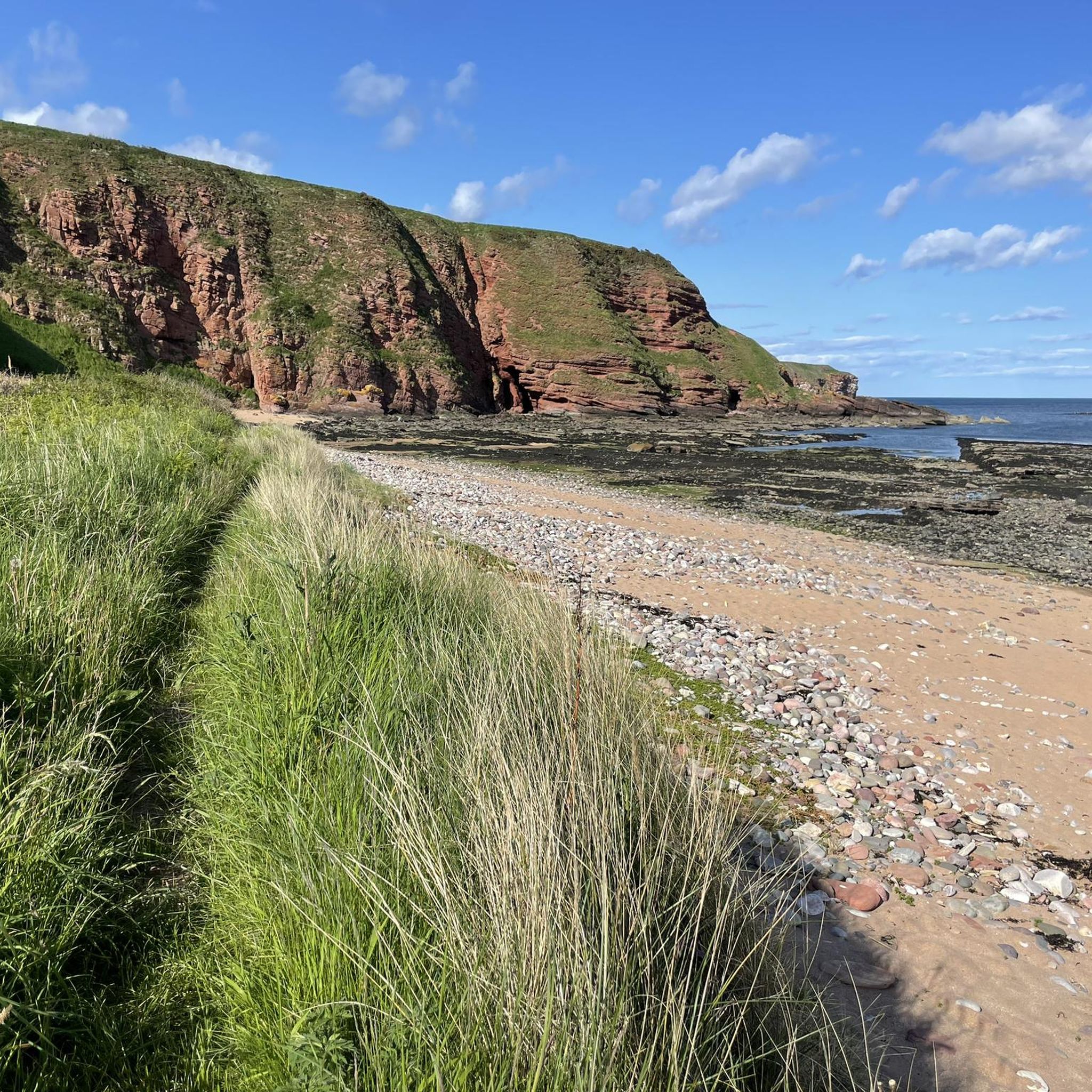
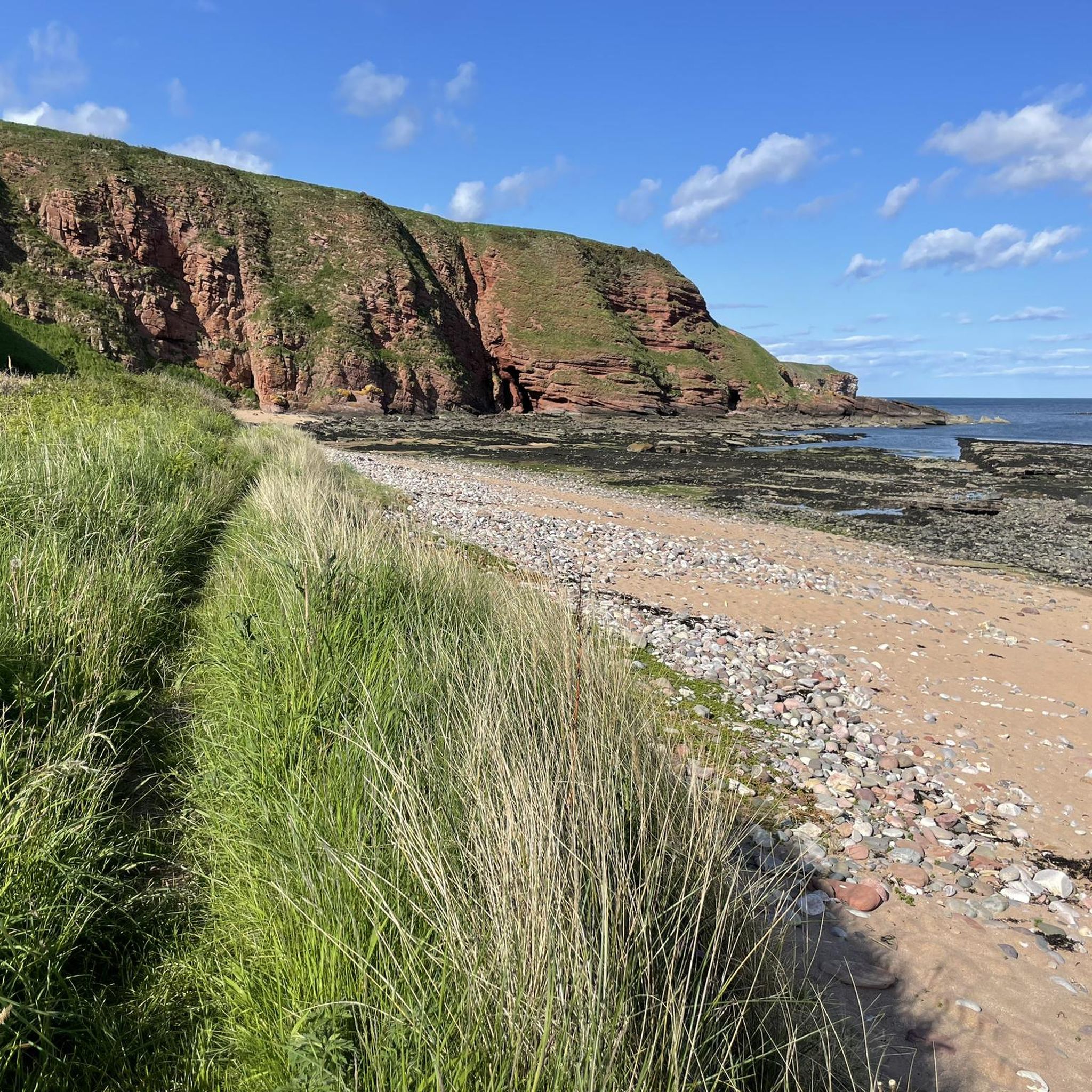
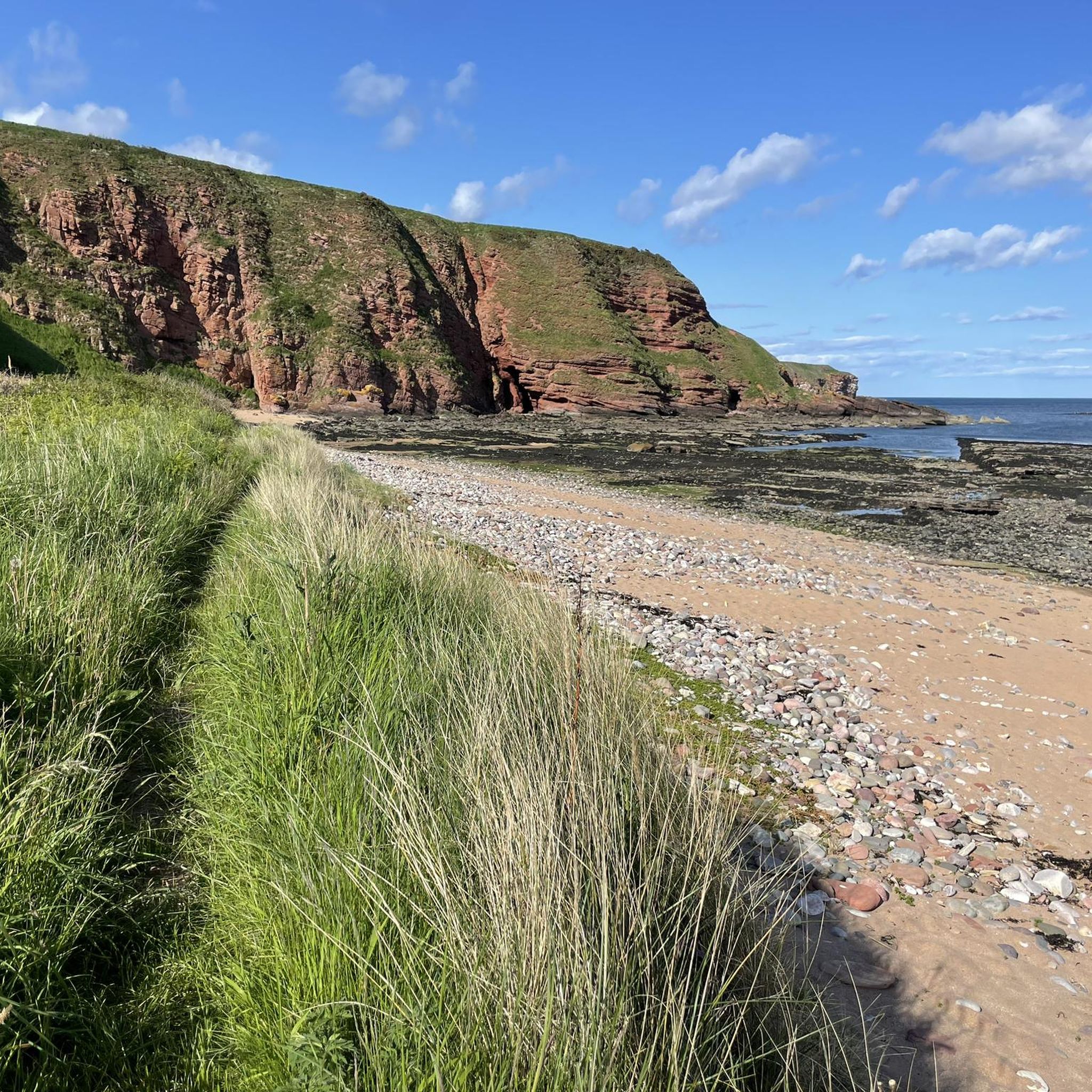
The red sandstone cliffs along from Arbroath make an interesting costal walk. The path is tarmac, and easy to follow, though there are still a couple of narrow sections to be careful at. Lots of wildlife to see, as well as caves and other geological formations.
0
0
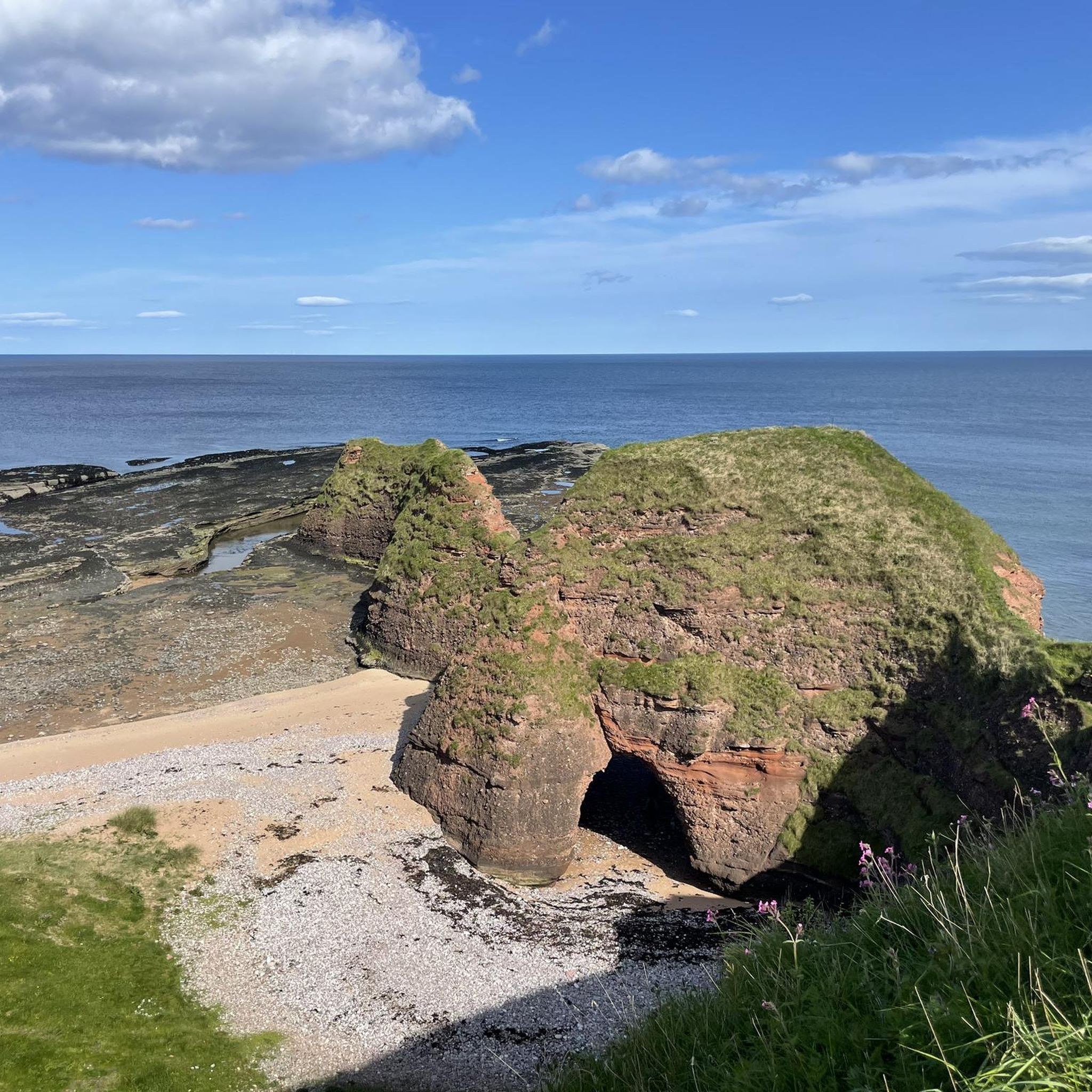
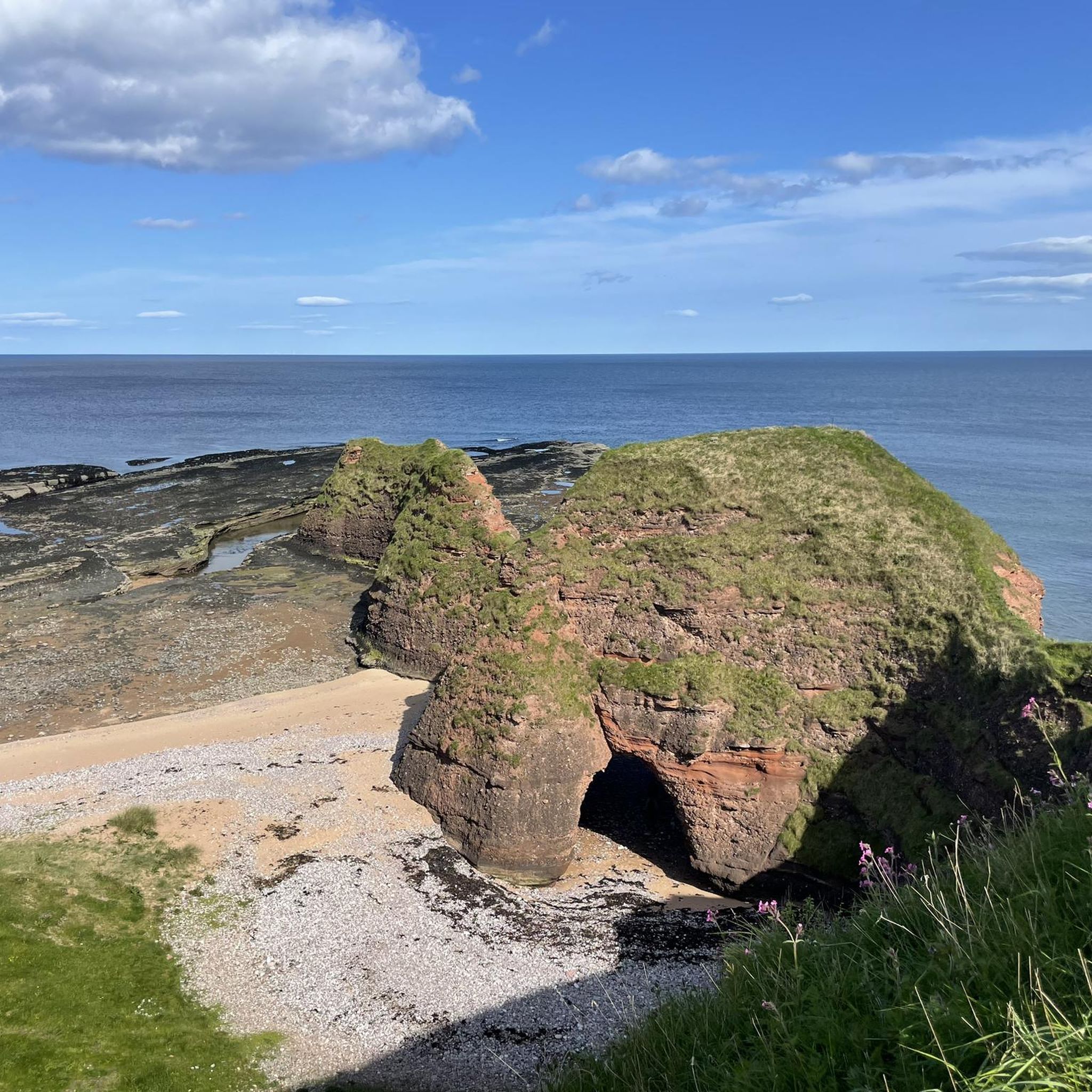
The Needle's Eye is an impressive sea arch, once the entrance to a cave before its collapse. Historically the sea level was much higher here and the cave would have looked out onto a beach.
1
1

Comes upon you quite suddenly, it’s right in the centre of a small traffic island in front of the church.
0
0
Frequently Asked Questions
What unique geological features can I see along the Arbroath coastline?
The Arbroath coastline, particularly the Seaton Cliffs, showcases dramatic red sandstone and conglomerate formations dating back 370 to 410 million years. You can observe fascinating coastal landforms such as sea stacks like The Deil's Heid Sea Stack, natural arches like The Needle's Eye Sea Arch, and various sea caves, all sculpted by millions of years of erosion.
Which natural monuments are a must-see for first-time visitors?
For first-time visitors, key natural monuments to explore include The Needle's Eye Sea Arch, a remarkable rock arch, and The Deil's Heid Sea Stack, a prominent sea stack. The general Arbroath Red Sandstone Cliffs also offer stunning views and geological interest.
Can I see wildlife at the natural monuments?
Yes, the cliffs and surrounding areas are a natural habitat for various seabirds, including puffins, guillemots, and kittiwakes. Dolphins can also occasionally be spotted in the sea, making it a great spot for wildlife observation.
Are there walking trails to explore the natural monuments?
Absolutely. A signposted trail runs along the top of the Seaton Cliffs, offering continuous stunning views. This coastal path also connects to the Arbroath to Auchmithie Geodiversity Trail, allowing you to observe how the coastline has been shaped by natural forces. For specific hiking routes, you can explore options like the Hiking around Royal Burgh Of Arbroath guide.
Are the natural monuments suitable for families?
Many parts of the Seaton Cliffs trail are suitable for families, offering easy walks with impressive views. The geological features and wildlife spotting opportunities can be engaging for children. For easier options, check the Easy hikes around Royal Burgh Of Arbroath guide.
Are the natural monuments dog-friendly?
Yes, the coastal paths along the Seaton Cliffs are generally dog-friendly. It's always recommended to keep dogs on a lead, especially near cliff edges and when wildlife is present, to ensure their safety and protect the local fauna.
What is the best time of year to visit the natural monuments?
The natural monuments can be visited year-round. Spring and summer offer the best chances for seabird observation and generally milder weather for walking. Autumn provides dramatic coastal scenery, while winter walks can be invigorating, though conditions may be more challenging.
Is there parking available near the Seaton Cliffs?
Parking is available at various points along the Arbroath coastline, including designated car parks near the start of the Seaton Cliffs walking trails. Specific parking details can often be found on local council websites or tourist information.
Are there more challenging hiking options along the cliffs?
While many sections are accessible, the full Arbroath to Auchmithie Coastal Path can be a moderate hike, offering a longer and more immersive experience of the dramatic coastline. Kayaking tours also provide a unique and adventurous way to explore the sea caves and rock formations from the water.
What other outdoor activities can I do near these natural monuments?
Beyond hiking, the area offers opportunities for gravel biking, with routes like those found in the Gravel biking around Royal Burgh Of Arbroath guide. The coastline is also popular for photography and exploring the geological formations.
Are there any historical sites near the natural monuments?
While the focus is on natural monuments, the region has historical significance. For example, The Dunnichen Stone and Battle of Nechtansmere Memorial, though not a natural monument itself, is a significant historical site nearby, commemorating a decisive Pictish victory.
What is Dickmont's Den?
Dickmont's Den is a large and distinctive 'geo,' which is a collapsed sea cave. It dramatically showcases coastal erosion, with its walls displaying both Lower Devonian bedded sandstones and Upper Devonian conglomerates, offering a visible 'time gap' in the geological record.
Most popular routes around Royal Burgh Of Arbroath
Most popular attractions around Royal Burgh Of Arbroath

Get inspired with the komoot mobile app


Explore more
Extend your search for the best caves by checking out these guides of the top ones around Royal Burgh Of Arbroath:
