Top 4 Natural Monuments around Sucha Beskidzka
Best natural monuments around Sucha Beskidzka are found within the Beskid Mountains of southern Poland, offering a diverse natural landscape. This region features a variety of natural attractions, including ancient trees, unique geological formations, and significant mountain peaks. These sites highlight the area's natural beauty and often hold ecological, scientific, or aesthetic value. Exploring these natural monuments provides opportunities to connect with the natural heritage of the Sucha Beskidzka area.
Best natural monuments around Sucha Beskidzka
- The most popular natural…
Last updated: June 1, 2026
John Paul II's Groń
Highlight • Summit
Translated by Google •
Tip by

Łamana Skała (929 m)
Highlight • Summit
Translated by Google •
Tip by

Sign up now to discover places like this
Get recommendations on the best single tracks, peaks, & plenty of other exciting outdoor places.
Sign up for free
Polica Summit and 1969 Plane Crash Memorial
Highlight • Summit
Translated by Google •
Tip by

Leskowiec Peak
Highlight • Summit
Translated by Google •
Tip by

Roztoki Waterfall
Highlight • Waterfall
Translated by Google •
Tip by

Start today with a free account
Your next adventure awaits.
Login or Signup

Tips from the Community

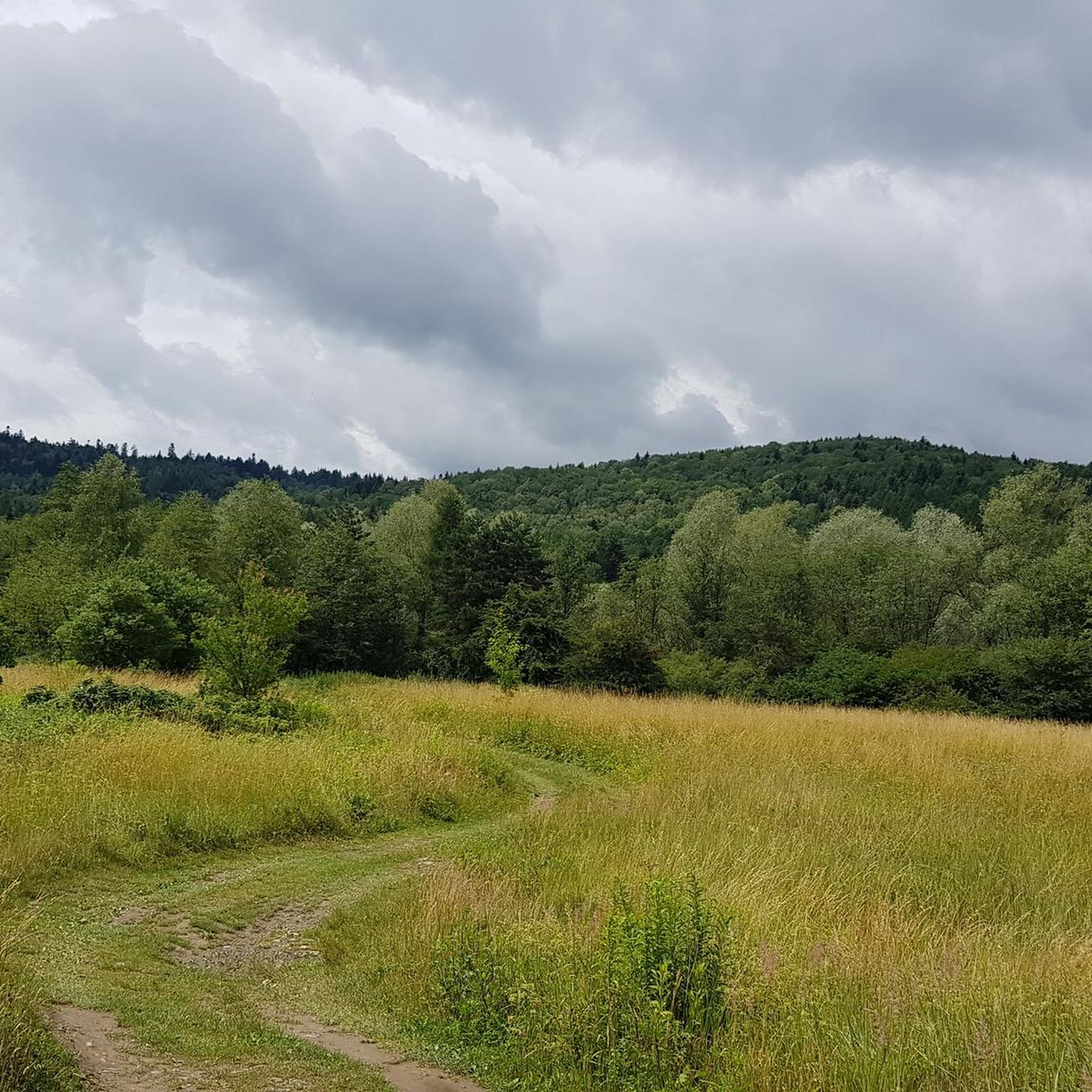
Łamana Skała, also known as Madohora, is the highest peak of the Zasolskie Mountains and the second (after Czupel 933 m above sea level) peak of the entire Beskid Mały. Despite its height, it is not a tourist destination due to the lack of viewing points. The name Łamana Skała, used already in the Middle Ages, fully reflects the character of the mountain. On the summit, covered with abundant trees, there are rock outcrops made of sandstone and conglomerates, reaching a height of several meters. You can often meet rock climbers here.
2
0

A very nice, not demanding route on the Little Beskid Trail
0
0

There are two ways to get to the waterfall. one of them is from the asphalt along a gravel road where gravel and MTB can handle it, or don't go down to the gravel and continue up the asphalt road and on a sharp curve you'll find a bench and a bridge to get to the waterfall. The road will handle it there without any problems. After this climb, it's very nice to cool your feet in a cold stream :) right next to the waterfall you will find benches to rest and admire the beautiful surrounding views. For those who are thirsty, on the way to the waterfall there are two grocery stores where you can replenish your supplies. I recommend :)
1
0

A unique place where you can rest both physically and spiritually.
0
0
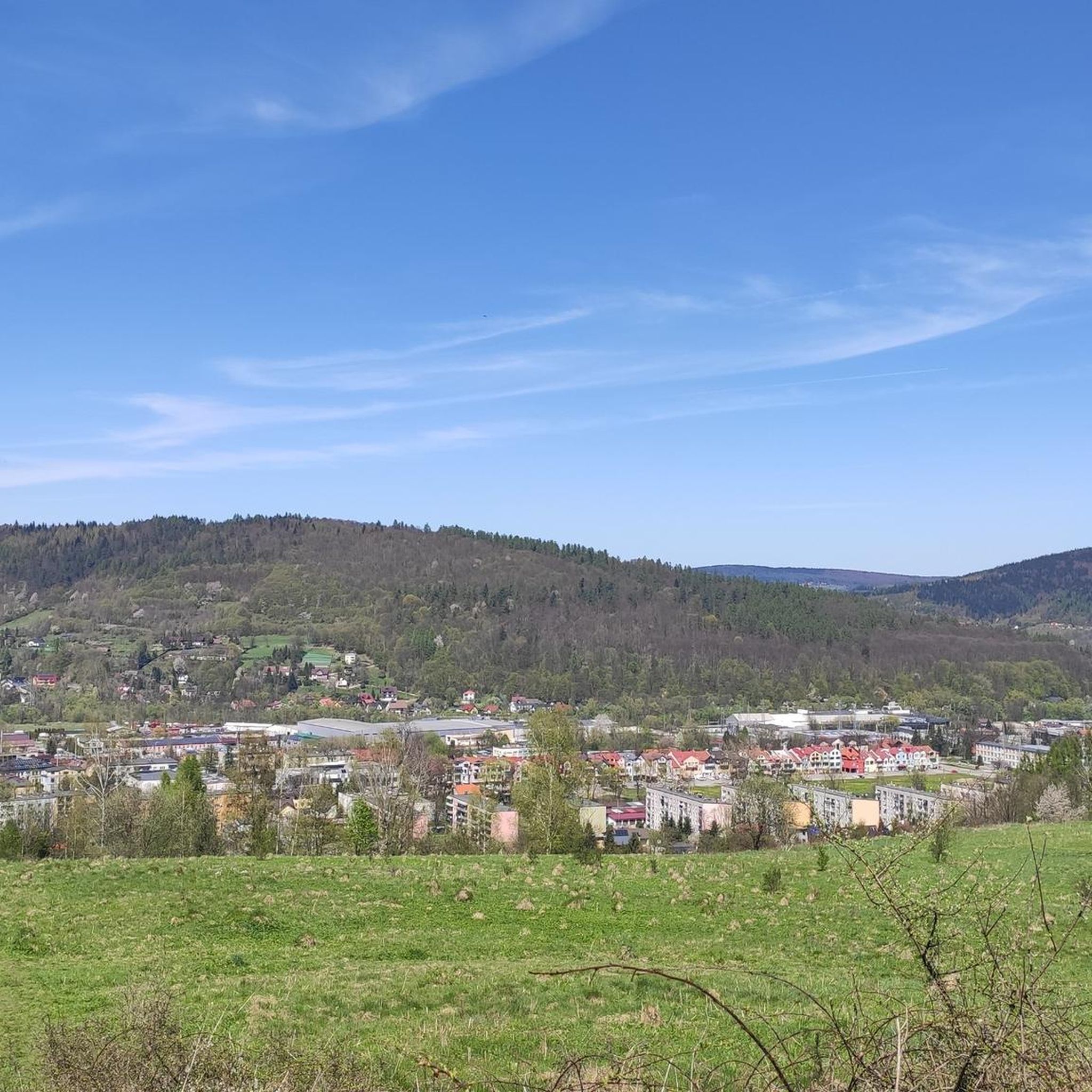
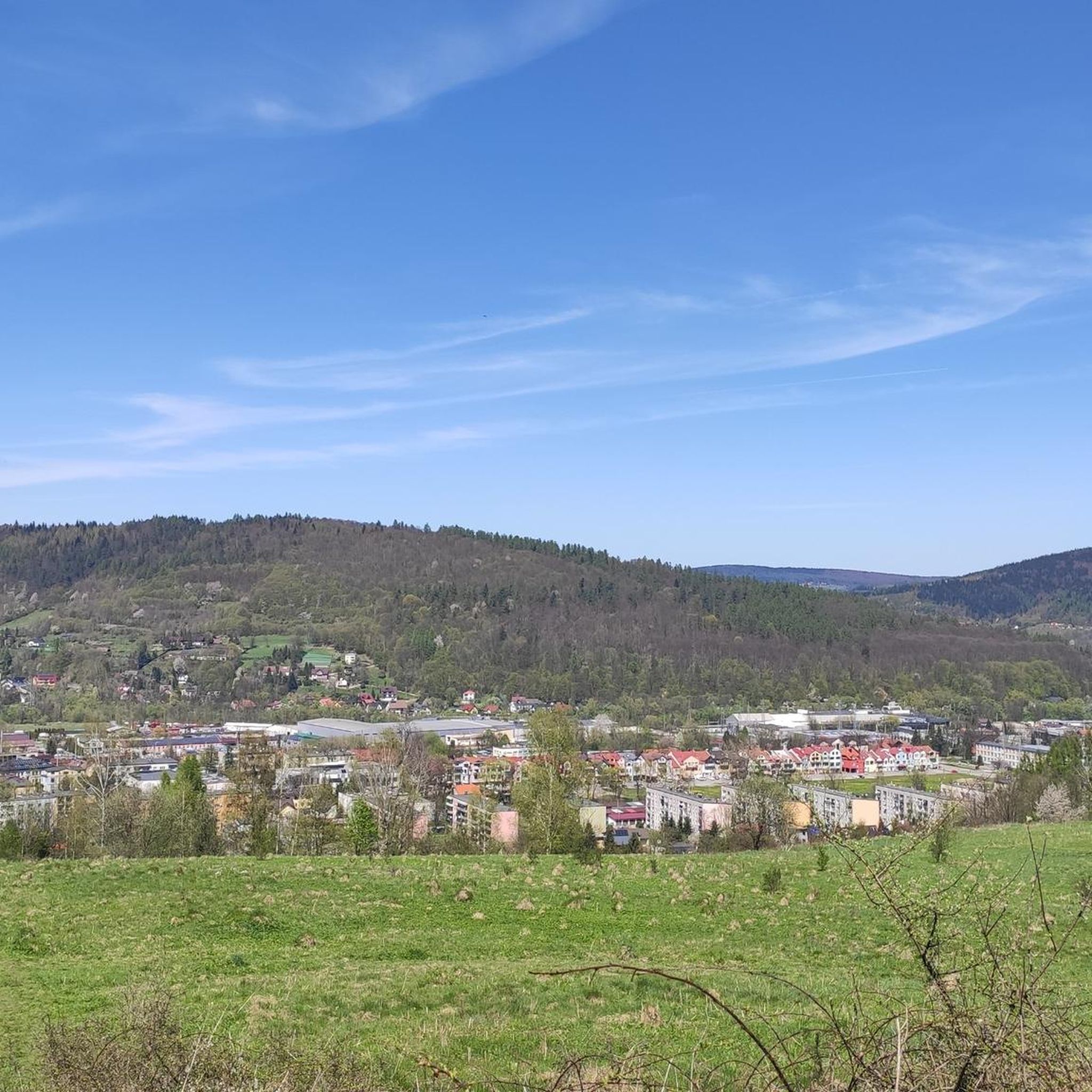
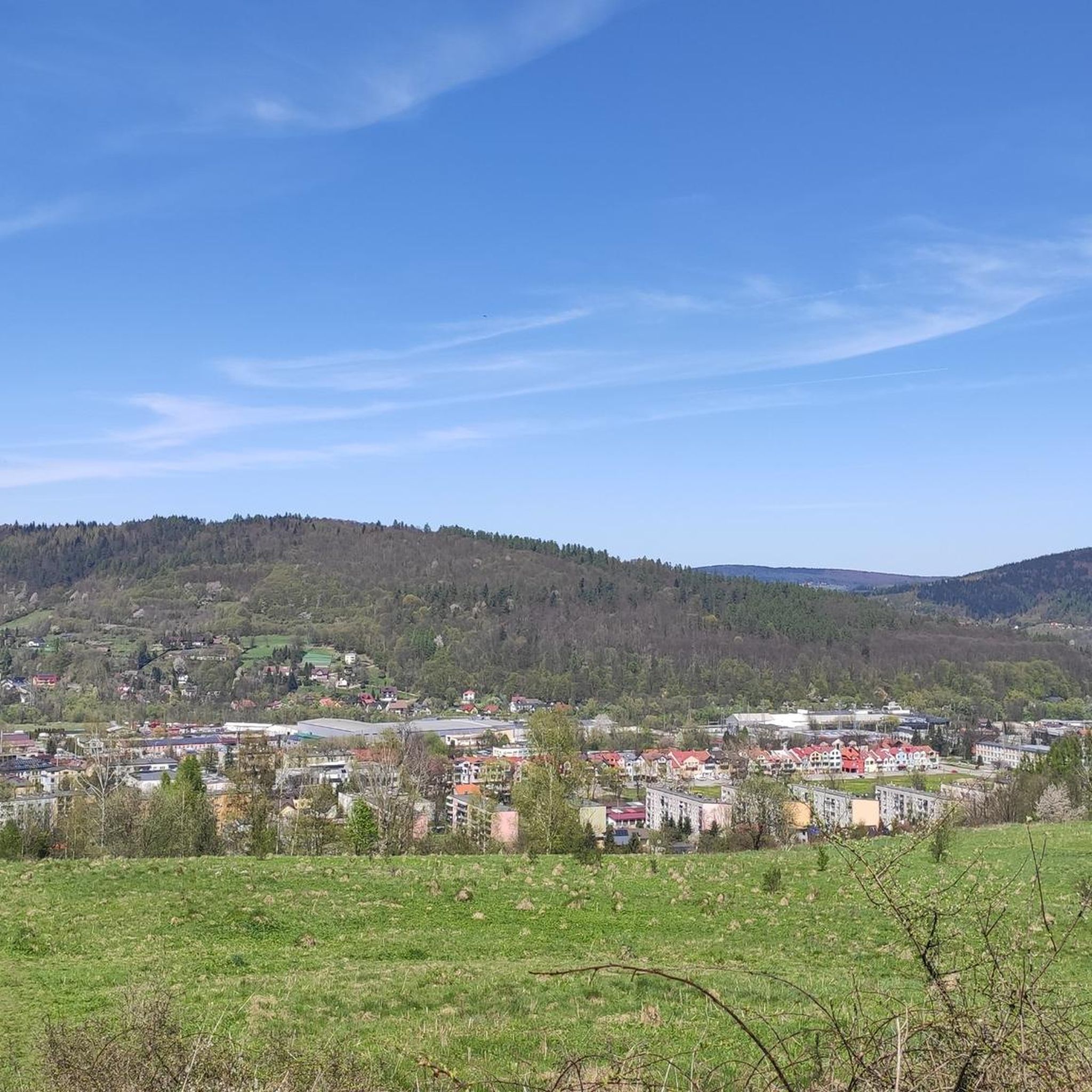
The summit on the route of the Little Beskidy Trail - the red trail, in the vicinity there is a shelter and a mountain of John Paul II (a unique place).
1
0
The summit is located next to the red MSB trail. The plate is on the trail.
0
0

It is located in the main ridge of the Little Beskids between the nearby Leskowiec (922 m above sea level), from which it is separated by the shallow Midowicz Pass, and the more distant Magurka Ponikiewska (817 m above sea level). Two side ridges extend from it. In the north-west direction, the ridge goes to Gancarz and further, in the south-east, initially a small ridge just below the summit, transforming below into a ridge with the peaks of Jaworzyna (662 m above sea level) and Harańczykowa Góra (624 m above sea level). From the valleys between these ridges, the source streams of the Rzyczanka, Ponikiewka, Tarnawka and Targoszówka streams flow. There are two clearings on the top of Groń Jana Pawła II; in the north it is Polana Beskid, in the south it is Polana Bargłowa (there is a tourist shelter on it). Initially, this peak was called Jaworzyna. During his childhood and adolescence, John Paul II reached the summit many times - later also as a bishop. In summer he covered the trail on foot, in winter he went skiing here. The last time he climbed Leskowiec and Jaworzyna as a cardinal was in 1970, after a mass celebrated on the occasion of the 25th anniversary of his priesthood in Kalwaria Zebrzydowska. In 1995, at the initiative of PTTK activist Stefan Jakubowski from Andrychów, a chapel was erected under the summit (in Polana Bargłowa), and a steel cross from 1991, dedicated to "people of the mountains". https://pl.wikipedia.org/wiki/Gro%C5%84_Jana_Paw%C5%82a_II https://www.youtube.com/watch?v=SgwDBYsouKs
1
1

The summit in the Policy Range (1369 m). Beautiful views of the Tatra Mountains and Babia Góra. Near the top, there is a monument commemorating the 1969 plane crash.
0
0
Frequently Asked Questions
What types of natural monuments can I explore around Sucha Beskidzka?
The Sucha Beskidzka area, nestled in the Beskid Mountains, offers a diverse range of natural monuments. You can find ancient trees, such as an over 300-year-old mountain elm on Mickiewicza Street, and unique geological formations like the flysch rock formation in Mucharz. The region also features significant mountain peaks, including John Paul II's Groń and Polica Summit.
Are there any natural monuments with historical or cultural significance?
Yes, several natural monuments in the region hold historical or cultural importance. John Paul II's Groń is a notable example, celebrated for offering a space for both physical and spiritual rejuvenation, featuring a chapel and a steel cross dedicated to 'people of the mountains'. The over 300-year-old mountain elm in Sucha Beskidzka also has a long history, designated a natural monument in 1963 and preserved through significant local efforts.
What are some of the best viewpoints among the natural monuments?
Many natural monuments around Sucha Beskidzka offer stunning panoramic views. Polica Summit provides beautiful vistas of the Tatra Mountains and Babia Góra. John Paul II's Groń is also known for its serene atmosphere and panoramic views. Additionally, Leskowiec Peak, on the Little Beskidy Trail, offers great viewpoints.
Are there family-friendly natural monuments or activities in the area?
While specific 'family-friendly' designations aren't always available for natural monuments, many of the sites, especially those with easier access or shorter trails, can be enjoyed by families. Exploring the ancient trees or the Roztoki Waterfall can be pleasant experiences for all ages. For easy hikes, consider routes from the Easy hikes around Sucha Beskidzka guide, which includes options like the 'Mini Zoo With Deer loop'.
What outdoor activities can I do near these natural monuments?
The region around Sucha Beskidzka offers a variety of outdoor activities. You can enjoy hiking on trails that lead to many of the natural monuments, with options ranging from easy to more challenging. For cycling enthusiasts, there are gravel biking and road cycling routes available. Explore guides like Easy hikes around Sucha Beskidzka, Gravel biking around Sucha Beskidzka, and Road Cycling Routes around Sucha Beskidzka for detailed route information.
Are there specific hiking trails that pass by natural monuments?
Yes, several hiking trails will take you past or directly to natural monuments. For instance, Leskowiec Peak is located on the route of the Little Beskidy Trail (red trail). The Łamana Skała (929 m) summit is also situated next to the red MSB trail. You can find more hiking options in the Easy hikes around Sucha Beskidzka guide.
What is the best time of year to visit the natural monuments?
The natural monuments around Sucha Beskidzka can be visited throughout the year, each season offering a different experience. Spring and autumn provide pleasant temperatures for hiking and vibrant foliage. Summer is ideal for longer excursions. Even in winter, some areas like John Paul II's Groń were historically used for skiing, suggesting that winter hikes can also be undertaken, though proper gear is essential.
How long should I plan for a visit to the natural monuments?
The duration of your visit depends on which natural monuments you choose to explore and what activities you plan. A visit to a single ancient tree or rock formation might take less than an hour, while hiking to a summit like Polica Summit or John Paul II's Groń could take several hours or even a full day, especially if combined with other trails.
Are there any unique trees or geological formations to see?
Yes, the region is home to several unique natural features. In Sucha Beskidzka itself, you can find an impressive over 300-year-old mountain elm on Mickiewicza Street. The Sucha Forest District also manages other notable trees, including a Weymouth pine in Lachowice and two pedunculate oaks in Mosorne and Wełcza. For geological formations, look for the flysch rock formation in Mucharz and the rock outcrops of sandstone and conglomerates at Łamana Skała.
What do visitors appreciate most about the natural monuments in Sucha Beskidzka?
Visitors frequently appreciate the serene atmosphere and the opportunity for both physical and spiritual rejuvenation, particularly at sites like John Paul II's Groń. The beautiful views from summits like Polica Summit are also highly valued. Many enjoy the chance to connect with the natural heritage and the diverse landscapes, from ancient trees to waterfalls like Roztoki Waterfall.
Can I find waterfalls among the natural monuments?
Yes, the region features natural monuments that include waterfalls. The Roztoki Waterfall is a notable example, offering a refreshing stop amidst the forest. It's a great spot to cool your feet in the cold stream and enjoy the surrounding views.
Most popular routes around Sucha Beskidzka
Most popular attractions around Sucha Beskidzka

Get inspired with the komoot mobile app


Explore more
Extend your search for the best caves by checking out these guides of the top ones around Sucha Beskidzka:
