Mesa Verde National Park
Mesa Verde National Park
Top 13 Natural Monuments in Mesa Verde National Park
Best natural monuments in Mesa Verde National Park are integral to its unique landscape and cultural heritage. The park is situated on a large cuesta, characterized by dramatic canyons and smaller mesas formed by millions of years of erosion. These geological features, including numerous alcoves and distinct sedimentary rock layers, provided the setting for the Ancestral Puebloan cliff dwellings. The natural landscape played a crucial role in shaping the ancient civilization that thrived here.
Best natural monuments in Mesa Verde…
Last updated: October 11, 2026
Petroglyph Panel
Highlight • Historical Site
Tip by

Mesa Verde National Park
Highlight • Historical Site
Tip by

Sign up now to discover places like this
Get recommendations on the best single tracks, peaks, & plenty of other exciting outdoor places.
Cliff Palace View & Loop Trail
Highlight • Historical Site
Tip by
Point Lookout
Highlight • Viewpoint
Tip by

Rock Formations by the Trail
Highlight • Natural Monument
Translated by Google •
Tip by

Sign up for free to discover even more natural monuments in Mesa Verde National Park.
Already have an account?
Start today with a free account
Your next adventure awaits.
Popular around Mesa Verde National Park

Other adventures in Mesa Verde National Park

Tips from the Community

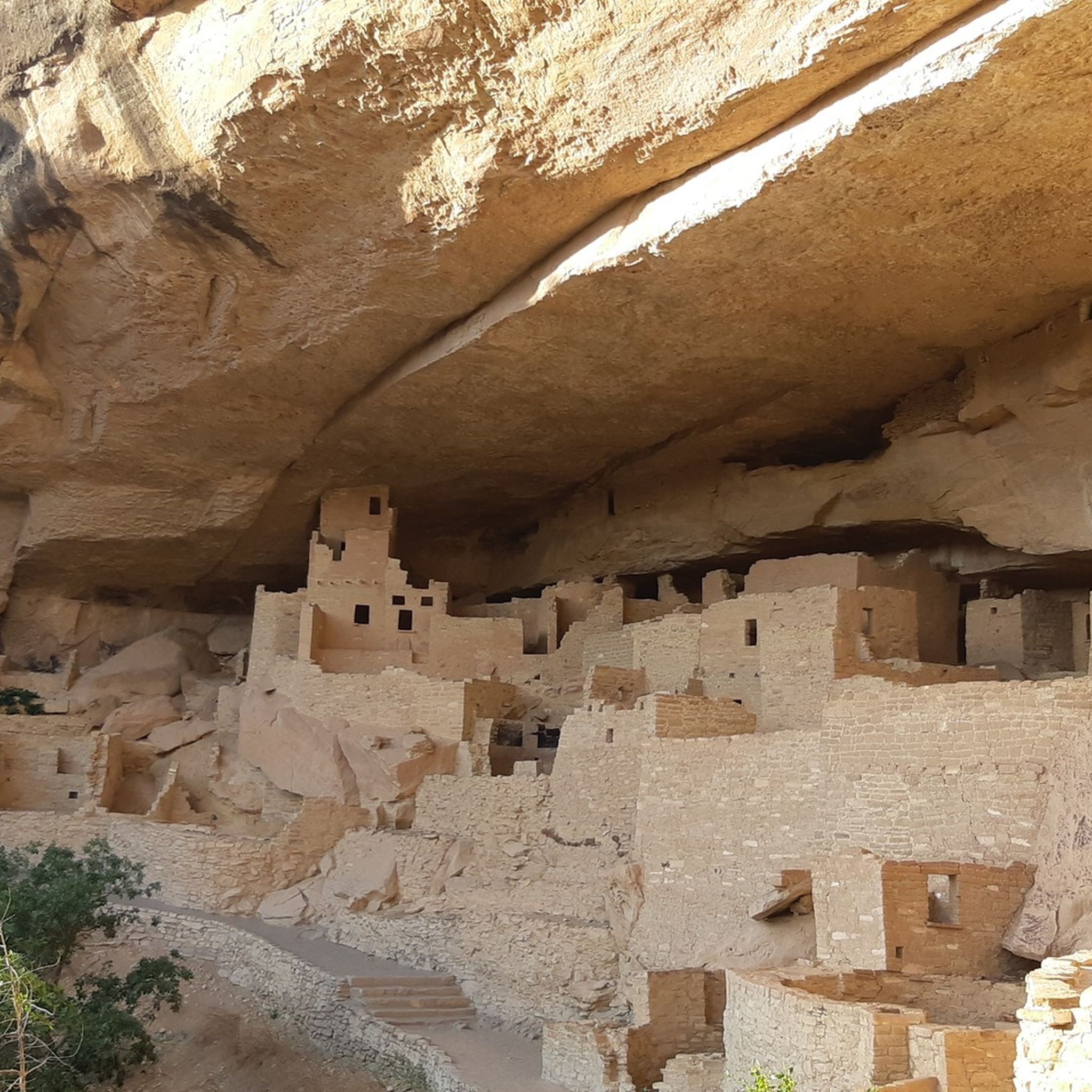
The Cliff Palace in Mesa Verde National Park, Colorado, is the largest and most famous cliff dwelling in North America and an architectural masterpiece of the Ancestral Pueblo people. It was built between 1190 and 1280 in a rock niche in the canyon wall from sandstone blocks, mortar, and wooden beams. The settlement housed approximately 100 people and served as a social and ceremonial center. The site can only be visited as part of a ranger-led tour, which involves descending uneven steps and several ladders.
0
0
The Point Lookout Trail in Mesa Verde National Park is a popular hike that leads to a prominent overlook above the park entrance. From the summit, hikers are rewarded with sweeping panoramic views, including: - The surrounding Mancos and Montezuma Valleys - The San Juan and La Plata Mountains in the distance - A view of the park's historic access road
0
0

The petroglyph panel along the Petroglyph Point Trail in Mesa Verde National Park measures over 35 feet wide and contains more than 30 distinct carvings created by the Ancestral Pueblo people. These petroglyphs include representations of human figures, animals, spirals, handprints, and abstract designs, with the exact meanings of the carvings unknown. Preserving this panel is crucial, as the carvings are fragile and irreplaceable. Visitors are reminded not to touch or deface the petroglyphs to ensure their survival for future generations.
1
0

Magnificent little passage under a rock which we really wonder how it holds up, it seems to defy the laws of gravity!
0
0

On the walls of the canyon you can find loads of Petroglyphs, carved into the rock by the ancient inhabitants of Mesa Verde.
2
0

Point Lookout is a well-known formation that towers above the entrance to Mesa Verde National Park. The moderately challenging Point Lookout Trail takes hikers to the viewpoint, which gives superb views of the San Juan and La Plata Mountains.
1
0

Perfect photo spot for the Cliff Palace from the Cliff Palace Loop. The palace consists of at least 150 rooms and was home for around 100 people. One assumes that Cliff Palace was a social, administrative site with high ceremonial usage. The loop trail brings you to the palace, the Balcony House and other view points for cliff dwellings. It is open from 8 am to sunset.
3
0
Mesa Verde is unlike every other national park in the US. Most of the other parks you enjoy with stunning natural monuments and a scenic backcountry. Mesa Verde was established to protect archeological sites and artifacts like the cliff dwellings from the Ancestral Pueblo people. Visit the Balcony House, the Cliff Palace, the Long House, the Spruce Tree House and the Step House. Mesa Verde has tons of view points and some good hiking trails, so you can easily spend a whole day here.
7
0
Frequently Asked Questions
What are the most significant natural features in Mesa Verde National Park?
Mesa Verde National Park is renowned for its unique geological formations that shaped the Ancestral Puebloan civilization. Key natural features include the park's overall Cuesta Formation, which creates the dramatic canyons and smaller mesas. The numerous alcoves carved into the sandstone cliffs were crucial for the construction of cliff dwellings. You can also observe distinct sedimentary rock layers, such as the Cliff House Sandstone where most dwellings are found, and vital seep springs that provided water for ancient inhabitants.
How did the natural landscape influence the Ancestral Puebloan people?
The natural landscape of Mesa Verde was fundamental to the Ancestral Puebloan way of life. The large alcoves in the cliff faces provided natural shelters where they built their elaborate cliff dwellings like Cliff Palace and Balcony House. Seep springs were a critical water source, influencing settlement locations. The varied rock layers and terrain also provided resources and protection, allowing a thriving civilization to develop within this unique environment.
Are there family-friendly natural monuments or viewpoints in Mesa Verde National Park?
Yes, several natural monuments and viewpoints are suitable for families. The View of Balcony House is a great option, offering a glimpse of the impressive cliff dwelling from a distance, often with telescopes available for closer viewing. Many of the park's scenic overlooks provide easy access to appreciate the Cuesta Formation and canyon views without strenuous hiking.
What kind of geological formations can I see in Mesa Verde National Park?
Mesa Verde National Park showcases a fascinating geological history. You can observe the park's defining Cuesta Formation, characterized by its gentle and steep slopes, which has been extensively eroded into canyons and mesas. The cliffs reveal distinct sedimentary rock layers, including Mancos Shale, Point Lookout Sandstone, Menefee Formation, and Cliff House Sandstone. Additionally, look for natural alcoves, seep springs, and smaller features like desert varnish and concretions on rock faces.
What outdoor activities can I do near the natural monuments in Mesa Verde National Park?
The natural monuments in Mesa Verde National Park are surrounded by opportunities for outdoor activities, primarily hiking. You can explore trails like the Petroglyph Point Trail, which leads to ancient rock carvings, or the Cliff Palace Loop Trail, offering views of the famous dwelling within its natural alcove. For panoramic vistas, consider hiking to Point Lookout. For more hiking options, refer to the Hiking in Mesa Verde National Park guide.
Where can I see ancient rock carvings in Mesa Verde National Park?
You can see ancient rock carvings at the Petroglyph Panel. This significant natural monument features over 30 distinct carvings created by the Ancestral Pueblo people, etched into the canyon walls. It's located along the Petroglyph Point Trail, offering a unique blend of natural beauty and historical art.
What is the best time to visit Mesa Verde National Park to see its natural monuments?
The best time to visit Mesa Verde National Park to appreciate its natural monuments and cultural sites is generally during the spring (April-May) and fall (September-October). During these seasons, the weather is typically mild and pleasant for hiking and exploring. Summer (June-August) is also popular, but can be hot, while winter (November-March) may see some roads and sites closed due to snow, though the park remains open for scenic drives and limited access.
Are there any viewpoints that offer panoramic views of the surrounding landscape?
Yes, Point Lookout is a prominent natural monument that offers superb panoramic views. From its summit, you can see the surrounding Mancos and Montezuma Valleys, as well as the distant San Juan and La Plata Mountains. It's a moderately challenging hike to reach, but the vistas are well worth the effort.
What is the difference between Mesa Verde's natural monuments and its cliff dwellings?
Mesa Verde's natural monuments refer to the geological features of the park itself, such as the Cuesta Formation, canyons, mesas, alcoves, and rock layers. The cliff dwellings, like Cliff Palace or Balcony House, are the architectural structures built by the Ancestral Puebloans within these natural alcoves. The natural monuments provided the setting and resources, while the cliff dwellings are the human-made structures that adapted to and utilized these natural features.
What do visitors enjoy most about the natural monuments in Mesa Verde National Park?
Visitors to Mesa Verde National Park are consistently captivated by the profound connection between the natural landscape and the ancient human history. They particularly enjoy seeing how the Ancestral Puebloans ingeniously adapted their architecture to the natural alcoves, as seen at sites like Cliff Palace. The sweeping vistas from various overlooks, the intricate details of geological formations like desert varnish, and the tangible sense of ancient history etched into the rock faces are also highly appreciated.
Are there easy hiking routes to experience the natural monuments?
Yes, there are easy hiking routes that allow you to experience the natural monuments. The Cliff Palace Loop Trail is an easy option that provides views of the famous cliff dwelling nestled in its natural rock niche. The Balcony House Trail is also considered easy, though access to the dwelling itself may involve ladders and uneven steps. For more accessible options, check the Easy Hikes in Mesa Verde National Park guide.
What are 'alcoves' and why are they important in Mesa Verde?
Alcoves are natural recesses or cave-like formations carved into the sandstone cliffs of Mesa Verde. They were primarily formed by a process called ice wedging, where water freezes and expands in rock cracks. These alcoves are incredibly important because they provided the protected, south-facing spaces where the Ancestral Puebloans meticulously constructed their elaborate cliff dwellings, offering shelter from the elements and contributing to the sustainability of their communities.
Most popular routes in Mesa Verde National Park
Most popular attractions in Mesa Verde National Park

Get inspired with the komoot mobile app


