Top 16 Natural Monuments around Bollullos De La Mitación
Best natural monuments around Bollullos De La Mitación include significant natural areas that offer ecological value and recreational opportunities. The region is characterized by its natural landscapes, including centuries-old pine forests and diverse flora. These areas serve as important ecological points, supporting local wildlife and offering spaces for outdoor activities. The natural terrain provides opportunities for exploration and connection with nature.
Best natural monuments around Bollullos De La Mitación
- The most popular natural monuments is Monumental Carob Tree, María Luisa…
Last updated: October 5, 2026
Monumental Carob Tree, María Luisa Park
Highlight • Natural Monument
It was inaugurated in 1914 and …
Translated by Google •
Tip by

Frog Fountain, María Luisa Park
Highlight • Monument
Translated by Google •
Tip by
Sign up now to discover places like this
Get recommendations on the best single tracks, peaks, & plenty of other exciting outdoor places.
María Luisa Park
Highlight • Natural
Translated by Google •
Tip by

Monument to Juan Sebastián Elcano
Highlight • Monument
Translated by Google •
Tip by
Great Large-leaved Fig (Ficus macrophylla), Calle Palos de la Frontera
Highlight • Natural Monument
Translated by Google •
Tip by
Sign up for free to discover even more natural monuments around Bollullos De La Mitación.
Already have an account?
Start today with a free account
Your next adventure awaits.
Popular around Bollullos De La Mitación
Tips from the Community

The Frog Fountain is a charming and playful fountain, built in the 1920s. The central element is an octagonal basin from which water spouts. Around this basin are eight bronze frogs that also spout water.
3
0
One of the most striking features of Seville is the beauty of its fountains, which are so recurrent to cool off on the hottest days. In the María Luisa Park we find one of the most beautiful fountains in the city, the Fountain of the Frogs. It is the oldest fountain in the entire enclosure, dating back to 1914, when what used to be the San Telmo Gardens began to become a park. It is located between two large ponds, next to the Garden of the Lions and the Isleta de los Patos, and surrounded by lush vegetation. It consists of a circular enclosure, surrounded by the figures of eight frogs and a duck leaning on a turtle in the middle of it. The mouths of the frogs and the beak of the duck expel water, although they are not always in operation, and form one of the most beautiful scenes in the park.
1
0

The Frog Fountain is located in María Luisa Park in Seville and is one of the park's oldest and most iconic fountains. It was designed by ceramist Manuel García-Montalván and inaugurated in 1914.
3
0
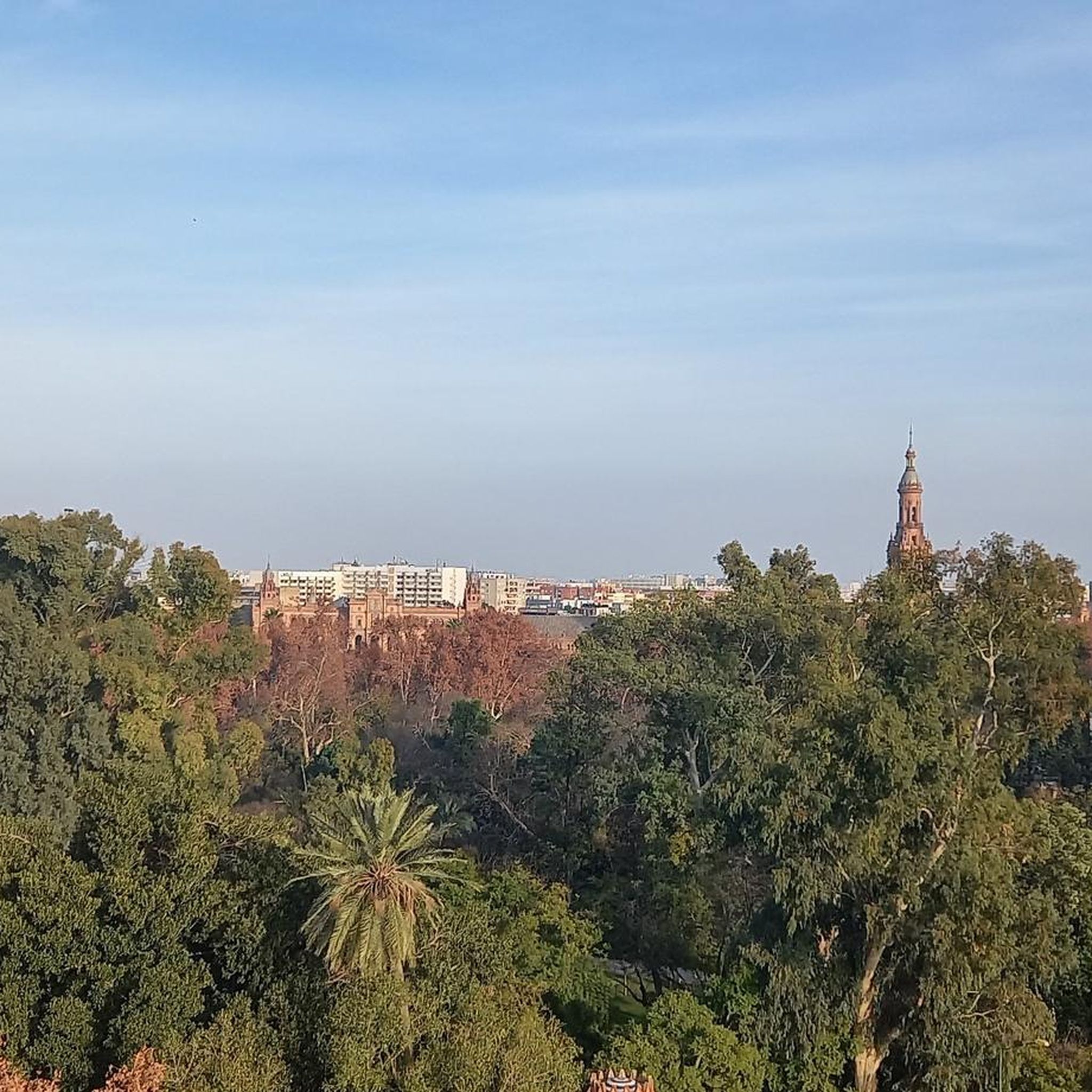
It's a spacious, free-access park, ideal for exploring on foot or by bike. It houses the Archaeological Museum and Plaza de España. It was inaugurated in 1914 and was part of the private gardens of the San Telmo Palace, later designed by French landscape designer Jean Claude Nicolas Forestier in 1914.
5
0
They were formerly private gardens of the Palace of San Telmo and were donated to the city in 1893 by the Infanta María Luisa Fernanda de Borbón (Duchess of Montpensier). They were renovated by the French engineer Jean-Claude Nicolas Forestier, curator of the Bois de Boulogne in Paris, who gave them a romantic touch, inspired by the gardens of the Generalife, the Alhambra and the Alcázares in Seville. The park was opened to the Plazas of Spain and America, created for the Ibero-American Exhibition of 1929, which are one of its main attractions. The fountains give that arabesque touch that adds sound and tranquility to the relaxation that can be enjoyed among the many benches and gazebos, which describe literary works and other works of art where you can rest peacefully.
7
0

The Frog Fountain is the oldest fountain in the María Luisa Park in Seville. It dates back to 1914, the year in which the former San Telmo Gardens were converted into a park.
3
0
The Monumento a Juan Sebastián de Elcano is an impressive monument located in the Glorieta de los Marineros. The monument was built to commemorate the first circumnavigation of the world, which was completed on September 8, 1522 with the return of the Nao Victoria under the command of Juan Sebastián de Elcano. The monument, created by the artist Antonio Cano in 1973, consists of several parts, including a pond with water jets that symbolize the sea and its movements, a wall with a world map and a bronze statue of Elcano. It commemorates the 250 men who set out from Seville on August 10, 1519 to travel around the world.
1
1
The Parque de María Luisa is a beautiful city park. The park was originally created in 1914 and is named after Infanta María Luisa Fernanda de Borbón, who donated the gardens of the Palacio de San Telmo to the city. The park is a beautiful example of romantic landscape architecture and includes several themed gardens, pavilions and fountains. Some of the highlights include the Plaza de España, an impressive square with a large pond and a fountain in the shape of a world map, and the Plaza de América, where you can visit the Museo de Artes y Costumbres Populares.
7
1
Frequently Asked Questions
What are some unique natural features to explore around Bollullos De La Mitación?
The region offers several notable natural features. You can visit the Monumental Carob Tree, María Luisa Park, a spacious area ideal for discovery. Another impressive sight is the Great Large-leaved Fig (Ficus macrophylla), Calle Palos de la Frontera, known for its immense size and extensive aerial roots. Additionally, the Parque de La Juliana features a centuries-old pine forest, the Pinar de la Juliana, which is ecologically important.
Are there family-friendly natural attractions in Bollullos De La Mitación?
Yes, several natural attractions are great for families. María Luisa Park is a spacious, free-access park with fountains and plenty of room to explore. The Centro de Naturaleza La Juliana, located within Parque de La Juliana, offers environmental education, an educational farm, and themed areas, making it ideal for learning and recreation. For adventure, El Bosque Suspendido provides tree-top adventure circuits suitable for various ages.
What outdoor activities can I do near these natural monuments?
The area around Bollullos De La Mitación is excellent for various outdoor activities. You can enjoy gravel biking on routes like the 'San Juan Bridge – San Juan Bridge loop' or 'Amphitheatre of Italica – Vía de la Plata loop'. Cycling enthusiasts can explore routes such as the 'View of the Autovía – Cafeteria Camping Dehesa Nueva loop'. For hiking, popular trails include the 'Riopudio Green Corridor Trail' and the 'San Diego and Cuatrovita Hermitages Circular'. You can find more details on these activities in the gravel biking, cycling, and hiking guides for the region.
What historical or cultural sites are associated with the natural monuments?
Many natural monuments in the area have historical significance. María Luisa Park was formerly private gardens of the San Telmo Palace and was renovated with a romantic touch inspired by historical gardens. Within the park, you'll also find the Frog Fountain, the oldest fountain in the park, dating back to 1914. The Monument to Juan Sebastián Elcano, located in Glorieta de los Marineros, commemorates the first circumnavigation of the world.
What makes the natural areas around Bollullos De La Mitación ecologically significant?
The natural areas, particularly the Parque de La Juliana, are ecologically important due to their centuries-old pine forest, the Pinar de la Juliana, which also contains oak trees and various aromatic plants. This forest serves as a crucial stopover point for birds migrating to Doñana National Park and supports diverse fauna, including passerine birds, small mammals, and reptiles. It represents one of the few remaining pine forests of its kind in the area.
Are there any adventure activities available in the natural settings?
Yes, for thrill-seekers and those looking for active outdoor experiences, El Bosque Suspendido (The Suspended Forest) within Parque de La Juliana is a must-visit. It's the first adventure park of its kind in Andalusia, featuring extensive circuits built among the trees, including ziplines, hanging bridges, and climbing elements. It boasts Spain's largest zipline circuit with 14 continuous ziplines.
What is the best time to visit the natural monuments around Bollullos De La Mitación?
While specific seasonal tips aren't provided, the region's climate generally makes spring and autumn ideal for outdoor activities. These seasons offer milder temperatures, which are more comfortable for exploring parks, hiking, and engaging in adventure activities like those at El Bosque Suspendido. Summers can be very hot, and winters are generally mild.
What kind of terrain can I expect on trails near the natural monuments?
The terrain around Bollullos De La Mitación varies, but generally includes natural landscapes with pine forests, as seen in Parque de La Juliana. Hiking and cycling routes often traverse relatively flat or gently rolling paths, suitable for different difficulty levels, from easy to moderate. For example, the 'Riopudio Green Corridor Trail' is an easy hiking option, while some gravel biking routes can be more challenging.
Are there any viewpoints or scenic spots in the natural areas?
Yes, María Luisa Park offers various scenic spots and viewpoints, particularly with its romantic garden design and integration with the Plaza de España and Plaza de América. While not explicitly listed as a viewpoint, the expansive nature of the parks and forests provides many opportunities for enjoying the natural surroundings and observing local flora and fauna.
What do visitors enjoy most about the natural monuments in this region?
Visitors appreciate the tranquil and serene natural environments, perfect for relaxation and enjoying the outdoors. The ecological value of areas like Parque de La Juliana, with its role in bird migration, attracts nature enthusiasts. The blend of learning and recreation at places like Centro de Naturaleza La Juliana, and the adventure offered by El Bosque Suspendido, also receive high praise. The community has shared over 210 photos and given more than 250 upvotes for these natural monuments.
Is there public transport access to the natural areas?
While specific public transport routes to each natural monument are not detailed, the main natural attractions like María Luisa Park are located within Seville, making them generally accessible. For areas further out like Parque de La Juliana, it's advisable to check local transport options or consider driving, as these are often more easily reached by car.
Are there facilities like parking or cafes near the natural monuments?
For attractions like María Luisa Park, being in an urban setting, parking is typically available nearby, though it might be paid. The park itself is spacious and free to enter. For areas like Parque de La Juliana, facilities such as the Centro de Naturaleza La Juliana offer amenities, and there are often cafes or restaurants in the surrounding towns like Bollullos De La Mitación.
Most popular routes around Bollullos De La Mitación
Most popular attractions around Bollullos De La Mitación

Get inspired with the komoot mobile app


Explore more
Extend your search for the best caves by checking out these guides of the top ones around Bollullos De La Mitación:
