Top 7 Natural Monuments around Fuentenovilla
Best natural monuments around Fuentenovilla are found within the La Alcarria region, characterized by its blend of historical charm and natural beauty. The area features a diverse landscape, including the Tajuña River valley and numerous historical fountains. This environment provides opportunities for exploring significant natural sites and engaging in outdoor activities. The municipality offers a comprehensive experience of nature and history.
Best natural monuments around Fuentenovilla
- The most popular natural monument is Encina de la Pica, a natural monument…
Last updated: June 4, 2026
Encina de la Pica
Highlight • Natural Monument
Translated by Google •
Tip by

Fuente del Arca
Highlight • Natural Monument
Translated by Google •
Tip by

Sign up now to discover places like this
Get recommendations on the best single tracks, peaks, & plenty of other exciting outdoor places.
Sign up for free
San Isidro Spring and Singular Tree of Villar del Olmo
Highlight • Natural Monument
Translated by Google •
Tip by

La Pica Holm Oak
Highlight • Natural Monument
Translated by Google •
Tip by

Robledillo Spring
Highlight • Natural Monument
Translated by Google •
Tip by
Sign up for free to discover even more natural monuments around Fuentenovilla.
Sign up for free
Already have an account?
Start today with a free account
Your next adventure awaits.
Login or Signup

Tips from the Community

The beautiful Fuente del Arca (Ark Fountain) is one of the historic springs of the Tajuña Valley. It lies along the Cordel de las Merinas, a notable drove road used during the transhumance era, and for centuries it was one of the main sources of drinking water for the town of Ambite. The basin itself is a small water garden, nestled in a pleasant setting of poplars, fig trees, willows, elms, and plants associated with springs, such as the maidenhair fern, a fern unique to the region.
0
0

La Pica may be the largest and oldest oak tree in the fields and forests of Madrid. It has been declared a Singular Tree by the Community of Madrid since 1992. It is an extraordinary forest monument, named by poets such as Antonio Machado and featured in numerous nature and environmental documentaries. Its estimated age is around three hundred years. It must have been born in the mid-eighteenth century. The trunk has a perimeter of four metres and a height of twenty metres, with a crown projection of five hundred square metres. It is a true jewel of forest nature.
0
0
Villar del Olmo is a well-kept and welcoming village, located at the head of the Vega stream, an agricultural valley between the slopes of Mediterranean scrubland where the landscapes of the Las Vegas and Alcarria regions of Madrid meet. It is a transit area between towns, valleys, moors and countryside. The Plaza Mayor is a beautiful Castilian-style space, which centres the dynamics of the village. It has whitewashed facades, stone arcades, a historic fountain, the Town Hall and the parish church, and next to them the Casa del Maestro and the schools. In the lowest part of the village, between the urban complex and the neighbourhoods of modern houses of Las Suertes and La Trinidad, there is the Fuente de San Isidro and a poplar declared a Singular Tree by the Community of Madrid. It is about twenty metres high and is almost one hundred years old.
0
0
The Arca spring is a historic spring in Ambite, located in the Arca ravine next to the Cordel de las Merinas. The structure of the fountain has been restored and with the benches and the shade of the trees it creates a welcoming space.
0
0
It is a historic fountain with benches and information panels in a welcoming environment of oaks, holm oaks, kermes oaks and Mediterranean scrubland on a hillside. The fountain has basins and the constant humidity throughout the year has created a valuable wetland ecosystem that is magnificent for the development of an amphibian pond.
0
0

Route of the Sources (PR-CC 84) in the Comarca de La Vera, Ambite.
6
0
This source has an important historical significance, since the first inhabitants of the town settled around this spring, located in the heart of the alcarria.
9
0

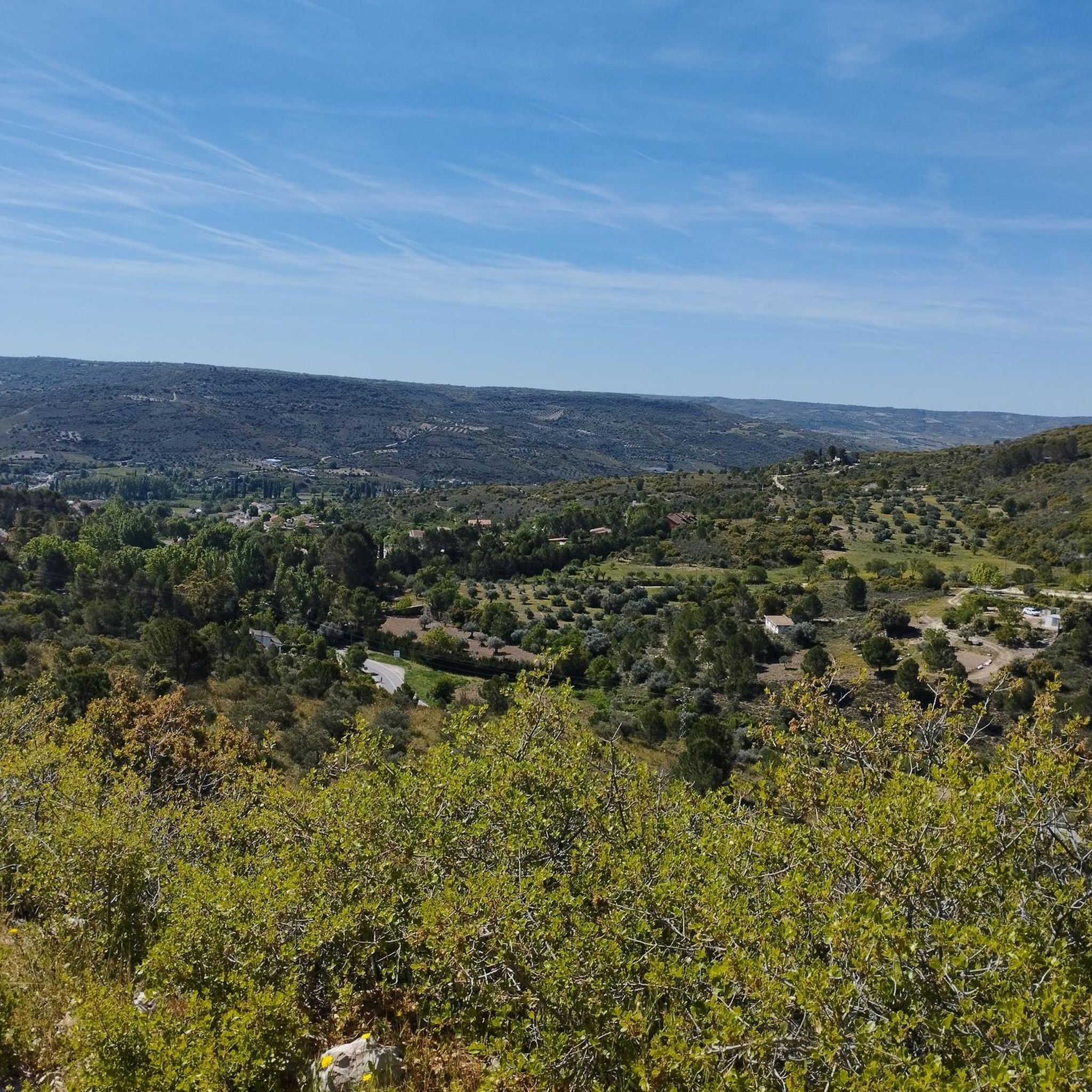
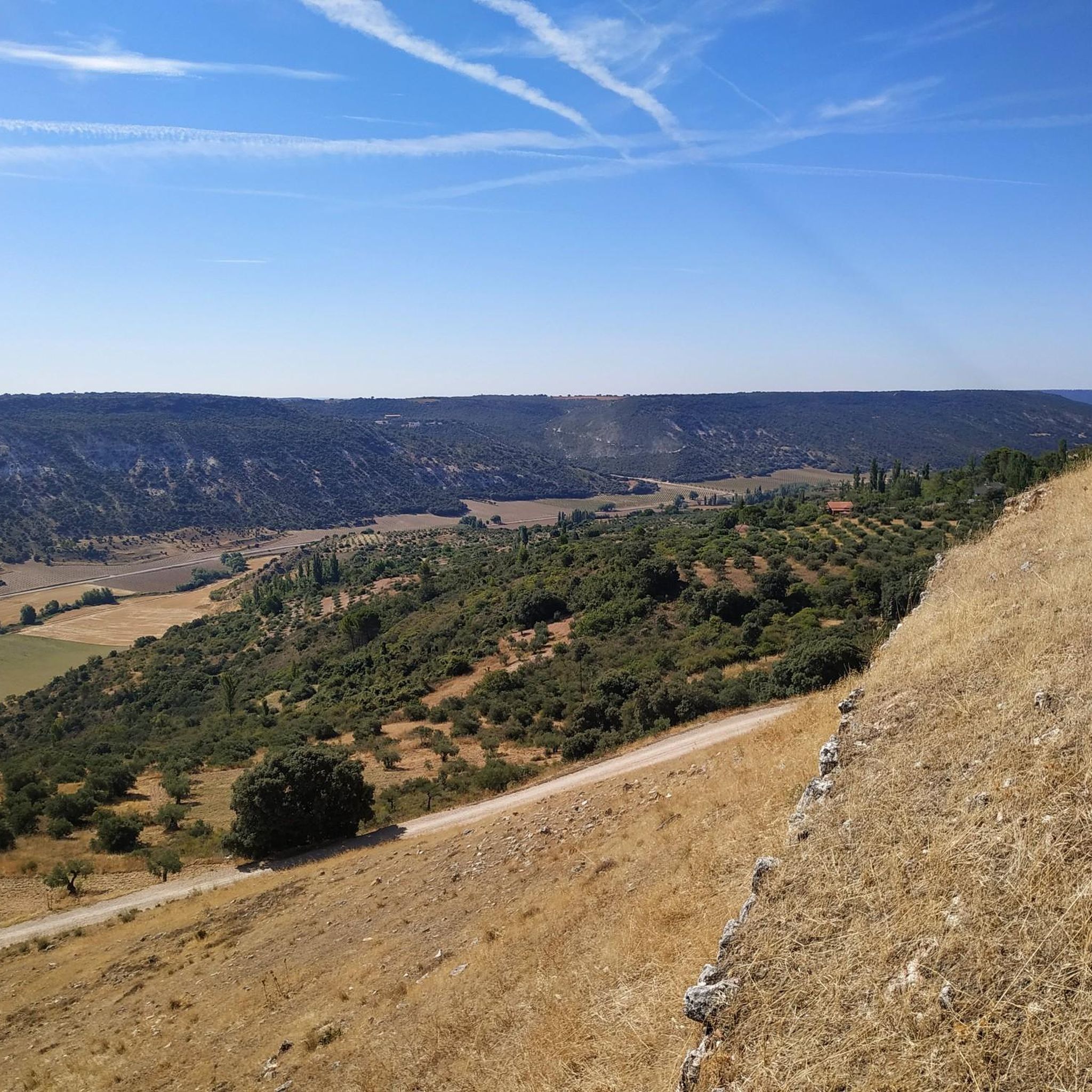
Being under this holm oak is impressive, its branches are spread out in an almost perfect diameter, they provide shelter and shade, the ground is flat and only littered by a few acorns and leaves, it is located in the middle of a carved esplanade with impressive views, and it has been here for more than a thousand years. or so the locals say and the thickness of its trunk and branches.
2
0
Frequently Asked Questions
What are some unique natural features to explore in Fuentenovilla beyond specific monuments?
Fuentenovilla is characterized by its Alcarreño landscape, which includes the picturesque Tajuña River Valley and numerous historical fountains. The area also features impressive riscos (cliffs or crags) that are home to various raptors. These elements collectively offer a rich natural environment for exploration.
Are there any historical natural monuments in the Fuentenovilla area?
Yes, several natural monuments have significant historical value. For instance, Fuente del Arca is a historical spring where early inhabitants settled. The San Isidro Spring and Singular Tree of Villar del Olmo combines a spring with a nearly century-old monumental poplar. Additionally, the Cuevas Blancas Rock Formations reveal the area's past with remains of old lime kilns.
What kind of wildlife can I expect to see in the natural areas around Fuentenovilla?
The natural areas around Fuentenovilla are home to diverse fauna. While hiking, you might spot lizards, rabbits, and foxes. The cliff areas, particularly along the Ruta de los Riscos, are known for raptors such as peregrine falcons, owls, and kestrels. In higher matorral areas, deer and wild boars can also be found.
Are there family-friendly natural monuments or activities in Fuentenovilla?
Absolutely. Fuente del Arca offers a welcoming space with benches and shade, ideal for families. The San Isidro Spring and Singular Tree of Villar del Olmo is another pleasant spot. The La Pica Holm Oak, a magnificent ancient tree, is also considered family-friendly, providing a great natural setting for a relaxed visit.
What hiking opportunities are available to experience Fuentenovilla's natural beauty?
Fuentenovilla offers several well-suited hiking routes. You can explore a low-difficulty 9.3 km circular trail that visits various fountains, or the 6.5 km Ruta de los Riscos, which takes you through oak and olive groves with impressive cliff views. For more options, check out the Hiking around Fuentenovilla guide.
Where can I find impressive views of the landscape around Fuentenovilla?
For impressive views, visit Encina de la Pica, an ancient holm oak situated on an esplanade with expansive vistas. The Ruta de los Riscos also provides excellent opportunities to see the dramatic cliffs and the surrounding Alcarreño landscape.
What is the significance of the fountains in Fuentenovilla?
Fuentenovilla is renowned for its numerous fountains, which are not just practical water sources but also reflect the area's rich hydrological heritage and historical significance. Fountains like Fuente de los Pilares and Fuente de los Borricos have Renaissance origins, showcasing centuries of human settlement influenced by water availability. They offer scenic spots for rest and reflection.
Can I explore the Tajuña River valley near Fuentenovilla?
Yes, the Tajuña River flows through the municipality, and its valley is a rich environmental setting. You can enjoy the picturesque landscapes along the riverbanks and the surrounding fertile plains. A notable historical and natural landmark is the old stone bridge, Puente de La Venta, dating back to 1786, which crosses the Tajuña near the urban area.
Are there any ancient or singular trees to visit in Fuentenovilla?
Yes, Fuentenovilla is home to remarkable ancient trees. The La Pica Holm Oak is an extraordinary forest monument, estimated to be around 300 years old with a trunk perimeter of 4 meters and a height of 20 meters. The Encina de la Pica is another impressive holm oak, said by locals to be over a thousand years old. Additionally, the San Isidro Spring and Singular Tree of Villar del Olmo features a monumental poplar nearly a century old.
What other outdoor activities, besides hiking, can I do near Fuentenovilla's natural monuments?
Beyond hiking, the area around Fuentenovilla offers opportunities for gravel biking and running. You can find various routes for these activities, catering to different difficulty levels. Explore the Gravel biking around Fuentenovilla guide or the Running Trails around Fuentenovilla guide for detailed routes.
What do visitors particularly appreciate about the natural monuments in Fuentenovilla?
Visitors appreciate the blend of natural beauty and historical significance. The ancient trees, like Encina de la Pica, are often described as impressive for their size and age, providing shelter and shade. Historical springs like Fuente del Arca are valued for their tranquil, restored settings and connection to the region's past. The overall experience of nature, history, and healthy leisure is highly regarded.
What is the best way to experience the local flora and aromatic plants?
The best way to experience the local flora is by exploring the hiking routes around Fuentenovilla. These trails, such as the circular routes mentioned, take you through areas rich in diverse plant life. You'll encounter aromatic plants like rosemary, thyme, lavender, savory, and gorse, especially in the Mediterranean scrubland areas.
Most popular routes around Fuentenovilla
Most popular attractions around Fuentenovilla

Get inspired with the komoot mobile app


Explore more
Extend your search for the best caves by checking out these guides of the top ones around Fuentenovilla:
